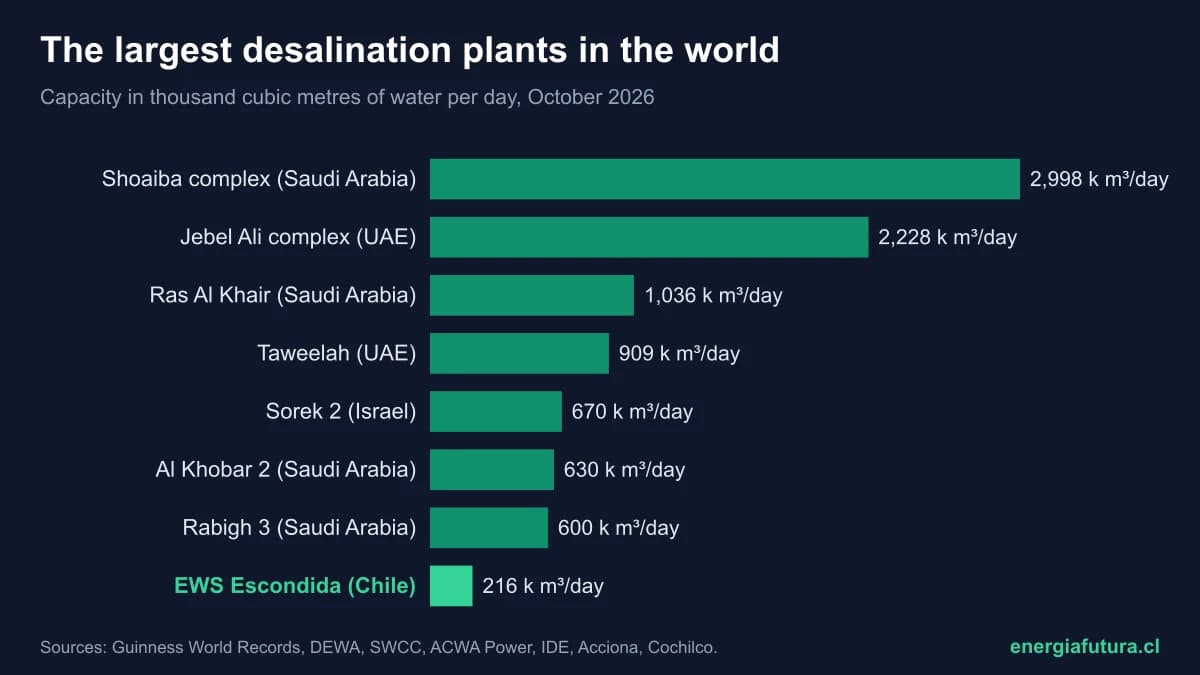
Updated on 29 October 2026. The largest desalination plant in the world is the Shoaiba complex, on Saudi Arabia's Red Sea coast, with a capacity of 2,998,000 cubic metres of water per day, according to the Guinness World Records entry verified on 7 December 2023. It is run by the state-owned Saline Water Conversion Corporation (SWCC) and brings together eight plants on a single site.
Counting a single plant rather than a complex, the largest is Ras Al Khair, also in Saudi Arabia, at about 1,036,000 m³ a day. And among plants that use only reverse osmosis, today's dominant technology, the biggest is Taweelah, in Abu Dhabi, at 909,200 m³ a day. Chile's largest, BHP's Escondida Water Supply (EWS), produces 216,000 m³ a day: about 14 times less than Shoaiba.
Ranking of the largest desalination plants in the world
The table ranks plants and complexes by nominal capacity in cubic metres per day, the measure used by operators and Guinness. A cubic metre is a thousand litres: 1 million m³ a day roughly covers the household use of several million people.
| Rank | Plant | Country | Capacity (m³/day) | Technology | In operation |
|---|---|---|---|---|---|
| 1 | Shoaiba (complex of 8 plants) | Saudi Arabia | 2,998,000 | Thermal and reverse osmosis | Several stages; Guinness record in 2023 |
| 2 | Jebel Ali (DEWA complex) | United Arab Emirates | ~2,228,000 (490 MIGD) | Thermal (MSF) and reverse osmosis | Several stations; 2021 figure |
| 3 | Ras Al Khair | Saudi Arabia | 1,036,000 | Thermal (MSF) and reverse osmosis | 2014-2016 |
| 4 | Taweelah | United Arab Emirates | 909,200 | Reverse osmosis | Full operation in 2024 |
| 5 | Sorek 2 | Israel | 670,000 | Reverse osmosis | 2025 |
| 6 | Al Khobar 2 | Saudi Arabia | 630,000 (670,852 according to Guinness) | Reverse osmosis | 2024-2025 |
| 7 | Rabigh 3 | Saudi Arabia | 600,000 | Reverse osmosis | December 2021 |
| — | EWS Escondida | Chile | 216,000 (2,500 l/s) | Reverse osmosis | 2018 |
Sources: Guinness World Records (Shoaiba and Al Khobar 2), Dubai Electricity and Water Authority, DEWA (Jebel Ali), SWCC and Guinness (Ras Al Khair), ACWA Power (Taweelah), IDE Water Technologies (Sorek 2), Acciona (Al Khobar 2), Aquatech (Rabigh 3) and Cochilco (EWS). MIGD: million imperial gallons per day; 1 MIGD is about 4,546 m³.
Shoaiba, the largest desalination plant in the world
Shoaiba lies about 110 km south of Jeddah, on the Red Sea coast, and supplies Mecca, Jeddah and Taif. It is not a single building but a complex of eight facilities built in stages since the 1980s, with thermal plants that evaporate seawater and reverse osmosis plants that filter it through membranes. Guinness recorded its combined capacity of 2,998,000 m³ a day in December 2023, among nine records SWCC obtained that year, according to the International Desalination and Reuse Association (IDRA).
The same site holds another record: the Shuaibah Phase V plant obtained the Guinness record for the lowest energy use in desalination in April 2025, at 2.34 kWh per cubic metre in total, according to the Saudi Water Authority announcement reported by Economy Middle East. Energy is a desalination plant's largest cost and the reason the industry moved from thermal plants to reverse osmosis.
Jebel Ali and Ras Al Khair, the other giants
The Jebel Ali complex in Dubai brings together several DEWA power and water stations. In 2021 the authority reported a capacity of 490 million imperial gallons a day (about 2.23 million m³), with 43 thermal units and two reverse osmosis plants, according to Smart Water Magazine. Its 2025 statistical yearbook reports 495 MIGD of total company capacity. Ras Al Khair, on the Persian Gulf coast, combines 8 thermal units and 17 reverse osmosis units with a power plant of about 2,400 MW, and supplies Riyadh through a pipeline hundreds of kilometres long.
The largest reverse osmosis plants
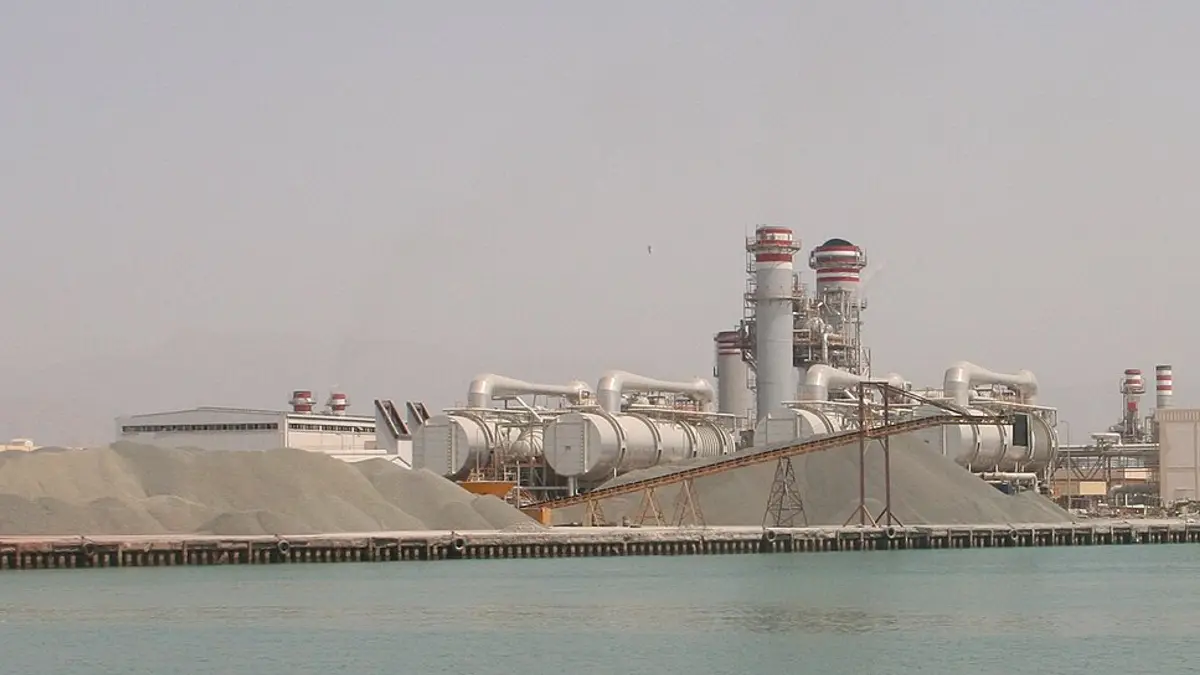
Reverse osmosis pushes seawater at high pressure through membranes that hold back the salt. It uses far less energy than evaporating water, and almost all new plants rely on it. In this category, the record has changed hands several times in just a few years:
| Plant | Country | Capacity (m³/day) | Milestone |
|---|---|---|---|
| Taweelah | UAE | 909,200 | First phase in June 2022; full operation in 2024 (ACWA Power) |
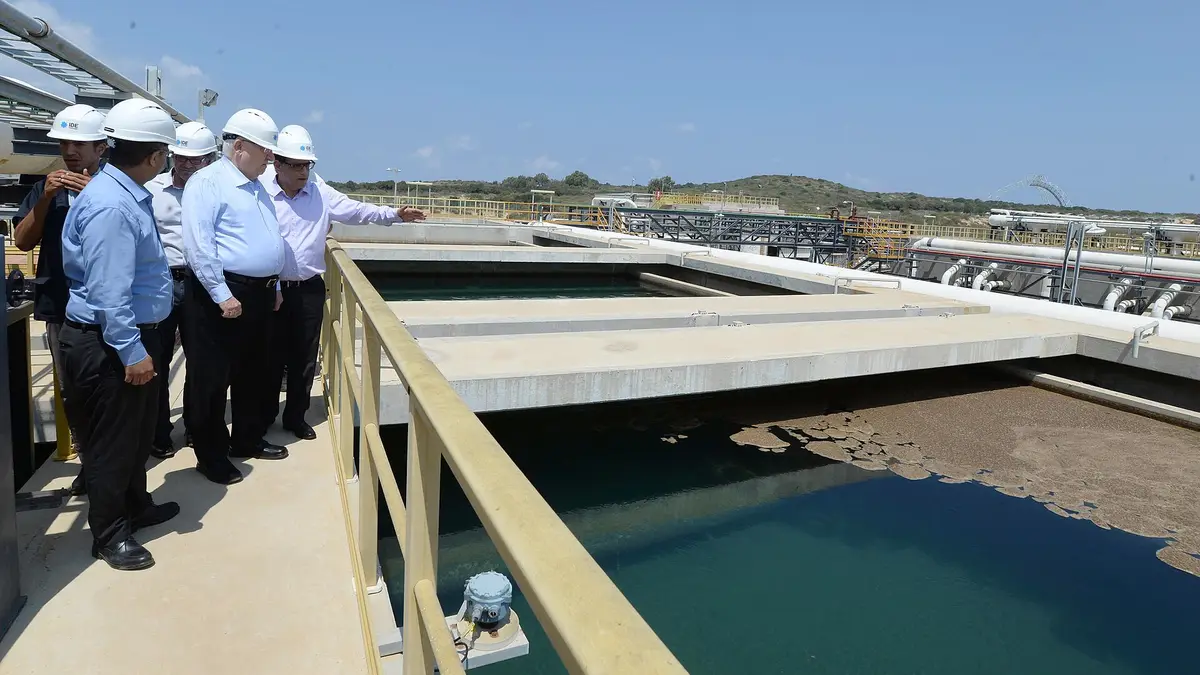
| Sorek 2 | Israel | 670,000 | Supplying water since March 2025; 200 million m³ a year (IDE) |
| Al Khobar 2 | Saudi Arabia | 630,000 to 670,852 | Guinness reverse osmosis record on 25 February 2025 |
| Rabigh 3 | Saudi Arabia | 600,000 | Guinness reverse osmosis record in 2022 |
| Hassyan (under construction) | UAE | ~818,000 (180 MIGD) | First 60 MIGD block in 2026; full commercial operation expected in 2027 (ACWA Power) |
Sources: ACWA Power, IDE Water Technologies, Guinness World Records, Acciona and Aquatech. Al Khobar 2's capacity differs between the builder (630,000 m³) and the Guinness record (670,852 m³), and the sources do not explain why. Guinness certified Al Khobar 2 as the largest reverse osmosis plant even though Taweelah reports a larger capacity; the record is only awarded to those who apply for it.
Taweelah is the benchmark for size: it is run by a company in which ACWA Power holds 40% and the Abu Dhabi government the rest, and it sells all its water to state-owned Emirates Water and Electricity Company (EWEC) for 30 years. Sorek 2, south of Tel Aviv, is Israel's largest and the world's first whose high-pressure pumps run on steam turbines, according to its builder, IDE.
Where Chile stands among desalination plants
Chile has no plants in the global ranking, but it is one of the largest users of desalinated water for mining. Escondida's EWS, at Coloso (Antofagasta), started operating in 2018 with 2,500 litres per second, about 216,000 m³ a day, and is the country's largest, according to Cochilco's inventory. Figures for the whole mining sector are in our report on seawater in Chilean mining.
| Plant in Chile | Owner | Capacity (l/s) | Capacity (m³/day, approx.) | Use |
|---|---|---|---|---|
| Escondida Water Supply (EWS) | BHP | 2,500 | 216,000 | Mining (Escondida) |
| Desaladora Norte | Aguas Antofagasta | 1,250 (expandable to 1,380) | 108,000 | Drinking water for Antofagasta |
| C20+ Collahuasi | Collahuasi | 1,050 | 90,700 | Mining (commissioning) |
| Spence Growth Option | BHP | 1,000 | 86,400 | Mining (Spence) |
| Distrito Norte | Codelco (Aguas Horizonte) | 840 (expandable to 1,956) | 72,600 | Mining (commissioning) |
| Quebrada Blanca | Teck | 865 (potential 1,200) | 74,700 | Mining |
Sources: Cochilco, reports on water use and projected water demand in copper mining (2026); Reporte Minero (Desaladora Norte, March 2025); REDIMIN (Distrito Norte, 91% complete as of November 2025). Conversion to m³ per day by Energía Futura (1 l/s = 86.4 m³/day).
Taken together, all copper mining desalination plants delivered about 5.71 m³ per second of desalinated water in 2025, according to Cochilco: roughly 493,000 m³ a day, less than half of what Ras Al Khair produces on its own. Aguas Antofagasta's Desaladora Norte made Antofagasta the first Chilean city of more than 500,000 people supplied 100% with seawater.
Growth has its costs. Desalinating water and pumping it up to mine sites more than 3,000 metres high uses a lot of electricity, and the brine goes back into the sea. The state is funding a study to measure that effect, as detailed in our story on desalination brine.
Much of that water ends up at the most productive mine on the planet, as shown in the ranking of the largest copper mine in the world, led by Escondida.
Does your company work in desalination, water management or sustainable mining? Reach Energía Futura's readers.
See advertising optionsHow this ranking was built
The ranking uses the nominal capacity reported by operators, governments or Guinness World Records, accessed on 29 October 2026. Complexes (several plants on one site, such as Shoaiba and Jebel Ali) are separated from individual plants, because sources mix them up. Jebel Ali's capacity is DEWA's 2021 figure and may have changed. Projects that have only been announced are not included. Ras Al Khair's figures range from 1.025 to 1.05 million m³ depending on the source; the most cited one was used. This ranking will be updated on this same page.
Frequently asked questions
What is the largest desalination plant in the world?
The Shoaiba complex in Saudi Arabia, at 2,998,000 m³ a day, according to Guinness World Records (2023). As a single plant, Ras Al Khair (about 1,036,000 m³ a day).
What is the largest reverse osmosis plant in the world?
Taweelah, in Abu Dhabi, at 909,200 m³ a day, in full operation since 2024, according to ACWA Power. In 2025 Guinness certified Al Khobar 2 (Saudi Arabia) at 670,852 m³ a day.
Which country has the most desalination?
Saudi Arabia, home to four of the seven plants or complexes in this ranking, followed by the United Arab Emirates, with two.
What is the largest desalination plant in Chile?
BHP's Escondida Water Supply (EWS), at 2,500 l/s (about 216,000 m³ a day), operating since 2018. For drinking water, the largest is Aguas Antofagasta's Desaladora Norte, at 1,250 l/s.
How to cite this data
Energía Futura (2026). The largest desalination plant in the world 2026: ranking of the biggest desalination plants. Based on data from Guinness World Records, SWCC, DEWA, ACWA Power, IDE Water Technologies, Acciona and Cochilco, accessed on 29 October 2026. Available at https://energiafutura.cl/en/news/the-largest-desalination-plant-in-the-world-2026-ranking-of-the-biggest-desalination-plants. The cover chart may be reproduced with credit to Energía Futura and a link to this page.