Eight weeks before the second phase of Chile's vehicle energy efficiency standard takes effect, the debate over its impact has turned into a battle of numbers. The Sustainable Mobility Center (CMS) argues that the new target of 22.8 kilometers per liter of gasoline equivalent (km/lge) would cut sales by 2,200 to 4,500 units a year, not the 80,000 projected by the National Automotive Association of Chile (ANAC), according to the analysis the center presented and Revista Electricidad published on November 5.
ANAC, for its part, repeated in its October market report its call to keep the target at 18.8 km/lge in 2027 and 2028. The same report shows that 27,687 light and medium vehicles were sold in October, up 17.7% from October 2025, a month that had slumped because of the switch to the Euro 6c emissions standard.
View the data as a table
| Sales drop according to ANAC | 80,000 cars |
| Maximum drop according to the CMS | 4,500 cars |
| 2027 efficiency target | 22.8 km/lge |
| October sales | 27,687 |
What the 2027 efficiency standard requires
Chile's Energy Efficiency Law set fuel economy targets for the new cars that importers sell. The first phase began in 2024 at 18.8 km/lge; from the first business day of 2027, the target rises to 22.8 km/lge, an increase of 21.3%, measured with the stricter WLTC laboratory cycle. The 22.8 km/lge figure applies to a car with an average reference mass of 1,375 kilos; lighter cars must do better and heavier ones less.
The key point, which both sides read differently, is that the target is calculated as the average of each importer's sales, not as a minimum for each model. On top of that, battery electric and plug-in hybrid cars count three times in that average. So an importer can keep selling combustion cars that do not reach 22.8 km/lge on their own if it offsets them with enough plug-ins. If it does not comply, it faces a fine imposed by the Superintendency of Electricity and Fuels (SEC).
| Point in dispute | ANAC | Sustainable Mobility Center |
|---|---|---|
| Models that would leave the market | More than 800 approved models | Models withdrawn since 2024 were ~3% of sales (1% under CLP 12 million) |
| Price impact | Extra cost of CLP 3 to 5 million per car | Average increase of 2.3% |
| Annual drop in sales | 80,000 units | 2,200 to 4,500 units |
| Industry fines | More than US$400 million by 2030 | Theoretical maximum of ~US$34 million in 2027 |
| VAT not collected | US$281 million | US$8 to 16 million |
| Proposal | Keep 18.8 km/lge in 2027 and 2028 | Apply the target and change the vehicle-tax incentive |
Source: ANAC market report, October 2026 and CMS analysis cited by Revista Electricidad (November 5, 2026). The 80,000-unit and US$281 million figures are ANAC's, as quoted by the CMS.
What ANAC says about the efficiency standard
The association argues that no gasoline or diesel car, not even mild hybrids and conventional hybrids measured under the WLTP cycle, reaches the efficiency required for its version. To comply, brands would have to sell more plug-in hybrids and electric cars, which by its calculations cost on average 50% more than a comparable combustion car (about CLP 12 million more) for EVs and 30% more (about CLP 7.2 million) for plug-ins. That is the basis for its estimate of an extra cost of CLP 3 to 5 million per car.
"From next January, new vehicles could become up to 5 million pesos more expensive," said Diego Mendoza, ANAC's secretary general, in the October report. The association had already warned earlier this month that more than 800 models would leave the market, and it asked the Ministry of Energy to explain how it will verify that Chile's standard is aligned with international ones, citing the European Parliament's debate on easing CO2 targets for new cars from 2035.
The Sustainable Mobility Center's response
Claudio Mena, head of Electromobility and Vehicle Standards at the CMS, says that the combustion models withdrawn since 2024 accounted for only 3% of sales, averaged 12.2 km/lge and had a median tax valuation of CLP 26.1 million, almost double that of the models still on sale. "The versions that left were expensive, inefficient and low-selling," he said.
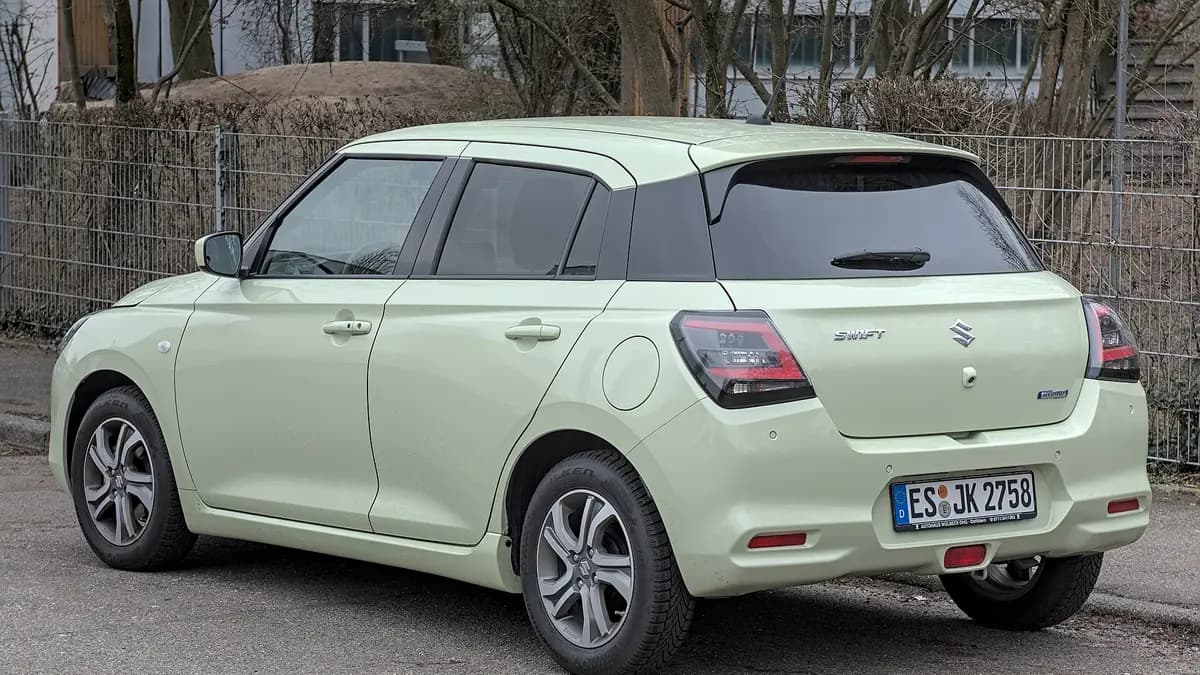
The center also compared energy costs. Driving 30 kilometers a day, a combustion car that already meets the 2027 target, such as the Suzuki Swift ISG priced at CLP 10.3 million, spends about CLP 730,000 a year on gasoline; an electric car at a similar price, the Renault Kwid E-Tech at CLP 10.5 million, spends around CLP 285,000 on electricity. At the other extreme, the 155 models that achieve less than 12 km/lge, with a median valuation of CLP 39 million, spend about CLP 1.5 million a year.
On the sales drop, the CMS notes that 80,000 units would be about a third of the annual light-vehicle market and that falls of that size were only seen in economic crises: -44% during the pandemic and -28% in 2023. With an average price increase of 2.3%, it estimates a drop of 2,200 to 4,500 cars, and calculates that importers that do not comply would only need to sell about 3,400 more electric cars a year. It also says that when the first phase began in 2024, with fewer than half of importers complying, light-vehicle sales changed by -1.3%, and in 2025 they rose 1.7%.
The example the center gave is Tattersall: in the first half of 2026, 64% of its sales were combustion cars averaging 15.1 km/lge, but once its electric and plug-in hybrid sales were added, with triple weighting, the average reached 26.9 km/lge, above the 2027 target. According to the CMS, about half of importers already meet that target today.
Fines, VAT and emissions: the other numbers in dispute
The theoretical maximum fine for the whole industry was US$21.6 million in 2024 and US$19.8 million in 2025, according to the CMS, and in 2027 it would be around US$34 million even if nobody changed their lineup: about CLP 355,000 per car for non-compliant importers. The center contrasts that with the US$3,500 to US$5,000 per car projected by ANAC and with the more than US$400 million in fines by 2030 that the association had announced earlier.
On emissions, the CMS estimates that each year of more efficient sales avoids some 56,000 tonnes of CO2 and the consumption of about 24 million liters of fuel, worth around CLP 38 billion, in a country that imports 98% of the oil it uses. "If the standard is frozen, as the industry wants, the cars entering the country today will be on the road for 15 or 20 years burning more gasoline than necessary," Mena said. His proposal is to change the vehicle-tax incentive for plug-ins rather than postpone the target.
Car sales in October
Meanwhile, the market keeps growing. 27,687 light and medium vehicles were sold in October (+17.7%), and January-October sales total 264,868 (+3.7%). All 16 regions grew in the month; the largest increases were in Aysén (+42%), La Araucanía (+41.6%) and Atacama (+41.6%). The comparison is favorable because October 2025 was weak after the Euro 6c standard came into force.
| Segment (October 2026) | Units | Year-on-year change |
|---|---|---|
| SUVs | 14,681 | +15.1% |
| Pickup trucks | 5,842 | +20.3% |
| Passenger cars | 4,539 | +21.7% |
| Commercial vehicles | 2,625 | +20.1% |
| Total light and medium | 27,687 | +17.7% |
| Trucks | 1,083 | -23.8% |
| Buses | 167 | -67.9% |
Source: ANAC, October 2026 automotive market report. The breakdown of October sales of electric and hybrid vehicles is published in a separate report that was not yet available when this article was written.
View the data as a table
| January-October | |
|---|---|
| 2021 | 335.8 |
| 2022 | 361.1 |
| 2023 | 261.1 |
| 2024 | 249.3 |
| 2025 | 255.4 |
| 2026 | 264.9 |
Trucks and buses are still falling. Buses total 1,069 units between January and October, 67.9% fewer than in the same period of 2025, when purchases of electric buses for Santiago's RED system were concentrated. Chile still has the largest electric bus fleet in the region, as shown by the regional monitor according to which Latin America passed one million electric cars.
What could happen before January
The 22.8 km/lge target is set by decree and changing it would require a decision by the Ministry of Energy. So far, the ministry has not announced any change. For car buyers, the practical takeaway is that the rule does not ban combustion models: it requires each importer to balance its sales mix. January list prices, and the supply of electric and plug-in hybrid cars, will show which projection is closer to reality. To compare electric work vehicles, there is a guide to electric pickups in Chile with prices and charging costs.
Does your brand sell electric cars, chargers or efficiency solutions? Reach Energía Futura's readers.
See advertising optionsFrequently asked questions
What is Chile's vehicle energy efficiency standard?
It is an average fuel economy target that each importer's new car sales must meet. It was 18.8 km/lge in 2024-2026 and rises to 22.8 km/lge from 2027.
Will gasoline cars be banned from 2027?
No. The target is an average per importer. Electric and plug-in cars count three times, which allows combustion models to keep being sold.
How much would car prices rise?
ANAC estimates CLP 3 to 5 million per car; the Sustainable Mobility Center, an average increase of 2.3%.
How many cars were sold in Chile in October 2026?
27,687 light and medium vehicles, 17.7% more than in October 2025, according to ANAC.
What fine does a non-compliant importer face?
It is imposed by the SEC. The CMS estimates the theoretical maximum fine for the whole industry at about US$34 million in 2027.