Chile's National Energy Commission (CNE) has set the stabilized prices that small distributed generators (PMGD) that chose that regime will receive over the coming months. The calculation confirms what the market already shows: the average basic price of energy fell to CLP 23.666 per kWh, 74.5% below the average market price of CLP 92.888 per kWh, so the band rule required adding CLP 38.376 per kWh to every price. The CNE approved the final technical report with Exempt Resolution 606, dated November 2, 2026.
The most striking figure in the final technical report is in the daily blocks. Between 8:00 am and 3:59 pm, the basic energy price is CLP 0.1 to 0.7 per kWh at almost every node in the system, a reflection of abundant solar power. At the Polpaico 220 kV node, for example, the basic price between noon and 3:59 pm is CLP 0.182 per kWh, and between 8:00 pm and 11:59 pm it rises to CLP 15.295.
View the data as a table
| Average basic price | $23.666/kWh |
| Average market price | $92.888/kWh |
| Amount added by the band | $38.376/kWh |
| Polpaico, 12:00 to 15:59 | $0.182/kWh |
What PMGD stabilized prices are
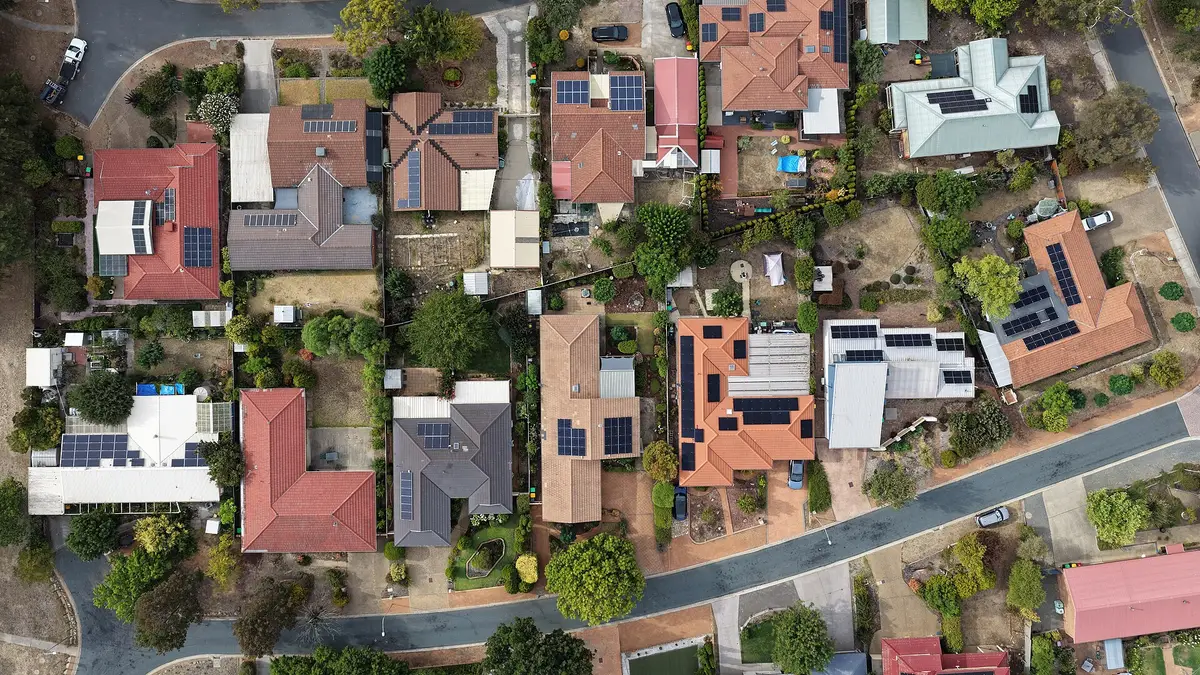
PMGDs are plants of up to 9 MW connected to distribution grids, mostly solar farms. The small-scale generation regulation (Supreme Decree 88 of 2019) allowed them to sell their energy at a stabilized price set by the CNE every six months, instead of being exposed to the instantaneous marginal cost. Supreme Decree 1 of 2026 changed that regime, but its first transitory article keeps the previous rule for plants that had already opted for it; this calculation applies to them.
The method has two steps. First, basic energy prices are calculated for each node in six four-hour blocks, based on the marginal costs projected in August's short-term node price setting. Then the theoretical average price is compared with the average market price, which reflects the contracts of free customers and distributors. If the theoretical price falls outside a band around the market price, a constant amount is added until it reaches the edge of the band.
| Indicator (national grid) | April 2026 | November 2026 | Change |
|---|---|---|---|
| Average basic price | CLP 26.459/kWh | CLP 23.666/kWh | -10.6% |
| Theoretical average price | CLP 32.280/kWh | CLP 28.565/kWh | -11.5% |
| Average market price | CLP 99.010/kWh | CLP 92.888/kWh | -6.2% |
| Theoretical vs. market gap | -67.40% | -69.25% | — |
| Lower limit of the band | 27.30% | 27.8% | — |
| Amount added by the band | — | CLP 38.376/kWh | — |
Source: CNE, final technical report, November 2026 and Exempt Resolution 173 of April 2026. Exchange rate used: CLP 897.64 per dollar; discount rate: 10% real per year.
Stabilized prices by time block
With the band applied, stabilized prices range between CLP 38.5 and 53.7 per kWh across almost the whole system. At Polpaico 220 kV they go from CLP 38.558 (noon to 3:59 pm) to CLP 53.671 (8:00 pm to 11:59 pm); at Parinacota 220 kV, in Arica, from CLP 38.525 to CLP 52.987. In other words, the market band accounts for more than two-thirds of the price a PMGD receives at midday. In dollars, the range is roughly US$43 to US$60 per MWh.
View the data as a table
| Parinacota (Arica) | Polpaico (RM) | Charrúa (Biobío) | Puerto Montt | |
|---|---|---|---|---|
| 0-4h | 12 | 12 | 11 | 7 |
| 4-8h | 12 | 12 | 11 | 8 |
| 8-12h | 0 | 1 | 1 | 2 |
| 12-16h | 0 | 0 | 0 | 2 |
| 16-20h | 7 | 8 | 7 | 6 |
| 20-24h | 15 | 15 | 13 | 11 |
The shape of the day changes in the south. In Puerto Montt and Chiloé, where there is less solar and more hydropower, the midday basic price is CLP 1.9 to 2.1 per kWh and the night price CLP 11.1: the gap between day and night is smaller than in the north and center. In Puerto Montt, the stabilized price ranges from CLP 40.257 to CLP 49.485.
| Node (220 kV) | 8:00-11:59 | 12:00-15:59 | 20:00-23:59 | Weighted average |
|---|---|---|---|---|
| Parinacota (Arica) | CLP 0.176 | CLP 0.149 | CLP 14.611 | CLP 7.403 |
| Crucero (Antofagasta) | CLP 0.327 | CLP 0.150 | CLP 13.432 | CLP 7.264 |
| Polpaico (Santiago region) | CLP 0.508 | CLP 0.182 | CLP 15.295 | CLP 7.458 |
| Alto Jahuel (Santiago region) | CLP 0.508 | CLP 0.182 | CLP 15.345 | CLP 8.081 |
| Itahue (Maule) | CLP 0.662 | CLP 0.115 | CLP 12.708 | CLP 7.017 |
| Charrúa (Biobío) | CLP 0.522 | CLP 0.173 | CLP 13.343 | CLP 7.189 |
| Puerto Montt | CLP 1.881 | CLP 2.058 | CLP 11.109 | CLP 5.888 |
Source: CNE, stabilized and basic price calculation workbook, November 2026. Basic energy prices before the band, in Chilean pesos per kWh. The stabilized price is the basic price plus CLP 38.376.
| Parinacota | 0.149 | 14.611 | 7.403 | 38.525 | 52.987 |
| Pozo Almonte | 0.144 | 13.801 | 7.435 | 38.520 | 52.177 |
| Tarapacá | 0.162 | 14.572 | 7.660 | 38.538 | 52.948 |
| Lagunas | 0.164 | 14.508 | 7.651 | 38.540 | 52.884 |
| Crucero | 0.150 | 13.432 | 7.264 | 38.526 | 51.808 |
| Encuentro | 0.164 | 14.488 | 7.869 | 38.540 | 52.864 |
| Chuquicamata | 0.165 | 14.618 | 7.936 | 38.541 | 52.994 |
| Calama | 0.163 | 14.508 | 7.911 | 38.539 | 52.884 |
| María Elena | 0.160 | 13.370 | 7.181 | 38.536 | 51.746 |
| Diego de Almagro | 0.163 | 14.230 | 7.731 | 38.539 | 52.606 |
| Cardones | 0.165 | 14.333 | 7.779 | 38.541 | 52.709 |
| Maitencillo | 0.164 | 13.915 | 7.475 | 38.540 | 52.291 |
| Pan de Azúcar | 0.169 | 14.560 | 7.892 | 38.545 | 52.936 |
| Los Vilos | 0.165 | 15.173 | 8.042 | 38.541 | 53.549 |
| Quillota | 0.168 | 15.007 | 7.960 | 38.544 | 53.383 |
| Polpaico 220 | 0.182 | 15.295 | 7.458 | 38.558 | 53.671 |
| Lampa | 0.179 | 15.272 | 7.723 | 38.555 | 53.648 |
| Los Maquis | 0.182 | 15.100 | 8.304 | 38.558 | 53.476 |
| Cerro Navia | 0.183 | 15.363 | 7.489 | 38.559 | 53.739 |
| Chena | 0.184 | 15.368 | 7.487 | 38.560 | 53.744 |
| Alto Jahuel 220 | 0.182 | 15.345 | 8.081 | 38.558 | 53.721 |
| Rancagua 154 | 0.178 | 15.777 | 8.272 | 38.554 | 54.153 |
| Itahue 220 | 0.115 | 12.708 | 7.017 | 38.491 | 51.084 |
| Ancoa 220 | 0.147 | 13.878 | 7.154 | 38.523 | 52.254 |
| Charrúa 220 | 0.173 | 13.343 | 7.189 | 38.549 | 51.719 |
| Hualpén | 0.264 | 13.575 | 7.324 | 38.640 | 51.951 |
| Temuco | 0.181 | 12.917 | 6.679 | 38.557 | 51.293 |
| Valdivia | 2.171 | 11.443 | 6.207 | 40.355 | 49.819 |
| Puerto Montt | 2.058 | 11.109 | 5.888 | 40.257 | 49.485 |
| Chiloé | 2.127 | 11.034 | 5.899 | 40.312 | 49.410 |
Why midday energy is almost worthless
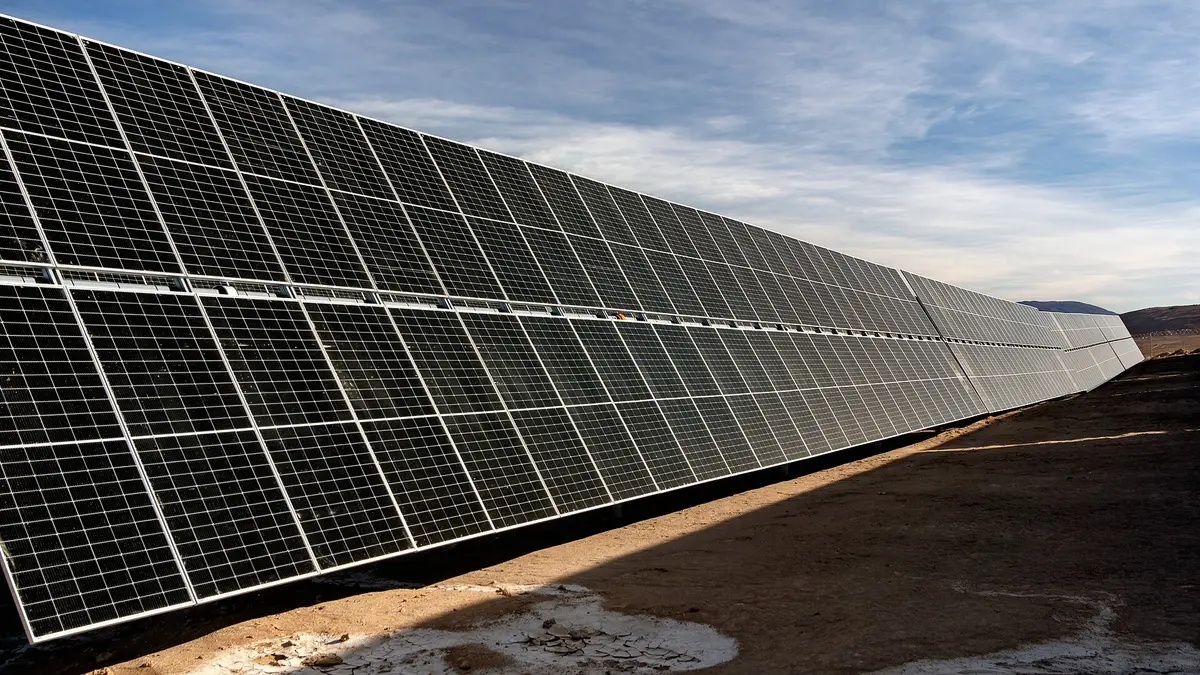
The basic price comes from projected marginal costs, and those costs are almost zero during the day because solar generation covers demand and often exceeds it. The system itself shows this in its operation: in October, marginal costs below US$5 per MWh already covered even three out of four early mornings north of Charrúa, thanks to batteries discharging at night.
For a solar PMGD, which produces precisely during those hours, the consequence is clear: without the market band, its energy would be worth almost nothing. With the band, it receives about CLP 38.5 per kWh at midday and a bit more in the first and last hours of sunlight. That is why several PMGDs have started adding batteries to shift their energy to the 8:00 pm to 11:59 pm block, the best paid. It is the same logic behind El Pelícano Solar's bond deal, which refinanced 21 PMGDs and will add storage to six of them.
How the prices are updated
The base stabilized prices are indexed every month to the average market price that the CNE publishes in the first five days of each month. The CNE received no comments on the preliminary report from August (Exempt Resolution 470), so the final report kept its results. The report now goes to the Ministry of Energy, which must issue the corresponding decree. The price signal arrives as storage expands quickly: the CNE expects 12,394 MWh of new batteries to come online in 2027, which should start to raise midday prices and lower night prices.
The change of regime under Supreme Decree 1 of 2026 is the backdrop to the debate. The government and industry groups have argued over how much distributed generation should be paid in a system where solar power is abundant during the day and scarce at night. While new projects go to the amended regime, older PMGDs keep receiving a price signal that, thanks to the band, depends more on market contracts than on their own marginal cost.
Do you develop PMGDs, batteries or services for distributed generation? Reach Energía Futura's readers.
See advertising optionsFrequently asked questions
What is a PMGD?
A small distributed generation plant: a power plant of up to 9 MW connected to the distribution grid, usually solar.
What is the stabilized price?
A price set by the CNE every six months for each node and time block, at which PMGDs that chose that regime can sell their energy instead of the instantaneous marginal cost.
How much is energy worth at midday?
The basic price is CLP 0.1 to 0.7 per kWh across almost the whole system between 8 am and 4 pm. With the market band, the stabilized price is about CLP 38.5 per kWh.
Why is CLP 38.376 per kWh added?
Because the theoretical average price was 69.25% below the market price, outside the band, and the rule requires raising it to the 27.8% limit.
Does this affect electricity bills?
Not directly. The stabilized price is what PMGDs receive for their energy; household tariffs are set through other processes.