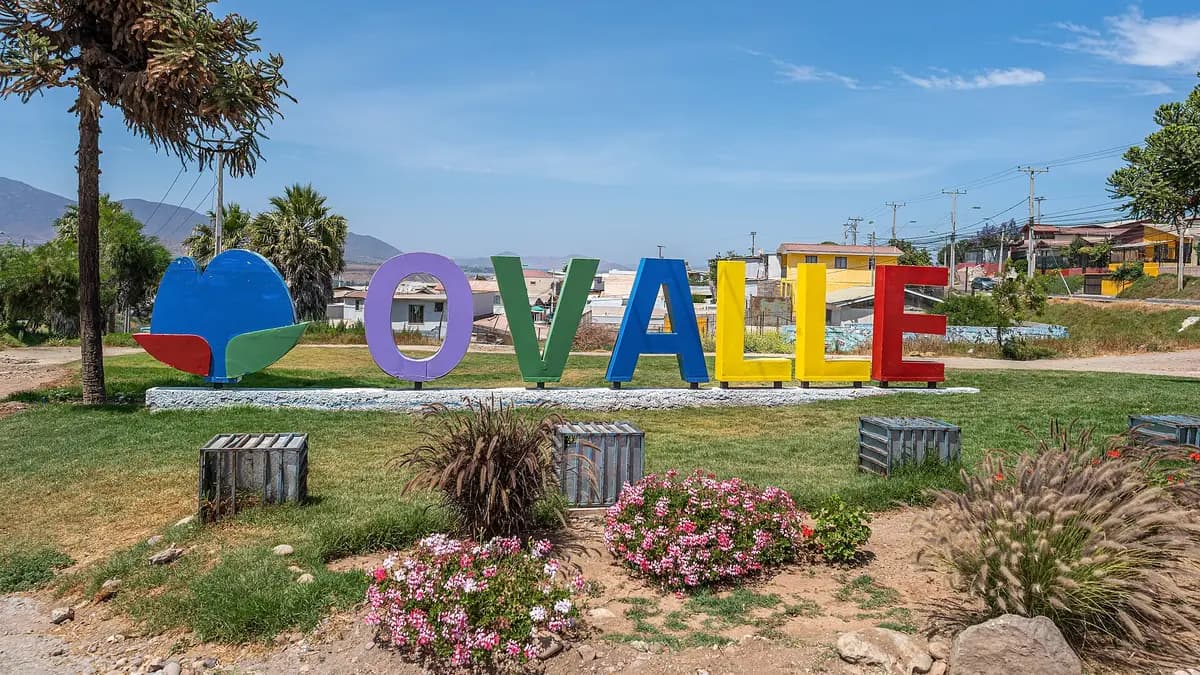
The Environmental Assessment Commission (Coeva) of Coquimbo, in northern-central Chile, has approved two solar projects in Limarí province with a combined investment of US$91.6 million. The largest is the expansion of the Soles del Norte solar park in Ovalle, which will grow from 120 MW to 219.99 MWp with an additional investment of US$78.4 million. The other is Solar Monte Patria III, a 6.39 MW plant with batteries in Monte Patria, worth US$13.2 million, according to Revista Electricidad on November 5.
Both projects were reviewed through Environmental Impact Declarations (DIA). According to the regional energy secretary, Cristhian Acori, they add 109 MW to the region's renewable capacity and will employ about 280 people during construction. With these two, the current government has approved seven energy projects in Coquimbo worth US$484 million.
View the data as a table
| Total investment | US$91.6 M |
| Final capacity of Soles del Norte | 219.99 MWp |
| Construction jobs | 280 |
| Energy projects approved in the region under this government | US$484 M |
Soles del Norte: a solar park that almost doubles in size
Soles del Norte belongs to Fotowatio Renewable Ventures (FRV), a Spanish-born developer controlled by Abdul Latif Jameel. The park already held a favorable Environmental Qualification Resolution (RCA) since August 29, 2025, issued by the same Coeva, according to Electrominería. The change approved now raises its installed capacity to 219.99 MWp.
To export more power, the project changes parts of its connection. The substation's step-up transformer will go from 105 to 210 MVA, and the conductor of the 220 kV line will be modified to handle injections of up to 210 MVA at the connection point. The single-circuit, 3.64 km line already had environmental approval and will carry the power to the existing Don Goyo substation, where it will be fed into the National Electric System.
| Item | Original project (2025 RCA) | With the expansion |
|---|---|---|
| Park capacity | 120 MW | 219.99 MWp |
| 30/220 kV step-up transformer | 105 MVA | 210 MVA |
| Connection line | 220 kV, 3.64 km | Same route, new conductor for 210 MVA |
| Connection point | Don Goyo substation | Don Goyo substation |
| Investment | — | US$78.4 million additional |
| Construction jobs | — | Up to 200 people |
Sources: Coquimbo Coeva, via Revista Electricidad and Electrominería. The expansion also moves the access to the work site from route D-531, extends the park's northern fence and adds a storage area for the high-voltage line. One technical note: the 120 MW in the original RCA and the 219.99 MWp in the new one do not necessarily use the same unit (alternating current capacity versus peak panel capacity).
Solar Monte Patria III: a small plant with batteries
Solar Monte Patria III is much smaller, but it has a feature that puts it in line with the market trend: a lithium battery storage system that will let it store daytime power and inject 9 MW at times of peak demand, more than its 6.39 MW solar capacity. It will cover 12 hectares and employ up to 80 people during construction.
Given its size, it is likely a small distributed generation plant (PMGD), the category of plants up to 9 MW that connect to distribution grids and have multiplied in central Chile. The public information does not say so. What is clear is the logic: with midday prices at record lows, a plant without batteries sells its power when it is worth least.
| Feature | Solar Monte Patria III |
|---|---|
| Municipality | Monte Patria, Limarí province |
| Solar capacity | 6.39 MW |
| Injection at peak demand | 9 MW, with lithium batteries |
| Area | 12 hectares |
| Investment | US$13.2 million |
| Construction jobs | Up to 80 people |
| Review route | Environmental Impact Declaration |
Source: Coquimbo Coeva, via Revista Electricidad. Investment per MW at Monte Patria III, about US$2.1 million per solar MW, is more than two and a half times that of the Soles del Norte expansion, about US$0.78 million per additional MWp (Energía Futura calculations, with the caveat that one figure is in MW and the other in MWp). The gap reflects the batteries and economies of scale: an expansion reuses access roads, land and an already approved grid line, while a small plant pays for every component from scratch.
| Soles del Norte expansion (FRV) | Ovalle | 219.99 | 78.4 | 200 |
| Solar Monte Patria III, with batteries | Monte Patria | 6.39 | 13.2 | 80 |
Coquimbo and its approved solar projects
The regional presidential delegate, Víctor Pino, who chaired the session, hailed the approvals as a sign of economic recovery and foreign investment. Acori said the Coquimbo Region leads the country in this kind of energy, a claim that depends on how it is measured: in installed solar capacity, the far-northern regions such as Antofagasta and Atacama hold most of the fleet (in late October alone, the Antofagasta Coeva approved US$688 million in solar energy), while Coquimbo stands out for its mix of wind and solar power.
The approval comes in a week of good news for the region's renewables. In La Higuera, the El Pelícano solar plant, which supplies the Santiago Metro, placed US$129 million in notes to add an 82 MW battery.
The challenge for solar projects: selling midday power
A plant like Soles del Norte, with no storage in its public design, will face the same problem as the rest of Chile's solar fleet, already one of Latin America's largest: in October, midday marginal costs hovered around zero in much of the system and curtailment exceeded 25% of available solar and wind power in some weeks. That is why more approved projects do not always mean more power sold; profitability depends on supply contracts, transmission and, increasingly, batteries.
Environmental approval is not the final step either. Companies must secure financing, sector permits and a grid connection with the National Electric Coordinator before building. FRV has not announced a start date for the expansion works.
Does your company develop or build solar projects in Coquimbo? Reach Energía Futura's readers.
See advertising optionsFrequently asked questions
Which solar projects did the Coquimbo Coeva approve?
The Soles del Norte expansion (FRV, Ovalle, US$78.4 million) and Solar Monte Patria III (Monte Patria, US$13.2 million). In total, US$91.6 million.
How much does Soles del Norte grow?
From 120 MW to 219.99 MWp. Its transformer goes from 105 to 210 MVA and it will connect at the Don Goyo substation.
Does Monte Patria III have batteries?
Yes. It will have lithium batteries to inject 9 MW at peak hours, with a 6.39 MW solar plant.
How many jobs will they create?
Up to 200 at Soles del Norte and up to 80 at Monte Patria III during construction, about 280 people in total.