Curtailment of renewable energy remains the biggest problem in Chile's power system. In the week of 16 to 22 November, 200.64 GWh of solar and wind energy was cut, more than half of it on Saturday and Sunday, according to the weekly balance by Aclai Consultores using data from the Coordinador Eléctrico Nacional published on Wednesday. This is energy the plants could have produced but the system could neither use nor transport.
At the same time, the grid operator published its 2027 Ancillary Services Report, which sets a new tender to strengthen the northern grid. The requirement is to add at the Kimal substation, in Antofagasta, the equivalent of a 103 MVAr synchronous condenser, so that the Kimal-Lo Aguirre direct-current line can operate securely without forcing gas plants to run.
View the data as a table
| Solar and wind energy curtailed | 200.64 GWh |
| Average marginal cost in the north | US$15.5/MWh |
| Time at US$5 or less in the north | 69.7% |
How much energy was lost to curtailment
According to ACERA's October bulletin, based on grid-operator data, 4,380 GWh of solar and wind energy was curtailed between January and October 2026, just 1.4% less than in the same period of 2025. October alone accounted for about 834 GWh, the difference between the total to October and the 3,546 GWh recorded to September.
It has been a wet year. In October, conventional hydropower supplied 35.6% of the system's electricity, solar 24.5% and wind 16.5%, while coal fell to 4.6%, 68.7% less than in October 2025, according to the same bulletin. With so much cheap energy, the system has more supply than it can consume or move during sunny hours. In 2025 curtailment had reached 6,205 GWh, as we reported in Deloitte's study on transmission.
| Indicator | Value | Period |
|---|---|---|
| Solar and wind energy curtailed | 200.64 GWh | 16-22 November 2026 |
| Energy curtailed in the year | 4,380 GWh | January-October 2026 |
| Change versus 2025 | −1.4% | January-October |
| Conventional hydro generation | 35.6% | October 2026 |
| Coal generation | 4.6% (−68.7% year on year) | October 2026 |
Source: Aclai Consultores using grid-operator data, via Electrominería; ACERA bulletin for October 2026.
Curtailment and zero marginal costs, even at night
Curtailment shows up in the marginal cost, the price at which energy is valued at each moment. In the week analysed, the average was US$15.5 per MWh in the north (Tarapacá to Nueva Pan de Azúcar), US$14.5 in the centre (Quillota to Ancoa) and US$12.5 at Charrúa. In the north the cost was at US$5 or less 69.7% of the time, in the centre 62.1% and at Charrúa 72.9%.
What is new is what happens at night. Between 23:00 and 07:59, the share of hours with a marginal cost of US$5 or less north of Charrúa went from 1% in November 2025 to 49% in November 2026, and south of Charrúa from 2% to 56%. During sunny hours it was already almost constant: 100% in the north. The shift coincides with a wet year and with more batteries charging at midday and discharging later. In May the marginal cost had already touched US$3.4 per MWh, its lowest since 2002.
| Night (23:00-07:59) | 1% | 49% | 2% | 56% |
| Daylight (08:00-17:59) | 96% | 100% | 66% | 72% |
| Peak (18:00-22:59) | 20% | 37% | 18% | 35% |
The south saw the opposite. On Monday 16 at 14:30, the marginal cost reached US$397.7 per MWh in Chiloé, US$377.9 in Puerto Montt and US$360.0 in Ciruelos, while Lastarria and Charrúa were at US$0. South of Lastarria there was price decoupling and congestion on Monday, Tuesday, Thursday and Friday, which the balance attributes to two 220 kV lines out of service since 17 October: Ciruelos-Cerros de Huichahue 2 and Cerros de Huichahue-Nueva Pichirropulli 2.
The tender to reinforce the Kimal substation
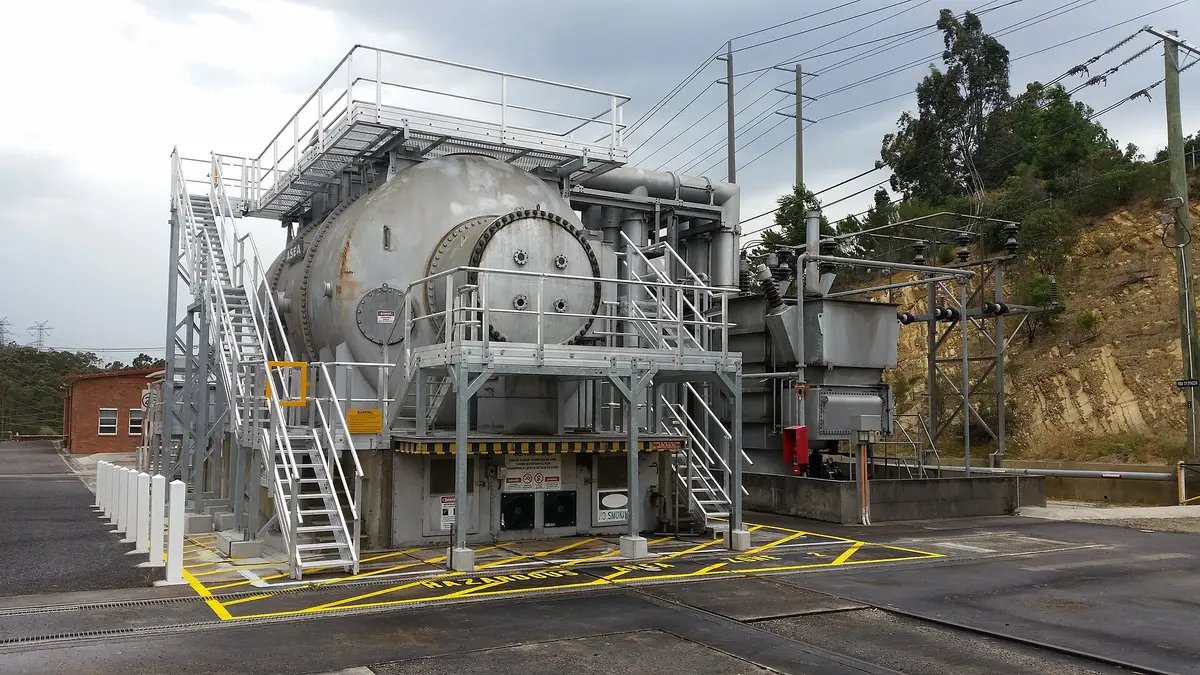
The other side of curtailment is stability. When most energy comes from solar, wind and battery plants connected through inverters, the grid loses the short-circuit power that the large rotating machines of thermal plants used to provide. Without that strength, a direct-current line such as Kimal-Lo Aguirre cannot operate securely.
The grid operator's report calculates that the Kimal 220 kV node needs an additional 606 MVA of short-circuit power. That is equivalent to a 103 MVAr synchronous condenser or a grid-forming (GFM) battery system of about 466 MVA, or any other technology with an equivalent contribution. The cost comparison is clear: covering the shortfall by running 124 MW of LNG-fired plants would cost about US$31.7 million a year, while the annualised investment for the upgrade would be US$3.4 million.
View the data as a table
| Equivalent synchronous condenser | 103 MVAr |
| Additional short-circuit power | 606 MVA |
| Cost of covering it with forced LNG | US$31.7 M/yr |
| Annualised cost of the upgrade | US$3.4 M/yr |
The report is open for comments until 7 December. Drafting of the tender rules will start in January and the preliminary tender launch is in July, the grid operator said. It noted that the measure reduces the need to keep conventional plants running only for security, lowers operating costs and makes it easier to use renewables. The Kimal-Lo Aguirre line itself is more than 22% built.
What the first northern tender delivered
This is not the first time. In May 2024 a voltage-control tender for the north concluded. Four new condensers were awarded, two to Consorcio Alupar (Ana María and Illapa) and two to Transelec (Ana María and Likanantai), plus the conversion of units at Engie's Tocopilla plant. The grid operator's press release says those facilities will start operating in the first months of 2027; the technical report sets their start from the second half of 2027.
| Consorcio Alupar | New condenser | Ana María 220 kV | 1,851.0 |
| Consorcio Alupar | New condenser | Illapa 220 kV | 1,493.0 |
| Engie Energía Chile | Unit conversion | Central Tocopilla 220 kV | 355.7 |
| Transelec | New condenser | Ana María 220 kV | 1,993.4 |
| Transelec | New condenser | Likanantai 220 kV | 1,993.4 |
| Company | Project | Node | Short-circuit power |
|---|---|---|---|
| Consorcio Alupar | New condenser | Ana María 220 kV | 1,851.0 MVA |
| Consorcio Alupar | New condenser | Illapa 220 kV | 1,493.0 MVA |
| Engie Energía Chile | Unit conversion | Tocopilla plant 220 kV | 355.7 MVA |
| Transelec | New condenser | Ana María 220 kV | 1,993.4 MVA |
| Transelec | New condenser | Likanantai 220 kV | 1,993.4 MVA |
Source: Coordinador Eléctrico Nacional, 2027 Ancillary Services Report (table 6-1).
- May 2024First northern tender concludes
- 23 November 20262027 ancillary services report published
- 7 December 2026Comment deadline
- January 2027Drafting of tender rules begins
- 20272024 condensers start operating
- July 2027Preliminary tender launch
Does your company develop batteries, condensers or grid-stability solutions? Reach Energía Futura's readers.
See advertising formatsFrequently asked questions
What is energy curtailment?
It is solar or wind energy that plants could generate but that is cut because there is not enough demand or the grid cannot carry it.
How much energy was curtailed in 2026?
4,380 GWh between January and October, according to ACERA using grid-operator data, and 200.64 GWh in the week of 16-22 November alone.
What is a synchronous condenser?
It is a rotating machine connected to the grid that produces no energy but provides short-circuit power, inertia and voltage control, attributes that systems with lots of solar and wind lose.
When is the Kimal tender?
The rules will be drafted from January and the preliminary launch is July 2027. Comments on the report close on 7 December 2026.