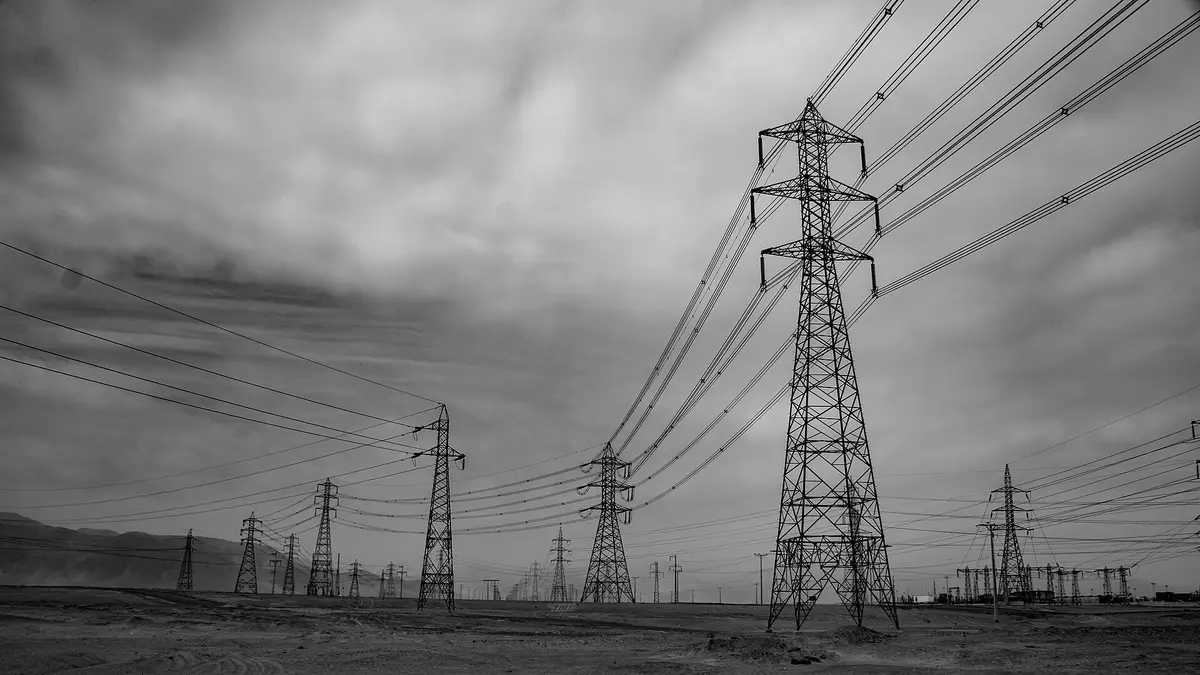
The Kimal-Lo Aguirre line, Chile's first high-voltage direct current (HVDC) line, passed 22% construction progress at the end of October 2026, according to the update from its developer, Conexión, reported by REDIMIN on November 4. About 1,500 people work on it today, and the company plans to reach about 7,000 as it opens new work fronts.
The 7,000-worker figure is not a contracted workforce and has no date: it depends on new sectoral authorizations, such as forestry permits, easements and land availability. The 1,346 km line, with up to 3,000 MW, will link the Kimal substation in María Elena (Antofagasta) with Lo Aguirre in Pudahuel (Metropolitan Region), with an investment of about US$1.5 billion.
View the data as a table
| Construction progress | +22% |
| Length | 1,346 km |
| Capacity | 3,000 MW |
| Workers today | 1,500 |
Kimal-Lo Aguirre progress, report by report
Kimal-Lo Aguirre progress is tracked by Chile's grid operator, the Coordinador Eléctrico Nacional, in bimonthly reports. In May-June 2026 it recorded 19.7% actual construction progress, above the 17.6% planned. In August, the Coordinador reported 21.4% against 19.5% planned, according to REDIMIN. In September, Reporte Minero reported 20% of works done and US$422 million spent.
View the data as a table
| Actual | Planned | |
|---|---|---|
| May-Jun 2026 | 19.7% | 17.6% |
| Aug 2026 | 21.4% | 19.5% |
| Cut-off | Actual construction progress | Planned progress | Source |
|---|---|---|---|
| May-June 2026 | 19.7% | 17.6% | Coordinador Eléctrico Nacional |
| August 2026 | 21.4% | 19.5% | Coordinador, via REDIMIN |
| September 2026 | 20% | — | Reporte Minero |
| End of October 2026 | Over 22% | — | Conexión, via REDIMIN |
The figures are not fully comparable: some measure construction only and others are rounded. Overall project progress, which adds engineering, permits and land management, was 57% in August against 54.31% planned, according to the Coordinador report cited by REDIMIN. That month, construction of the line and of the Lo Aguirre converter station were behind their own schedules, although the project as a whole was ahead.
What the Kimal-Lo Aguirre line is
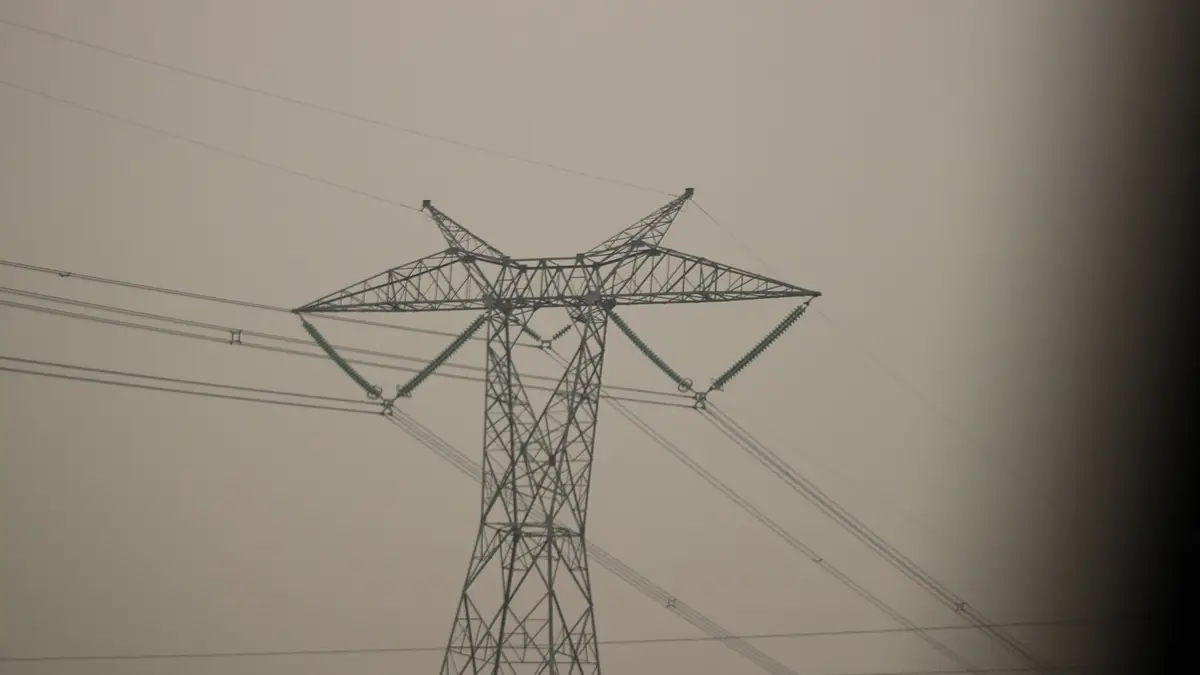
The line will carry solar and wind power from the north to central Chile, where most demand is. It uses direct current because it loses less energy over long distances than alternating current. It will operate at ±600 kV in a bipolar scheme and cross 28 communes in 5 regions: Antofagasta, Atacama, Coquimbo, Valparaíso and the Metropolitan Region. At each end it will have converter stations, which turn alternating current into direct current and back.
View the data as a table
| Kimal | María Elena |
| Lo Aguirre | Pudahuel |
It was awarded in December 2021 to the consortium of Transelec, ISA Inversiones Chile and China Southern Power Grid International, with a bid annual remuneration of US$116.3 million. It will be one of the longest HVDC lines in the Americas, though far from China's records, as we show in the longest transmission line in the world.
| Feature | Value |
|---|---|
| Length | 1,346 km |
| Capacity | Up to 3,000 MW |
| Voltage | ±600 kV direct current |
| Route | 28 communes in 5 regions |
| Investment | About US$1.5 billion |
| Spent by September 2026 | US$422 million |
| Structures with works underway | About 200 |
| Current workers | About 1,500 |
| Projected workers | About 7,000 (subject to permits) |
| Planned commercial operation | 2029 |
Sources: Conexión and Coordinador Eléctrico Nacional, via REDIMIN (November 4, 2026) and Reporte Minero (September 10). Other sources give slightly different lengths depending on how the route is measured.
With US$422 million spent by September out of a total of about US$1.5 billion, the project has used about 28% of its budget, a share consistent with physical progress of just over a fifth: in works of this kind, equipment such as conductors, insulators and converter station transformers is paid for before it shows on the ground. In the Antofagasta Region, according to information published in August, the route covers 415.2 km and 829 towers, almost a third of the line. The rest runs south through Atacama, Coquimbo and Valparaíso to the Metropolitan Region, where the Lo Aguirre converter station will receive the power and feed it into the alternating current grid.
Does your company work in power transmission or renewables? Reach Energía Futura's readers.
See advertising optionsPermits, the bottleneck
The line received its favorable environmental approval in November 2025, and construction formally began in February 2026. But environmental approval is not enough: the route requires about 5,000 sectoral and environmental permits across the five regions, which the company and the Coordinador track one by one. That is why staffing depends on forestry permits, easements and land release.
- December 2021Awarded to Transelec, ISA and China Southern Power Grid
- November 2025Favorable environmental approval
- February 2026Construction formally starts
- August 202621.4% construction progress
- October 2026Passes 22% with 1,500 workers
- 2029Planned commercial operation
Conexión's sustainability and public affairs manager, Carola Venegas, presented the update at the Future Energy Summit, held in Santiago on October 28-29. Works are now concentrated in María Elena and Pudahuel, with about 200 structures in progress. The next steps are opening new fronts, assembling structures and building the converter stations. Financing is closed with international banks, and disbursements depend on meeting environmental, social and governance requirements.
Why Kimal-Lo Aguirre matters for curtailment
Chile loses renewable energy every year that it cannot transport. Deloitte estimated 2025 curtailment at 6,205 GWh, as we reported in our story on a grid that cannot carry the available energy. With 3,000 MW of capacity, Kimal-Lo Aguirre is the project that can do the most to reduce that waste after 2029.
It is not the only one. Investment in power transmission in Chile grew ninefold in 2026, to US$3,276 million in 48 works, as we detailed in our story on transmission investment. And the government is preparing a portfolio of 20 strategic energy projects, mainly lines and storage, to shorten their permitting before 2030.
Frequently asked questions
How far along is Kimal-Lo Aguirre construction?
Over 22% at the end of October 2026, according to the company. The Coordinador had reported 21.4% in August.
How many workers does it have?
About 1,500. The company plans to reach about 7,000, subject to new permits and with no set date.
When will it start operating?
Commercial operation is planned for 2029.
Who is building it?
Conexión, the company of Transelec, ISA Inversiones Chile and China Southern Power Grid International, which won the tender in 2021.
Why does it use direct current?
Because over long distances it loses less energy than alternating current and allows precise control of how much power is carried.