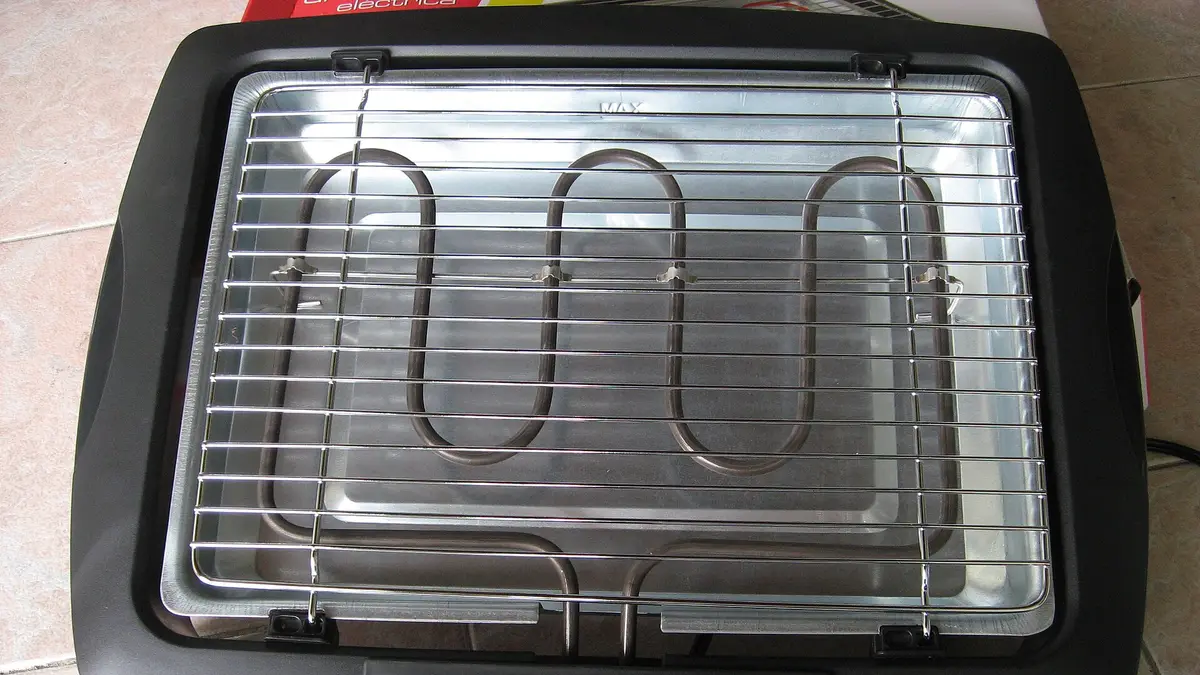
A 2,000 W electric grill costs about CLP 511 per hour at full power, with electricity at CLP 255.27 per kWh (CGE's BT1 residential rate in Chile since October 2026). A one-hour barbecue, with ten minutes of preheating, costs close to CLP 600 in electricity; with a 1,000 W grill, about CLP 300. That is far less than a 2.5 kg bag of charcoal, which sells in Chilean supermarkets for CLP 3,390 to 4,390.
With warmer weather and the year-end holidays coming, the electric grill becomes an option for people who live in apartments, where charcoal is banned by building rules or simply bothers the neighbors. This guide calculates how much it costs in Chilean pesos, compares it with charcoal and gas, and explains which power rating suits each household size.
How much electricity an electric grill uses by power rating
An electric grill's power rating appears on the box and in the product sheet. In Chilean stores, tabletop models range from 1,000 to 2,200 W. The Thomas TH-180, one of the best sellers, has 1,000 W and reaches 220 °C, according to its listing at Jumbo; the same brand's TH-224 has 1,500 W and the TH-205, 2,000 W, according to the Ripley and Sodimac listings. The Ursus Trotter Ecokeramik appears with 1,500 or 2,000 W depending on the store, so it is worth checking the rating plate of the exact model.
| Grill power | Example model | Cost per hour at full power | Number of people |
|---|---|---|---|
| 1,000 W | Thomas TH-180 | CLP 255 | 2 to 3 people |
| 1,500 W | Thomas TH-224 | CLP 383 | 3 to 4 people |
| 2,000 W | Thomas TH-205 | CLP 511 | 4 to 6 people |
| 2,200 W | Large tabletop or pedestal models | CLP 562 | 6 or more people |
Energía Futura calculations with electricity at CLP 255.27 per kWh (energy and service charges of CGE's BT1 rate in October 2026). Power ratings from listings published by Jumbo, Ripley and Sodimac in October 2026. The number of people is a guide based on cooking surface. The price per kWh varies by municipality and distributor, as shown in the price of a kWh in Chile by municipality.
The hourly cost in the table is the maximum. Grills have a thermostat that cuts power to the heating element once the plate reaches the chosen temperature and turns it back on when it cools. At a medium setting, the element spends part of the time off and actual consumption stays below the rating. To avoid underestimating the cost, the calculations in this guide use full power.
How much an electric grill costs per barbecue and per month
A barbecue on an electric grill has two stages: preheating, about ten minutes with the element at maximum, and cooking, which for meat, chicken, sausages and vegetables usually takes about an hour. With 70 minutes of use at full power, this is the cost per barbecue:
| Power | Consumption per barbecue (70 minutes) | Cost per barbecue | Cost per month (4 barbecues) |
|---|---|---|---|
| 1,000 W | 1.17 kWh | CLP 298 | CLP 1,190 |
| 1,500 W | 1.75 kWh | CLP 447 | CLP 1,790 |
| 2,000 W | 2.33 kWh | CLP 596 | CLP 2,380 |
| 2,200 W | 2.57 kWh | CLP 655 | CLP 2,620 |
Energía Futura calculations with electricity at CLP 255.27 per kWh, rounded. Assumes one barbecue per weekend. If the grill is used daily to cook meat or vegetables, for example 20 minutes a day with a 1,500 W model, consumption rises to 15 kWh per month: about CLP 3,830.
On the electricity bill, the effect is small. A typical household uses about 180 kWh per month, the reference used by Chile's National Energy Commission (CNE), and four barbecues with a 2,000 W grill add a little over 9 kWh, 5% of that total. What weighs most on the bill are still the appliances that run every day for several hours, such as the refrigerator or heating.
How much it costs to cook a kilo of meat
A practical measure is cost per kilo. On a 2,000 W grill with a full plate, a kilo of thinly cut meat cooks in about 20 to 25 minutes, not counting preheating. That works out to about CLP 170 to 215 of electricity per kilo. On a small 1,000 W grill, which cooks less meat at once, the cost per kilo is similar because it takes longer.
Electricity, charcoal or gas: which is cheapest for a barbecue
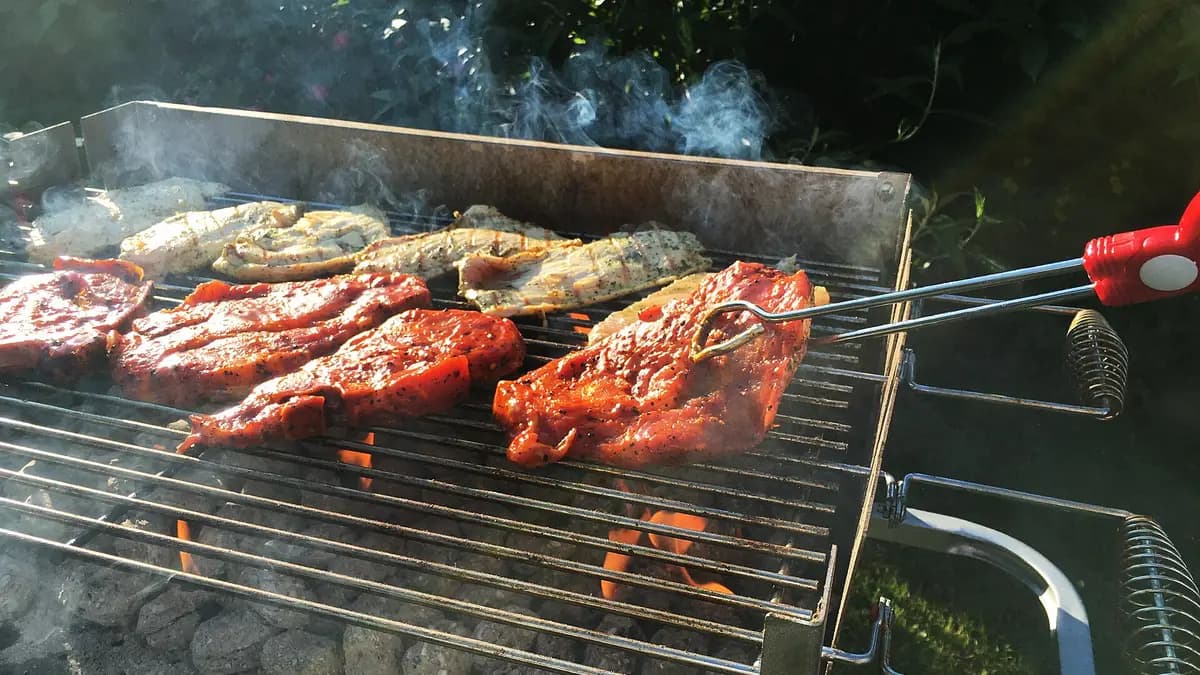
In cost per barbecue, the comparison clearly favors electricity. A 2.5 kg bag of charcoal, which is usually enough for a family barbecue, costs CLP 3,390 to 4,390 at the online store of Líder, according to prices checked in October 2026. Firelighters or paper come on top of that.
On a gas grill, the cost depends on burner power. A kilo of liquefied petroleum gas delivers about 13.1 kWh of heat, and with a 15 kg cylinder at CLP 30,250 (Lipigas price in the Santiago Metropolitan Region reported to the CNE's official Gas en Línea system in October 2026), a kilo costs CLP 2,017. Each 3 kW burner at full blast burns about 230 grams per hour: about CLP 460 per hour. A three-burner gas grill at full power costs on the order of CLP 1,390 per hour.
| Grill type | Cost per barbecue (about 1 hour) | Smoke | Where it can be used |
|---|---|---|---|
| Electric, 2,000 W | About CLP 600 | Little (only from fat) | Balcony, terrace, ventilated kitchen |
| Gas, three burners | About CLP 1,400 | Little | Terrace or yard; in apartments, depending on building rules |
| Charcoal (2.5 kg bag) | CLP 3,390 to 4,390 | A lot | Yard or barbecue area; usually banned in apartments |
Energía Futura calculations. Electricity at CLP 255.27 per kWh; gas with a 15 kg cylinder at CLP 30,250 and 13.1 kWh per kilo, with all three burners at full power for one hour; charcoal at Líder prices from October 2026. In practice, gas and electric grills often run below maximum, so their real cost can be lower.
Charcoal has an advantage that is not measured in pesos: the smoky flavor of embers. An electric grill browns meat through contact with the plate or grate, but does not produce that smoke. That is why many families use the electric grill day to day and keep charcoal for special occasions. There is also an environmental difference: burning charcoal emits fine particles, a problem in cities with critical air pollution episodes.
Which electric grill to choose by use
There is no single best electric grill. The choice depends on how many people eat, the space available and the type of food. These are the main differences:
- Tabletop grill with a grate and exposed element (1,000 to 1,500 W): the cheapest and lightest. Suits two to four people. Fat drips into a tray of water, which reduces smoke.
- Grill with a griddle or non-stick surface: cooks by contact and also works for vegetables, eggs or fish. Easier to clean, but does not mark meat the way a grate does.
- Grills of 2,000 W or more, with or without a pedestal: for large families or gatherings. They heat faster and hold temperature better when cold meat is added.
- Indoor contact grills with a lid: they cook both sides at once and cut cooking time in half, which offsets their power.
- Adjustable thermostat: it should have several settings so it is not always used at maximum. Thomas models have 5 settings, according to their listings.
If you already own an electric oven or an air fryer, compare before buying. For large pieces, such as a whole chicken, the oven can be more efficient, as we calculated in how much electricity an electric oven uses. For small portions, a 1,000 W grill is among the cheapest appliances to run.
Safety: sockets and extension cords
A 2,000 W electric grill on a 220 V grid draws about 9 amperes. That is a heavy load for a household socket, which in Chile is designed for 10 amperes. So it is worth following a few basic rules:
- Do not use power strips or thin extension cords. If an extension cord is needed, it must handle at least 10 amperes and be fully unrolled so it does not overheat.
- Do not share the socket with another high-power appliance, such as a kettle or an oven, at the same time: the breaker may trip.
- Use it in a dry place. On terraces, keep rain or washing water away from the socket.
- Check the SEC seal. Electrical appliances sold in Chile must be certified by the Superintendency of Electricity and Fuels (SEC) and carry its seal.
- Wait for it to cool before washing it, and never immerse the part with the heating element.
If the breaker trips every time the grill is turned on together with other appliances, the circuit is at its limit. One option is to spread out the loads or, if the grill is used daily, ask an authorized electrician to check the circuit's capacity.
Five tips to spend less on an electric grill
- Preheat only as needed: ten minutes is usually enough; leaving it on with no meat is pure waste.
- Fill the surface with each batch instead of cooking one piece at a time.
- Use thin or butterflied cuts, which cook faster.
- Turn down the thermostat once the meat is seared.
- Switch it off a few minutes early: the plate stays hot and finishes the cooking.
Because an electric grill concentrates its use in a few weekend hours, it also makes good use of rooftop solar power if the barbecue is at midday. For those who cook a lot with electricity, the details for other kitchen appliances are in how much electricity an air fryer uses.
Does your company sell appliances, grills or energy efficiency solutions? Reach Energía Futura's readers.
See advertising optionsFrequently asked questions
How much electricity does an electric grill use per hour?
What its rating says: a 2,000 W grill uses up to 2 kWh per hour, about CLP 511 with electricity at CLP 255.27 per kWh. With the thermostat at a medium setting, actual consumption is lower.
How much does a barbecue on an electric grill cost?
Between CLP 300 and 650 in electricity, depending on power, for a one-hour barbecue with ten minutes of preheating.
Which is cheaper, an electric grill or charcoal?
The electric grill. A barbecue costs about CLP 600 in electricity with a 2,000 W grill, while a 2.5 kg bag of charcoal costs CLP 3,390 to 4,390.
Can an electric grill be used in an apartment?
Generally yes, because it produces no embers and little smoke, but check the building's rules and use it in a ventilated place.
What power of electric grill should I choose?
For two or three people, a 1,000 W grill is enough; for families of four to six, a 2,000 W model heats faster and holds temperature better.