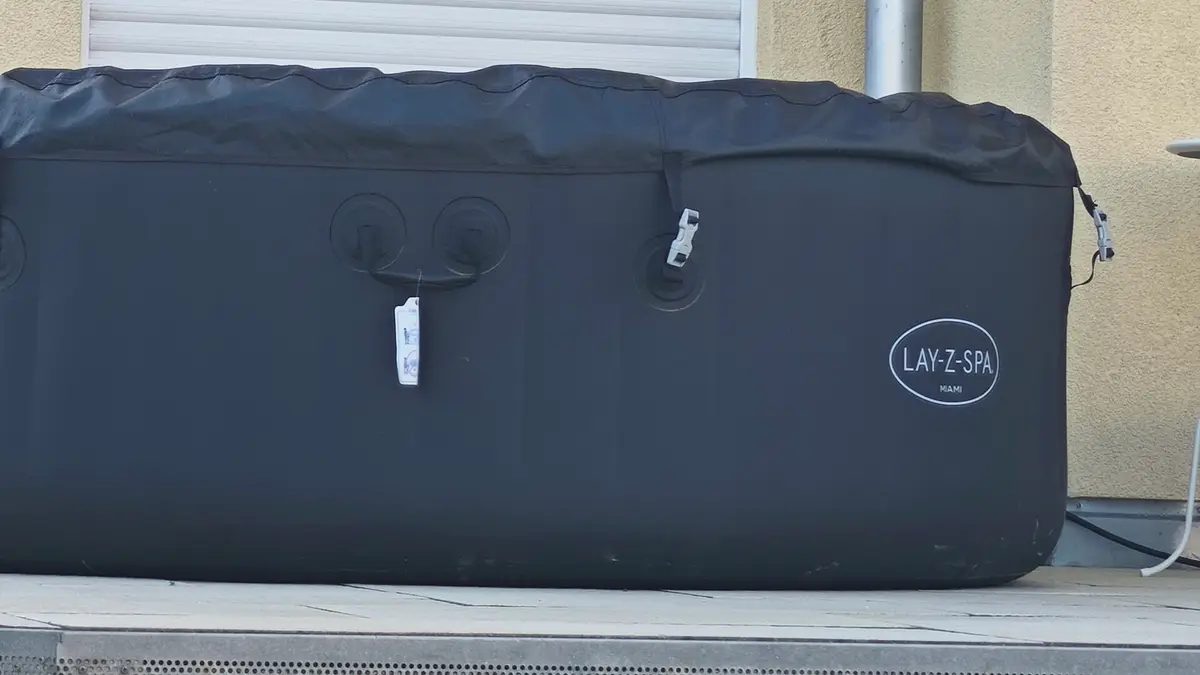
An inflatable hot tub has a heater of about 2,000 W, and heating its 800 liters of water from 15 °C to 38 °C costs CLP 5,500 to 7,900, with electricity at CLP 255.27 per kWh (CGE's BT1 residential rate in Chile since October 2026). The expensive part is keeping it warm: with the lid on, a 900-liter tub at 36 °C can use about 378 kWh a month in a mild climate, according to a calculation published this month by the British comparison site Selectra. In Chilean pesos, about CLP 96,500.
The inflatable hot tub has become popular in yards and terraces because it costs far less than a rigid spa. But its electricity use surprises many owners when the bill arrives. This guide calculates its cost in Chilean pesos, when it is better to keep it hot or drain it, and what to check before buying one.
How much electricity an inflatable hot tub uses: heater, pump and bubbles
An inflatable hot tub has three electrical devices in the same control unit: the heater, which warms the water; the filter pump, which circulates it through a filter; and the bubble blower, which injects air through the floor. These are the ratings of two of the best-selling brands, according to retail listings:
| Device | Bestway Lay-Z-Spa | Intex PureSpa Bubble (4 people) | Cost per hour in Chile |
|---|---|---|---|
| Heater | 2,050 W | 2,200 W | CLP 523 to 562 |
| Bubble blower (massage) | 800 W | 800 W | CLP 204 |
| Filter pump | About 50 W | Not listed | CLP 13 |
| Water capacity | Depends on model | About 795 liters | — |
| Heating rate | 1.2 to 2 °C per hour, depending on model | 1.5 to 2.5 °C per hour | — |
Sources: listings for Lay-Z-Spa models at Harvey Norman and Icecat, and for the Intex PureSpa Bubble at Kmart Australia, Galaxus and Decathlon. Costs calculated by Energía Futura with electricity at CLP 255.27 per kWh. The price per kWh varies by municipality, as shown in the price of a kWh in Chile by municipality.
Two details in the listings matter a lot. First, the maximum temperature of these units is 40 °C. Second, on most models the heater and the bubble blower do not run at the same time, to avoid overloading the socket; when the bubbles are on, the water stops heating and cools faster, because the incoming air is colder.
How much it costs to heat an inflatable hot tub in Chilean pesos
Heating water takes a lot of energy: raising one liter by one degree requires 1.163 Wh. For 800 liters going from 15 °C (spring tap water) to 38 °C, physics gives 21.4 kWh. Losses during heating must be added on top, which according to Selectra's analysis bring the total to about 30 kWh for a 900-liter tub. With a 2,000 W heater, the process takes 11 to 15 hours.
| Situation | Energy | Cost in Chilean pesos |
|---|---|---|
| Heating 800 liters from 15 °C to 38 °C, no losses (theoretical minimum) | 21.4 kWh | CLP 5,460 |
| Heating the tub with normal losses, lid on | About 30 kWh | CLP 7,660 |
| A 30-minute bubble session | 0.4 kWh | CLP 102 |
| 12 hours of daily filtering (50 W pump) | 0.6 kWh | CLP 153 |
Energía Futura calculations with electricity at CLP 255.27 per kWh. Consumption with losses is based on Selectra's analysis, updated on October 25, 2026, for a 900-liter tub with a 2,000 W heater. The filter pump rating comes from a retail listing and may vary by model.
In summer, tap water is warmer and the air helps, so the first heat-up costs less. In autumn or on cold nights, the water loses heat faster and the heater runs more hours. That is why the same tub can cost twice as much in April as in January in Chile.
Monthly cost: keeping it warm or reheating before each soak
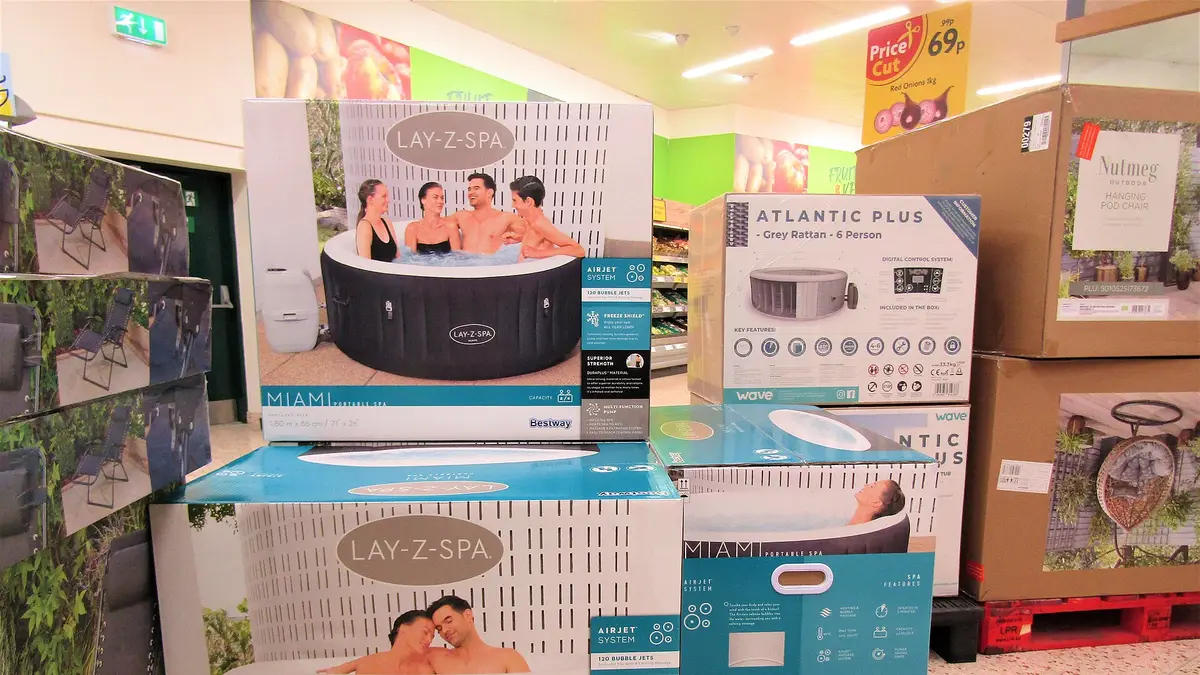
The decision that weighs most on the bill is whether to keep the tub hot all the time or heat it only before use. Selectra's analysis, for a 900-liter tub at 36 °C with average air of about 14 °C, gives these monthly figures, which we converted to Chilean pesos:
| Scenario (30 days) | Monthly consumption | Monthly cost in Chile |
|---|---|---|
| Always at 36 °C, lid on, sheltered from wind | 378 kWh | CLP 96,500 |
| Always at 36 °C, lid off | 560 kWh | CLP 142,950 |
| Always at 36 °C, lid off, windy | 756 kWh | CLP 193,000 |
| Reheated for 2 soaks a week | 240 kWh | CLP 61,260 |
| Reheated for 4 soaks a week | 510 kWh | CLP 130,190 |
| Drained | 0 kWh | CLP 0 |
Consumption: Selectra (UK), October 25, 2026, with average air of about 14 °C. Conversion to Chilean pesos by Energía Futura with electricity at CLP 255.27 per kWh. In a Chilean summer, with higher average temperatures, the consumption to keep it warm would be lower: if the gap between water and air drops from 22 °C to 15 °C, heat loss falls in proportion, and the lid-on scenario would be about 260 kWh a month, about CLP 66,000 (Energía Futura estimate).
According to the same analysis, keeping it hot all the time is cheaper from about 13 soaks a month, roughly three times a week. With less use, it is better to reheat before each soak, and if it is used less than once a week, draining it is cheapest. In addition, each degree lower on the thermostat saves about 4.5% of the energy, according to Selectra.
The thermal lid: the biggest saving
Evaporation accounts for 30% to 50% of the heat a hot tub loses, and an insulated lid almost completely eliminates it, according to Selectra. So the difference between using it or not is about 180 kWh a month, about CLP 46,000. The lid also keeps leaves and dust out, which reduces the work of the filter and the chemicals needed.

Which inflatable hot tub to choose and how to spend less
Before buying an inflatable hot tub, check these points in the technical sheet, beyond the price:
- Capacity in liters: more water means more energy to heat it. A four-person model, of about 800 liters, uses considerably less than a six- or seven-person one, which can exceed 1,100 liters.
- Insulated lid with fasteners: it is the part that saves the most. It should have straps or clips so the wind cannot lift it.
- Insulating base or floor: cold ground steals heat through the bottom. A foam base or thermal mat under the tub reduces that loss.
- Insulated walls: some models have walls with air chambers or materials that retain heat better.
- Heater scheduling: units that let you schedule the heater make it easy to heat only before use.
- Electrical certification: the unit must be plugged into a socket with residual-current protection, and appliances sold in Chile must be certified by the SEC.
For those who already have a pool, the comparison with heating pool water is useful: a heat pump delivers more heat per kWh than an electric resistance heater, as we explain in how much it costs to heat a pool with a heat pump.
Seven tips to spend less
- Keep the lid on whenever it is not in use.
- Place it out of the wind, next to a wall or behind a fence.
- Lower the thermostat to 36 or 37 °C instead of 40 °C.
- Use the bubbles sparingly: they cool the water and stop the heater.
- Heat during sunny hours, if the house has solar panels, to use your own energy.
- Fill it with warm water in summer, taking advantage of afternoon sun on hoses or tanks.
- Drain it in autumn and winter if it will be used little: keeping it hot in the cold is the most expensive option.
The 2,000 W heater uses power right in the sunny hours if scheduled well, so a rooftop solar system can cover a good share of its cost in summer. We explain how to size one in home solar kit: what it includes and how much it costs.
How much water an inflatable hot tub uses
A four-person model holds about 800 liters, the equivalent of four or five full bathtubs. With good filtering and water treatment, the water lasts several weeks, so water consumption matters less than electricity. When draining it, treated water should not go onto gardens with sensitive plants if it contains high concentrations of chlorine or bromine.
Does your company sell pools, spas or solar energy solutions? Reach Energía Futura's readers.
See advertising optionsFrequently asked questions
How much electricity does an inflatable hot tub use?
Its heater is rated at about 2,000 to 2,200 W and the bubble blower at 800 W. Keeping it hot all month with the lid on can use close to 378 kWh in a mild climate.
How much does it cost to heat an inflatable hot tub?
Taking 800 liters from 15 °C to 38 °C costs CLP 5,500 to 7,900 in electricity, with electricity at CLP 255.27 per kWh, and takes 11 to 15 hours.
Should an inflatable hot tub be left on all the time?
Only if it is used about three times a week or more. With less use, it is cheaper to reheat it before each soak or drain it.
Can the bubbles and the heater run at the same time?
On most inflatable models, no: when the bubbles are on, the heater stops to avoid overloading the socket.
How much does a hot tub lid save?
A lot: evaporation accounts for 30% to 50% of heat loss. Without a lid, monthly consumption can rise from 378 to 560 kWh, about CLP 46,000 more a month.