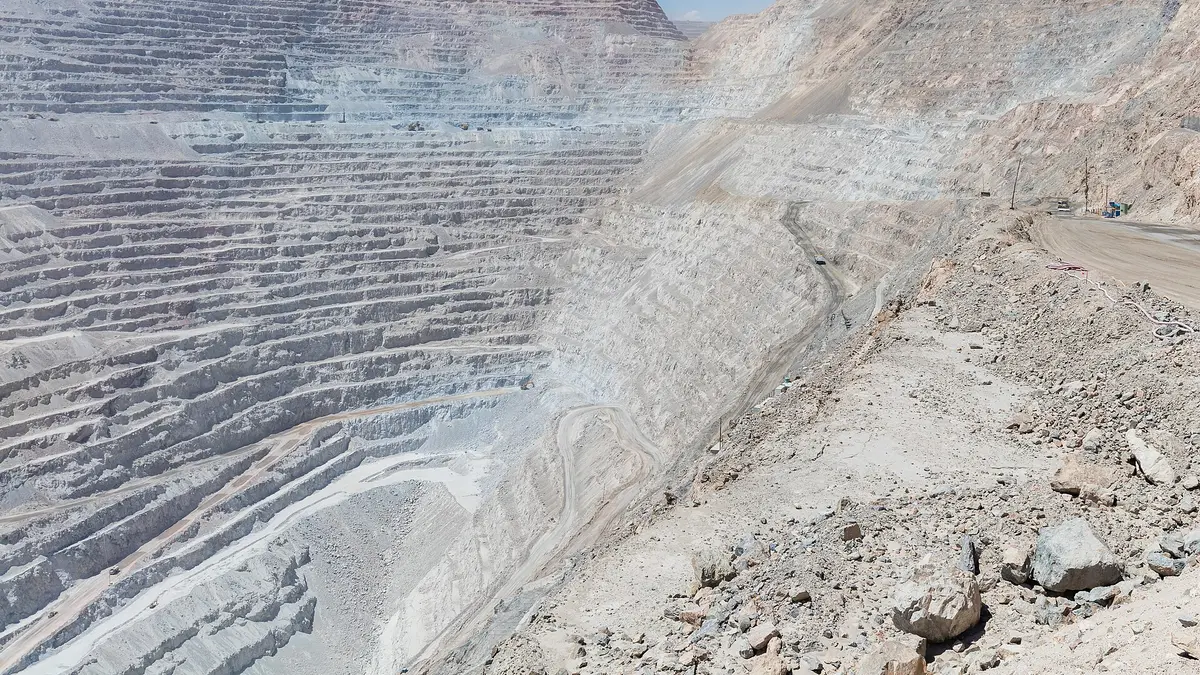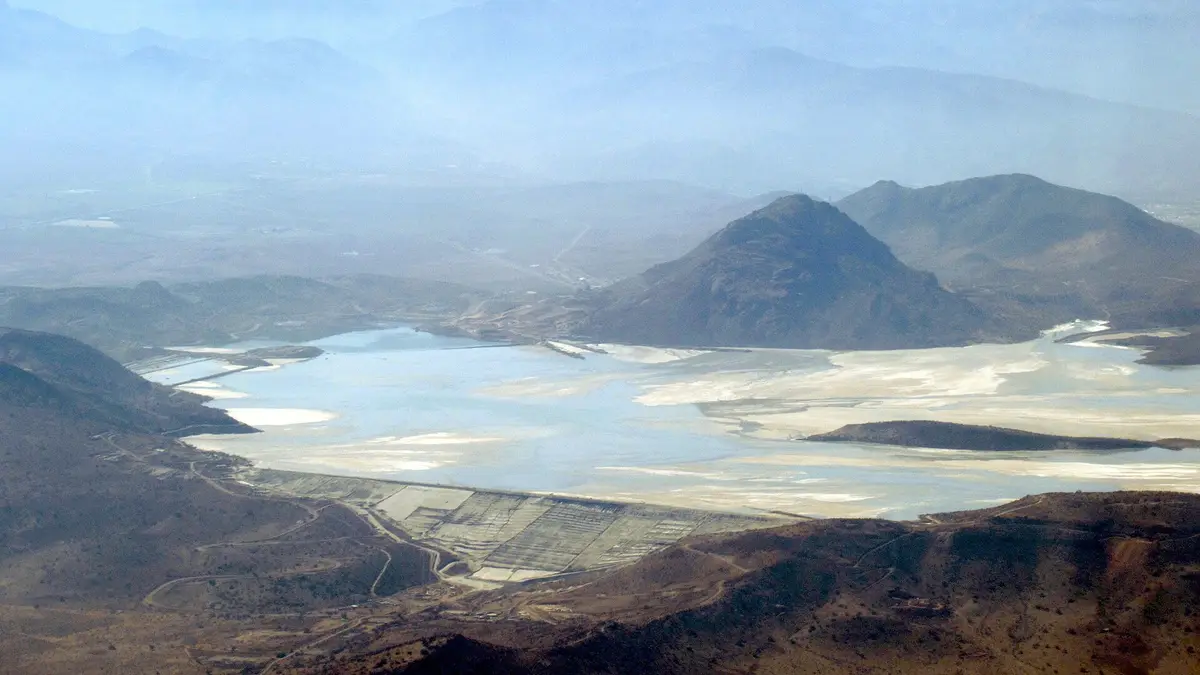
The 2026-2035 Mining Investment Portfolio compiled by the Chilean Copper Commission (Cochilco) has reached US$111,149 million, the highest amount in 13 years. The figure is 6.3% higher than the US$104,549 million in the previous survey and brings together 72 projects from state-owned and private companies, 13 more than last year.
The rise is mostly explained by lithium: identified investment in the mineral went from US$4,700 million to US$10,800 million. Chile's Minister of Economy and Mining, Daniel Mas, announced the figures in China during the presidential tour, and Cochilco's acting executive vice-president, Claudia Rodríguez, presented them at the World Copper Conference Asia, according to a Cochilco release dated 19 November 2026.
View the data as a table
| Total investment | US$111,149 million |
| Rise on the previous survey | 6.3% |
| Lithium investment | US$10,800 million |
| Projects | 72 |
The mining investment portfolio in figures
Every year Cochilco surveys the mining projects that companies plan to carry out over the following ten years. It is not money already spent: it is the sum of initiatives at different stages, from projects under construction to ideas at pre-feasibility. That is why it works as a gauge of companies' interest in Chile.
| Indicator | 2025-2034 portfolio | 2026-2035 portfolio |
|---|---|---|
| Total investment | US$104,549 million | US$111,149 million |
| Number of projects | 59 | 72 |
| Lithium investment | US$4,700 million | US$10,800 million |
| Copper's share | 89.8% | 84.5% |
| Antofagasta Region | US$40,734 million | US$51,544 million |
Source: Cochilco, 19 November 2026 release and Annex C of the 2025-2034 report. The number of projects in the previous survey is the one Cochilco gives in its release.
To see what the record means, look at the series. Cochilco surveys published between 2018 and 2023 ranged from US$65,712 million to US$74,047 million. In 2024 the portfolio rose to US$83,180 million, in 2025 it jumped to US$104,549 million, and it now exceeds US$111,000 million, a level not seen since the 2013 survey.
View the data as a table
| Mining investment portfolio | |
|---|---|
| 2018 | US$65.7 |
| 2019 | US$72.5 |
| 2020 | US$74.0 |
| 2021 | US$68.9 |
| 2022 | US$73.7 |
| 2023 | US$65.7 |
| 2024 | US$83.2 |
| 2025 | US$104.5 |
| 2026 | US$111.1 |
Lithium explains 92% of the increase
The US$6,100 million increase in lithium is equivalent to about 92% of the portfolio's net growth, according to the breakdown published by Reporte Minero. Two projects, both under environmental review, drive that figure:
- Salar Futuro, from Novandino Litio, the partnership between Codelco and SQM created under the National Lithium Strategy, with an estimated investment of US$3,000 million.
- Transition to Direct Lithium Extraction (TED), from Albemarle, worth US$3,100 million, which aims to replace evaporation ponds with a technology that separates lithium from brine.
Both are in the Salar de Atacama, in the Antofagasta Region. In the previous portfolio, by contrast, all US$4,700 million of lithium investment was in projects in the Atacama Region, such as the Maricunga salt flat. These two projects shift a large part of lithium investment to the country's main salt flat.
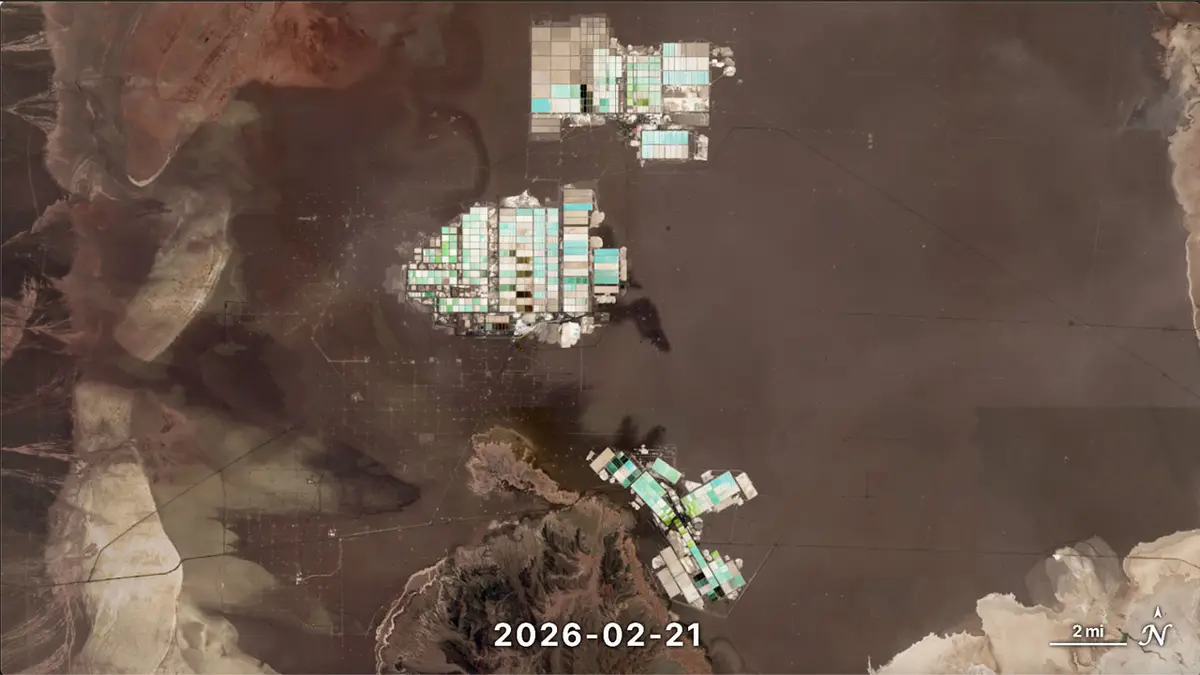
Direct lithium extraction, known as DLE, is central to the environmental debate over the salt flat because it promises to use less water and less land than evaporation. Its impacts are still being studied: reinjecting brine, for example, does not by itself guarantee that the salt flat's balance will recover. That is why these projects are under close scrutiny by Chile's Environmental Assessment Service.
The jump in the portfolio comes in a year of high lithium prices. Chilean lithium exports totalled US$5,171 million between January and October, as we reported in our story on lithium and copper exports. Codelco has also set itself the goal of being among the world's five largest lithium producers by 2035.
Does your company supply the copper and lithium industry or develop clean-energy solutions for mine sites? Reach Energía Futura's readers.
See advertising optionsCopper keeps 84.5% of the mining investment portfolio
Despite lithium's advance, copper accounts for 84.5% of the total. Among its projects, Cochilco highlighted two: the Escondida B1 Leach Pad Extension, by BHP, worth US$1,300 million, which seeks to sustain output of 210,000 tonnes of cathodes a year, and the Mantos Blancos Capacity Improvements, by Capstone Copper, worth US$500 million, which would extend operations to 2041 and raise sulphide ore processing to 9.8 million tonnes a year.
Copper's falling share, from 89.8% to 84.5%, does not mean less investment in copper, but that lithium is growing faster. The portfolio arrives at a difficult time for Chile's copper output, which posted its worst January-September result since 2006, as we explained in our story on Cochilco's production data.
Antofagasta concentrates 46% of the investment
The Antofagasta Region remains the leader with US$51,544 million, about 46% of the national total. Of that amount, US$44,994 million corresponds to copper projects. In the previous survey the region added up to US$40,734 million, so it grows by about US$10,800 million in a year, largely because of lithium in the Salar de Atacama.
Cochilco has not yet published the regional breakdown of the new portfolio. The map shows the latest full breakdown available, that of the 2025-2034 portfolio, which shows where investment is concentrated: after Antofagasta came Atacama, with US$16,992 million, and Tarapacá, with US$14,820 million.
View the data as a table
| Antofagasta | US$40,734 |
| Atacama | US$16,992 |
| Tarapacá | US$14,820 |
| Coquimbo | US$7,835 |
| O'Higgins | US$6,254 |
| Valparaíso | US$6,166 |
| Metropolitana | US$1,206 |
| Biobío | US$130 |
What is needed for the investment to materialise
A portfolio is not a promise of investment. In the previous survey, Cochilco classified only 41% of the amounts as base projects, that is, under way or with high certainty, and another 40% as potential, with high technical, environmental or financial uncertainty. According to Prensa Digital, in the new portfolio 22 projects are already under way, worth US$36,727 million, about a third of the total.
| Project status (2025-2034 portfolio) | Investment | Share |
|---|---|---|
| Base (under way or high certainty) | US$42,831 million | 41% |
| Probable | US$6,594 million | 6% |
| Possible | US$13,297 million | 13% |
| Potential (high uncertainty) | US$41,827 million | 40% |
Source: Cochilco, Annex C of the 2025-2034 Mining Investment Project Portfolio report, table 4. The status of projects in the 2026-2035 portfolio has not yet been published in detail.
Cochilco itself warns that environmental permitting, water and energy availability, relations with communities and market conditions will determine how much of the portfolio materialises. Rodríguez highlighted the ongoing reform of sector permits, which seeks clearer and better coordinated procedures. For mining, much of that energy will be renewable: northern mine sites already contract solar parks and batteries, and their carbon footprint depends on it, as we explain in the carbon footprint of Chilean copper.
Frequently asked questions
How much is the 2026-2035 mining investment portfolio worth?
US$111,149 million across 72 projects, according to Cochilco. It is 6.3% more than the previous portfolio and the highest amount in 13 years.
How much will be invested in lithium?
The portfolio identifies US$10,800 million in lithium projects, compared with US$4,700 million in the previous survey. Salar Futuro (US$3,000 million) and Albemarle's TED (US$3,100 million) explain most of the increase.
Which region concentrates the most mining investment?
Antofagasta, with US$51,544 million, about 46% of the total. Of that amount, US$44,994 million is in copper projects.
Is the portfolio guaranteed investment?
No. It includes projects under way and others at early stages that depend on permits, financing and company decisions. In the previous survey, 40% of the amounts corresponded to potential projects.