Chilean company Lader Energy has filed with the Environmental Impact Assessment System (SEIA) the environmental impact study for the Las Cardas Solar Photovoltaic Park, in the commune of Coquimbo. The project combines 157.89 MWp of panels, a 203.45 MW / 813.9 MWh battery system and an estimated investment of US$200 million, Revista Electricidad reported on 19 November 2026.
Power will reach the National Electricity System through a 220 kV line of 14.73 kilometres to the Nueva Pan de Azúcar substation, an existing facility. The project will have a service life of 38 years.
View the data as a table
| Solar capacity | 157.89 MWp |
| Batteries | 813.9 MWh |
| Investment | US$200 million |
| 220 kV line | 14.73 km |
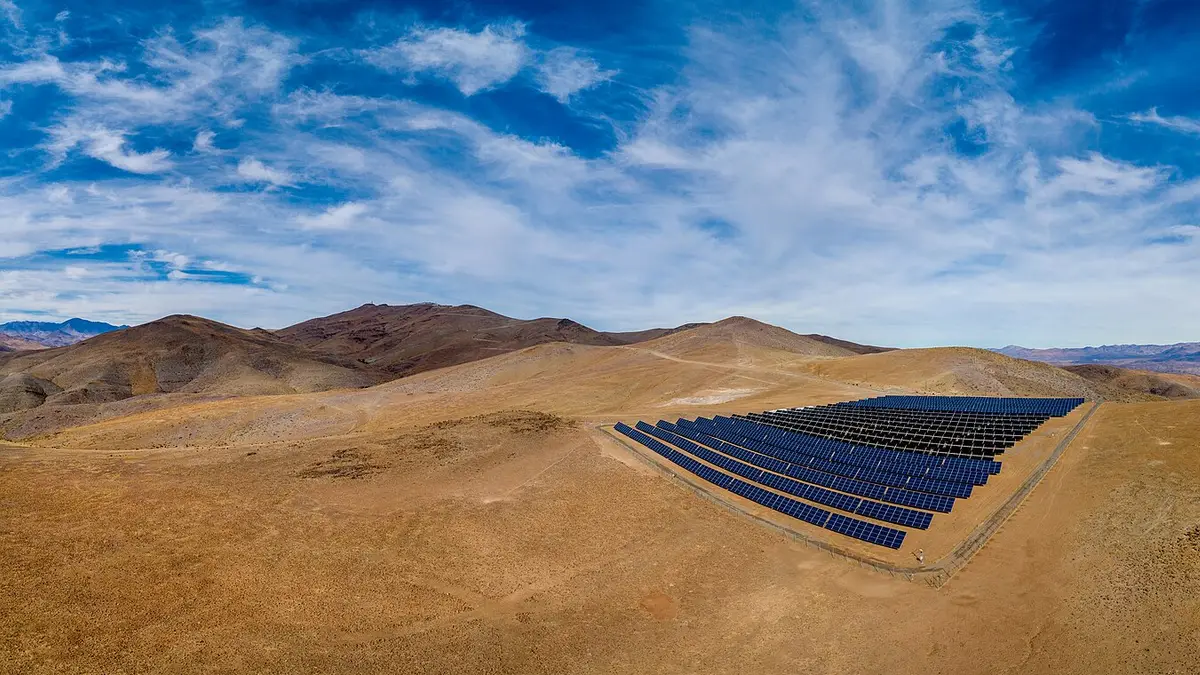
What Las Cardas Solar looks like
The park will install 219,296 photovoltaic modules, arranged in 7,832 strings of 28 modules each and mounted on 4,734 single-axis solar trackers that turn from east to west during the day to follow the sun. Peak capacity will be 157.89 MWp and the active capacity fed into the grid 144.96 MW.
To step up the voltage, the project includes a 34.5/220 kV substation with two 80/100 MVA transformers on one hectare. The transmission line will be single-circuit with 42 support structures.
| PV modules | 219,296 |
| Strings | 7,832, of 28 modules each |
| Tracker structures | 4,734, single-axis north-south |
| Peak / active capacity | 157.89 MWp / 144.96 MW |
| Batteries (BESS) | 203.45 MW and 813.9 MWh |
| Declared BESS output | 145 MW for 5 hours |
| Step-up substation | 34.5/220 kV, two 80/100 MVA transformers |
| Transmission line | 220 kV, 14.73 km and 42 structures |
| Investment and service life | US$200 million, 38 years |
The panels will cover a horizontal projection of 70.21 hectares, within a fenced area of 231.16 hectares. The batteries will take up only 2.03 hectares, less than 1% of the park's land.
Las Cardas Solar's batteries: five hours of energy
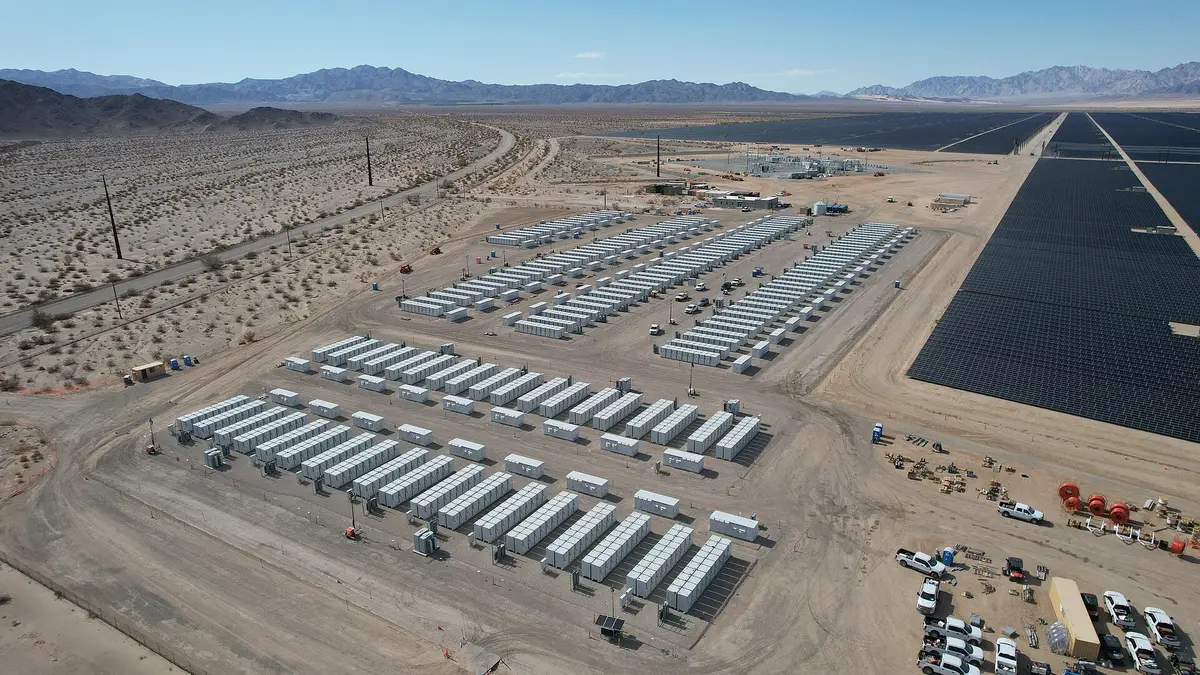
The storage system, or BESS, will have 203.45 MW of installed capacity and 813.9 MWh of storage. According to the documents filed with the SEIA, it will be sized to deliver 145 MW for five hours, that is, almost the park's full output after sunset.
This configuration has become the norm in new solar projects: store midday energy, when there is a surplus and the marginal cost falls to zero, to sell it at night. Today, without batteries, much solar energy is lost to curtailment. With 813.9 MWh, Las Cardas is among the solar projects with the most storage filed this year, although far from the 3,010 MWh of Grenergy's Pampa del Desierto.
| Project | Owner | Region | Storage | Status |
|---|---|---|---|---|
| Pampa del Desierto | Grenergy | Antofagasta | 3,010 MWh | Under environmental review |
| Estela Solar | Promigas | Tarapacá | 935 MWh | In testing |
| Las Cardas Solar | Lader Energy | Coquimbo | 813.9 MWh | Filed with the SEIA |
| Observatorio | Verano Energy | O'Higgins | 600 MWh | Financed |
| EnAccess BESS | EnAccess | Metropolitan | 400 MWh | Under environmental review |
Sources: Revista Electricidad (19 November and 1 November 2026), pv magazine (19 October 2026) and REDIMIN (26 October 2026). The EnAccess project is a BESS without a solar plant.
The storage figures allow a simple calculation. If the batteries discharged at their maximum power of 203.45 MW, the 813.9 MWh would last about 4 hours. At the 145 MW declared by the project, the five hours add up to 725 MWh; the difference from installed capacity works as a margin for cell degradation and to avoid fully discharging them, which is common in BESS design.
| Calculation | Result |
|---|---|
| Hours at maximum power (813.9 MWh / 203.45 MW) | 4 hours |
| Energy delivered at 145 MW for 5 hours | 725 MWh |
| Installed capacity versus declared output | 89% used, 11% margin |
| Ratio of peak to active capacity (157.89 / 144.96) | 1.09 |
Source: Energía Futura calculations with the EIA data reported by Revista Electricidad. The ratio between peak capacity (direct current) and active capacity (alternating current) shows the park will have somewhat more panels than inverter capacity, a common practice to make better use of morning and afternoon hours.
Does your company develop, build or finance solar parks and batteries? Reach Energía Futura's readers.
See advertising optionsWhy batteries are gaining ground in Chile
According to the latest competition monitoring report of the National Electricity Coordinator, battery capacity on the grid rose from 2.6 GW in January to 5 GW in June 2026, and the energy they discharge each day approached 10 GWh. The CNE, for its part, projects more than 12,000 MWh of new batteries in 2027, as we reported in our story on the storage expected for 2027.
The Coquimbo Region also has several renewable projects under review or recently approved. This month Enel's Cerro Los Loros wind farm in Ovalle was approved, with 64 MW and US$150 million, as we reported in this story. The Nueva Pan de Azúcar substation is one of the area's connection points.
What comes next in the environmental review
Because it was filed as an Environmental Impact Study rather than a declaration, the project will undergo a longer review with mandatory public participation. Coquimbo's Environmental Assessment Service must seek input from sector agencies, which can raise observations before the Assessment Commission votes. Lader Energy has not publicly announced construction or operation dates.
Law 19,300 sets a period of 120 working days to assess an Environmental Impact Study, extendable to 180 days, although the clock stops each time the service asks the developer for clarifications through a consolidated report known as an Icsara. In practice, energy projects of this size usually take more than a year to obtain their approval.
Lader Energy is a Chilean company that develops renewable energy projects. In September it also presented a data-centre campus next to the Kimal-Lo Aguirre line, in the Santiago Metropolitan Region. According to the company, Las Cardas Solar seeks to help diversify the power mix and meet the country's decarbonisation goals.
Frequently asked questions
Where is Las Cardas Solar?
In the commune of Coquimbo, Coquimbo Region, Chile. It will connect to the Nueva Pan de Azúcar substation through a 14.73 km, 220 kV line.
How much capacity will the park have?
157.89 MWp of peak capacity and 144.96 MW of active capacity, with 219,296 panels on solar trackers.
What batteries will it have?
A 203.45 MW / 813.9 MWh BESS, sized to deliver 145 MW for five hours.
How much does the project cost?
The estimated investment is US$200 million, with a 38-year service life.