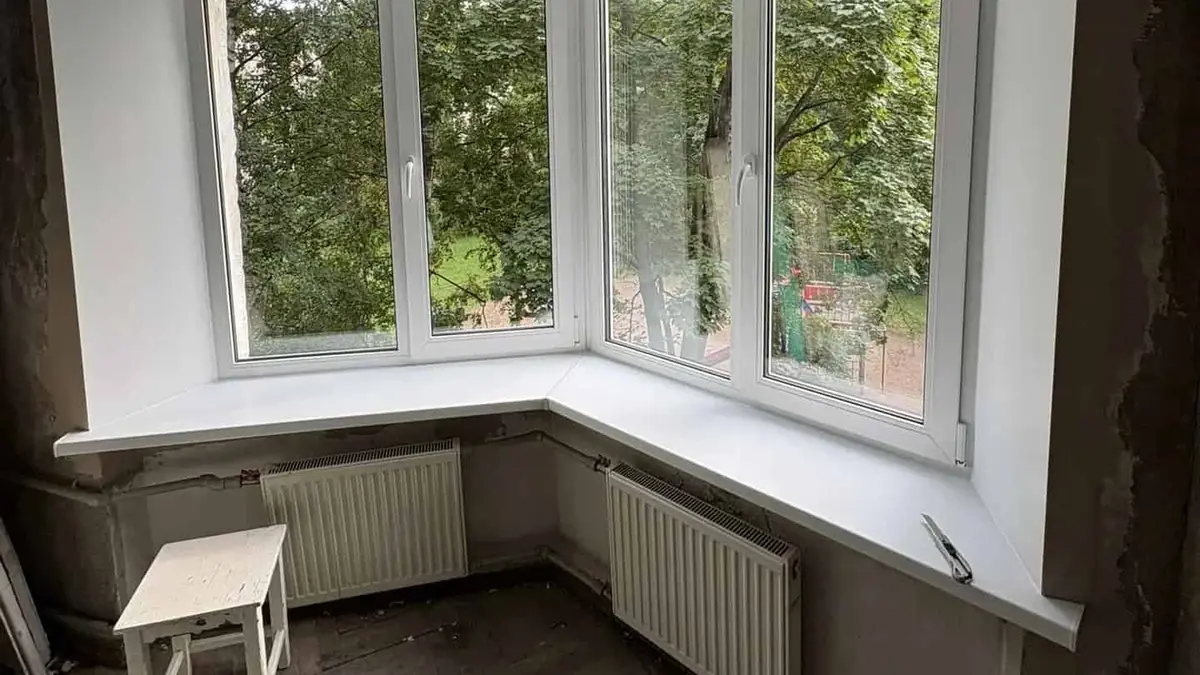
A double-glazed window, known in Chile as *termopanel* or DVH (*doble vidriado hermético*), is two panes of glass separated by a sealed cavity of air or gas. That cavity is what insulates: single glass lets through 5.8 watts per m² for every degree of difference between inside and outside, while a standard 4-12-4 mm double-glazed unit lets through 2.8 W, according to the reference values of Chilean standard NCh 853 published by Sodimac. With low-emissivity (low-e) glass it drops to 1.8 W. Put simply, double glazing loses about half the heat of an ordinary window.
Since 28 November 2025, double glazing is no longer a luxury in new homes. The updated Thermal Regulation of the Housing Ministry (article 4.1.10 of the OGUC building code) sets how much window area is allowed depending on its U-value, and in the south of the country single glass is effectively ruled out. This guide explains what it is, how much it saves in pesos, what it costs per m² in Chile and when it pays to replace your windows.
View the data as a table
| Single glass | 5.8 W/m²K |
| Standard double glazing | 2.8 W/m²K |
| Heat loss avoided | 52% |
| South window in Santiago | 48% |
What double glazing is and how it works
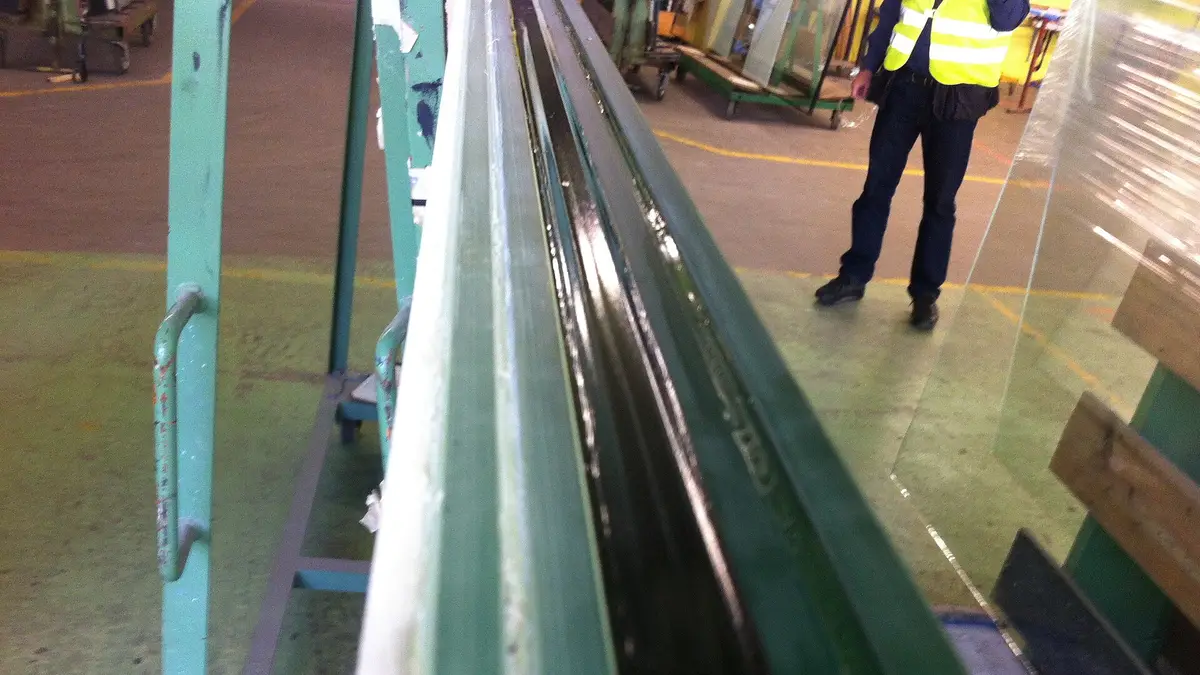
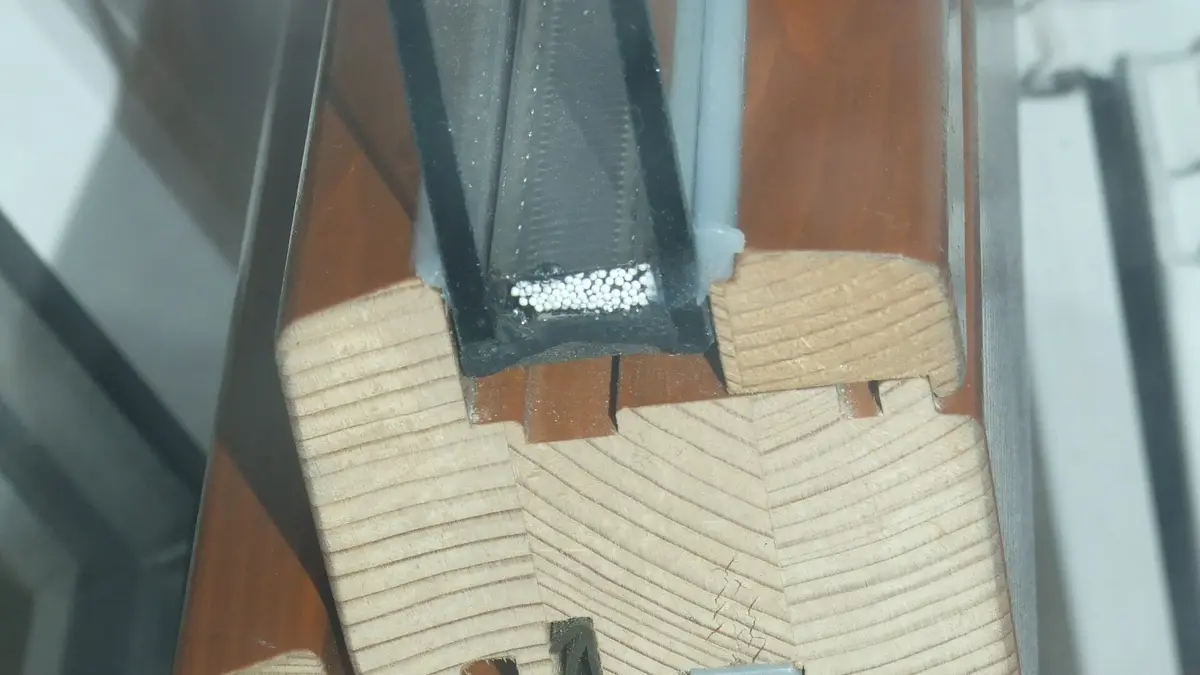
Glass is a poor insulator: heat from a room passes through the pane and escapes outside. Double glazing adds a cavity of dehydrated air (or argon gas in better models) between two panes, sealed around the edge with a spacer and a desiccant that absorbs moisture. Because still air conducts little heat, the loss is halved. That is why manufacturers describe it with three numbers: the thickness of each pane and of the cavity, for example 4-12-4 mm.
- Single or monolithic glass: one 4 or 5 mm pane. Thermal transmittance of 5.8 W/m²K.
- Standard double glazing (4-12-4 with air): 2.8 W/m²K. This is what most hardware stores sell.
- Double glazing with low-e glass: an invisible metallic coating reflects heat back indoors. It drops to 1.8 W/m²K.
- Frame: it counts as much as the glass. PVC and wood insulate better than aluminium, which needs a thermal break so it does not conduct the cold.
The U-value is the amount of energy that passes through each m² of window for every degree of temperature difference. If it is 5 °C outside and 18 °C inside, the difference is 13 degrees: one m² of single glass continuously lets out 75 W of heat, and one m² of double glazing, 36 W. Sernatur, Chile's tourism service, adds that the effect is greater when walls, floor and roof are also insulated; otherwise heat escapes elsewhere.
How much double glazing saves on heating
The saving depends on how much window area the home has, the climate and how it is heated. To put a figure on it, we ran a calculation with explicit assumptions: a home with 10 m² of windows, an average difference of 10 degrees between inside and outside for 12 hours a day over 150 days of heating (May to September), and electric heating paid at CGE's BT1 rate for November 2026, CLP 255.91 per kWh.
| Window type | U (W/m²K) | Heat lost per season | Cost with electric heating | Saving vs single glass |
|---|---|---|---|---|
| Single glass | 5.8 | 1,044 kWh | CLP 267,170 | — |
| Standard double glazing | 2.8 | 504 kWh | CLP 128,979 | CLP 138,191 |
| Low-e double glazing | 1.8 | 324 kWh | CLP 82,915 | CLP 184,255 |
Under those assumptions, switching from single glass to double glazing saves about 540 kWh per winter, or CLP 138,191 if the home is heated with electricity. With a heat pump, gas or firewood the saving in pesos is smaller, because each kWh of heat costs a different amount: you can compare them in our guide to low-consumption electric heaters. The calculation only covers the glass; an aluminium frame without a thermal break or a badly sealed window reduces the benefit.
Some savings do not show up in the table. Double glazing reduces condensation on the inner pane, the droplets that wet the frame and end up as mould, because the inner face stays warmer. It also cuts street noise. Sernatur mentions both benefits in its technical sheet on double glazing.
What Chile's new thermal rules require of windows
The updated rules divide the country into 9 thermal zones, from A (Arica, Iquique, Antofagasta) to I (Coyhaique, Natales, Punta Arenas), under standard NCh1079:2019. For each zone and orientation they set the maximum percentage of the wall that can be window, depending on the U-value. The better the window insulates, the more glazed area is allowed.
| A | Arica | 97% | 50% | 78% | 25% |
| B | Copiapó | 92% | 30% | 68% | 10% |
| C | Valparaíso | 88% | 40% | 58% | 15% |
| D | Santiago | 83% | 25% | 48% | 10% |
| E | Concepción | 78% | 10% | 38% | 5% |
| F | Temuco | 73% | 0% | 28% | 0% |
| G | Puerto Montt | 67% | 0% | 19% | 0% |
| H | Pucón | 62% | 0% | 18% | 0% |
| I | Punta Arenas | 57% | 0% | 16% | 0% |
In Santiago (zone D), a south-facing wall can be up to 48% window if it is double glazing with a U-value of 2.8 or less, but only 10% with single glass. Before the update, under the 2007 rules, the limit for single glass in the former zone 3 was 25%. From Temuco southwards (zones F, G, H and I), single glass is allowed 0% in every orientation: in practice, every new home has double glazing.
View the data as a table
| South wall, double glazing | ||
|---|---|---|
| Arica (zone A) | Zone A | 78% |
| Copiapó (zone B) | Zone B | 68% |
| Valparaíso (zone C) | Zone C | 58% |
| Santiago (zone D) | Zone D | 48% |
| Concepción (zone E) | Zone E | 38% |
| Temuco (zone F) | Zone F | 28% |
| Puerto Montt (zone G) | Zone G | 19% |
| Pucón (zone H) | Zone H | 18% |
| Punta Arenas (zone I) | Zone I | 16% |
The rules apply to homes, schools and health facilities that apply for a building permit after they took effect; they do not require existing homes to replace their windows. In addition, since October 2025 every new home must have an Energy Rating under Energy Efficiency Law 21,305, according to a Housing Ministry statement, so the type of window affects the score the house receives.
- 2000First stage of the Thermal Regulation
- 2007Second stage: requirements expanded
- 2012Home Energy Rating is launched
- 27 May 2024Update of the rules published
- Oct 2025Energy rating becomes mandatoryEnergy Efficiency Law 21,305.
- 28 Nov 2025New thermal rules take effect9 thermal zones and windows by U-value.
Price of double glazing per m² in Chile
We checked the prices of sliding windows in the Sodimac catalogue on 25 November 2026. A 100 × 100 cm aluminium window with single glass costs CLP 38,990; the same size with double glazing starts at CLP 109,900 in PVC and CLP 119,900 to 139,900 in aluminium (Wintec), rising to CLP 220,990 and 359,990 in Termohome's ranges. Per m²:
| Aluminium, single glass 100×100 (Wintec) | 38,990 | 38,990 |
| PVC double glazing 100×100 (Wintec) | 109,900 | 109,900 |
| Aluminium double glazing 100×100 (Wintec) | 139,900 | 139,900 |
| Aluminium double glazing 120×120 (Wintec) | 152,990 | 106,243 |
| PVC double glazing 120×120 (Wintec) | 149,990 | 104,160 |
| Aluminium double glazing 100×100 (Termohome) | 220,990 | 220,990 |
| PVC double glazing 100×100 (Termohome) | 359,990 | 359,990 |
| PVC double glazing 120×120 (Termohome) | 414,990 | 288,188 |
| Sliding window (Sodimac) | Size | Regular price | Price per m² |
|---|---|---|---|
| Aluminium, single glass (Wintec) | 100 × 100 cm | CLP 38,990 | CLP 38,990 |
| PVC double glazing (Wintec) | 120 × 120 cm | CLP 149,990 | CLP 104,160 |
| Aluminium double glazing (Wintec) | 120 × 120 cm | CLP 152,990 | CLP 106,243 |
| PVC double glazing (Wintec) | 100 × 100 cm | CLP 109,900 | CLP 109,900 |
| Aluminium double glazing (Termohome) | 100 × 100 cm | CLP 220,990 | CLP 220,990 |
| PVC double glazing (Termohome) | 120 × 120 cm | CLP 414,990 | CLP 288,188 |
These are prices for standard ready-to-fit windows, without labour. Made-to-measure windows, removal of the old ones and finishing are quoted separately by each installer. Single-sash top-hung windows tend to cost more per m² than large sliding ones, because the frame weighs more in the price.
Is double glazing worth it? How many winters it takes to pay off
Using the same 10 m² example, replacing single-glazed aluminium windows with Wintec PVC double glazing costs about CLP 709,100 extra in windows (the CLP 70,910 difference per m²), excluding installation. If the home is heated with electricity and saves CLP 138,191 a season, the change pays for itself in about five winters. With the same brand's aluminium double glazing, the difference rises to CLP 1,009,100 and the payback to seven winters.
- Most worthwhile: in central-southern and southern Chile, in south-facing rooms, in homes whose walls and roof are already insulated, and where heating is electric.
- Less worthwhile: in the north, where the temperature difference is smaller, or if the home loses heat through an uninsulated roof: there, the first peso is better spent overhead.
- Cheap alternative: sealing frames and gaps with weather strips and using heavy curtains reduces losses while you save for the change.
Before deciding, measure how much your home spends on heating: if you heat with electricity, check how much electricity a home in Chile uses per month and compare your summer and winter bills. The difference is roughly what you spend on heat.
If you are also thinking of changing your heating system, double glazing helps: a home that loses less heat needs a smaller unit. It is the same reasoning behind air-source heat pumps, which perform better in well-insulated homes.
Do you make or install double-glazed windows? Reach Energía Futura's readers.
See advertising optionsFrequently asked questions
What is double glazing?
A window with two panes separated by a sealed cavity of air or gas, known in Chile as *termopanel* or DVH. It loses about half the heat of single glass: 2.8 W/m²K against 5.8 W/m²K.
How much does double glazing cost per m² in Chile?
At Sodimac, a standard double-glazed sliding window starts at about CLP 104,000 per m² in PVC or aluminium (Wintec) and reaches CLP 220,000 to 360,000 per m² in higher-end ranges, in prices from 25 November 2026, without installation.
Is double glazing mandatory in new homes?
The rules do not name it, but in practice it is from Temuco southwards: in thermal zones F, G, H and I, single glass is allowed 0% of the wall. In Santiago single glass can be used, but only on 10% of a south wall.
PVC or aluminium double glazing?
PVC insulates better and in the budget ranges costs the same or less per m². Aluminium is only equivalent if it has a thermal break, an insulating piece inside the profile.
Why does double glazing fog up on the inside?
If it fogs between the two panes, the edge seal has failed and moisture has entered the cavity: the unit has lost its insulation and the glass unit must be replaced. If it fogs on the room side, it is moisture in the air and you should ventilate.