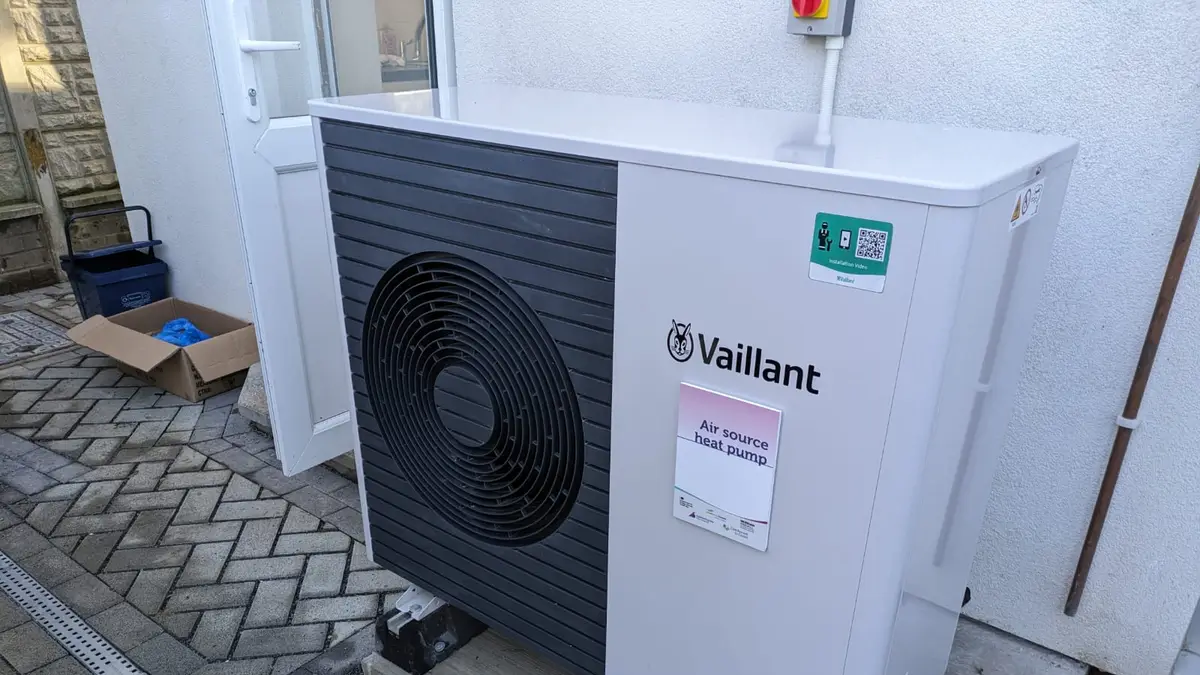
An air-source heat pump (known in Spanish as *aerotermia*) is a heating and hot-water system that takes energy from the outside air, even when it is cold, and moves it into the house. Its strength is efficiency: heat pumps are three to five times more efficient than a gas boiler, according to the International Energy Agency (IEA), because for every kWh of electricity they deliver several kWh of heat. At 3 to 4 kWh of heat per kWh and residential electricity at CLP 255.27 (CGE, BT1 tariff, October 2026), a kWh of heat costs CLP 64 to 85.
That is well below the cost of heating with kerosene (about CLP 133 per kWh of heat) or LPG (about CLP 154), and less than a third of a regular electric heater, which turns each kWh into a single kWh of heat. This guide explains how heat pumps work, which types exist in Chile, how much they consume, what they cost to install and when they pay off.
View the data as a table
| More efficient than a gas boiler | 3 to 5 times |
| kWh of heat, heat pump (COP 3) | $85 |
| kWh of heat from kerosene | $133 |
| kWh of heat from LPG | $154 |
What an air-source heat pump is and how it works
A heat pump works like a refrigerator in reverse. A refrigerant gas circulates in a closed circuit: in the outdoor unit it evaporates and absorbs heat from the air, even at a few degrees; an electric compressor compresses it and heats it further, and indoors the refrigerant releases that heat into the room air or the heating water. Electricity is not used to produce heat but to move it from outside to inside.
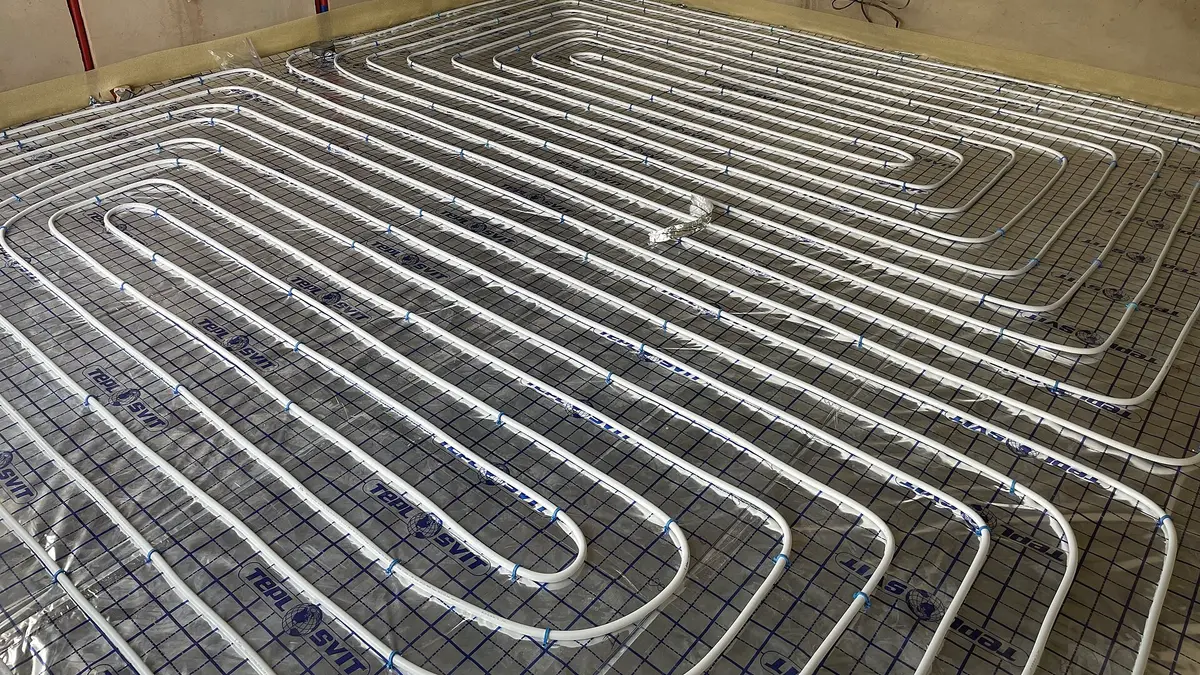
The ratio between heat delivered and electricity consumed is called the COP (coefficient of performance). A COP of 3 means 3 kWh of heat per electric kWh. COP falls when it is colder outside and when water must leave hotter: it performs better with underfloor heating, which works at about 35 °C, than with old radiators, which need 60 °C or more. That is why manufacturers report COP at different temperatures and a seasonal average called SCOP.
| Concept | What it means | Reference value |
|---|---|---|
| COP | kWh of heat per electric kWh under a test condition | 3 to 4 in this guide's calculations |
| SCOP | Average COP over the whole heating season | Reported by each manufacturer |
| Water temperature | Lower means more efficient | Underfloor ~35 °C; radiators 55-60 °C |
| Heat source | Outside air | Works below 0 °C, with lower performance |
Source: the IEA estimates that heat pumps on the market are three to five times more efficient than a gas boiler. Working temperatures are those typical of each emission system.
The two types: air-to-air and air-to-water
There are two main families. Air-to-air is the heating-and-cooling inverter split sold in any store: it takes heat from the outside air and delivers it as warm air in a room. It is the cheapest way to have a heat pump in Chile, and its consumption and the capacity each room needs are covered in our guide to the inverter air conditioner.
Air-to-water is what Europe properly calls *aerotermia*: it heats water that circulates through underfloor heating, radiators or fan coils, and can also produce the house's domestic hot water, replacing the gas water heater or electric tank. It is a central system, with an outdoor unit, a storage tank and plumbing, so it costs several times more. The same technology is used to heat swimming pools, as we explain in the guide to the pool heat pump.
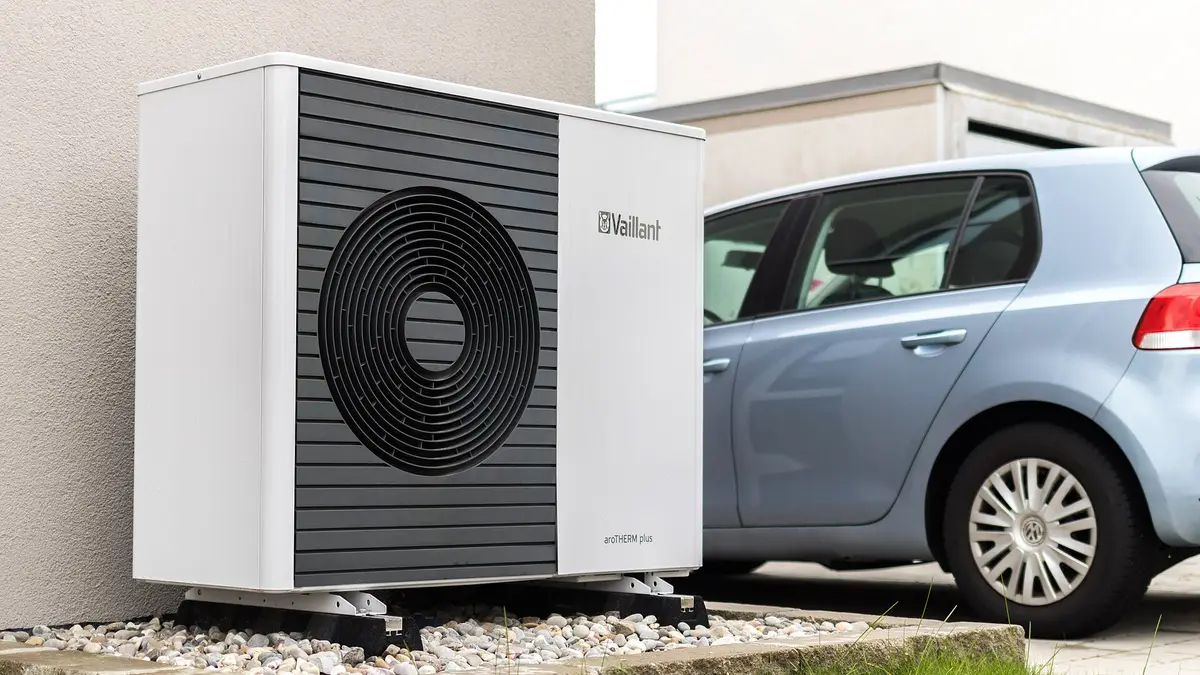
How much a heat pump consumes and what each kWh of heat costs
To compare heating systems you have to look at the cost per kWh of heat delivered, not the price of the appliance. At November 2026 prices, a heat pump with COP 3 delivers heat at about CLP 85 per kWh, and with COP 4, at CLP 64. Kerosene, at the average of CLP 1,372 per litre in the Santiago Metropolitan Region, costs about CLP 133 per kWh of heat; LPG, with the 15-kilo cylinder at CLP 30,250, about CLP 154, and an electric resistance heater, CLP 255.
| Heating | Cost per kWh of heat | Basis of calculation |
|---|---|---|
| Heat pump, COP 4 | CLP 64 | Electric kWh at CLP 255.27 divided by 4 |
| Heat pump, COP 3 | CLP 85 | Electric kWh at CLP 255.27 divided by 3 |
| Pellet stove | CLP 81 to 95 | 15 kg bag between CLP 4,850 and 5,690 |
| Kerosene heater | CLP 133 | Litre at CLP 1,372 (Santiago average, November 14); 2,740 kcal/h heater burning 0.31 L/h |
| LPG heater | CLP 154 | 15 kg cylinder at CLP 30,250 (Lipigas, Santiago) and 13.1 kWh per kilo |
| Electric resistance heater | CLP 255 | 1 kWh of heat per electric kWh |
Energía Futura calculations with prices from preciocombustible.cl (kerosene, November 14, 2026), the CNE's Gas en Línea (15 kg cylinder) and CGE's BT1 tariff. The kerosene heater's consumption is that of the Toyotomi LC-33 used in our guide to the kerosene heater. The pellet price comes from our pellet stove guide (Temuco, August 2026).
Applied to a monthly bill, and as an example, delivering 1,000 kWh of heat in a month (the real figure depends on the size, insulation and climate of each house) would cost about CLP 85,100 with a COP 3 heat pump, CLP 133,500 with kerosene and CLP 153,900 with LPG. The heat pump would use about 333 kWh of additional electricity that month.
Firewood is still the most used fuel in southern Chile: in Temuco, the regional energy office recorded eucalyptus from CLP 65,000 per cubic metre in an August survey reported by Sernac. Its cost per kWh of heat depends heavily on the wood's moisture and the stove's efficiency, so we do not include it in the table. What is clear is that a heat pump emits no smoke in the house, an advantage in cities with air-pollution plans.
Does your company sell or install heat pumps, underfloor heating or insulation? Reach Energía Futura's readers.
See advertising formatsHow much it costs to install a heat pump in Chile
The cheapest option is the heating-and-cooling inverter split. At Falabella, on November 14, 2026, 9,000 BTU units (about 2.6 kW) started at CLP 289,990, and 18,000 BTU units ranged between CLP 449,990 and 859,990, not counting installation.
| Unit (air-to-air) | Capacity | Lowest listed price |
|---|---|---|
| Verken heating/cooling inverter split | 9,000 BTU | CLP 289,990 |
| Hisense heating/cooling inverter split | 9,559 BTU | CLP 319,990 |
| Atma heating/cooling inverter split | 12,000 BTU | CLP 329,990 |
| Midea Ecomaster AI inverter | 18,000 BTU | CLP 549,990 |
| Samsung Wind-Free Pro inverter | 18,000 BTU | CLP 859,990 |
| Atma heating/cooling split | 24,000 BTU | CLP 519,990 |
Source: Falabella, prices listed on November 14, 2026. Installation not included.
Air-to-water systems have no list price in Chilean retail: they are quoted by an installer, because they include the heat pump, the tank, the plumbing and sometimes the underfloor heating. A market study by Chile's Ministry of Energy and German cooperation agency GIZ found price differences of up to 300% between heat-pump suppliers, so it is worth asking for at least three quotes and comparing the kW of heat, the COP or SCOP and the warranty.
When it pays off in Chile
- Well-insulated houses: with good insulation less heat is needed and a smaller pump will do. In an uninsulated house, any heating is expensive.
- Existing underfloor or central heating: air-to-water uses the installation and works at low temperature, where its COP is higher.
- Replacing kerosene, gas or firewood: the cost per kWh of heat falls by half or more, and smoke and the risk of carbon monoxide indoors disappear.
- Houses with solar panels: part of the electricity the pump uses can come from the roof, especially on sunny autumn and spring days.
- Very cold climates: it works below 0 °C, but its COP falls; in Patagonia a unit designed for low temperatures is advisable.
The downside is the upfront investment. If the house already has a pellet stove or a certified wood stove in good condition, the saving from switching to a heat pump is smaller, because pellets deliver heat at CLP 81 to 95 per kWh, close to the cost with a COP 3 pump. Details of that system are in the guide to the pellet stove.
Frequently asked questions
What is an air-source heat pump?
A heating and hot-water system with a heat pump that takes energy from the outside air. It is three to five times more efficient than a gas boiler, according to the IEA.
How much does it cost to heat with a heat pump in Chile?
With electricity at CLP 255.27 per kWh, heat costs between CLP 64 and 85 per kWh. Delivering 1,000 kWh of heat in a month costs about CLP 85,100 with a COP 3 unit.
Is a heat pump cheaper than kerosene?
Yes, in running cost. Kerosene at CLP 1,372 per litre delivers heat at about CLP 133 per kWh, against CLP 85 for a COP 3 heat pump. The upfront investment is higher.
Is a split air conditioner a heat pump?
Yes. A heating-and-cooling inverter split is an air-to-air heat pump. Air-to-water systems, instead, heat water for underfloor heating, radiators and domestic hot water.
Do heat pumps work below freezing?
Yes, but their performance drops as the outside temperature falls. In very cold areas, a unit designed for low temperatures and a well-insulated house are advisable.