The service connection, called *empalme eléctrico* in Chile, is the set of cables, protective devices and box that connects the distribution company's grid to your home's meter. Chile's electricity regulator, the SEC, defines it in technical code RIC No. 01 as the elements linking the customer's metering unit to the distribution network. Its capacity sets how much power you can draw at once: a common 25-amp single-phase connection allows 5 kW.
When the main breaker trips as soon as the oven, kettle and heater run together, or when an electric car charger or heat pump is installed, what is usually missing is connection capacity. Upgrading it is a service with a regulated price: Energy Ministry Decree 2T of 2026 sets the rates, and in Chilquinta's area upgrading a single-phase overhead connection costs CLP 28,836 to 29,389 including VAT. This guide explains how it works, what it costs and what the TE1 certificate is for.
View the data as a table
| Common home connection | 5 kW |
| Top size in BT1 tariff | 8 kW |
| Upgrade, single-phase overhead | CLP 29,389 |
| New single-phase overhead connection | CLP 194,731 |
What an electricity service connection is and what it is made of
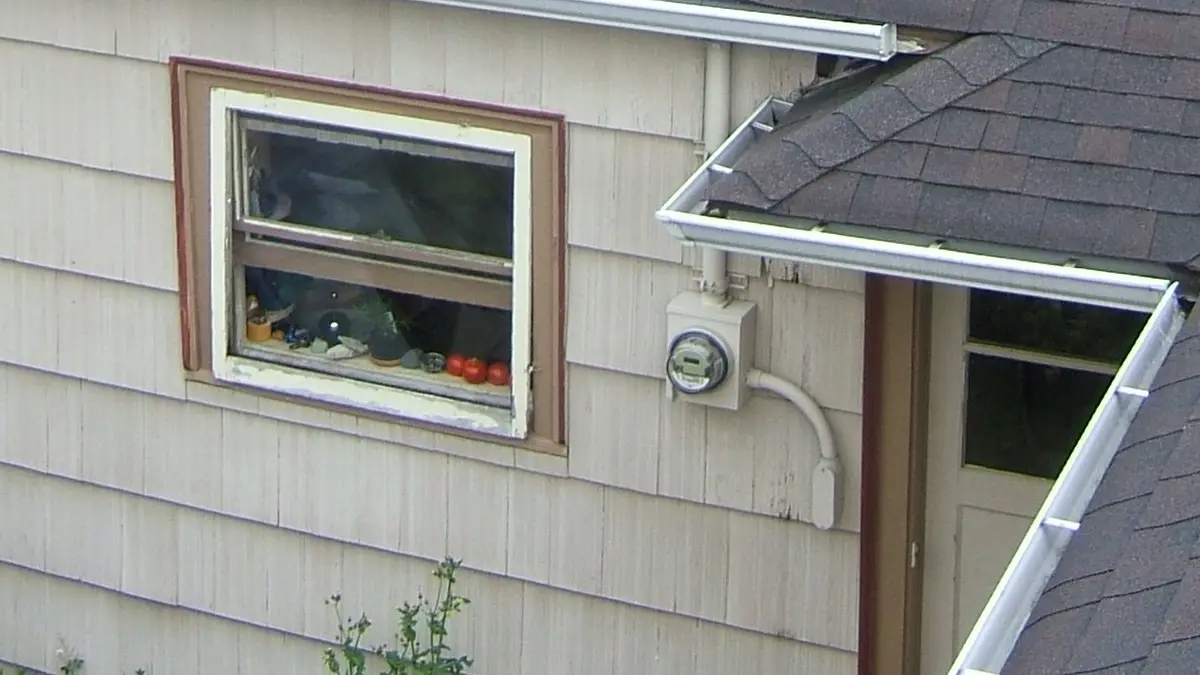
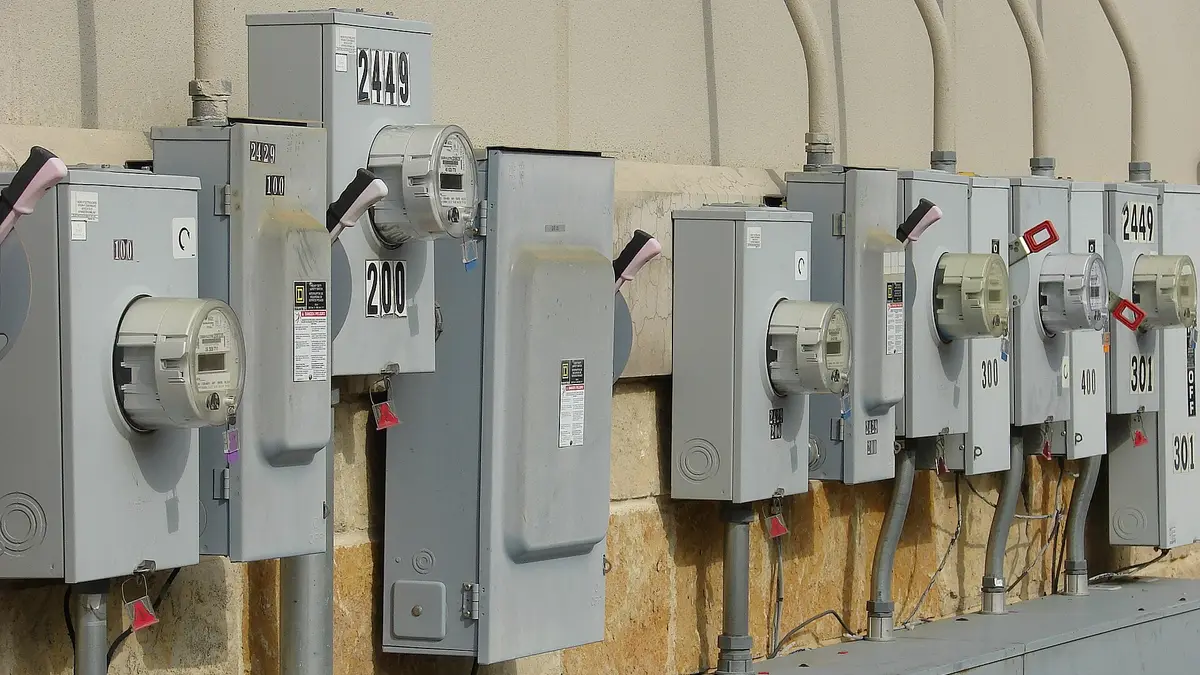
The connection starts at the utility's pole (or underground vault) and ends at the connection box, the enclosure that houses the meter. From there the feeder runs to the home's electrical panel. Its parts are:
- Service drop: the cable from the pole to the house. It can be overhead (concentric) or underground.
- Protection or limiter: a circuit breaker that trips if the contracted capacity is exceeded. Its amp rating sets the connection's power.
- Connection box: the cabinet holding the meter. RIC No. 01 requires impact resistance (IK 09) and, if exposed to the sun, UV protection.
- Meter: records the energy. It belongs to the utility or the customer, depending on the case.
Single-phase or three-phase connection: how much power each provides
A single-phase connection uses one phase and neutral at 220 V; it is what the vast majority of homes have. A three-phase one uses three phases at 380 V and is for large motors, workshops, irrigation pumps, fast EV chargers or homes with heavy loads. Annex 1.3 of RIC No. 01 sets the standard capacities according to the connection's breaker:
| Breaker (A) | Contracted power (kW) | Maximum power (kVA) | Connection type | Tariff |
|---|---|---|---|---|
| 6 | 1 | 1.3 | A-6 / S-6 | BT1 |
| 10 | 2 | 2.2 | A-6 / S-6 | BT1 |
| 16 | 3 | 3.5 | A-6 / S-6 | BT1 |
| 20 | 4 | 4.4 | A-6 / S-6 | BT1 |
| 25 | 5 | 5.5 | A-6 / S-6 | BT1 |
| 30 | 6 | 6.6 | A-9 / S-9 | BT1 |
| 32 | 6.5 | 7.0 | A-9 / S-9 | BT1 |
| 35 | 7 | 7.7 | A-9 / S-9 | BT1 |
| 40 | 8 | 8.8 | A-9 / S-9 | BT1 |
| 50 | 10 | 11 | A-16 / S-16 | Residential other than BT1 |
| 63 | 13 | 13.8 | A-16 / S-16 | Residential other than BT1 |
The letter A stands for overhead and S for underground. According to the same table, single-phase connections up to 40 A (8 kW) fall under the BT1 tariff, Chile's basic residential rate; those of 50 and 63 A move to residential tariffs other than BT1. For three-phase, the table starts at 3.6 kW (6 A) and goes up to 612 kW (1,000 A).
To work out how much power you need, add up the appliances that run at the same time: a 2,000 W kettle, a 2,000 W heater and a 1,500 W oven already total 5.5 kW, above what a 25 A connection provides. An electricity usage meter helps you see how much each appliance draws before asking for more capacity.
How to upgrade your electricity service connection step by step
Decree 2T defines a connection capacity upgrade as adapting or replacing the connection's protective devices to raise the available power. It includes disconnection and reconnection, inspection, technical studies and the new protective devices. It does not include the meter, replacing the connection's conductor or municipal fees, and the customer must first file the indoor installation declaration with the SEC and present it when requesting the service.
- 1. Check the indoor wiring: an SEC-licensed electrician confirms that the panel, conductors and protective devices can handle the new power, and adapts them if needed.
- 2. Declare the installation (TE1): the electrician files the commissioning declaration for the indoor installation on the SEC's e-Declarador platform.
- 3. Request the upgrade from the utility: with the TE1 and a bill, you apply at the utility's branch or website.
- 4. Protection change and reconnection: the utility replaces the limiter with a higher-capacity one and charges the regulated rate.
- 5. If moving from single to three-phase: it is no longer an upgrade but a new connection, with another meter and conductor.
If the upgrade is to charge an electric car in an apartment building, there are specific metering and co-ownership rules; we explain them in our guide to chargers in condominiums and buildings.
What the TE1 is and why it is required for the connection
The TE1 is the commissioning declaration of an indoor electrical installation filed with the Superintendency of Electricity and Fuels (SEC). It is submitted by an SEC-licensed electrician on the e-Declarador platform, according to the official ChileAtiende guidance. It certifies that the home's wiring complies with the RIC technical codes. Without a TE1 the utility will not connect a new service or upgrade an existing one, because the decree requires the declaration to be filed before the service is requested.
The cost of the TE1 is not regulated: the electrician charges for it, and it covers the inspection, measurements and drawings. It is therefore worth getting more than one quote and checking that the person holds a current SEC licence in the class matching the installation's power.
How much it costs to upgrade or install an electricity service connection
These prices are not set by each company: they are fixed by Decree 2T of 2026, published in the Official Gazette on 10 April 2026, with indexation formulas, and each utility publishes its table. As an example we use Chilquinta's, in force since 1 June 2026, including VAT. A new connection has a fixed charge and a variable charge per metre, covering labour and the conductor.
| 5.1.2 | Capacity upgrade, single-phase overhead, up to 6 kVA | 28,836 | 0 |
| 5.1.3 | Capacity upgrade, single-phase overhead, 6-10 kVA | 29,389 | 0 |
| 5.2.2 | Capacity upgrade, single-phase underground, 6-10 kVA | 30,193 | 0 |
| 5.3.1 | Capacity upgrade, three-phase overhead, 6-20 kVA | 52,277 | 0 |
| 5.3.2 | Capacity upgrade, three-phase overhead, 20-50 kVA | 56,275 | 0 |
| 9.1.2 | New connection, single-phase overhead, up to 6 kVA | 194,731 | 2,256 |
| 9.1.3 | New connection, single-phase overhead, 6-10 kVA | 189,615 | 2,256 |
| 9.2.1 | New connection, single-phase underground, up to 6 kVA | 267,431 | 15,205 |
| 9.3.1 | New connection, three-phase overhead, 6-20 kVA | 666,566 | 2,706 |
| 9.3.2 | New connection, three-phase overhead, 20-50 kVA | 688,211 | 3,873 |
| 9.4.1 | New connection, three-phase underground, 6-20 kVA | 1,138,811 | 21,340 |
| Service (Chilquinta, from 1 June 2026) | Fixed charge | Per metre | Total with 15 metres |
|---|---|---|---|
| Capacity upgrade, single-phase overhead, up to 6 kVA | CLP 28,836 | — | CLP 28,836 |
| Capacity upgrade, single-phase overhead, 6-10 kVA | CLP 29,389 | — | CLP 29,389 |
| Capacity upgrade, three-phase overhead, 6-20 kVA | CLP 52,277 | — | CLP 52,277 |
| New connection, single-phase overhead, up to 6 kVA | CLP 194,731 | CLP 2,256 | CLP 228,571 |
| New connection, single-phase underground, up to 6 kVA | CLP 267,431 | CLP 15,205 | CLP 495,506 |
| New connection, three-phase overhead, 6-20 kVA | CLP 666,566 | CLP 2,706 | CLP 707,156 |
On top of these amounts come the items the service does not cover: the meter if it needs replacing, tree trimming, breaking and repairing pavement, trenches for an underground connection, municipal fees and the electrician's indoor work, including the TE1. At other utilities the figures differ because the decree sets values by company and area, but the list of services and the way they are charged are the same. Before requesting the upgrade, the electrician checks the panel: we explain how power is split between circuits in our guide to the home electrical panel.
One tip before paying for an upgrade: check whether the problem is capacity or usage. If the main breaker trips only when two or three large appliances coincide, it is sometimes enough not to run them together; if a circuit breaker trips but not the main one, the problem is in that circuit, not in the connection. Raising contracted power can also make the bill more expensive under tariffs that charge for capacity, unlike BT1.
Are you an electrician or electrical services company? Reach Energía Futura's readers.
See advertising optionsFrequently asked questions
What is an electricity service connection?
It is the link between the utility's grid and the home's meter: the cable, protective devices and box. Its capacity, in amps, sets how much power can be used at once.
How many kW does a 25-amp single-phase connection give?
5 kW of contracted power and 5.5 kVA of maximum power, according to annex 1.3 of the SEC's RIC No. 01. A 40 A one gives 8 kW.
How much does it cost to upgrade the connection?
At Chilquinta, upgrading a single-phase overhead connection costs CLP 28,836 to 29,389 including VAT, and a three-phase overhead one CLP 52,277 to 56,275, from 1 June 2026. The electrician's work and the TE1 are extra.
Who files the TE1?
An electrician with a current SEC licence, who submits it on the e-Declarador platform. Customers cannot file it themselves.
Is it worth switching from single to three-phase?
Only if you have three-phase equipment or need more than single-phase provides (13 kW at 63 A). It is a new, more expensive connection: CLP 666,566 plus CLP 2,706 per metre for Chilquinta's overhead version.