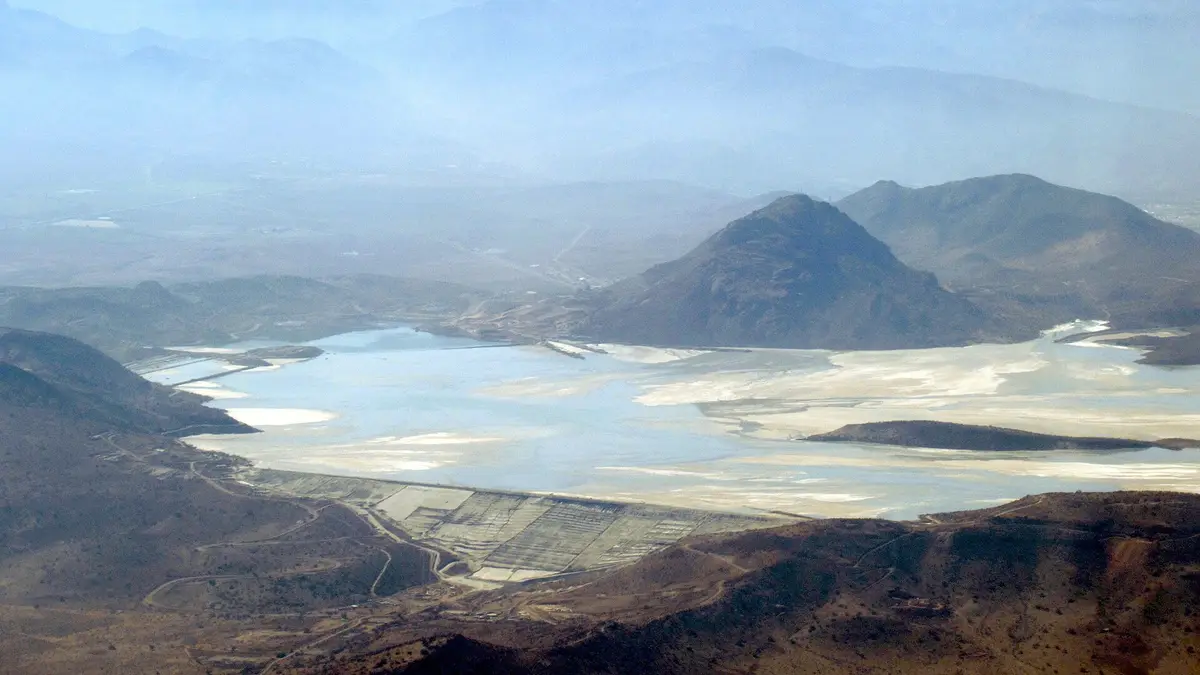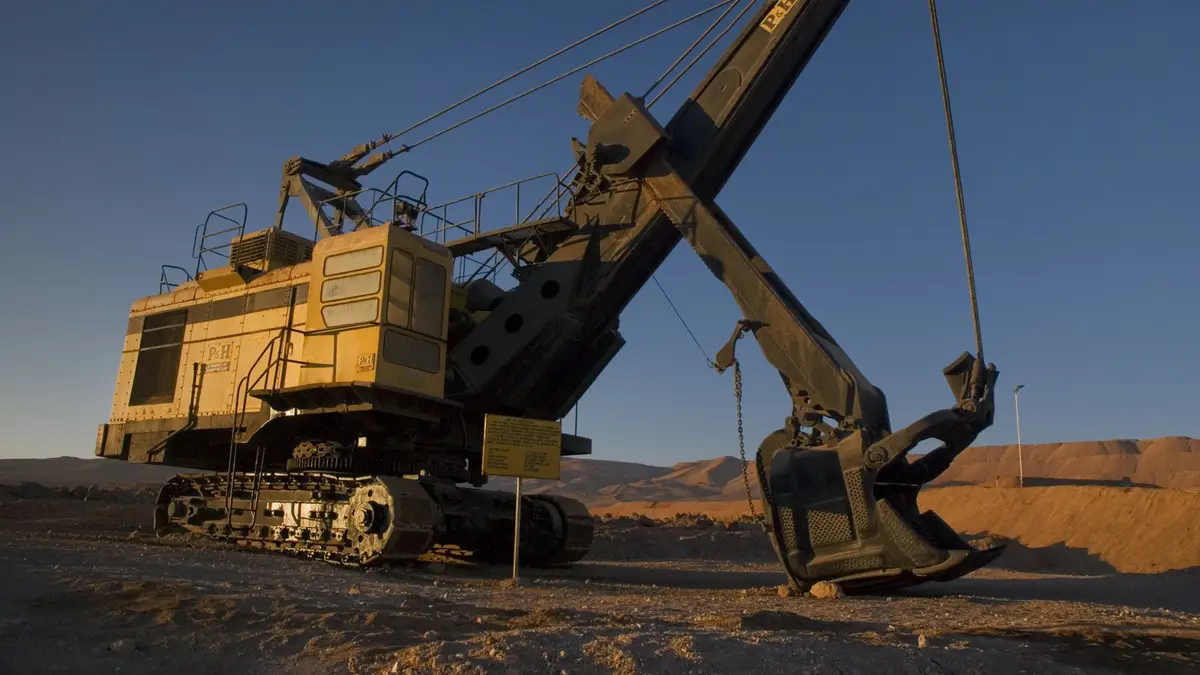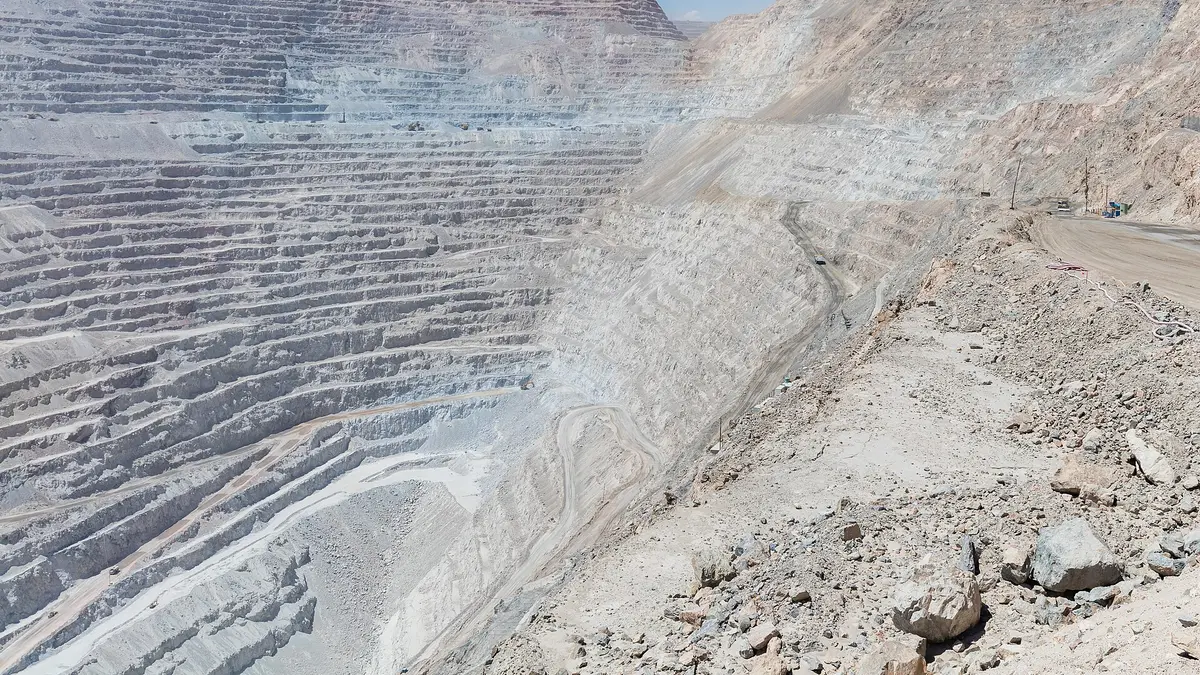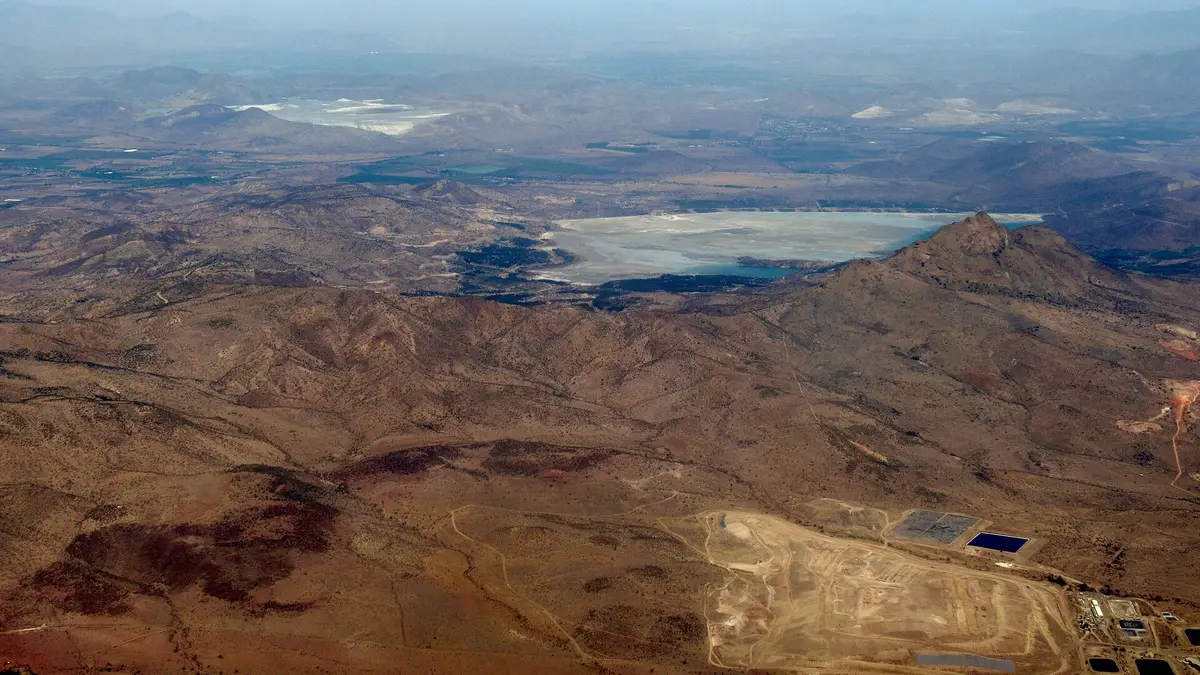
Chile's mine tailings contain rare earths, the elements in the magnets of electric cars and wind turbines, but mostly at low concentrations. A team from Universidad Católica del Norte (UCN) screened 649 tailings deposits in nine regions using public Sernageomin data and found a median grade of 71 grams per tonne (g/t), half that of ordinary crustal rock. Even so, 46 deposits exceed 150 g/t and the highest, in Antofagasta, reaches 1,645 g/t.
There is a catch: of those 46 richest deposits, 38 are abandoned or inactive. “Closure regulation, not metallurgy, is the first obstacle to recovery”, concludes the paper, published on 22 September 2026 in the journal Minerals and publicised by the university this week.
View the data as a table
| Deposits screened | 649 |
| Median rare-earth grade | 71 g/t |
| Deposits above 150 g/t | 46 |
| Highest grade | 1,645 g/t |
What the study of rare earths in tailings found
The work, by Elizabeth Lam-Esquenazi, Brian Keith-Norambuena, Ítalo Montofré-Bacigalupo, Bárbara Fuentes-Siegmund, Rodrigo Rojas-Ardiles and Javier Quispe-Curasi, cross-referenced Sernageomin's geochemical database (2,131 surface samples) with the October 2025 tailings register. After cleaning the data, 649 deposits remained, 645 with the complete series of 14 lanthanides.
| Indicator | Result |
|---|---|
| Deposits screened | 649 (645 with complete series) |
| Median rare-earth grade | 71.0 g/t |
| Deposits above 150 g/t | 46 |
| Deposits above 300 g/t | 11 |
| Highest grade | 1,645 g/t (Antofagasta, abandoned) |
| Total indicative content | 1.23 to 1.80 million t |
| Content in the 20 largest dams | 96% |
Source: Lam-Esquenazi et al., Minerals 16(10), 966, 2026. Total content depends on whether authorised (1.80 Mt) or deposited (1.23 Mt) tonnage is used; the authors present it as an order-of-magnitude figure.
Light rare earths such as lanthanum, cerium, neodymium and praseodymium dominate. Heavy ones, scarcer and more valuable, such as dysprosium and terbium, average 12% of the total, according to UCN. The elements of greatest interest for the energy transition are neodymium, praseodymium, dysprosium and terbium, which make the permanent magnets in electric motors and wind generators.
Where the rare earths in tailings are
By region, Antofagasta would hold about 917,000 tonnes of contained rare earths (on authorised tonnage), 50.9% of the national total, followed by Coquimbo (256,000 t), Atacama (226,000 t), the Santiago Metropolitan Region (223,000 t) and Tarapacá (112,000 t), the latter in a single deposit. Coquimbo, by contrast, has the most deposits screened (334) and the most tailings above 150 g/t (21).
View the data as a table
| Antofagasta | 917,482 t |
| Coquimbo | 256,236 t |
| Atacama | 225,944 t |
| Metropolitana | 222,840 t |
| Tarapacá | 112,403 t |
| O'Higgins | 36,292 t |
| Valparaíso | 29,531 t |
| Aysén | 766 t |
| Maule | 35 t |
| Region | Deposits screened | Median grade (g/t) | Above 150 g/t | Indicative content (t) |
|---|---|---|---|---|
| Antofagasta | 50 | 95.6 | 9 | 917,482 |
| Coquimbo | 334 | 75.0 | 21 | 256,236 |
| Atacama | 146 | 55.5 | 13 | 225,944 |
| Metropolitan | 27 | 47.2 | 2 | 222,840 |
| Tarapacá | 5 | 31.4 | 0 | 112,403 |
| O'Higgins | 12 | 57.9 | 0 | 36,292 |
| Valparaíso | 65 | 66.5 | 0 | 29,531 |
| Aysén | 9 | 43.5 | 1 | 766 |
| Maule | 1 | 84.9 | 0 | 35 |
Source: Lam-Esquenazi et al., Minerals 16(10), 966, table 2. Indicative content on the register's authorised tonnage; order-of-magnitude figures.
Grade and size do not go together. The six deposits above 440 g/t are small, between 21,000 and 281,000 tonnes. Most of the content is in the large dams of big mines, with grades close to or below crustal average: Laguna Seca, in Antofagasta, leads with about 456,000 indicative tonnes, followed by Sierra Gorda (261,000 t) and Candelaria (157,000 t).
Does your company work in tailings reprocessing, critical minerals or remediation? Reach Energía Futura's readers.
See advertising optionsWhy the problem is legal before it is technical
Of the 46 deposits above 150 g/t, 27 are abandoned (59%), 11 inactive (24%), 7 active (15%) and one has no data. Across the whole inventory, 546 of the 649 deposits (84.1%) are abandoned or inactive. Abandoned ones have no identified operator, so any reprocessing project would first need to resolve ownership and closure obligations.
Total content shows the opposite: of the 20 deposits holding 96% of the indicative rare earths, 16 are active and 4 inactive. They are dams at large operating mines. The Sernageomin register behind the study, which Energía Futura analysed in detail, lists 839 deposits, of which 348 are abandoned.
| Tranque de Relave 2 | Antofagasta | 1,645.2 | Abandoned |
| Carlos Gregorio Araya Campaña | Coquimbo | 800.5 | Abandoned |
| Tranque 1 Puerto Cristal | Aysén | 724.0 | Abandoned |
| Tranque de Relave 1 | Antofagasta | 655.2 | Abandoned |
| Farah 1-7 | Atacama | 560.7 | Inactive |
| San Luis | Coquimbo | 444.1 | Inactive |
| Espinillas | Metropolitana | 424.6 | No data |
| Tesoro 1-2-3 | Coquimbo | 410.6 | Inactive |
| Irene 2 | Coquimbo | 380.9 | Abandoned |
| Candelaria | Atacama | 314.4 | Inactive |
| Blanquita | Coquimbo | 311.4 | Abandoned |
| El Cisne | Coquimbo | 288.0 | Abandoned |
| Santa Teresa 2 | Atacama | 287.6 | Abandoned |
| Dina 1-2-3-4 | Coquimbo | 286.1 | Abandoned |
| Tranque de Relave | Atacama | 243.0 | Active |
| El Molle 5 | Coquimbo | 240.7 | Abandoned |
| Florencia 2 | Atacama | 240.0 | Abandoned |
| El Molle 4 | Coquimbo | 223.6 | Abandoned |
| Las Bombas 3 | Atacama | 215.6 | Abandoned |
| Litueche | Metropolitana | 203.2 | Abandoned |
The study's own warnings
The authors insist the work is for prioritising, not estimating resources. “The initial data were collected to monitor environmental risks, not to look for resources, and samples are few. In almost half of the deposits we have a single sample. And all samples are from the surface”, Lam told Reporte Minero.
The study also found that rare earths come with thorium, a radioactive element that would require special handling. Before thinking about production, depth sampling, mineralogy and an assessment of water and reagent use, new waste and community relations would be needed. Done well, reprocessing could help remediate abandoned deposits that are now an environmental liability.
The search for critical minerals in tailings already has cases in Chile, such as Chilean Cobalt, which is studying cobalt recovery from tailings in Atacama. Nor is the idea new for rare earths: Sernageomin began sampling tailings in 2015 and by 2017 already pointed to these elements as the most valuable after copper, but interest faded for lack of evidence, the paper recalls.
The global context explains why the topic is back. According to the study, demand for magnet elements has doubled since 2015, and one country mined 60% of magnet rare earths in 2024 and refined 91% of the total. Country detail is in our ranking of the world's largest rare earth producers.
Frequently asked questions
Are there rare earths in Chile's tailings?
Yes. The UCN study detected all 14 lanthanides in practically all 649 deposits screened, but the median grade is low: 71 g/t.
Where is the tailings deposit with the most rare earths?
In Antofagasta: an abandoned dam of about 55,700 tonnes at 1,645 g/t, based on the available sample.
How many tonnes of rare earths could be in the tailings?
Between 1.23 and 1.80 million tonnes indicative, depending on the tonnage basis. Allowing for grade dispersion, the full range is 0.94 to 2.33 million tonnes.
Can they be extracted profitably?
The study does not assess that. It measures where to look first; economic and environmental viability require field studies.