Atlas Renewable Energy wants to give one of its large solar projects in northern Chile a second grid outlet. The company submitted to the Environmental Impact Assessment System (SEIA) the modification "Incorporation of the SE Alfa Solar-SE Kimal 2x220 kV Transmission Line" for its Alfa Solar Photovoltaic Park, in the municipality of María Elena, Antofagasta Region, with an estimated investment of US$160 million, Electrominería and Redimin reported on November 6.
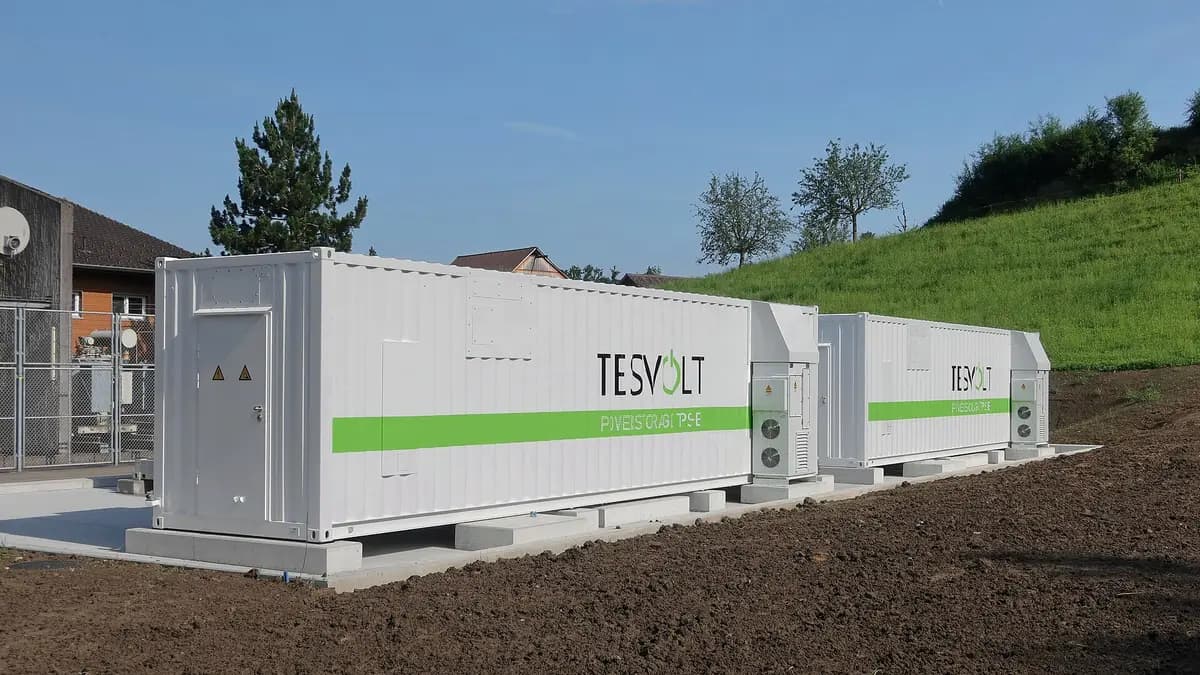
The project combines three works: a double-circuit 220 kV transmission line between the Alfa Solar substation and the Kimal substation, a new Alfa Solar Sur step-up substation and a battery energy storage system (BESS Sur) within the plant's grounds. The plant would also keep its already planned connection to the Crucero substation.
View the data as a table
| Investment in the modification | US$160 million |
| Voltage of the line to Kimal | 220 kV |
| Alfa Solar plant capacity | 854 MW |
What the Alfa Solar modification includes
| Work | Description | Disclosed data |
|---|---|---|
| Transmission line | Double circuit 2x220 kV, from SE Alfa Solar to SE Kimal | Length not disclosed |
| Alfa Solar Sur substation | New step-up substation | Within the corridor and the plant |
| BESS Sur | Batteries inside the solar complex | MW and MWh not disclosed |
| Connection to Crucero | Kept as an alternative | Already approved in 2021 |
| Total investment | US$160 million |
Source: Electrominería, Redimin and Diario Minero (November 6, 2026), based on the SEIA filing. The initial documents do not specify the power or energy of BESS Sur, nor the length of the line.
The original plant was approved under RCA No. 0222/2021 in June 2021. The Ministry of Energy map compendium of June 2025 lists it at 854 MW, and when it entered review in 2020 Atlas estimated an investment of US$450 million, according to pv magazine. Redimin adds that records of the Superintendency of the Environment show the original project reported the start of construction on June 4, 2026, although that does not confirm work on the Kimal line or the batteries.
- March 2020Alfa Solar enters reviewAtlas estimated an investment of US$450 million.
- June 2021Permit RCA No. 0222/2021Environmental approval of the original plant.
- April 2025BESS del Desierto, 200 MW / 800 MWhAtlas opens its standalone battery in María Elena.
- 4 June 2026Construction start reported to the SMAAccording to records cited by Redimin.
- 6 November 2026Kimal line and BESS Sur filedUS$160 million modification.
Why Kimal: the north's power hub
The Kimal substation, in María Elena, is the starting point of the Kimal-Lo Aguirre direct current line, 1,346 km long, which will carry renewable power from the north to Santiago and which passed 22% progress in October. It is due to start operating in 2029. Connecting to Kimal means getting closer to the main route through which Antofagasta's solar power will flow to central Chile.
For a solar plant, having two grid outlets reduces the risk of being "locked in" when a line becomes congested, one of the problems that has caused solar curtailment in the north: hours when plants must switch off panels because the grid cannot carry their output. Batteries tackle the same problem from another angle, storing cheap midday energy to sell at night, when prices are higher.
Atlas and batteries in María Elena
This is not Atlas's first storage project in the municipality. In April 2025 the company opened BESS del Desierto, a 200 MW, 800 MWh system (four hours of discharge) next to its Sol del Desierto plant, presented as Latin America's largest standalone battery system, according to Energy-Storage.news. Atlas estimated it would deliver more than 280 GWh a year to the grid, under a 15-year contract with Emoac, a Copec subsidiary.
| Atlas project in María Elena | Type | Key figure | Status |
|---|---|---|---|
| BESS del Desierto | Standalone batteries | 200 MW / 800 MWh | Operating since April 2025 |
| Sol del Desierto | Solar plant | 230 MW | Operating |
| Alfa Solar | Solar plant | 854 MW | 2021 permit; construction start reported in June 2026 |
| Alfa Solar-Kimal line + BESS Sur | Transmission and batteries | US$160 million | Under environmental review |
Sources: Energy-Storage.news (April 2025), Ministry of Energy (June 2025), Electrominería and Redimin (November 2026).
Batteries in Chile: the context for BESS Sur
Atlas's filing adds to a wave of storage. The CNE expects 12,394 MWh of new batteries to connect to the system in 2027, and Antofagasta concentrates a large share of the projects.
Counting batteries in operation, testing and construction, the country has already reached 11.3 GW of storage. The Alfa Solar modification still has to pass environmental review, and the company has not disclosed construction dates for the line or for BESS Sur. It is also unknown whether it is being processed as an Environmental Impact Declaration (DIA) or Study (EIA).
What is still unknown about Alfa Solar and BESS Sur
When an approved project changes significantly, environmental law requires the modification to be submitted to the SEIA. That is what Atlas did: the 2021 permit covers the plant and its connection to Crucero, but not the new line to Kimal or the batteries. Redimin notes that the original approval does not automatically approve the new works, which must go through their own review with the participation of the public agencies with environmental responsibilities.
With the information available as of November 8, several key figures remain unpublished. They are the ones that will define the project's real weight in the northern grid:
- Size of BESS Sur: with no power (MW) or energy (MWh) disclosed, it is unknown how many hours it will deliver at night.
- Line length: the route follows the corridor between the plant and Kimal, but its length and number of towers have not been published.
- Schedule: there are no construction dates for the line or the batteries.
- Jobs: the cited documents do not report the construction workforce.
The interest in adding batteries to existing solar plants has an economic explanation. In the north, surplus solar power has pushed marginal costs close to zero for much of the day, while at night prices rise because demand is met by more expensive plants. A plant with its own batteries can shift part of its output to those hours and also receive capacity payments, the regulatory recognition of a plant's contribution to system security at peak demand.
For Atlas, which already operates an 800 MWh system in the same municipality, BESS Sur would extend a familiar strategy: combining panels, batteries and access to more than one substation to reduce exposure to congestion and to zero midday prices.
Does your company work in transmission, batteries or solar projects? Reach Energía Futura's readers.
See advertising formatsFrequently asked questions
What did Atlas file with the SEIA?
A modification of its Alfa Solar plant that adds a 2x220 kV line to the Kimal substation, a step-up substation and a BESS Sur battery system.
How much does it cost?
US$160 million, according to the estimate filed with the SEIA.
Where is Alfa Solar?
In the municipality of María Elena, Antofagasta Region, Chile.
How big will the battery be?
Not disclosed. The initial documents do not specify the MW or MWh of BESS Sur.
Why connect to Kimal?
Because Kimal is the start of the Kimal-Lo Aguirre line, which will carry power from the north to Santiago from 2029, and a second outlet reduces congestion risk.