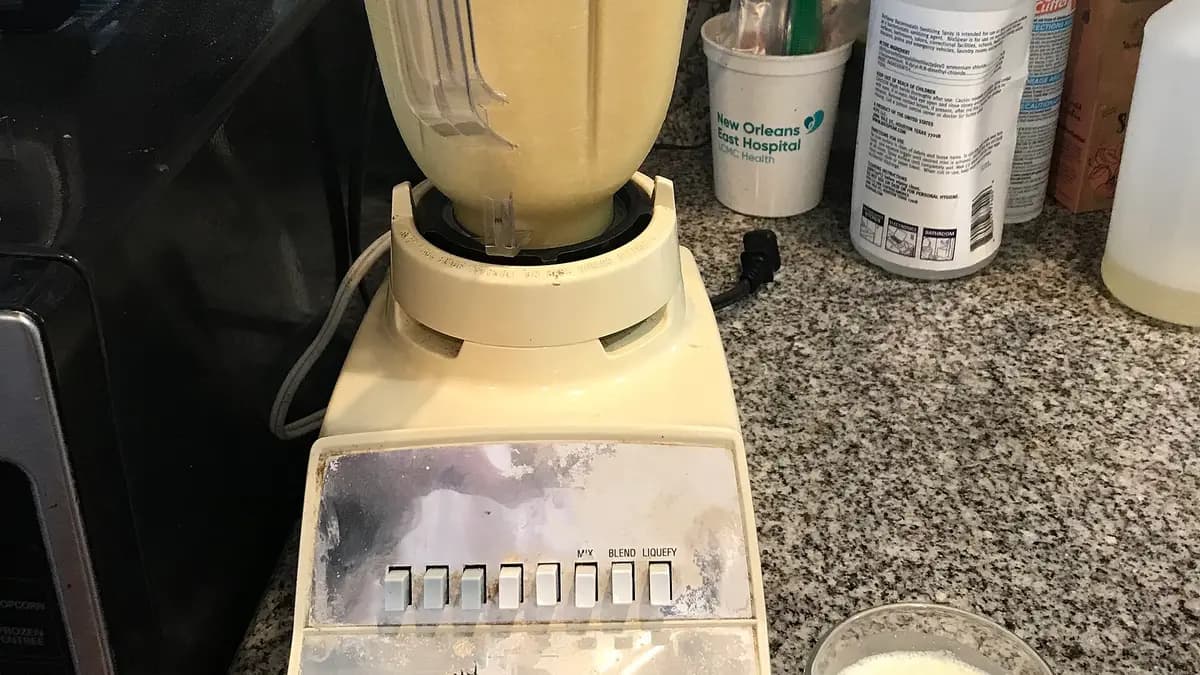
A 1,100 W blender, like the Oster Xpert Series sold in Chile, costs at most CLP 4.7 per minute of use with electricity at CLP 255.27 per kWh (CGE's BT1 residential tariff in force since October 1, 2026). Used one minute a day for a smoothie or a sauce, it adds up to about CLP 140 a month. It is one of the appliances with the smallest impact on the power bill, even though it has one of the highest power ratings in the kitchen.
The reason is simple: a blender draws a lot of power for a very short time. A 150 W refrigerator runs all day; a 1,500 W blender runs for two or three minutes. In this guide we look at how much electricity a blender uses by power rating, what each use costs in pesos and what to look for when buying one.
How much electricity a blender uses: power of models sold in Chile
A blender's power is on its rating plate and in the retailer's listing, in watts (W). Personal or portable blenders, with 400 to 600 ml cups, run from about 200 to 500 W; 1.5-liter jar blenders are around 550 to 800 W; and high-performance models, with 2-liter jars and ice-crushing blades, range from 1,000 to 1,500 W. The table shows models with their power and price on the Chilean price comparison site Solotodo as of November 2, 2026.
| Model | Type | Power | Jar | Price on Solotodo |
|---|---|---|---|---|
| Mademsa MBL30 | Personal | 300 W | 0.6 L | CLP 19,791 |
| Moulinex BGJ5077 | Jar | 550 W | 1.25 L | CLP 15,990 |
| Midea MJ-BL6003BK | Jar | 800 W | 1.5 L | CLP 16,990 |
| Oster BLSTPEGNRT-052 | Jar | 800 W | 1.5 L | CLP 54,990 |
| Ursus Trotter UT-Promixer1000 | Jar | 1,000 W | 1.5 L | CLP 32,990 |
| Oster Xpert Series BLST3BCPG-052 | High performance | 1,100 W | 2 L | CLP 69,990 |
| Moulinex LM811D10 | High performance | 1,200 W | 2 L | CLP 69,990 |
| Ninja BN750EU | High performance | 1,200 W | 2.1 L | CLP 98,991 |
| Ninja BN701CL | High performance | 1,400 W | 2 L | CLP 89,990 |
| Oster Profesional Xtreme Mix BLSTXPG-BGW | High performance | 1,500 W | 2 L | CLP 79,990 |
Source: Solotodo listings checked on November 2, 2026. Prices change daily by store and promotion. Power is the maximum stated by the manufacturer.
An important technical detail: the rated power is what the motor can draw at full load, for example when crushing ice. With liquids or soft fruit, the motor runs more easily and uses less. That is why all the calculations in this guide are a ceiling: actual use is usually somewhat lower.
How much a blender costs to run in pesos
The calculation is power in kilowatts times hours of use times the price per kWh. A 1,100 W (1.1 kW) blender running one minute (1/60 of an hour) uses 0.018 kWh. At CLP 255.27 per kWh, that is CLP 4.7.
| Blender power | Energy per minute | Cost per minute | One minute a day (month) | Three minutes a day (month) |
|---|---|---|---|---|
| 300 W (personal) | 0.005 kWh | CLP 1.3 | CLP 38 | CLP 115 |
| 550 W | 0.009 kWh | CLP 2.3 | CLP 70 | CLP 211 |
| 800 W | 0.013 kWh | CLP 3.4 | CLP 102 | CLP 306 |
| 1,100 W | 0.018 kWh | CLP 4.7 | CLP 140 | CLP 421 |
| 1,200 W | 0.020 kWh | CLP 5.1 | CLP 153 | CLP 460 |
| 1,500 W | 0.025 kWh | CLP 6.4 | CLP 191 | CLP 574 |
Energía Futura calculations with electricity at CLP 255.27 per kWh and 30 days a month, rounded. They assume maximum power the whole time.
For scale: the 0.55 kWh a month of a 1,100 W blender used one minute a day is about 0.3% of the 180 kWh that Chile's National Energy Commission uses as a household's monthly reference consumption. Our story on how much electricity a home in Chile uses each month shows which appliances really move the bill: refrigerator, electric water heater, heaters and dryer.
What each recipe costs with a blender
Times vary by recipe and model, but these are typical household ranges. The table calculates the cost with a 1,100 W blender.
| Recipe | Typical time | Energy | Cost |
|---|---|---|---|
| Juice or smoothie | 30 to 60 seconds | 0.009 to 0.018 kWh | CLP 2 to 5 |
| Cream soup or purée | 1 to 2 minutes | 0.018 to 0.037 kWh | CLP 5 to 9 |
| Sauce or salsa | 20 to 40 seconds | 0.006 to 0.012 kWh | CLP 2 to 3 |
| Frappé or slushie with ice | 1 to 2 minutes | 0.018 to 0.037 kWh | CLP 5 to 9 |
| Plant milk (almond, oat) | 2 to 3 minutes | 0.037 to 0.055 kWh | CLP 9 to 14 |
Energía Futura calculations with electricity at CLP 255.27 per kWh. Times are typical-use assumptions; blenders with automatic programs, such as Ninja models with sensors, set the time themselves.
The conclusion is clear: it is not worth choosing a blender for its electricity use. The difference between a 550 W and a 1,500 W blender, used one minute a day, is about CLP 120 a month. What matters is that the blender does what you need well and lasts.
Which blender to choose by use
- For single-serve smoothies: a personal blender of 300 to 500 W, with a cup that doubles as a bottle. It takes little space and costs from about CLP 16,000.
- For family juices, soups and sauces: a 1.5-liter jar blender of 600 to 800 W covers most uses.
- For ice, nuts or plant milks: one of 1,000 W or more, with sturdy blades and a 2-liter jar. It uses more per minute, but finishes sooner.
- For crushing ice daily or making frozen desserts: high-performance models such as Ninja or the Oster Xtreme Mix, at 1,200 to 1,500 W.
A more powerful blender can even use less per recipe if it finishes in half the time. A 550 W blender that takes two minutes to crush ice uses the same as a 1,100 W one that does it in one, and the second leaves the ice finer.
Rechargeable portable blenders
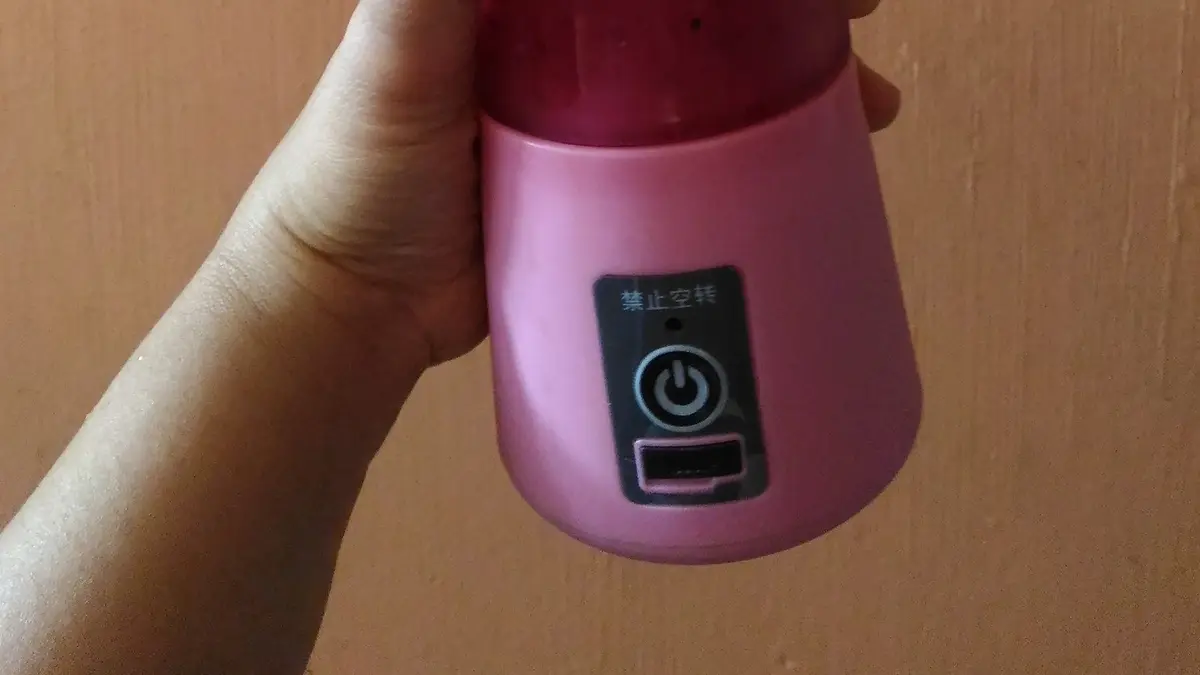
USB-charged portable blenders have small motors and batteries of a few watt-hours. A full charge uses on the order of 0.01 to 0.02 kWh, about CLP 3 to 5, and lasts several smoothies. Their limit is not consumption but power: they are not suited to hard ice or thick mixtures.
Blender, immersion blender or food processor: which uses less
For many recipes there is more than one possible appliance. The immersion blender, at 250 to 1,000 W, goes straight into the pot and handles soups and purées without transferring them; its advantage is not consumption but skipping the jar wash. A food processor, with 500 to 1,000 W motors, chops and grates better than a blender but runs for similar times. In all three cases, the cost per recipe is measured in single-digit pesos.
Where the cost does change is when the blender replaces another process. Making a vegetable cream soup means cooking the vegetables on an electric or gas stove for 20 to 30 minutes: that cooking uses dozens of times more than a minute of blending. If you want to save in the kitchen, focus on the appliances that heat.
Tips to make your blender use less and last longer
- Add liquids first and then solids: the motor starts with less effort.
- Cut fruit and vegetables into pieces before blending.
- Do not run it more than one or two minutes at a time with thick mixtures: the motor heats up and its thermal protection may cut it.
- Use the pulse function for chopping: it uses less than continuous mode.
- Unplug it if it has a display or lights: some draw standby power.
To calculate the cost with your own distributor's rate, see the table of electricity prices per kWh in Chile by municipality and distributor. With a more expensive kWh, the cost rises in the same proportion.
And if you are replacing kitchen appliances, a blender's power matters much less than the efficiency of the appliances that run all day. For those, the label is the best guide: we explain the new one in our story on Chile's new refrigerator energy label.
Do you sell efficient appliances or home energy-saving solutions? Reach Energía Futura's readers.
See advertising optionsFrequently asked questions about how much electricity a blender uses
How many watts does a normal blender have?
1.5-liter jar blenders sold in Chile range from about 550 to 800 W. Personal models have 200 to 500 W and high-performance ones 1,000 to 1,500 W.
How much does a blender cost per month?
With one minute of daily use, between CLP 38 and 191 a month depending on power, with electricity at CLP 255.27 per kWh. A 1,100 W model costs about CLP 140.
Does a higher-wattage blender use more electricity?
Per minute, yes, but it usually finishes sooner. In practice, the monthly difference between a basic and a powerful blender is a couple of hundred pesos.
Should I unplug the blender?
In models without a display, standby use is practically zero. In those with lights or a digital display, unplugging avoids a small continuous draw.