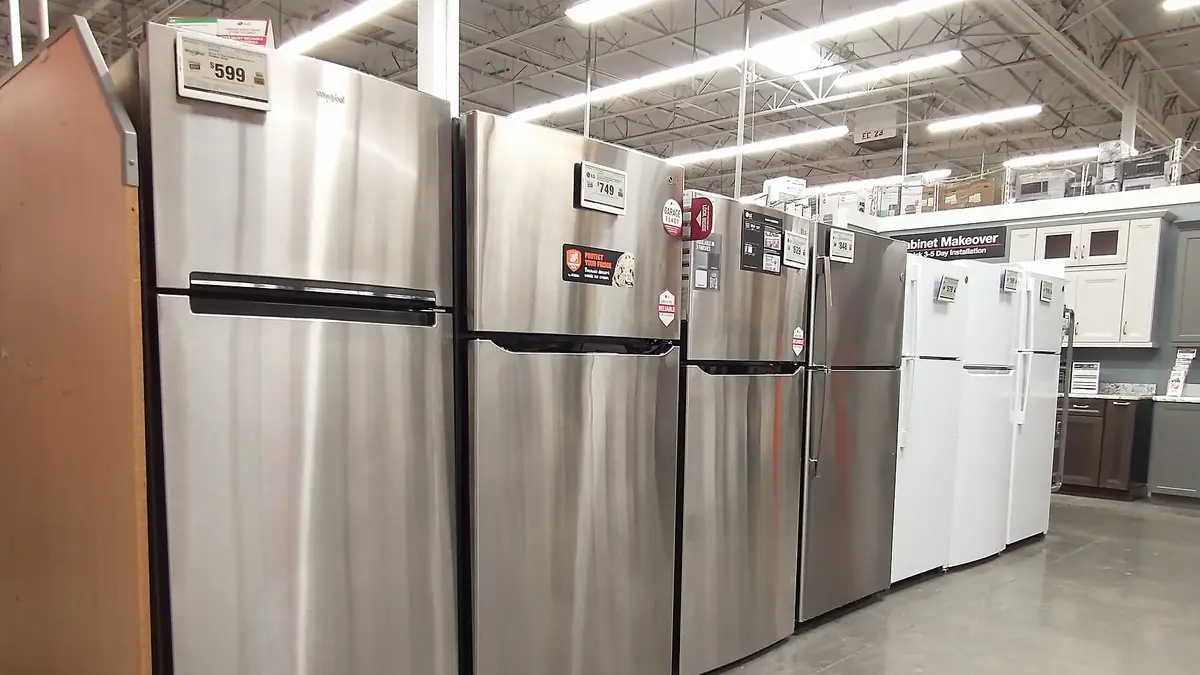
Since Saturday, October 31, 2026, every refrigerator, fridge-freezer, freezer and similar household appliance offered in Chile, in both physical stores and online channels, must display the new E2.0 energy efficiency label. It was presented on Friday the 30th by Energy Minister Ximena Rincón and the Superintendent of Electricity and Fuels, Marta Cabeza, according to the Ministry of Energy.
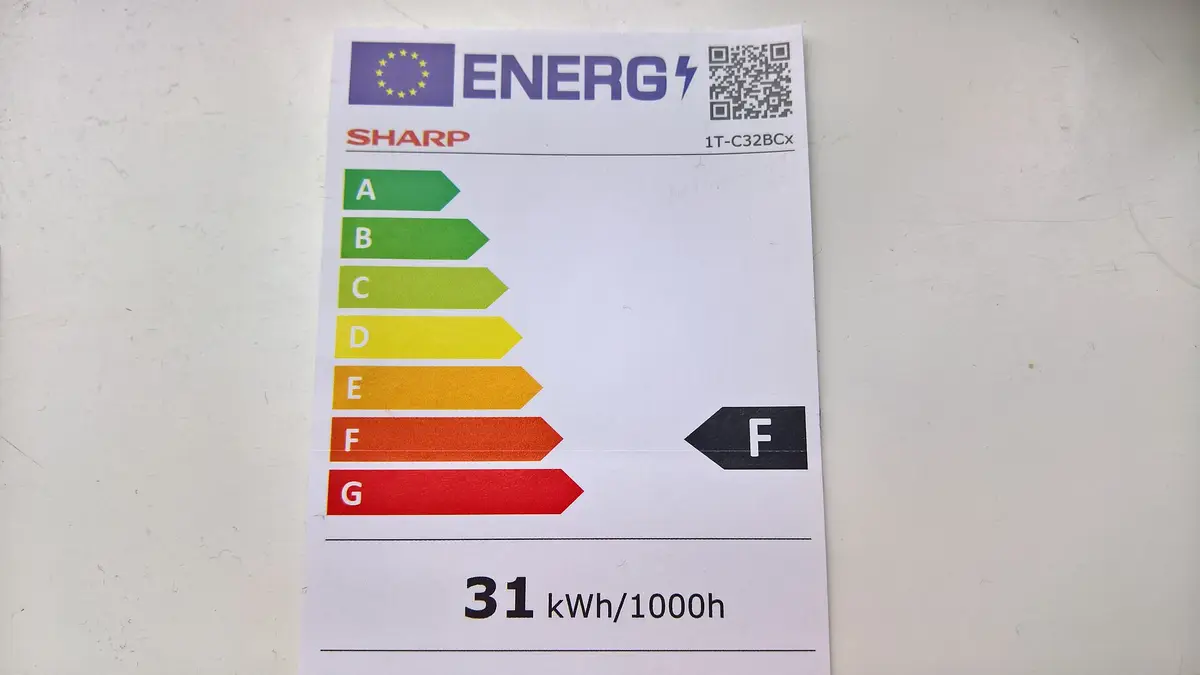
The new label keeps the A to G letter scale, but with a more modern and demanding calculation method. As a result, a refrigerator that used to be rated A+ or A++ may now show a lower letter without having lost efficiency. The most visible change for buyers is that the label shows consumption in kWh per month and carries a green circular seal that sets it apart from the old one.
“Sixteen percent of our bill has to do with this appliance,” Minister Rincón said at the launch, referring to the weight of the refrigerator in a household's electricity bill. The Superintendency of Electricity and Fuels (SEC) will enforce compliance nationwide.
What changes with the new refrigerator energy efficiency label
The E2.0 label updates how consumption is measured and the classification ranges for each letter. The goal is for the scale to tell appliances apart again: under the old label, many new models were already bunched in the top letters, with extra “+” signs.
| Feature | Previous label | E2.0 label |
|---|---|---|
| Scale | A to G, with A+ and A++ classes | A to G, with new ranges |
| Methodology | Previous standard | More modern and demanding |
| Consumption shown | Previous format | kWh per month |
| Identification | — | Green circular seal |
| Mandatory in stores | Until the transition | From October 31, 2026 |
Source: Ministry of Energy and SEC, June 10 and October 30, 2026; Chócale and T13, October 30, 2026.
The official advice is not to compare directly the letters on the old label with those on the new one. An old “A++” and a new “C” may correspond to refrigerators with similar consumption. To compare two models, the safest approach is to look at the kWh per month figure on both E2.0 labels.
When it took effect and what the rules say
The change was not improvised. It was set by Exempt Resolution No. 35 of the Ministry of Energy, dated September 4, 2024, and Exempt Resolution No. 30602 of the SEC, dated February 11, 2025, and was rolled out in two stages, the Ministry of Energy reported on June 10, 2026.
| Date | What took effect |
|---|---|
| September 4, 2024 | Exempt Resolution No. 35 of the Ministry of Energy |
| February 11, 2025 | Exempt Resolution No. 30602 of the SEC |
| January 1, 2026 | Manufacturers and importers must hold the Efficiency Approval Certificate and the E2.0 label at first sale |
| October 31, 2026 | All appliances in physical and online stores must display the E2.0 label |
Source: Ministry of Energy, June 10, 2026.
During the transition, the same model could carry two different labels, which the ministry described as “completely normal.” To help with the equivalence, the SEC published a reference comparison table between the previous rating and E2.0 for certified models.
How much a household can save with the new refrigerator energy efficiency label
The refrigerator is the only appliance that runs 24 hours a day, all year round. That is why a difference that looks small on the label shows up on the bill. “A refrigerator may be cheaper when you buy it, but if it is not efficient, it can be expensive to run,” the minister warned.
As an example, Energía Futura calculated the cost of three typical consumption levels with electricity at CLP 255.27 per kWh, CGE's BT1 residential rate in force in October 2026 for the base tier. The calculation is a reference: the price varies by distribution company and municipality.
| Consumption on the label | Cost per month | Cost per year | Cost over 10 years |
|---|---|---|---|
| 25 kWh/month | CLP 6,382 | CLP 76,581 | CLP 765,810 |
| 35 kWh/month | CLP 8,934 | CLP 107,213 | CLP 1,072,134 |
| 50 kWh/month | CLP 12,764 | CLP 153,162 | CLP 1,531,620 |
Source: Energía Futura calculation with electricity at CLP 255.27 per kWh (CGE, BT1, October 2026). Consumption levels are examples, not specific models.
Between a 25 and a 50 kWh per month appliance there is a difference of CLP 6,382 a month and more than CLP 760,000 over ten years, the usual lifespan of a refrigerator. In many cases, that figure exceeds the price gap in the store. To run the numbers for your own appliance, see how much electricity a refrigerator uses and what it costs.
How to read the label when you buy
- Look for the green circular seal: it shows the label is E2.0 and can be compared with others in the same format.
- Check the kWh per month first: it is the figure that translates directly into pesos on your bill.
- Compare models of the same type and size: a refrigerator with a large freezer will use more than a simple one, even with the same letter.
- Do not mix old and new letters: an old A+ is not equivalent to an E2.0 A.
- Ask for the label in online stores: the obligation covers digital channels too.
Mandatory labeling in Chile is not limited to refrigerators: washing machines, light bulbs, air conditioners and other appliances also carry it. If you are looking for a small unit for an office or bedroom, see how much a mini fridge uses and costs.
The measure comes as the Ministry of Energy prepares a new National Energy Efficiency Plan for the next five years, whose public consultation process was launched on September 29, 2026, according to the ministry. If you need extra space for frozen food, also see what a chest or upright freezer costs to run.
Does your brand sell efficient appliances or energy-saving solutions? Reach Energía Futura's readers.
See advertising optionsFrequently asked questions about the new refrigerator energy efficiency label
Since when is the E2.0 label mandatory?
Since October 31, 2026 for all refrigerators and freezers offered in physical and online stores. For manufacturers and importers it has applied since January 1, 2026.
My refrigerator was A++ and the same model now shows B. Is it worse?
Not necessarily. E2.0 uses a stricter methodology, so an appliance can drop a letter without using more energy. Compare the kWh per month.
Do I need to change the label on the refrigerator I already own?
No. The obligation applies to new appliances being sold, not to those already in homes.
Who enforces it?
The SEC, nationwide. According to Superintendent Marta Cabeza, “there must be no refrigerators that fail to provide this information through the label.”
How much of the electricity bill goes to the refrigerator?
About 16% of a household's electricity bill, according to Energy Minister Ximena Rincón.