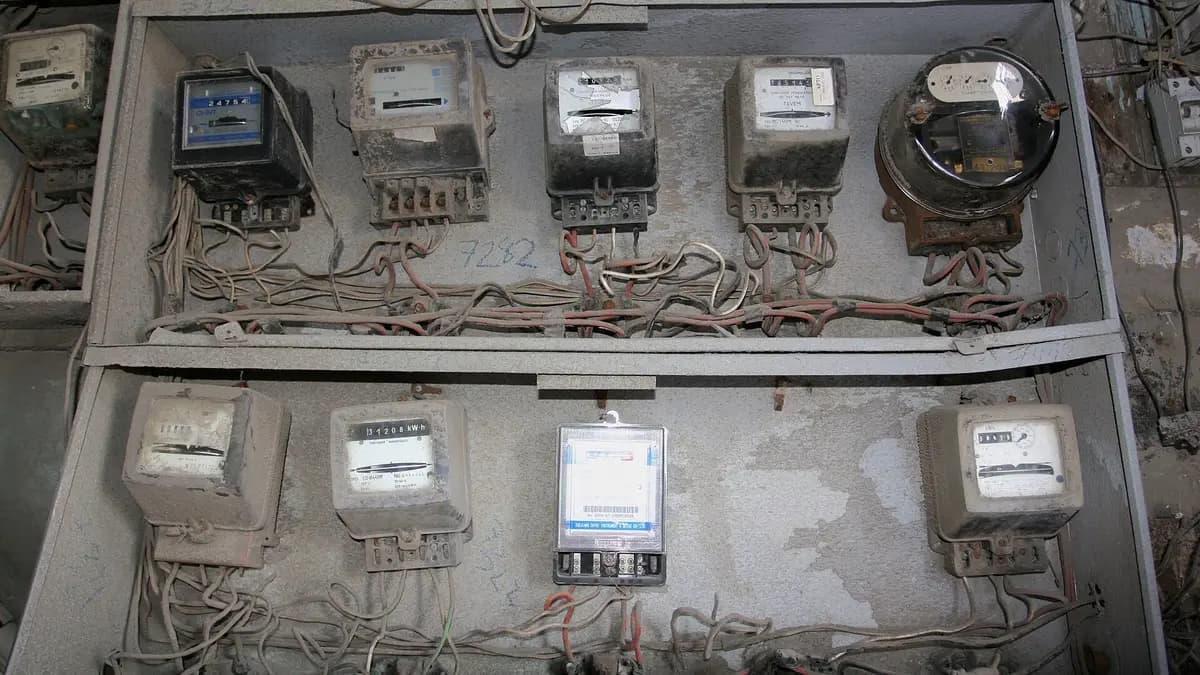
The Ninth Chamber of the Santiago Court of Appeals upheld the 1,000 UTM fine that Chile's Superintendency of Electricity and Fuels (SEC) imposed on distributor CGE for the irregular replacement of electricity meters in the Biobío Region. At the November 2026 value of the UTM, a Chilean inflation-indexed monthly tax unit, the penalty is worth about CLP 72.4 million. The ruling was reported by Diario Financiero on November 2, 2026.
The court rejected the company's claim of illegality and upheld the penalty in full. According to the ruling, CGE replaced about 1,800 meters without the technical verification required by the rules, swapped more than 5,000 devices that were within the permitted error range and changed the registered holder of 4,553 devices.
1,800
Meters replaced without verification
Approximate figure in the ruling
+5,000
Replaced while within range
More than 5,000 devices
4,553
With a change of holder
Devices
CLP 72.4 M
Fine upheld
1,000 UTM at CLP 72,440
Source: Diario Financiero, November 2, 2026; November UTM per SII
View the data as a table
| Meters replaced without verification | 1,800 · Approximate figure in the ruling |
| Replaced while within range | +5,000 · More than 5,000 devices |
| With a change of holder | 4,553 · Devices |
| Fine upheld | CLP 72.4 M · 1,000 UTM at CLP 72,440 |
Why the court upheld the fine on CGE
CGE argued that the replacements were preventive maintenance because the devices were more than 20 years old. The court did not accept that justification: it held that electricity regulations set restrictive conditions for a distributor to replace a meter on its own, and that age or obsolescence does not exempt it from obtaining a technical certification from authorized bodies or laboratories.
For the court, the irregular replacements and the changes of holder affected customers' guarantees over the accuracy of metering and billing. In other words, the issue is not merely procedural: the meter is the instrument used to calculate what each household pays, and the rules require proof that a device is out of range before it is replaced.
| Point of the case | Detail |
|---|---|
| Court | Ninth Chamber, Santiago Court of Appeals |
| Penalty | 1,000 UTM, imposed by the SEC |
| CGE's appeal | Claim of illegality, rejected |
| Meters replaced without verification | About 1,800 |
| Meters replaced while within range | More than 5,000 |
| Devices with a change of holder | 4,553 |
| Company's defence | Preventive maintenance of devices over 20 years old |
Source: Diario Financiero, November 2, 2026. The report does not give the date of the ruling or of the SEC's original resolution, nor the municipalities involved, and does not say whether CGE will appeal to the Supreme Court.
How much is a 1,000 UTM fine
The UTM for November 2026 is CLP 72,440, according to SII Circular 39, which sets the month's tax-exempt bracket at CLP 724,400 (10 UTM). At that value, 1,000 UTM equals CLP 72,440,000. The fine is paid at the UTM value of the month in which it is settled, so the final figure may vary slightly.
It is not the largest penalty CGE has received over metering. In October 2025 the SEC fined it 85,000 UTM, more than CLP 5.8 billion at the time, for meter-reading errors and bills with estimated consumption that affected more than 640,000 customers in O’Higgins and Maule in July and August 2025, according to Diario Financiero.
| SEC penalty on CGE | Amount | Reason |
|---|---|---|
| October 2025 (O’Higgins and Maule) | 85,000 UTM | Wrong readings and bills with undisclosed estimated consumption (80,000 UTM) and wrong data on unregistered consumption (5,000 UTM) |
| Upheld in November 2026 (Biobío) | 1,000 UTM | Meter replacement without technical verification and changes of holder |
Source: Diario Financiero (October 22, 2025 and November 2, 2026).
The Biobío case differs from the 2025 one: it is not about miscalculated bills but about the procedure for changing equipment. The court focused on the fact that more than 5,000 meters working within the permitted range were replaced anyway, and that 4,553 changed holder. In practice, the company altered the record of who owns the device used to measure each customer's consumption, without the prior certification required by the rules.
What customers can do if their meter is replaced
Meter replacement became a political issue in Chile in 2019, when a plan to roll out smart meters was going to be paid for by customers. That year, the Chamber of Deputies approved that removing and replacing meters be paid entirely by the companies, and the mandatory replacement plan was suspended.
- Ask for the reason in writing. The distributor must explain why it is changing the device and on what technical verification.
- Check the next bill. Compare consumption with previous months and the same month last year.
- Complain to the company first. If it does not respond or the answer is unconvincing, file a complaint with the SEC online.
- Keep the readings. A dated photo of the old and new meters serves as evidence.
How each charge on the bill works and how much a kWh costs by municipality can be checked in our guide to electricity prices per kWh in Chile by utility.
Courts have backed the SEC against distributors before. In October, a court ordered another company to cancel a CLP 434,000 charge to a customer, as we reported in our story on how to challenge an excessive charge.
The ruling comes as the government prepares a reform of electricity distribution, whose bill would be submitted in March and which covers, among other things, quality of service and metering. Progress on that process is in our story on Chile's power grid reform.
Does your company offer smart metering, energy efficiency or electrical services? Reach Energía Futura's readers.
See advertising optionsFrequently asked questions about the fine on CGE
Why was CGE fined?
For replacing about 1,800 meters without the required technical verification, swapping more than 5,000 that were within range and changing the holder of 4,553 devices in Biobío.
How much is the fine in pesos?
1,000 UTM, about CLP 72.4 million at the November 2026 UTM (CLP 72,440).
Can a distributor change my meter without notice?
According to the ruling, it cannot do so freely: it needs a technical certification from an authorized body or laboratory, even if the device is old.
Where do I complain if I think my meter is inaccurate?
First to the distributor and, if there is no solution, to the SEC, which can order the device to be checked.
How do I know if my meter is working properly?
A simple test is to switch off all appliances and breakers in the home and check whether the meter keeps advancing. If it does, there may be a fault or a leak, and it is worth requesting an inspection.