Chile's National Electric Coordinator has offered a working group to the municipality of Renca to explain the technical and regulatory grounds for the Lo Campino substation, a transmission project that Mayor Claudio Castro and the mayor of Quilicura, Paulina Bobadilla, reject over its possible impact on the Cerros de Renca Metropolitan Park in Santiago. The grid operator's reply was reported on November 6, 2026 by Electrominería.
The Lo Campino substation is being developed by Sociedad Austral de Transmisión Troncal (SATT), a subsidiary of Grupo Saesa. According to the final technical report of the 2022 Transmission Expansion Plan of the National Energy Commission (CNE), it has a reference investment value of US$52,616,954 and a construction period of 60 months.
View the data as a table
| Reference investment value | US$52.6 M |
| 220/110 kV autotransformer bank | 400 MVA |
| Construction period | 60 months |
| Expected loading of Cerro Navia in some scenarios | Over 85% |
What the Coordinator said about the Lo Campino substation
In its letter to the municipality, the Coordinator said it understood the concern about the project's potential impact on the park, which it recognized as an important initiative for the community and the area, and welcomed Renca's interest in learning about the background. It offered a working meeting to explain why the project is considered necessary.
The body drew a distinction that is key in this case: the need to reinforce the area's power infrastructure, identified in planning, is one thing; decisions on location and design, which belong to later stages, are another. According to the Coordinator, it is up to Saesa, through SATT, to carry out detailed engineering, assess site alternatives, choose the final location and obtain land and permits. The environmental and territorial assessment is also the company's responsibility.
The Coordinator added that regulatory mechanisms exist to assess technical changes to the project, as long as its functionality and benefits for the system are preserved. That door could open a design change, such as a gas-insulated substation (GIS), which takes up less space, or a different route for the connections.
- 2022Transmission planning identifies the need
- May 2023CNE includes Lo Campino in the 2022 expansion plan
- June 2024The Coordinator publishes the tender rules (US$52 M reference)
- 2025Decree 5T awards the project to Grupo Saesa
- August 4, 2025Rights move to subsidiary SATT
- September 15, 2026Renca's mayor opposes the design
- November 6, 2026The Coordinator offers a working group
Why Santiago needs the Lo Campino substation
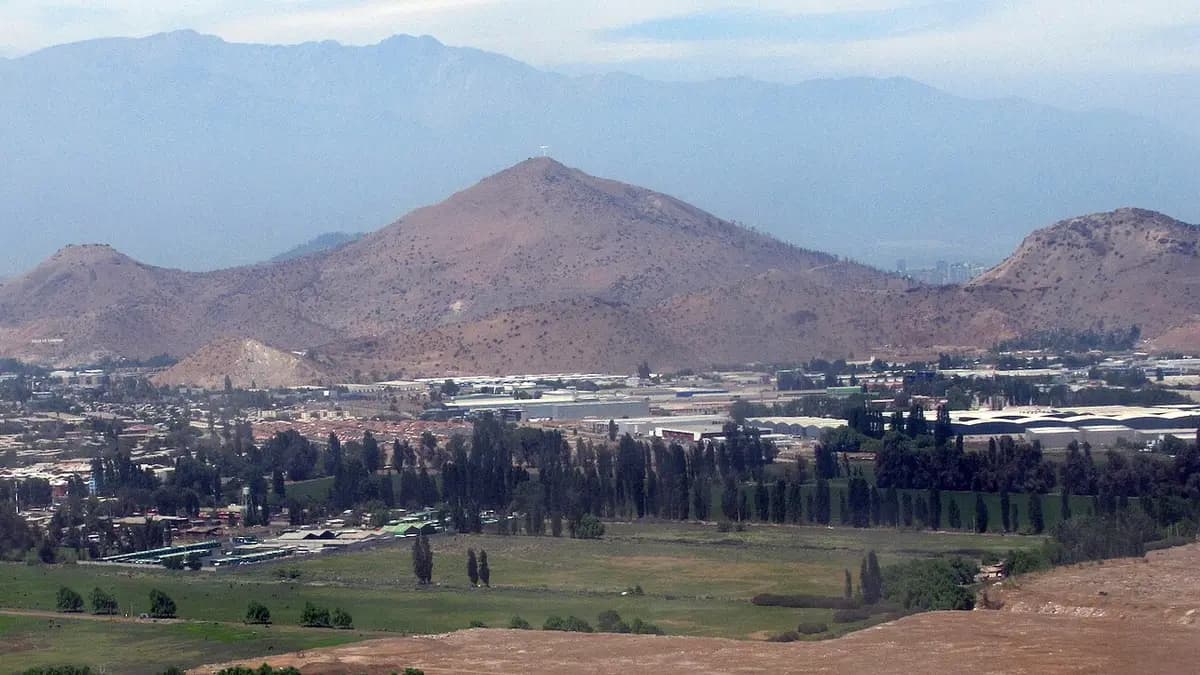
The justification lies in the CNE plan. The Cerro Navia substation is the main point where power is injected to supply the Metropolitan Region: it feeds the 110 kV ring that serves more than 30 primary distribution substations. It has 3 banks of 400 MVA autotransformers and sits in a built-up part of the city, with few options to keep expanding.
The Commission's analysis showed that, in some operating scenarios, the expected loading of Cerro Navia's transformers would exceed 85%, mainly due to organic demand growth in Greater Santiago. The new substation will share the transformation of power between the 220 kV and 110 kV networks and reduce the strain on Cerro Navia, the Coordinator explained. The problem is not unique to Santiago: a Deloitte study concluded that Chile's transmission grid cannot carry the available energy in several parts of the country.
| Substation | Role | 220/110 kV transformation |
|---|---|---|
| Cerro Navia (existing) | Main injection into Santiago's 110 kV ring; serves more than 30 primary substations | 3 banks of 400 MVA (1,200 MVA) |
| Lo Campino (planned) | Shares transformation in the north of the capital and sections four lines | 1 bank of 400 MVA plus a spare unit |
Source: CNE, final technical report of the 2022 Transmission Expansion Plan. With Lo Campino, 220/110 kV transformation capacity in western Santiago would rise by a third, and the city would have a second backup point if one of Cerro Navia's banks fails.
| Feature | Lo Campino substation |
|---|---|
| Owner | SATT, a Grupo Saesa subsidiary |
| Plan that includes it | 2022 Transmission Expansion Plan (CNE) |
| Reference investment value | US$52,616,954 |
| Construction period | 60 months |
| Transformation | 220/110 kV, 400 MVA autotransformer bank, plus a spare unit |
| 220 kV yard | Breaker-and-a-half, busbars of at least 2,000 MVA |
| 110 kV yard | Breaker-and-a-half, busbars of at least 1,000 MVA |
| Required location | About 3 km north of Cerro Navia, along the Cerro Navia-Nueva Lampa line, within a 2.5 km radius |
Source: CNE, final technical report of the 2022 Transmission Expansion Plan. The document allows both yards to be built with GIS technology or equivalent, an option that reduces the substation's footprint. The project will section three existing lines and receive a fourth.
| 2x220 kV Cerro Navia - Nueva Lampa | 220 | Sectioned at Lo Campino |
| 2x110 kV Cerro Navia - Tap Libertadores | 110 | Sectioned at Lo Campino |
| 2x110 kV Cerro Navia - El Salto | 110 | Sectioned at Lo Campino |
| 2x110 kV Tap Lo Boza - Lo Boza | 110 | Connected to Lo Campino |
Opposition from Renca and Quilicura
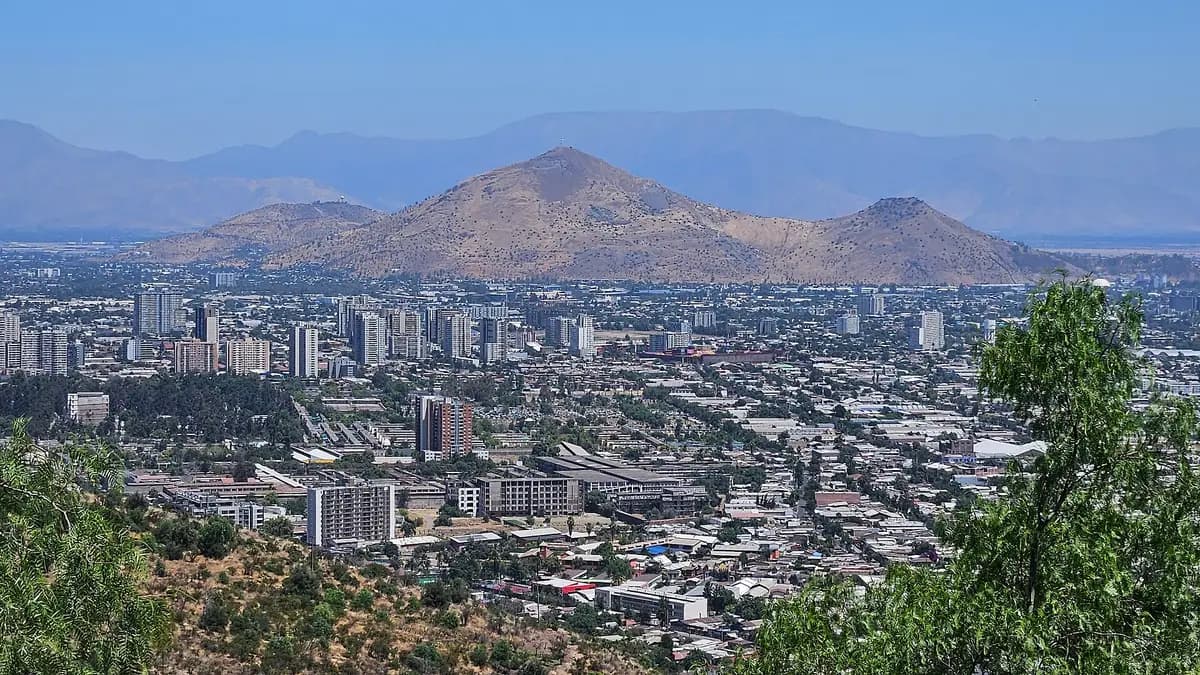
Mayor Castro made his opposition public in September. According to The Clinic, the municipality objected to a design with 28 high-voltage towers more than 35 meters tall and a substation that would use more than 7 hectares near the park, and sent a formal statement to Conaf, the ministries of Energy and the Environment, the Government of Santiago and the municipality of Quilicura.
Castro compared the case with Providencia, where the same company is building a substation integrated into the urban setting and 2.6 km of underground lines beneath Andrés Bello avenue. The Cerros de Renca Metropolitan Park is a project covering more than 200 hectares that aims to turn the hill into a large public park for northwestern Santiago, with a lookout at the summit.
A recurring conflict in transmission
The Lo Campino case illustrates a frequent tension in a system where transmission investment is growing ninefold in 2026: planning determines that a project is needed and sets a general area, but the exact location is settled later, when the winning bidder has already secured the tender with a tight budget. Burying lines or enclosing a substation costs more, and who pays that difference is the underlying question in these disputes.
The government has put transmission at the center of its agenda: the tender awarded this week assigned 17 transmission projects worth US$475 million. But many of these works must cross urban or environmentally valuable areas, where dialogue with municipalities and residents weighs as much as electrical calculations.
No date has been set for the meeting. Nor is there any public record of the project entering the Environmental Impact Assessment System (SEIA), the stage at which the location, towers and mitigation measures would be formally discussed.
Does your company work in transmission, grids or power services? Reach Energía Futura's readers.
See advertising optionsFrequently asked questions
What is the Lo Campino substation?
A new 220/110 kV substation for northern Santiago, included by the CNE in the 2022 Transmission Expansion Plan, with a reference investment of US$52.6 million.
Who is building it?
Sociedad Austral de Transmisión Troncal (SATT), part of Grupo Saesa, which took over the project rights in August 2025.
Why does Renca reject it?
Because of its potential impact on the Cerros de Renca Metropolitan Park: the municipality objects to towers over 35 meters tall and a substation covering more than 7 hectares.
Can the design be changed?
According to the Coordinator, regulatory mechanisms exist to assess technical changes, provided the project's functionality and benefits for the system are preserved.
What is it for?
To relieve the Cerro Navia substation, whose transformers would exceed 85% loading in some scenarios due to demand growth in Santiago.