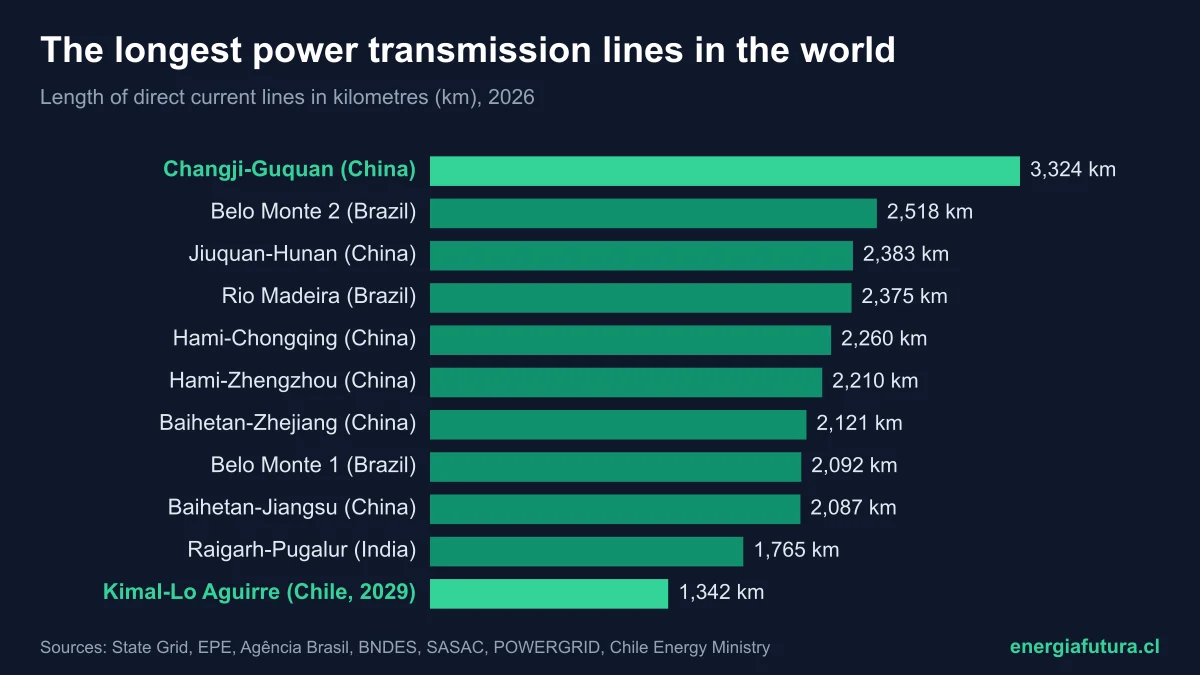
Updated on 26 October 2026. The longest power transmission line in the world is Changji-Guquan, in China: it runs 3,324 kilometres between Changji, in Xinjiang, and Guquan, in Anhui province, in direct current at ±1,100 kV, the highest voltage in operation on the planet. It can carry 12,000 MW, according to State Grid Corporation of China information reported by Enerdata. Construction ended in late 2018 and the line entered operation in 2019.
It is almost 2.5 times the length of Kimal-Lo Aguirre, Chile's first direct current line, which will be 1,342 km long and will link Antofagasta with the Santiago Metropolitan Region from 2029. This is the ranking of the longest transmission lines in the world, with their voltage and capacity.
Ranking: the longest power transmission line in the world and the runners-up
All the longest lines in the world are high-voltage direct current (HVDC) lines. Over distances of more than a thousand kilometres, direct current loses less energy than alternating current and needs fewer conductors, so it is the technology of choice for carrying electricity from large remote power plants to cities. The length of a given line varies by source, because some measure the route and others the distance between stations; this ranking uses the operator's or the official agency's figure when available.
| # | Line | Country | Voltage | Capacity | Length | In operation |
|---|---|---|---|---|---|---|
| 1 | Changji-Guquan | China | ±1,100 kV | 12,000 MW | 3,324 km | 2019 |
| 2 | Belo Monte, second bipole (Xingu-Rio de Janeiro) | Brazil | ±800 kV | 4,000 MW | 2,518 km | 2019 |
| 3 | Jiuquan-Hunan | China | ±800 kV | 8,000 MW | 2,383 km | 2017 |
| 4 | Rio Madeira (Porto Velho-Araraquara) | Brazil | ±600 kV | 6,300 MW (2 bipoles) | 2,375 km | 2014 |
| 5 | Hami-Chongqing | China | ±800 kV | 8,000 MW | 2,260 km | 2025 |
| 6 | Hami South-Zhengzhou | China | ±800 kV | 8,000 MW | 2,210 km | 2014 |
| 7 | Baihetan-Zhejiang | China | ±800 kV | 8,000 MW | 2,121 km | 2022 |
| 8 | Belo Monte, first bipole (Xingu-Estreito) | Brazil | ±800 kV | 4,000 MW | 2,092 km | 2017 |
| 9 | Baihetan-Jiangsu | China | ±800 kV | 8,000 MW | 2,087 km | 2022 |
| 10 | Xiangjiaba-Shanghai | China | ±800 kV | 6,400 MW | About 2,000 km | 2010 |
| 11 | Raigarh-Pugalur | India | ±800 kV | 6,000 MW | 1,765 km | 2020-2021 |
Sources: State Grid via Enerdata (Changji-Guquan); Agência Brasil (Belo Monte 2); Yongfu, the project designer (Jiuquan-Hunan); Brazil's EPE (Rio Madeira); China Daily (Hami-Chongqing); C-EPRI (Hami South-Zhengzhou); Enerdata (Baihetan-Zhejiang); BNDES (Belo Monte 1); SASAC (Baihetan-Jiangsu); Hitachi Energy (Xiangjiaba-Shanghai); POWERGRID via Powerline (Raigarh-Pugalur). Accessed on 26 October 2026. The ranking may be incomplete: China operates other ultra-high-voltage direct current lines that do not always publish their exact length.
China dominates the ranking
Of the 11 lines in the table, seven are Chinese, three Brazilian and one Indian. All three countries share the same geographic problem: their big energy resources (coal, wind and sun in western China; Amazon rivers in Brazil; coal in central India) are thousands of kilometres away from the cities that consume the power. Several of these lines start at dams that appear in the ranking of the largest hydroelectric plants in the world, such as Belo Monte, Baihetan and Xiangjiaba.
Changji-Guquan, the longest power transmission line in the world in 2026
Changji-Guquan was the first line in the world to operate at 1,100 kilovolts. Its purpose is to carry electricity generated in Xinjiang, in China's far northwest, to the Anhui region, near Shanghai, in the east of the country. With 12,000 MW of capacity, it can carry four times the power that Kimal-Lo Aguirre, Chile's future direct current line, will transmit.
| Item | Changji-Guquan |
|---|---|
| Operator | State Grid Corporation of China |
| Ends | Changji (Xinjiang)-Guquan (Anhui) |
| Technology | Ultra-high-voltage direct current (UHVDC) |
| Voltage | ±1,100 kV |
| Capacity | 12,000 MW |
| Length | 3,324 km (other sources give between 3,293 and 3,305 km) |
| Main equipment suppliers | Siemens and ABB, among others |
| Construction | January 2016 to late 2018 |
Source: State Grid via Enerdata and supplier fact sheets. The small difference in length is because some sources measure the full route and others only the overhead line section.
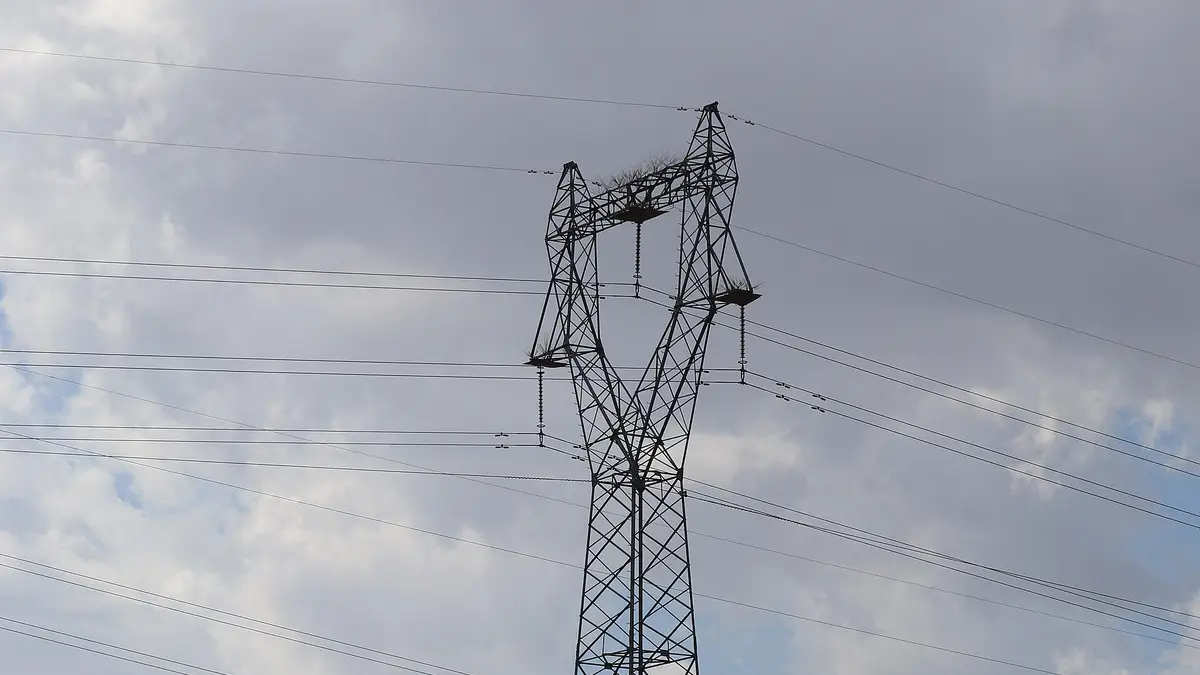
Why Guinness still names Rio Madeira
Anyone looking up the record at Guinness World Records will find a different name: the entry for the longest power line is still assigned to the Rio Madeira link, in Brazil, with 2,500 km. That entry is out of date. According to Brazil's Energy Research Company (EPE), Rio Madeira is 2,375 km long and was the longest direct current line in the world when it began commercial operation in 2014, overtaking Xiangjiaba-Shanghai.
Since then it has been overtaken by the second Belo Monte bipole, also in Brazil, and by several Chinese lines, led by Changji-Guquan. Rio Madeira operates at ±600 kV, the same voltage Chile's Kimal-Lo Aguirre will use, and remains one of the most important lines in Latin America: it carries power from the Santo Antônio and Jirau plants, in Rondônia, to São Paulo.
The longest lines in Latin America
Brazil has the longest lines in the region because its big hydro plants are in the Amazon and its consumption is in the southeast. Belo Monte needed two ±800 kV bipoles, one of 2,092 km to Estreito, in Minas Gerais, and another of 2,518 km to Rio de Janeiro, the latter built by State Grid. Chile will join Brazil among the countries in the region with a long-distance direct current line when Kimal-Lo Aguirre enters service.
Kimal-Lo Aguirre: how Chile's longest line compares
Kimal-Lo Aguirre will be Chile's first direct current line. According to the Ministry of Energy's September 2026 Project Report, it will be 1,342 km long, with an investment of US$2 billion, and its grid connection is scheduled for May 2029. The decree that awarded it sets a capacity of 3,000 MW at ±600 kV. It is being built by the Conexión Kimal-Lo Aguirre consortium, formed by Transelec, ISA Chile and China Southern Power Grid.
| Item | Kimal-Lo Aguirre (Chile) | Changji-Guquan (China) |
|---|---|---|
| Length | 1,342 km | 3,324 km |
| Voltage | ±600 kV | ±1,100 kV |
| Capacity | 3,000 MW | 12,000 MW |
| Investment | US$2 billion | No comparable official figure |
| Commissioning | May 2029 (planned) | 2019 |
Source: Chile's Ministry of Energy, September 2026 Project Report; 2022 award decree; State Grid via Enerdata. Kimal-Lo Aguirre explains much of the jump in investment in transmission works in Chile during 2026, as detailed in this year's power transmission investment.
At 1,342 km, Kimal-Lo Aguirre would not make the global ranking, but it would be Chile's longest line and one of the longest in Latin America outside Brazil. Its purpose is similar to that of the Chinese lines: to move solar and wind power from the north, where there is a surplus, to the centre of the country, where it is consumed. Today part of that energy is lost for lack of transmission capacity, a problem analysed in the renewable curtailment identified by Deloitte.
Why the longest lines use direct current
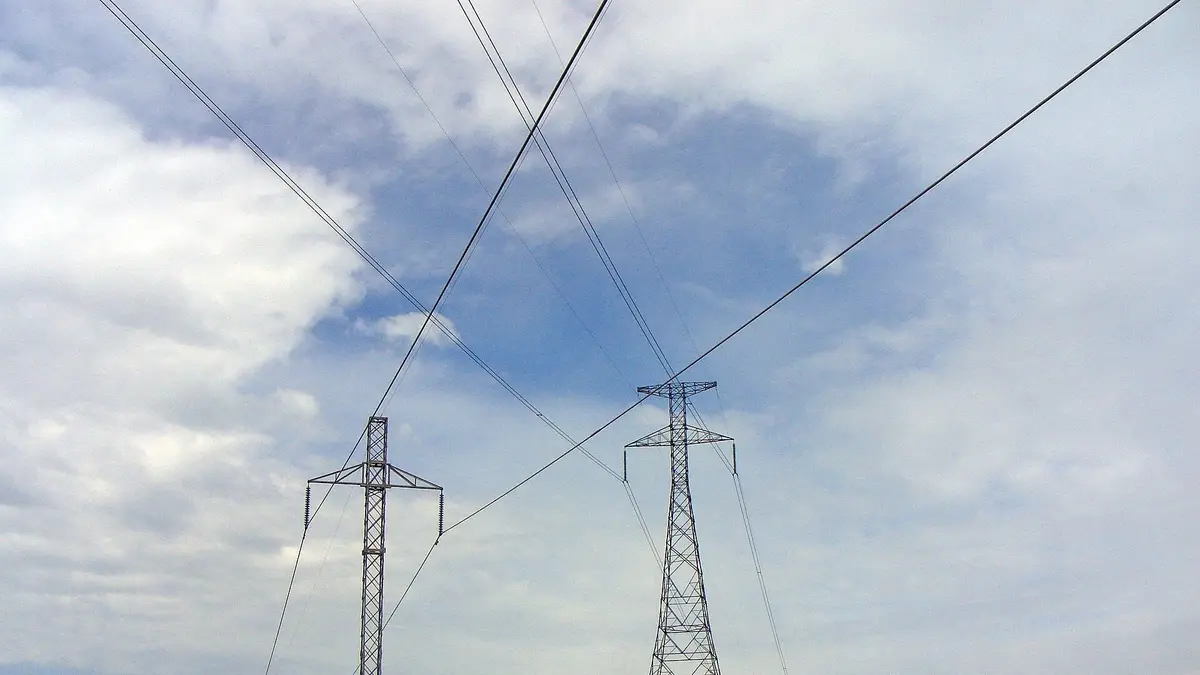
In alternating current, energy is lost over distance through effects that grow with the length of the line, and beyond a certain threshold it becomes unviable. In direct current those losses are smaller, two conductors are used instead of three and the towers can be lighter. The cost lies in the converter stations at each end, which turn alternating current into direct current and back. That is why direct current pays off mainly over long distances, generally from a few hundred kilometres on land.
- More voltage, fewer losses: raising the voltage from ±800 kV to ±1,100 kV allowed Changji-Guquan to carry 12,000 MW over more than 3,000 km.
- Narrower corridor: a direct current line needs a narrower right of way than several alternating current lines with the same capacity.
- Flow control: converter stations make it possible to decide how much power flows, which helps stabilise systems with a lot of solar and wind power.
Does your company work in power transmission, engineering or large energy projects? Reach Energía Futura's readers.
See advertising optionsFrequently asked questions
What is the longest power transmission line in the world?
Changji-Guquan, in China, at 3,324 km, ±1,100 kV and 12,000 MW of capacity. It has operated since 2019 between Xinjiang and Anhui.
What is the longest line in Latin America?
The second Belo Monte bipole, in Brazil, at 2,518 km and ±800 kV between Pará and Rio de Janeiro. It is followed by Rio Madeira, at 2,375 km.
What does Guinness say about the longest power line?
Its entry still names Rio Madeira at 2,500 km, but that line has already been overtaken by Belo Monte and several Chinese lines.
What will be Chile's longest line?
Kimal-Lo Aguirre, with 1,342 km of direct current at ±600 kV and 3,000 MW, between Antofagasta and the Santiago Metropolitan Region. Its grid connection is scheduled for May 2029.
What is the highest voltage of a transmission line?
In direct current, Changji-Guquan's ±1,100 kV. In Chile, the highest alternating current lines are 500 kV.
How to cite this data
Energía Futura (2026). The longest power transmission line in the world 2026: ranking of the longest high-voltage lines. With data from State Grid, EPE, Agência Brasil, BNDES, SASAC, Hitachi Energy, POWERGRID and Chile's Ministry of Energy, accessed on 26 October 2026. Available at https://energiafutura.cl/en/news/the-longest-power-transmission-line-in-the-world-2026-ranking-of-the-longest-high-voltage-lines. The cover chart may be reproduced crediting Energía Futura and linking to this page.