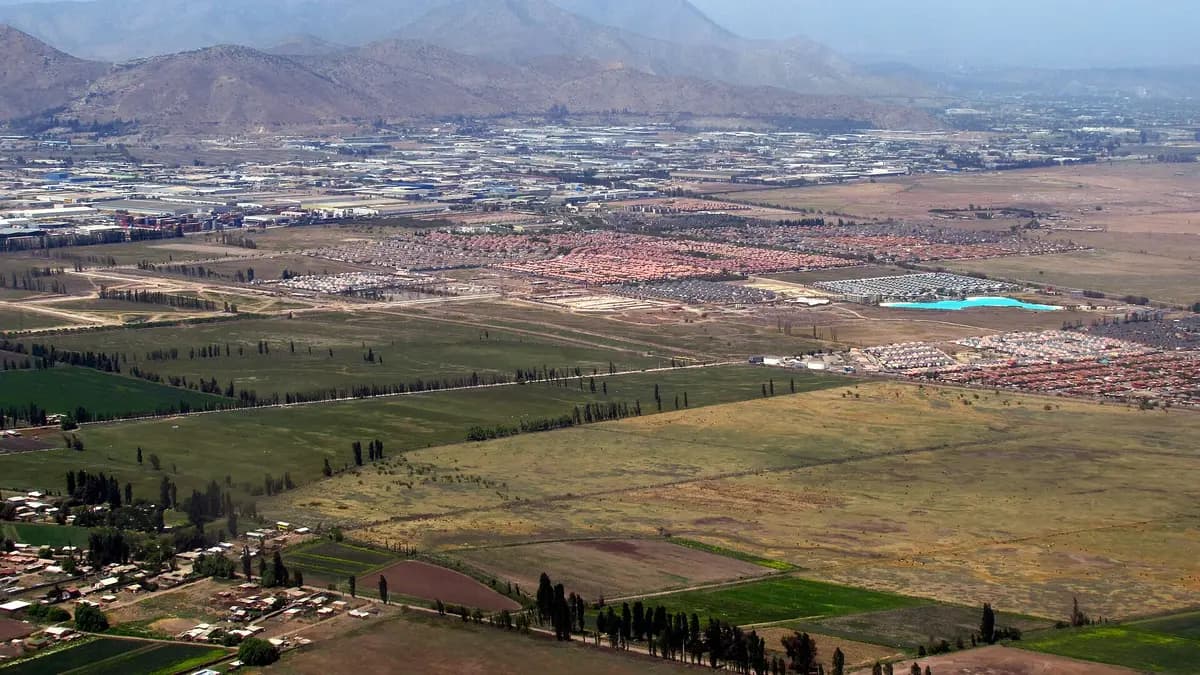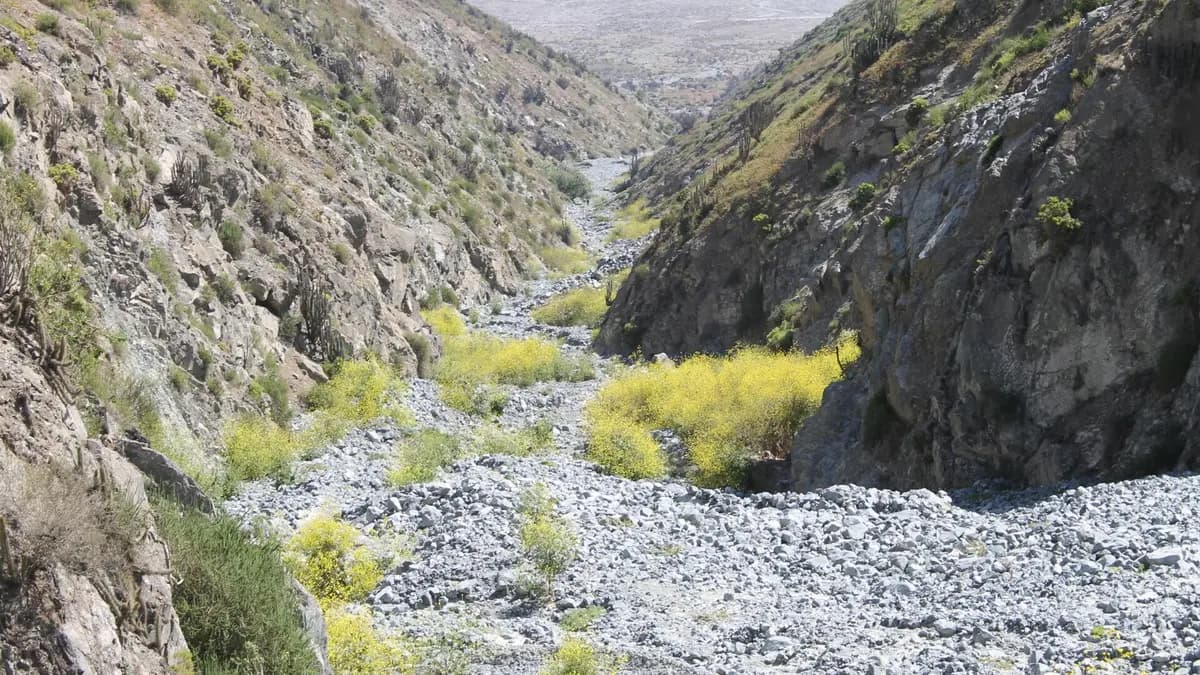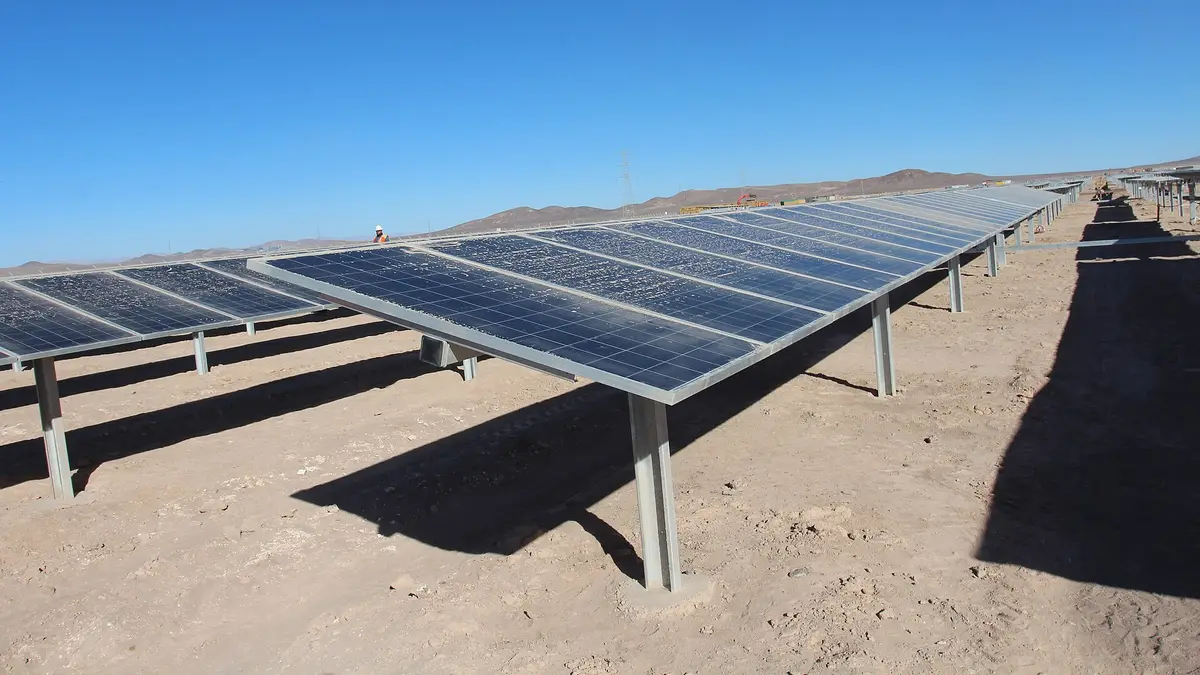
Spanish developer Grenergy has submitted the Pampa del Desierto photovoltaic park, in the municipality of María Elena, Antofagasta Region, to Chile's Environmental Impact Assessment System (SEIA). The project combines 518.7 MWp of solar panels, a nominal output of 430 MW and a battery energy storage system (BESS) of 430 MW and 3,010 MWh, with an estimated investment of US$520 million, according to Revista Electricidad and Reporte Minero on October 30, 2026.
The formal applicant is GR Flor de Loto SpA, a Grenergy company, which filed an Environmental Impact Statement (DIA) on October 29. As of this writing, the project was still at the admission stage, meaning the Environmental Assessment Service (SEA) had not yet accepted it for processing, according to REDIMIN.
The standout figure is the battery: 3,010 MWh can deliver the nominal 430 MW for about seven hours straight. That means much of the energy the panels produce at midday could be sold in the evening and at night, when the grid needs it and prices are higher.
Pampa del Desierto in numbers
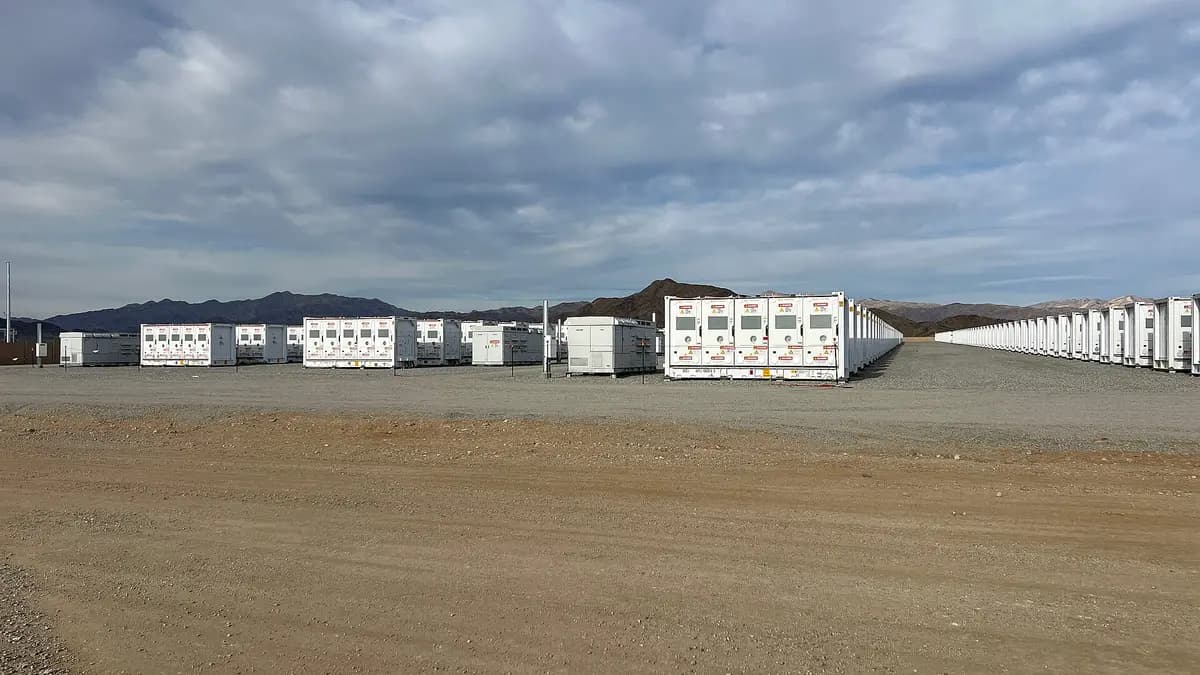
According to the DIA as described by the three outlets, the plant will use 829,920 bifacial modules rated at 625 Wp each, mounted on single-axis trackers that follow the sun during the day. Storage will be spread across 632 battery containers and 79 transformer stations.
| Component | Project figure |
|---|---|
| Installed solar capacity | 518.7 MWp |
| Nominal output | 430 MW |
| PV modules | 829,920 bifacial, 625 Wp |
| Batteries (BESS) | 430 MW / 3,010 MWh |
| Battery duration | About 7 hours at nominal output |
| Battery containers | 632 |
| Land area | 850.67 hectares |
| Estimated investment | US$520 million |
Source: Pampa del Desierto Environmental Impact Statement, via Revista Electricidad, Reporte Minero and REDIMIN, October 30, 2026. The land area appears only in Revista Electricidad.
518.7 MWp
Installed solar capacity
829,920 bifacial modules
3,010 MWh
Battery storage
430 MW for about 7 hours
US$ 520 M
Estimated investment
Applicant's estimate
Source: Project DIA, via Revista Electricidad and Reporte Minero, October 30, 2026
View the data as a table
| Installed solar capacity | 518.7 MWp · 829,920 bifacial modules |
| Battery storage | 3,010 MWh · 430 MW for about 7 hours |
| Estimated investment | US$ 520 M · Applicant's estimate |
The investment is the applicant's estimate on the SEIA form, not a committed outlay. As with any project under review, the final figure will depend on detailed engineering, panel and battery prices, and whether the company decides to build it.
How Pampa del Desierto will connect to the grid
Power will leave through a new Pampita step-up substation, raising voltage from 33 kV to 220 kV. From there, a 21.46-kilometer high-voltage line with 66 towers will carry the electricity to the Kimal substation, which already exists and belongs to a third party.
Kimal is no ordinary substation: it is the starting point of the Kimal–Lo Aguirre direct-current line, the largest transmission project under construction in Chile, designed to carry up to 3,000 MW of renewable power from the north to the Santiago Metropolitan Region. At its other end, in Pudahuel, batteries are also planned, such as the 400 MWh system EnAccess filed for environmental review last week.
Why seven hours of storage matters
A battery system's duration is its capacity in MWh divided by its power in MW. Many recent projects in Chile are designed for about four hours; Pampa del Desierto targets seven, bringing it close to covering the whole evening and much of the night with stored solar power.
The reason is economic. During sunny hours, northern Chile produces more energy than the grid can carry, and prices fall to almost zero: in October, the marginal cost dropped to US$3.4 per MWh, its lowest level since 2002, with curtailment of renewable output close to a quarter of potential production. Storing that energy and selling it after 7 p.m. is the bet behind almost every new project.
| Project in Chile (2026) | Power | Capacity | Duration |
|---|---|---|---|
| EnAccess (Pudahuel and Lampa) | 100 MW | 400 MWh | 4 hours |
| Delva (Vallenar and Freirina) | 440 MW | 2,640 MWh | 6 hours |
| Pampa del Desierto (María Elena) | 430 MW | 3,010 MWh | 7 hours |
| SQM plant (Coya Sur) | 20 MW | 320 MWh | 16 hours |
Source: SEIA filings for each project, via REDIMIN, Revista Electricidad and La Tercera (2026). Duration calculated by Energía Futura.
Grenergy doubles down on María Elena
Pampa del Desierto does not come alone. On the same day, October 30, the Antofagasta Environmental Assessment Commission approved Elena 2, another Grenergy park in María Elena, together with an SQM solar plant. Elena 2 has an almost identical battery: 430 MW and 3,010 MWh.
| Grenergy project | Solar capacity | Batteries | Investment | Status (Oct 30, 2026) |
|---|---|---|---|---|
| Pampa del Desierto | 518.7 MWp | 430 MW / 3,010 MWh | US$520 million | DIA at admission stage |
| Elena 2 | 566.58 MWp | 430 MW / 3,010 MWh | US$577 million | Approved by Antofagasta commission |
| Total | 1,085 MWp | 6,020 MWh | US$1,097 million | — |
Source: REDIMIN, Revista Electricidad and La Tercera, October 30, 2026. Totals calculated by Energía Futura.
Both projects join the Oasis de Atacama platform, under which Grenergy says it is developing 3.9 GW of solar and 19.2 GWh of storage in several phases in northern Chile. In September, the company closed its largest financing, US$457 million for Algarrobal and Palmas, the fifth phase of that platform.
Timeline and next steps
According to Revista Electricidad, the Pampa del Desierto DIA envisages 20 months of construction, 40 years of operation and 18 months of closure, with execution expected to begin in March 2029. If the schedule holds, the plant could come online around the end of 2030.
First it must clear the SEIA. For reference, Elena 2 was filed as a DIA in January 2026 and approved in 268 days, 33% faster than the average for DIAs approved in 2025, according to the SEA as quoted by La Tercera. To see how existing systems compare, check our ranking of the largest battery in the world.
Does your company develop solar, storage or transmission projects? Reach Energía Futura's readers.
See advertising optionsFrequently asked questions about Pampa del Desierto
What is the Pampa del Desierto photovoltaic park?
It is a solar-plus-storage project by Grenergy, through GR Flor de Loto SpA, in María Elena, Antofagasta Region. It combines 518.7 MWp of solar with a 430 MW / 3,010 MWh BESS.
How much will it cost?
The estimated investment is US$520 million, according to the DIA filed on October 29, 2026. It is an estimate, not a committed amount.
Has it been approved?
No. As of October 30, 2026, it was still at the admission stage in the SEIA. Elena 2, Grenergy's other project in María Elena, was approved that day.
Where will it connect?
To the Kimal substation, through a new 33/220 kV Pampita substation and a 21.46 km line.
When would construction start?
The DIA estimates execution will begin in March 2029, with 20 months of works, subject to environmental approval and the company's investment decision.