Antofagasta's Environmental Evaluation Commission (Coeva) has unanimously approved the «Operational Continuity and Water Transition» project of Codelco's Gabriela Mistral division, which extends the mine's life to 2055 with an investment of US$868 million. The project received its favourable environmental permit (RCA) on Monday 16 November 2026, Reporte Minero reported.
The key change is water: the division, located in Sierra Gorda, will keep using its wells until 2035 and from then on will stop consuming inland water, buying it instead from authorised third parties. From that year it will also process ore through chloride leaching, which adds salt (sodium chloride) to improve copper recovery.
View the data as a table
| Investment | US$868 million |
| Extra years of operation | 28 |
| Years of water transition | 7 |
| Operating workforce | 1,200 |
What the Gabriela Mistral project includes
Gabriela Mistral started production in 2008 with a 15-year life, later extended to 2028. It was the world's first mine to produce 100% traceable copper cathodes, according to Codelco, and holds The Copper Mark labels for responsible production and chain of custody, as well as the Huella Chile label for its cathodes.
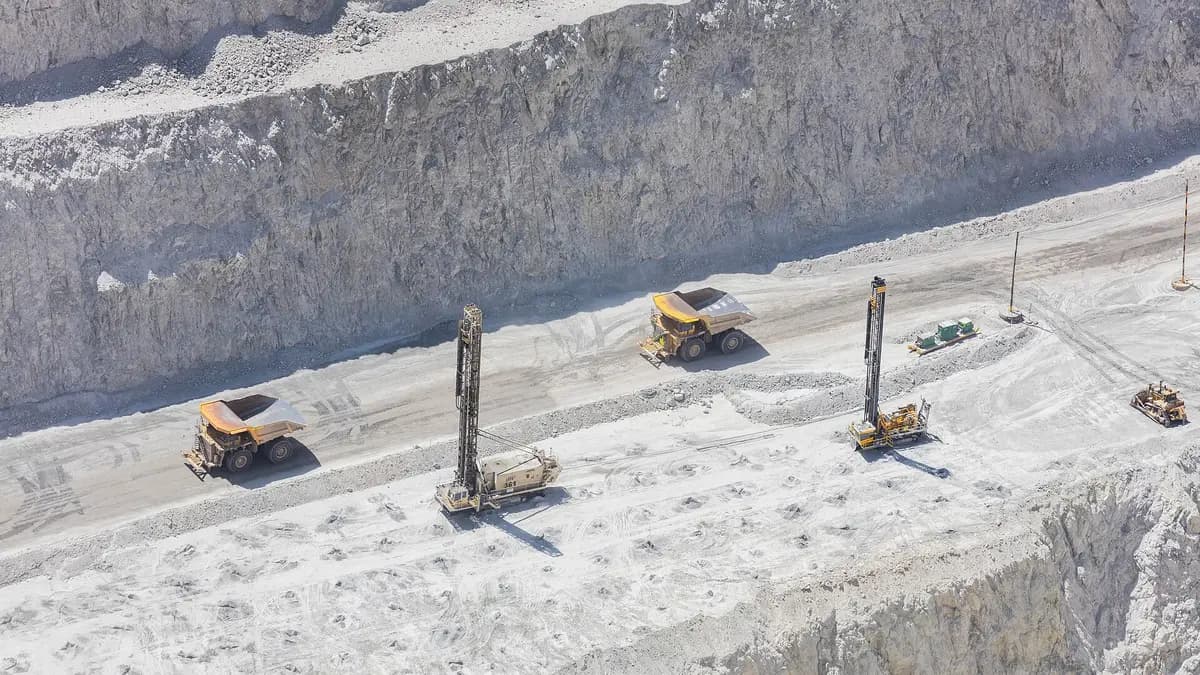
The environmental impact study, filed on 23 December 2024, keeps the rates already approved: mining of up to 91.1 million tonnes a year in the pit, processing of 46 million tonnes at the plant and capacity of 150,000 tonnes of cathodes a year, according to Diario Financiero. In practice, Codelco reported in 2024 output of about 110,000 tonnes of fine copper a year. The mine will keep working oxides before moving to sulphides, and will expand the pit, waste dump and stockpiles.
| Project | Detail |
|---|---|
| Name | Operational Continuity and Water Transition, Gabriela Mistral Mining Project |
| Owner | Codelco, Gabriela Mistral division |
| Location | Sierra Gorda, Antofagasta Region |
| Investment | US$868 million |
| Service life | Until 2055 (28 years of operation) |
| Approved capacity | 150,000 t/year of copper cathodes |
| Water | Wells until 2035; then water from authorised third parties |
| Jobs | 230 in construction; 1,200 in operation |
| Approval | Favourable RCA, Antofagasta Coeva, 16 Nov 2026 (unanimous) |
Source: Reporte Minero (17 November 2026), Codelco (23 December 2024) and Diario Financiero (23 December 2024).
Gabriela Mistral's water transition, step by step
The plan has two stages. Between 2029 and 2035, the division will keep using its water rights at the Laguna Seca, Mariposa and Elvira wells. Codelco says it has so far used only 2% of the volume stored in the basin, despite being authorised to use 5%, and that the source *«has no connection with ecosystems or other basins, nor any user other than Codelco»*. From 2035, industrial water will come from authorised, environmentally assessed third parties.
As compensation for continuing to use inland water until 2035, Codelco proposed contributing to the Antofagasta Region, where it has infrastructure, a volume equivalent to the water it will consume during the seven-year transition. *«What we want is for Gabriela Mistral to remain a sustainable, efficient and productive operation»*, said Gabriel Méndez, vice-president for Corporate Affairs and Sustainability, when the study was filed.
| Period | Water source | Process |
|---|---|---|
| To 2028 (current operation) | Own wells (Elvira-Laguna Seca aquifer) | Oxide leaching |
| 2029-2035 (transition) | Laguna Seca, Mariposa and Elvira wells, with compensation | Oxides, then sulphides |
| 2035-2055 | Water from authorised third parties; no inland water | Chloride leaching with salt |
Source: Codelco and Diario Financiero (23 December 2024), with data from the environmental impact study.
- 2008Production beginsWith an initial 15-year life, later extended to 2028.
- 23 Dec 2024EIA filedOperational continuity and water transition.
- 15 Dec 2025Complementary IcsaraThe SEA asks it to reassess its own desalination plant.
- 16 Nov 2026Favourable RCAAntofagasta's Coeva approves unanimously.
- 2029-2035Water transitionIt keeps using the Laguna Seca, Mariposa and Elvira wells.
- 2035End of inland waterThird-party water and chloride leaching with salt.
- 2055End of service life28 years of project operation.
The regulator asked it to assess its own desalination plant
During the review, the Environmental Evaluation Service (SEA) questioned several points of the water plan. In its consolidated request for clarifications of 15 December 2025, it asked Codelco to reassess its own desalination plant as an alternative, *«considering the prolonged water scarcity and the expected duration of third-party supply»*, and to specify how many trucks, trips and routes it would use to bring water to the site from 2036, along with their emissions.
The same document asked Codelco to justify the flow to be offset, which the company calculated as 275 litres per second minus 40.8 l/s of natural recharge, because that recharge *«already exists without the Project»*. It also reviewed a contingency measure: the occasional use of up to 10 l/s from three wells for workers' drinking water between 2036 and 2057. The approved permit has not yet been published in detail, so it is unclear which answers made it into the final version.
| Share of the basin's volume used to 2024 | 2% (authorised: 5%) |
| Maximum authorised instantaneous flow (Elvira-Laguna Seca aquifer) | 324 l/s |
| Flow to be offset proposed by the company | 275 l/s minus 40.8 l/s of natural recharge |
| Drinking water in contingencies (2036-2057) | Up to 10 l/s from three wells |
| Source from 2035 | Industrial water from authorised third parties |
Does your company offer desalinated water, clean energy or mining solutions? Reach Energía Futura's readers.
See advertising optionsWater, the big challenge for sustainable mining in Antofagasta
Gabriela Mistral's decision follows other miners in the region, which have been replacing well water with desalinated seawater. Chile's largest, BHP's Escondida Water Supply, produces 216,000 m³ a day, and the world's biggest exceed a million, as our ranking of the world's largest desalination plant shows. The cost is energy: pumping water from the coast to high-altitude mines takes a lot of electricity, which links water to emissions.
That link was raised last week by the Consejo Minero, which called for competitive electricity to decarbonise mining, whose direct emissions are still rising, as we reported in our story on the Consejo Minero and Cochilco report. The Gabriela Mistral extension also comes in a tough year for Chilean copper, with output at its lowest level in decades as ore grades decline, as September's figures showed: Chile's copper production fell 15%.
The approval can still be challenged before the Committee of Ministers or the environmental courts. If there are no appeals, Codelco can move ahead with the works.
Frequently asked questions
Until when will Gabriela Mistral operate?
Until 2055, under the environmental approval for the operational continuity project.
Where will Gabriela Mistral get its water?
Until 2035, from its wells at Laguna Seca, Mariposa and Elvira. From 2035, from authorised third parties, without using its own inland water.
How much will Codelco invest?
US$868 million, according to the environmental impact study.
What is chloride leaching?
A process that adds sodium chloride (salt) to the leaching solution to recover more copper from sulphide ores. Gabriela Mistral will use it from 2035.