To decarbonise mining, Chile needs electricity at costs that compete with those of other copper-producing countries and clear rules for measuring emissions. That was the message of José Tomás Morel, head of studies at the Consejo Minero, the association of Chile's large mining companies, at the Net Zero Mining 2026 seminar, Electrominería reported on 13 November.
The diagnosis matches official figures. According to the Chilean Copper Commission (Cochilco), copper mining emitted 12,861 kilotonnes of CO2 equivalent in 2024, the lowest level since 2010. But the decline came almost entirely from electricity, which is increasingly renewable, while direct emissions, mostly from the diesel burned by trucks, keep rising.
View the data as a table
| Total emissions | 12,861 kt CO₂e |
| Direct emissions | 55% |
| Diesel share | 93.3% |
| Renewable electricity | 78% |
What the Mining Council is asking for to decarbonise mining
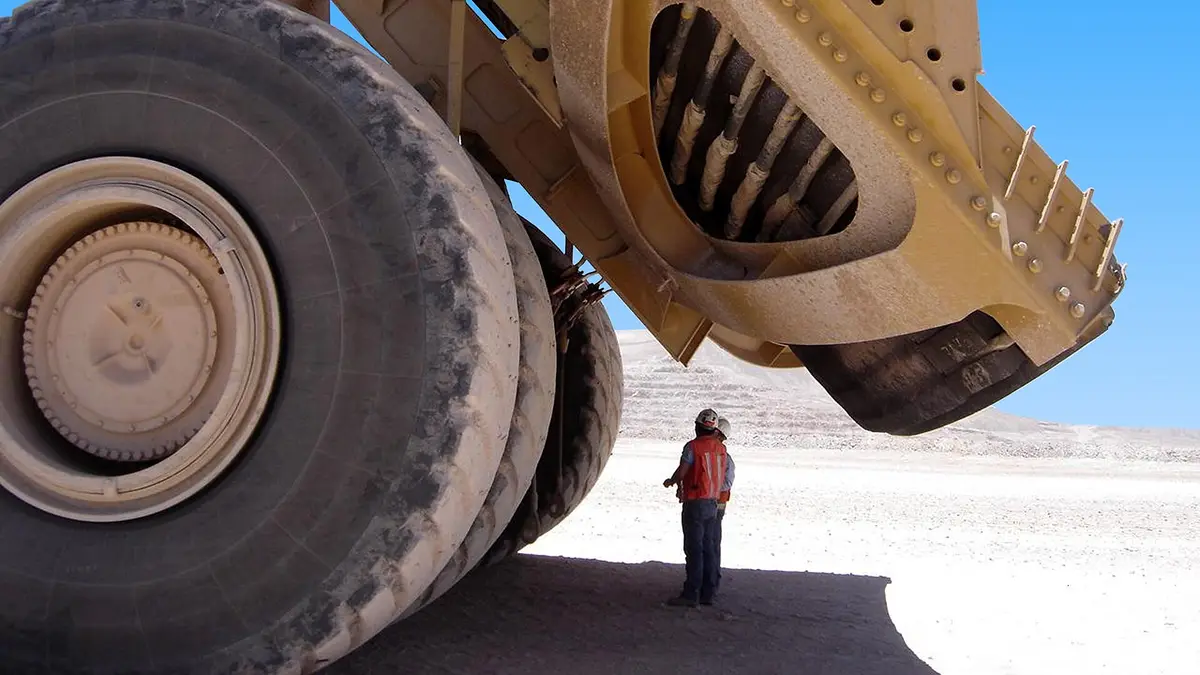
Morel organised the proposal around the three scopes of the Greenhouse Gas Protocol (GHG Protocol), the standard companies use to measure their footprint. On scope 1, emissions produced on site, he said the replacement of diesel haul trucks (CAEX) with low-emission alternatives must speed up, and that electrifying them depends on Chilean electricity costs being competitive. Today, he said, they are higher than in other copper-producing countries.
- Scope 1 (direct emissions): speed up the switch of haul trucks to low-emission technologies, with electricity at competitive prices.
- Scope 2 (purchased electricity): if the state allocates emissions by sector, recognise the renewable supply contracts signed by miners, and keep the GHG Protocol's annual accounting instead of the proposed hourly matching.
- Scope 3 (value chain): consistent measurement criteria and official recognition of the reductions miners achieve in other sectors.
- Goal: the association reaffirmed large-scale mining's commitment to Chile's carbon neutrality by 2050.
The hourly-matching point matters. The ongoing revision of the GHG Protocol is discussing requiring contracted renewable electricity to match consumption hour by hour to count as clean. A mine running at night on a solar contract could see its reported emissions rise even if nothing changes in its operation. Energy costs, meanwhile, are a complaint shared by other large consumers: the free-market clients grouped in Acenor estimate electricity in Chile is 49% more expensive than in Brazil, as we reported in our story on the Ministry of Energy's generation agenda.
Copper mining emissions are falling thanks to electricity
Of the 12,861 kt in 2024, 55% were direct emissions and 45% indirect, those produced at the power plants that generate the electricity miners buy. Between 2010 and 2024, direct emissions grew at an average 3.7% a year and indirect ones fell 4.5% a year, for an overall decline of 1.2% a year, according to the Cochilco report, based on data from 49 operations accounting for 98% of the country's copper output.
The fall in indirect emissions is explained by the power mix. The emission factor of the National Electric System dropped from 0.4187 tonnes of CO2e per MWh in 2018 to 0.2017 in 2024, a 52% reduction in six years, thanks to the growth of solar and wind in the north and the retirement of coal plants. The trend continued in 2026: in October, for the first time, more than 90% of the system's electricity was renewable, as we reported in our story on the renewable generation record.
View the data as a table
| SEN factor | |
|---|---|
| 2018 | 0.419 |
| 2019 | 0.406 |
| 2020 | 0.383 |
| 2021 | 0.391 |
| 2022 | 0.301 |
| 2023 | 0.242 |
| 2024 | 0.202 |
| Year | SEN emission factor (t CO2e/MWh) |
|---|---|
| 2018 | 0.4187 |
| 2019 | 0.4056 |
| 2020 | 0.3834 |
| 2021 | 0.3907 |
| 2022 | 0.3006 |
| 2023 | 0.2421 |
| 2024 | 0.2017 |
Source: Cochilco, Greenhouse gas emissions from copper mining in 2024 (DEPP 24/2025, November 2025), Table 1.
78% of mining's electricity is already renewable
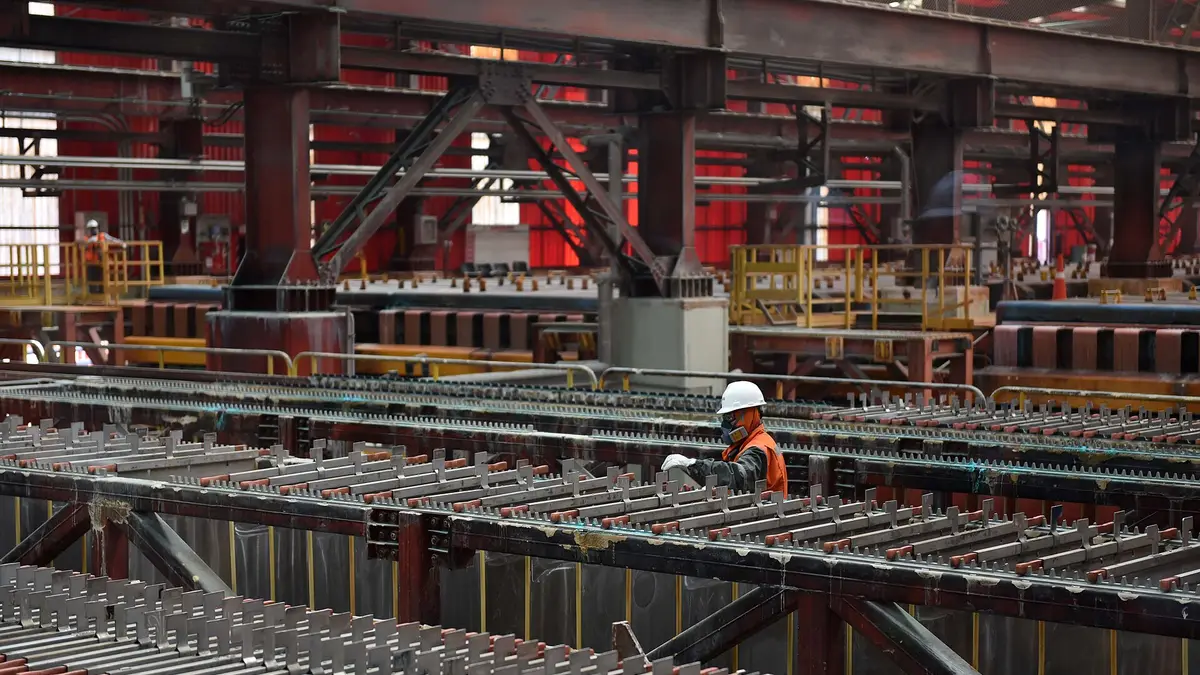
Of the 49 operations surveyed by Cochilco, 34 report renewable supply contracts, covering 78% of the sector's electricity use, up from 67% in 2022 and 74% in 2023. Large private mining reaches 96%, while large state mining stood at 23% in 2024. Codelco said in its 2025 climate change report that, after awarding two renewable contracts, about 85% of its electricity will be clean in 2026 and 100% in 2030.
| Type of mining | Operations | Electricity use (TJ) | With renewable contract | % renewable |
|---|---|---|---|---|
| Large state mining | 8 | 24,058 | 1 | 23% |
| Mid-size state mining | 6 | 464 | 5 | 84% |
| Large private mining | 19 | 74,526 | 19 | 96% |
| Mid-size private mining | 16 | 3,259 | 9 | 70% |
| Total | 49 | 102,307 | 34 | 78% |
Source: Cochilco, 2024 EMPAE survey, Table 2 of the emissions report (November 2025).
Does your company electrify mine sites, sell renewable power to miners or develop zero-emission trucks? Reach Energía Futura's readers.
See advertising optionsDiesel, the big outstanding task to decarbonise mining
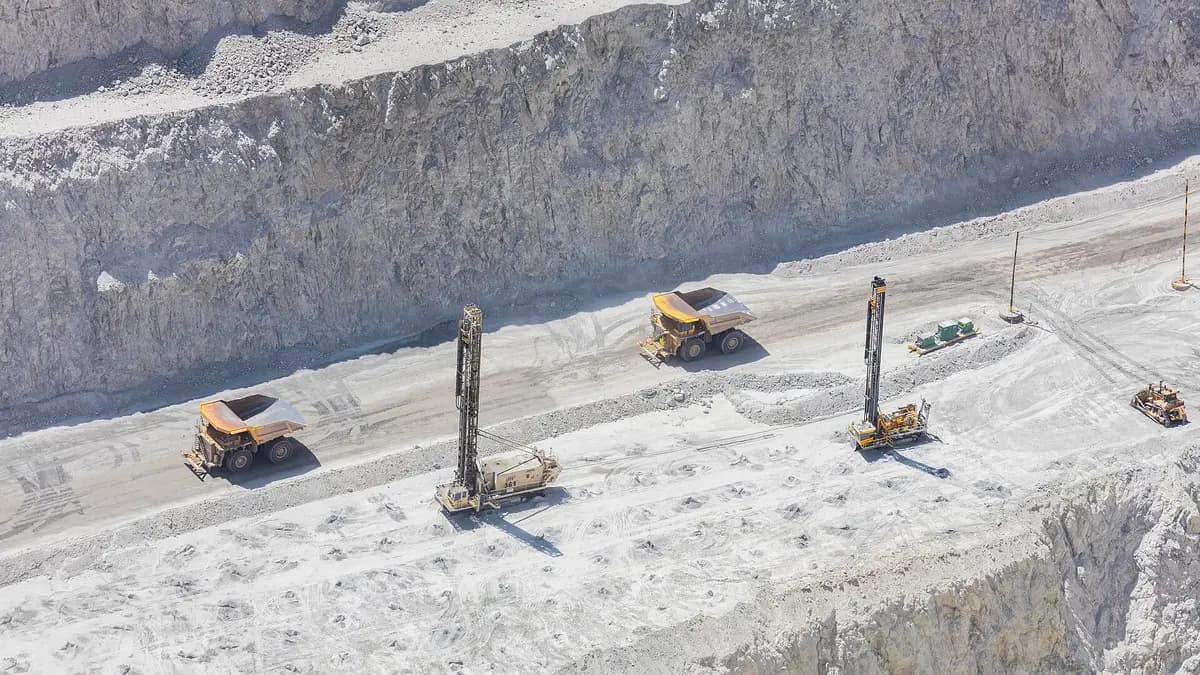
The problem is in the pit. Diesel accounts for 93.3% of direct emissions, with 6,651 kt of CO2e in 2024, because of its use in heavy haul trucks and loading equipment. Direct emissions rose from 6.63 to 7.13 million tonnes between 2022 and 2024, and 82% came from open-pit mining, which emits 1.3 tonnes of CO2e per tonne of fine copper.
The reason is structural: lower ore grades, deeper pits and longer haul distances mean more rock must be moved to produce the same copper. Fuel use per unit of output rose from 13.8 to 17.7 petajoules per million tonnes of fine copper between 2014 and 2024. Cochilco concludes that the big gap lies in mine-to-plant processes and that electrification, green hydrogen, hybrid fleets and trolley systems for haul trucks will be key. The Ministry of Mining has already launched a technology action plan to decarbonise mining with that focus.
Frequently asked questions
How much does copper mining emit in Chile?
12,861 kt of CO2 equivalent in 2024, the lowest since 2010, according to Cochilco. 55% are direct emissions and 45% indirect.
What did the Mining Council ask for?
Electricity at competitive costs to electrify trucks, recognition of miners' renewable contracts, and keeping the GHG Protocol's annual emissions accounting instead of hourly matching.
Why are mining's direct emissions rising?
Because deposits have lower grades and deeper pits: more rock has to be moved and longer distances covered with diesel trucks to produce the same copper.
How much renewable electricity does copper mining use?
78% of its electricity use in 2024 was covered by renewable contracts, according to Cochilco.