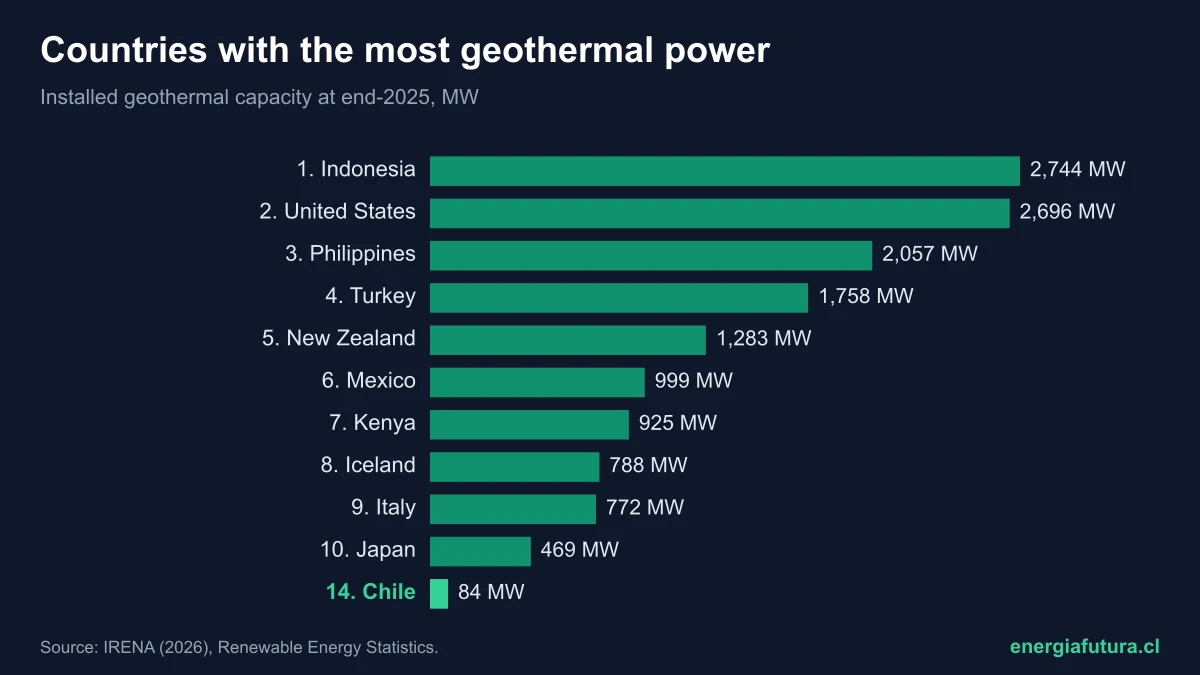
Updated November 14, 2026. Indonesia is the country with the most geothermal energy in the world: it had 2,744 MW installed at the end of 2025, according to statistics from the International Renewable Energy Agency (IRENA). With that it overtook the United States, which led the ranking and stayed at 2,696 MW. The top five are completed by the Philippines (2,057 MW), Türkiye (1,758 MW) and New Zealand (1,283 MW). Chile ranks 14th, with 84 MW, all at the Cerro Pabellón plant.
Geothermal energy uses heat from the Earth's interior: wells are drilled into reservoirs of hot water and steam, and that steam drives a turbine. It works day and night, regardless of the weather, but it is only viable where heat lies close to the surface, in volcanic areas. That is why the world has just 15,624 MW of geothermal power, which generated 97.7 TWh in 2024, 0.3% of the planet's electricity. This data sheet brings together the ranking of countries by capacity, how much they generate, who depends on it most and Chile's place.
View the data as a table
| Indonesia's capacity | 2,744 MW |
| World capacity | 15,624 MW |
| World generation 2024 | 97.7 TWh |
| Chile, ranked 14th | 84 MW |
Ranking of countries with the most geothermal energy
The table ranks countries by installed geothermal capacity at the end of 2025. Generation is for 2024, the last full year with IRENA data, and the last column shows what share of the country's electricity came from the Earth's heat that year.
| # | Country | Capacity 2025 (MW) | Capacity 2015 (MW) | Generation 2024 (GWh) | % of its electricity |
|---|---|---|---|---|---|
| 1 | Indonesia | 2,744 | 1,438 | 16,763 | 4.5% |
| 2 | United States | 2,696 | 2,542 | 18,535 | 0.4% |
| 3 | Philippines | 2,057 | 1,916 | 10,789 | 8.3% |
| 4 | Türkiye | 1,758 | 624 | 11,140 | 3.1% |
| 5 | New Zealand | 1,283 | 990 | 9,265 | 20.5% |
| 6 | Mexico | 999 | 898 | 3,692 | 1.0% |
| 7 | Kenya | 925 | 619 | 5,922 | 49.8% |
| 8 | Iceland | 788 | 665 | 5,986 | 30.5% |
| 9 | Italy | 772 | 768 | 5,675 | 2.1% |
| 10 | Japan | 469 | 516 | 3,883 | 0.4% |
| 11 | Costa Rica | 263 | 217 | 1,498 | 11.9% |
| 12 | El Salvador | 209 | 204 | 1,569 | 18.2% |
| 13 | Nicaragua | 165 | 155 | 742 | 15.0% |
| 14 | Chile | 84 | 0 | 308 | 0.3% |
| 15 | Russia | 81 | 74 | 433 | 0.04% |
Source: IRENA, Renewable Energy Statistics 2026 (IRENASTAT), geothermal energy, accessed November 14, 2026. The percentage is an Energía Futura calculation over each country's total 2024 generation according to IRENA. Chile had no geothermal plants in 2015.
View the data as a table
| Indonesia | 2,744 MW |
| United States | 2,696 MW |
| Philippines | 2,057 MW |
| Türkiye | 1,758 MW |
| New Zealand | 1,283 MW |
| Mexico | 999 MW |
| Kenya | 925 MW |
| Iceland | 788 MW |
| Italy | 772 MW |
| Japan | 469 MW |
| Costa Rica | 263 MW |
| El Salvador | 209 MW |
| Nicaragua | 165 MW |
| Chile | 84 MW |
| Russia | 81 MW |
| Germany | 78 MW |
| Papua New Guinea | 51 MW |
| Guatemala | 49 MW |
| Honduras | 40 MW |
| Portugal | 29 MW |
| People's Republic of China | 26 MW |
| France | 16 MW |
| Croatia | 10 MW |
| Taiwan | 7 MW |
| Ethiopia | 7 MW |
| Hungary | 3 MW |
Indonesia overtakes the United States
Indonesia almost doubled its geothermal capacity in ten years: it had 1,438 MW in 2015 and 2,744 MW in 2025, a 91% increase. It sits on the Pacific Ring of Fire, the belt of volcanoes that surrounds that ocean. In 2025 it added 105 MW and overtook the United States, which in IRENA's database shows the same capacity as in 2024.
In generation, however, the United States is still first: it produced 18,535 GWh of geothermal power in 2024, against Indonesia's 16,763 GWh. A large part comes from a single complex, The Geysers, north of San Francisco. The world's largest complexes, with their figures, are in our ranking of the largest geothermal power plant in the world.
View the data as a table
| 2015 | 2020 | 2021 | 2022 | 2023 | 2024 | 2025 | |
|---|---|---|---|---|---|---|---|
| Indonesia | 1,438 MW | 2,131 MW | 2,286 MW | 2,360 MW | 2,598 MW | 2,639 MW | 2,744 MW |
| United States | 2,542 MW | 2,572 MW | 2,597 MW | 2,649 MW | 2,696 MW | 2,696 MW | 2,696 MW |
| Philippines | 1,916 MW | 1,928 MW | 1,928 MW | 1,932 MW | 1,952 MW | 1,952 MW | 2,057 MW |
| Turkey | 624 MW | 1,613 MW | 1,676 MW | 1,691 MW | 1,691 MW | 1,734 MW | 1,758 MW |
| New Zealand | 990 MW | 1,062 MW | 1,060 MW | 1,060 MW | 1,060 MW | 1,283 MW | 1,283 MW |
| Mexico | 898 MW | 974 MW | 999 MW | 999 MW | 999 MW | 999 MW | 999 MW |
| Kenya | 619 MW | 863 MW | 863 MW | 950 MW | 985 MW | 940 MW | 925 MW |
| Iceland | 665 MW | 756 MW | 756 MW | 758 MW | 788 MW | 788 MW | 788 MW |
| Italy | 768 MW | 772 MW | 772 MW | 772 MW | 772 MW | 772 MW | 772 MW |
| Japan | 516 MW | 487 MW | 487 MW | 437 MW | 456 MW | 461 MW | 469 MW |
The country that grew the most was Türkiye: it went from 624 MW in 2015 to 1,758 MW in 2025, almost triple. Kenya rose from 619 to 925 MW with the Olkaria field, in the Rift Valley.
Geothermal power in the world, 2015-2025
Global geothermal capacity grew from 11,843 MW in 2015 to 15,624 MW in 2025, 32% in ten years, according to IRENA's country-by-country sum (Energía Futura calculation). It is a slow pace compared with solar or wind, which multiplied several times over the same period. Generation has stayed around 95,000 to 98,000 GWh a year since 2020.
| Year | World capacity (MW) | World generation (GWh) |
|---|---|---|
| 2015 | 11,843 | 81,229 |
| 2020 | 14,184 | 95,454 |
| 2021 | 14,468 | 94,627 |
| 2022 | 14,706 | 97,229 |
| 2023 | 15,102 | 98,143 |
| 2024 | 15,365 | 97,679 |
| 2025 | 15,624 | No data yet |
Source: IRENA (IRENASTAT), sum of countries with data. 2025 generation has not yet been published.
View the data as a table
| World | |
|---|---|
| 2015 | 11.8 |
| 2020 | 14.2 |
| 2021 | 14.5 |
| 2022 | 14.7 |
| 2023 | 15.1 |
| 2024 | 15.4 |
| 2025 | 15.6 |
Why geothermal outperforms other renewables
The great advantage of geothermal power is that it does not depend on the sun or the wind. With IRENA data, the world's geothermal plants generated in 2024 the equivalent of running at full power 72.7% of the hours of the year, known as the capacity factor (Energía Futura calculation with end-2024 capacity). In Iceland it reached 86.8%, in New Zealand 82.4% and in the United States 78.5%.
That stability makes geothermal useful as baseload power, like coal or nuclear, but without combustion emissions. Its limits are geography and cost: wells several kilometres deep must be drilled without knowing for sure what temperature and flow will be found, which makes the first step of each project expensive. To see how much water, sun, wind and the Earth's heat contribute together in each country, see our ranking of countries with the most renewable energy.
The countries that depend most on the Earth's heat
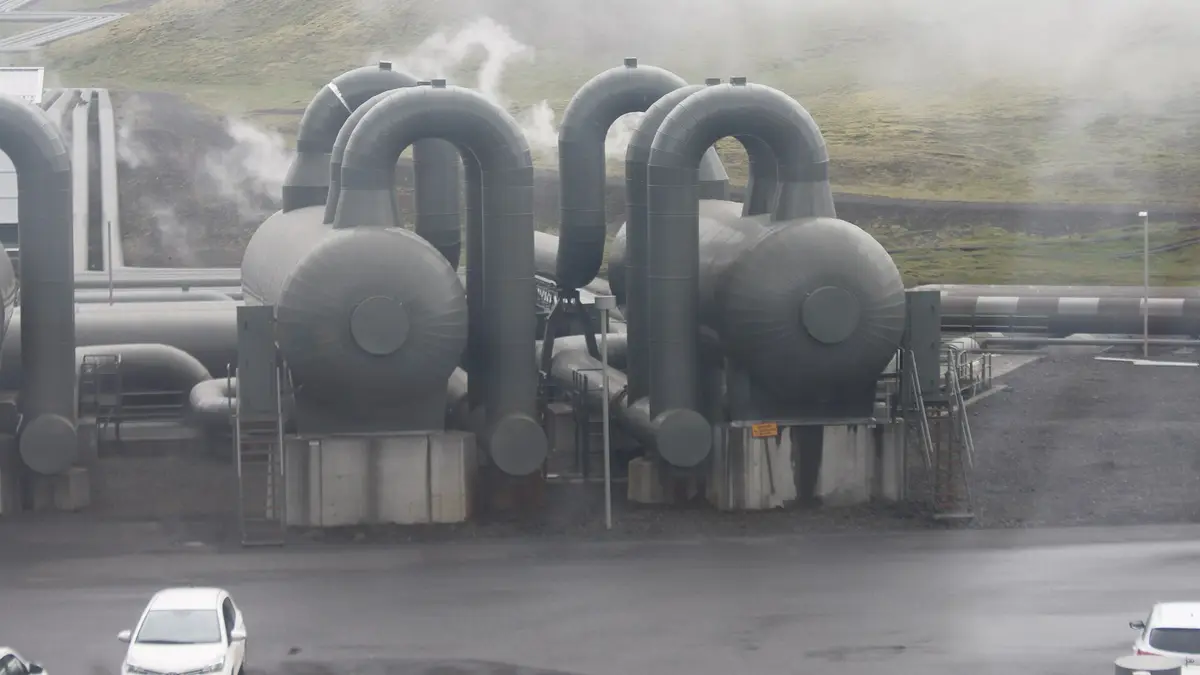
By share of electricity, the ranking changes completely. Kenya generated almost half of its electricity (49.8%) from geothermal in 2024; Iceland, 30.5%, and New Zealand, 20.5%. In Central America geothermal is also key: it supplies 18.2% of El Salvador's electricity, 15% of Nicaragua's and 11.9% of Costa Rica's.
The United States, the largest generator, gets just 0.4% of its electricity from geothermal, and Japan, with 469 MW and many volcanoes, also 0.4%. China appears in IRENA with only 26 MW, because that statistic counts only electricity generation and not the direct use of geothermal heat, for example for space heating.
Does your company explore, drill or operate geothermal projects? Reach Energía Futura's readers.
See advertising formatsChile's place in the geothermal energy ranking
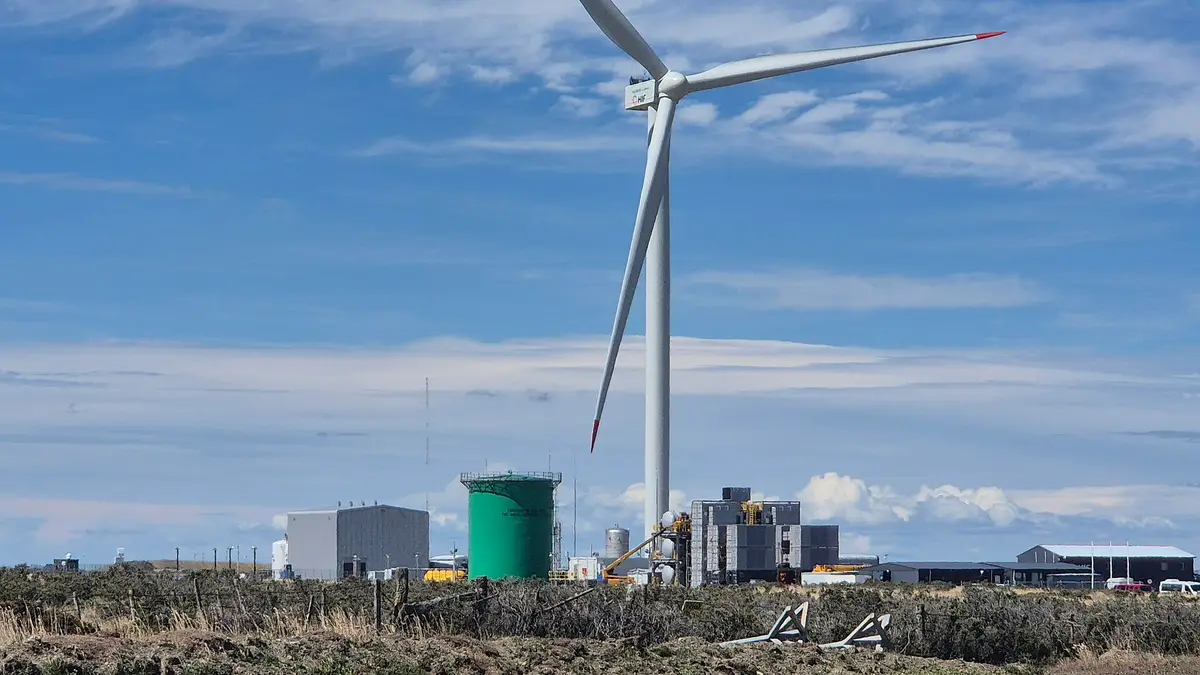
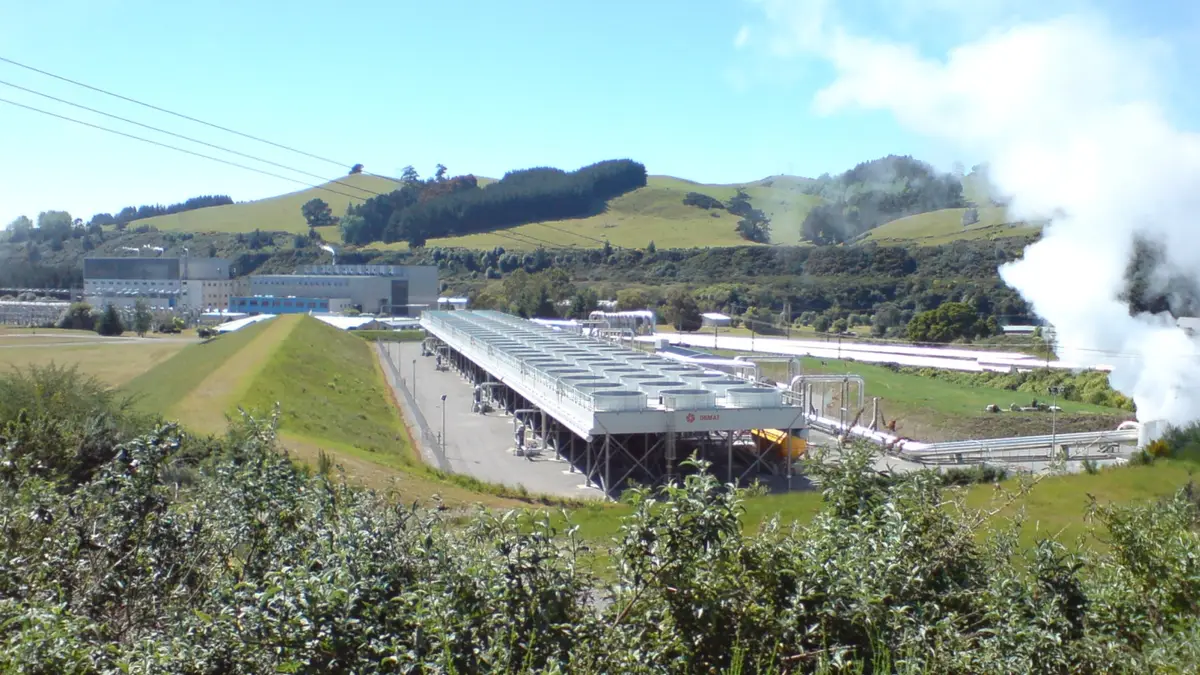
Chile has 84 MW of geothermal power (83.58 MW, according to IRENA), all at Cerro Pabellón, in the municipality of Ollagüe, Antofagasta Region. It was the first geothermal plant in South America: it started in 2017 with two 24 MW units and later added a third 33 MW unit, with which its capacity reached 83 MW in 2022, according to IRENA. It sits at about 4,500 metres above sea level and belongs to Geotérmica del Norte, a company owned by Enel Green Power (83.65%) and state-owned ENAP (16.35%).
| Year | Capacity (MW) | Generation (GWh) | % of Chile's electricity |
|---|---|---|---|
| 2020 | 39.7 | 216 | 0.3% |
| 2021 | 51.4 | 324 | 0.4% |
| 2022 | 83.4 | 467 | 0.5% |
| 2023 | 83.6 | 368 | 0.4% |
| 2024 | 83.6 | 308 | 0.3% |
| 2025 | 83.6 | No data yet | — |
Source: IRENA (IRENASTAT), Chile. Generation fell from its 2022 peak with no change in capacity; IRENA does not explain why. With 308 GWh in 2024, Cerro Pabellón ran at a capacity factor of 42.1%, against 63.9% in 2022 (Energía Futura calculation).
View the data as a table
| Chile | |
|---|---|
| 2020 | 216 |
| 2021 | 324 |
| 2022 | 467 |
| 2023 | 368 |
| 2024 | 308 |
In Latin America, Chile is the fifth country with the most geothermal energy, behind Mexico (999 MW), Costa Rica (263 MW), El Salvador (209 MW) and Nicaragua (165 MW). It has high potential thanks to its volcanic chain, but the altitude of the reservoirs, the cost of exploration and permitting have held back other projects: as of November 2026 there is no second geothermal plant in operation in the country.
Full ranking by country
The table includes all countries with geothermal capacity in IRENA at the end of 2025. You can search for a country and sort by capacity, by 2015 capacity or by 2024 generation.
| 1 | Indonesia | 2,743.8 | 1,438.3 | 16,763 |
| 2 | United States | 2,695.5 | 2,542.0 | 18,535 |
| 3 | Philippines | 2,057.4 | 1,916.1 | 10,789 |
| 4 | Turkey | 1,757.5 | 624.0 | 11,140 |
| 5 | New Zealand | 1,283.0 | 990.0 | 9,265 |
| 6 | Mexico | 998.5 | 898.0 | 3,692 |
| 7 | Kenya | 925.4 | 618.9 | 5,922 |
| 8 | Iceland | 787.6 | 665.0 | 5,986 |
| 9 | Italy | 771.8 | 768.0 | 5,675 |
| 10 | Japan | 468.9 | 516.0 | 3,883 |
| 11 | Costa Rica | 262.7 | 217.4 | 1,498 |
| 12 | El Salvador | 209.4 | 204.4 | 1,569 |
| 13 | Nicaragua | 165.4 | 154.5 | 742 |
| 14 | Chile | 83.6 | No data | 308 |
| 15 | Russia | 81.4 | 74.0 | 433 |
| 16 | Germany | 77.5 | 29.0 | 215 |
| 17 | Papua New Guinea | 51.0 | 50.0 | 96 |
| 18 | Guatemala | 49.2 | 49.2 | 275 |
| 19 | Honduras | 40.0 | No data | 305 |
| 20 | Portugal | 29.1 | 25.0 | 202 |
| 21 | People's Republic of China | 25.8 | 25.8 | 144 |
| 22 | France | 16.1 | 14.8 | 110 |
| 23 | Guadeloupe | 14.5 | 14.5 | 94 |
| 24 | Croatia | 10.0 | No data | No data |
| 25 | Taiwan | 7.5 | No data | 27 |
| 26 | Ethiopia | 7.3 | 7.3 | No data |
| 27 | Hungary | 3.0 | No data | 12 |
| 28 | Thailand | 0.3 | 0.3 | 1 |
| 29 | Austria | 0.3 | 0.9 | No data |
| 30 | Australia | 0.1 | 0.1 | No data |
Methodology
Capacity corresponds to IRENASTAT's geothermal energy category, in its update published in the second half of 2026, with data at the end of 2025. It measures only electricity generation, not direct use of heat. 2025 generation is not yet available, so 2024 is used. Other sources, such as ThinkGeoEnergy's annual count, use operators' figures and may differ. To see how geothermal compares with hydropower, see our ranking of countries with the most hydropower.
How to cite this data
Energía Futura (2026). «Countries with the most geothermal energy 2026: world ranking and Chile's place». Updated November 14, 2026. energiafutura.cl/en/news/countries-with-the-most-geothermal-energy-2026-world-ranking-and-chile. Data: IRENA (2026), Renewable Energy Statistics.
Frequently asked questions
Which country has the most geothermal energy?
Indonesia, with 2,744 MW at the end of 2025, according to IRENA. In generation, the United States is still first, with 18,535 GWh in 2024.
How much geothermal power is there in the world?
About 15,624 MW at the end of 2025, which generated 97.7 TWh in 2024, 0.3% of the world's electricity.
Which country depends most on geothermal energy?
Kenya, which generated 49.8% of its electricity from geothermal in 2024, followed by Iceland (30.5%) and New Zealand (20.5%).
Where does Chile rank in geothermal energy?
14th in the world and fifth in Latin America, with 84 MW at Cerro Pabellón, which generated 308 GWh in 2024.
What is Chile's only geothermal plant?
Cerro Pabellón, in Ollagüe, Antofagasta Region, owned by Enel Green Power and ENAP. It has operated since 2017 and was the first in South America.