Green hydrogen in Chile adds up to 62 announced initiatives as of October 2026, of which 17 operate at pilot scale, according to the "Milestones and progress 2026" report of the Chilean Hydrogen Association (H2 Chile), published by H2news on 13 October. Projects with environmental approval or under review totalled US$36.8 billion and 8.6 GW of electrolysis. None of the industrial projects has started construction.
The map changed on 12 November 2026: TotalEnergies, through its subsidiary TEC H2 MAG, withdrew H2 Magallanes from environmental review, a US$16 billion project and the largest ever submitted to Chile's Environmental Impact Assessment System (SEIA), according to Electrominería. The details are in our story on the withdrawal of H2 Magallanes. This guide covers how many projects there are, where they are, how much they plan to invest and what stage each one is at.
View the data as a table
| Announced initiatives | 62 |
| Investment approved or under environmental review | US$36,800 million |
| With environmental approval | US$15,000 million |
| Electrolysis in those projects | 8.6 GW |
How many green hydrogen projects there are in Chile
H2 Chile counts 62 initiatives in green hydrogen and its derivatives. Not all are large plants: 29 are production projects for hydrogen, ammonia, methanol, synthetic fuels and fertilisers; another 29 aim to use hydrogen in transport and industrial processes, and 4 are dedicated to manufacturing electrolysers or fuel-cell vehicles. Of all of them, 17 are already running, but at pilot scale.
| Indicator | Figure | Date |
|---|---|---|
| Announced initiatives | 62 | October 2026 |
| Operating at pilot scale | 17 | October 2026 |
| Investment approved or under environmental review | US$36.8 billion | October 2026 |
| Investment with environmental approval (RCA) | US$15 billion | October 2026 |
| Electrolysis capacity in those projects | 8.6 GW | October 2026 |
| Potential jobs | 31,700 | October 2026 |
| Project withdrawn after the report | H2 Magallanes, US$16 billion | 12 November 2026 |
Source: H2 Chile, "Milestones and progress 2026", via H2news, and the SEA via Electrominería. If H2 Magallanes was in that portfolio, as its under-review status suggests, investment approved or under review would fall to about US$20.8 billion (Energía Futura calculation).
Where the green hydrogen projects in Chile are
Antofagasta has 26% of the announced initiatives, thanks to its solar radiation, its ports and demand from mining. It is followed by the Santiago Metropolitan Region, with 24%, home mainly to projects using hydrogen in transport and industry; Magallanes, with 19%, for the strength and steadiness of its wind; and Biobío, with 11%, for its industrial and port hub. The remaining 20% is spread across other regions.
View the data as a table
| Antofagasta | 26% |
| Metropolitana | 24% |
| Magallanes | 19% |
| Biobío | 11% |
The difference between the two big zones is the energy source. In the north, projects use solar power from the Atacama Desert; in the south, Patagonian wind farms, which can run many more hours a year. That is why the largest projects have gone to Magallanes, where wind blows for much of the day and night.
The large green hydrogen projects in Chile and their status
These are the largest industrial projects that have gone through the SEIA and their status in mid-November 2026. Investment is as declared by each developer; none has yet taken a final investment decision, the step at which a company commits the money to build.
| Project | Developer | Region | Declared investment | Status |
|---|---|---|---|---|
| H2 Magallanes | TotalEnergies (TEC H2 MAG) | Magallanes | US$16 billion | Withdrawn (12 Nov 2026) |
| HNH Energy | HNH Energy | Magallanes (San Gregorio) | US$11 billion | Approved (August 2026) |
| INNA | AES Andes | Antofagasta (Taltal) | US$10 billion | Withdrawn (January 2026) |
| Acuario | Consorcio Austral | Magallanes (San Gregorio) | US$4.7 billion | Under review (since July 2026) |
| Volta | — | Antofagasta (Mejillones) | US$2.5 billion | Approved (December 2025) |
| E-methanol plant | NorQuim | Antofagasta (Mejillones) | US$1.2 billion | Under review (since March 2026) |
| Cabo Negro | HIF Global | Magallanes (Punta Arenas) | US$830 million | Approved (2026) |
Sources: SEA and developers, via Electrominería, H2news, Redimin, Ex-Ante and Bloomberg Línea. For Volta, the sources reviewed do not identify the developer.
HNH Energy is the largest approved project: the Magallanes Environmental Assessment Commission gave it the green light in August 2026, with 12 votes in favour, for a complex with a wind farm, desalination plant, port and green ammonia plant in San Gregorio, with works due to start in 2027, according to Bloomberg Línea. It is the largest investment ever approved in the region.
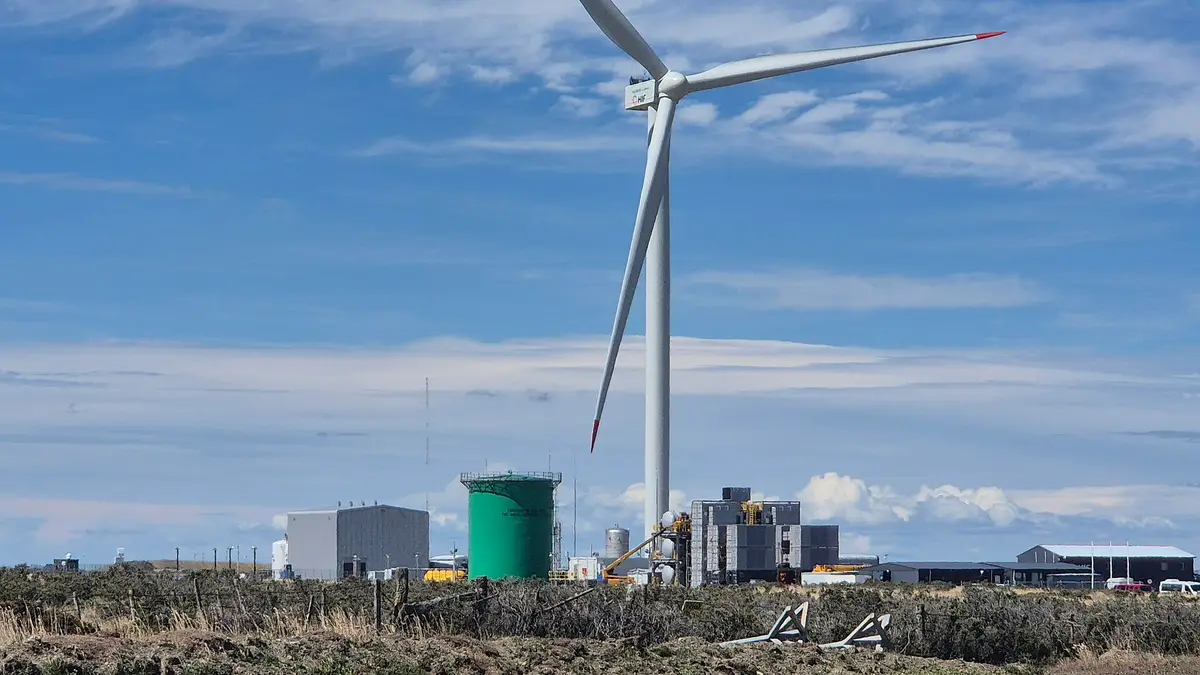
Cabo Negro, by HIF Global, is smaller but closer to construction: a US$830 million plant in Punta Arenas that would produce 173,600 tonnes a year of e-methanol and 70,000 tonnes of e-gasoline, powered by the Faro del Sur wind farm (372 MW and 62 turbines), approved in February 2026, according to H2 Business News. HIF already runs Haru Oni, the e-fuels pilot plant that started in December 2022.
Acuario, by Consorcio Austral, entered the SEIA in July 2026 with an Environmental Impact Study to produce 4,100 tonnes a day of green ammonia at Bahía Gregorio, with a 1.73 GW wind farm and 173 turbines, and construction planned for 2029. The same company is preparing a sister project, Sagitario, for 2031.
Does your company develop green hydrogen, electrolysers, desalination or wind power projects? Reach Energía Futura's readers.
See advertising optionsThe projects that fell through
In 2026 the two largest projects that had reached the SEIA were withdrawn. In January, AES Andes announced it was dropping INNA, a US$10 billion complex of more than 3,000 hectares that would have stood about 10 kilometres from the Paranal and Armazones observatories in Antofagasta. The astronomy community had warned that its lighting would damage the quality of the sky. The company said it would prioritise its renewable and storage projects, according to Ex-Ante.
On 12 November it was H2 Magallanes' turn. Its Environmental Impact Study had been filed on 5 May 2025 and included a wind farm, an electrolysis plant, a desalination plant, ammonia storage and an export terminal. The SEA declared the study withdrawn and closed the procedure; the company's letter gave no reasons.
The underlying reasons the industry cites are well known: interest rates higher than in 2021, demand for green ammonia and fuels growing more slowly than expected in Europe and Asia, and doubts about the price buyers will pay. Worldwide, H2 Chile counts 579 projects with a final investment decision, 525 of them operating or under construction, and committed investment of US$130 billion. The largest plants already running are in our ranking of the largest green hydrogen plant in the world.
- Nov 2020National Green Hydrogen StrategyTarget of 5 GW of electrolysis by 2025, which was not met.
- Dec 2022Haru Oni starts upHIF Global's e-fuels pilot plant near Punta Arenas.
- Dec 2025Volta approvedAntofagasta assessment commission, US$2.5 billion in Mejillones.
- Jan 2026AES Andes drops INNAUS$10 billion, next to the Paranal and Armazones observatories.
- Jul 2026Acuario submittedGreen ammonia in San Gregorio for US$4.7 billion.
- Aug 2026HNH Energy approvedThe largest investment ever approved in Magallanes.
- 12 Nov 2026TotalEnergies withdraws H2 MagallanesThe SEA closes the US$16 billion project's review.
The uses of green hydrogen in Chile that already work
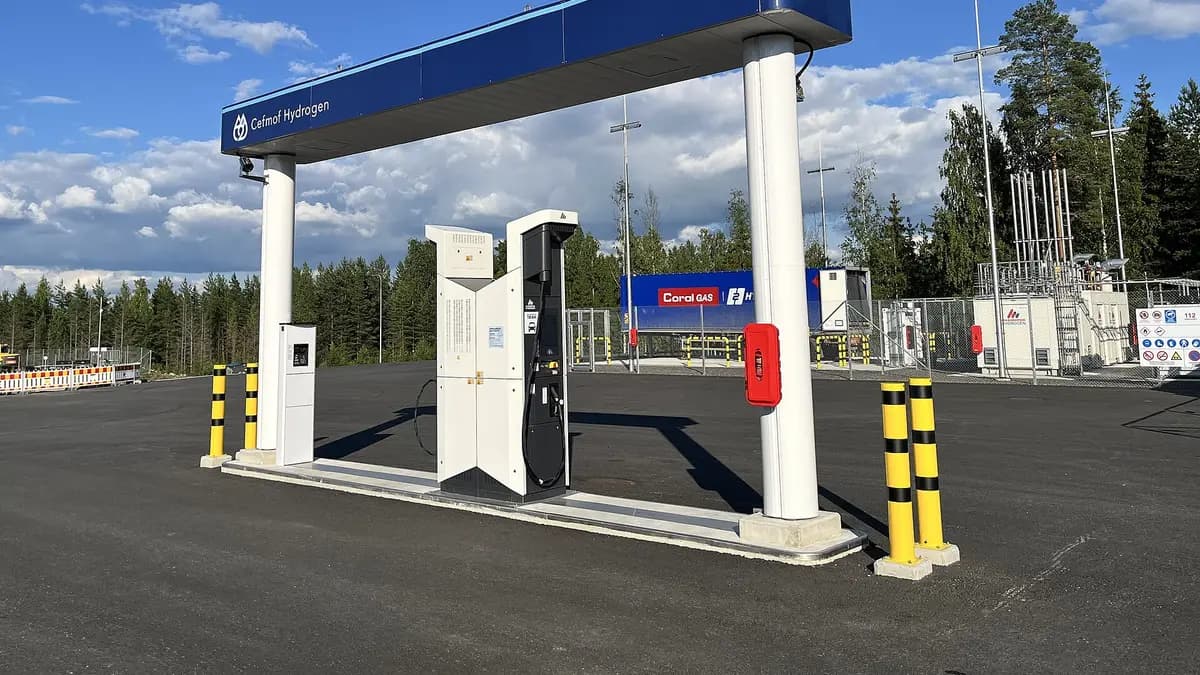
While the export megaprojects wait, local uses are moving forward on a small scale. H2 Chile's report highlights the opening in 2026 of the first hydrogen station for heavy-duty trucks, with Marval, Colbún, Walmart, Copec, Mining3 and IEE Ingeniería; the first hydrogen delivery truck designed and built in Chile, by Centro Mario Molina; and the first hydrogen bus for public transport, developed by Reborn for a pilot with Red Movilidad.
Corfo also funds industrial "rings": in Biobío, MarVal and Fosfoquim are mobilising US$19.3 million, and Colbún, Marval and Walmart take part in a US$13.7 million initiative on the corridor between the Metropolitan and Valparaíso regions. Ports are getting ready too: in Mejillones, a terminal expansion aims to handle green ammonia, as we reported in Terquim's investment in Mejillones.
What's next for green hydrogen in Chile
The 2020 National Green Hydrogen Strategy set a target of 5 GW of electrolysis by 2025 that was not met, and aimed for Chile to be among the top three exporters by 2040. In 2026 the strategy was updated for 2026-2030. The milestones to watch in the coming months are the rulings on Acuario and the NorQuim plant, and whether HNH Energy and Cabo Negro take a final investment decision.
For the power system, hydrogen is also a demand bet: projects with electrolysis could absorb large volumes of solar and wind energy that is now lost for lack of transmission. Without investment decisions, however, the figures remain on paper: of the US$36.8 billion in the October report, only US$15 billion had an environmental permit and none was under construction.
Frequently asked questions
How many green hydrogen projects are there in Chile?
62 announced initiatives as of October 2026, according to H2 Chile: 29 production, 29 use and 4 equipment manufacturing. 17 operate at pilot scale.
How much is being invested in green hydrogen in Chile?
US$36.8 billion in projects approved or under environmental review as of October 2026, of which US$15 billion were approved. The withdrawal of H2 Magallanes (US$16 billion) in November shrinks that portfolio.
What is the largest approved green hydrogen project in Chile?
HNH Energy, in San Gregorio, Magallanes, with an investment of about US$11 billion, approved by the Magallanes Environmental Assessment Commission in August 2026.
Why did TotalEnergies withdraw H2 Magallanes?
The letter filed with the SEA on 12 November 2026 does not explain the reasons. The US$16 billion project had been under review since May 2025.
Which regions concentrate green hydrogen?
Antofagasta (26% of initiatives), the Metropolitan Region (24%), Magallanes (19%) and Biobío (11%), according to H2 Chile.