More than 120 researchers and representatives of industry, government and salt-flat communities met on 5 and 6 November at the Universidad de Chile for the DLE Symposium 2026, the first international meeting on direct lithium extraction (DLE) held in South America, according to Reporte Minero. "Chile has decided that new operations must use direct extraction technologies," said Humberto Estay, director of the Advanced Mining Technology Center (AMTC).
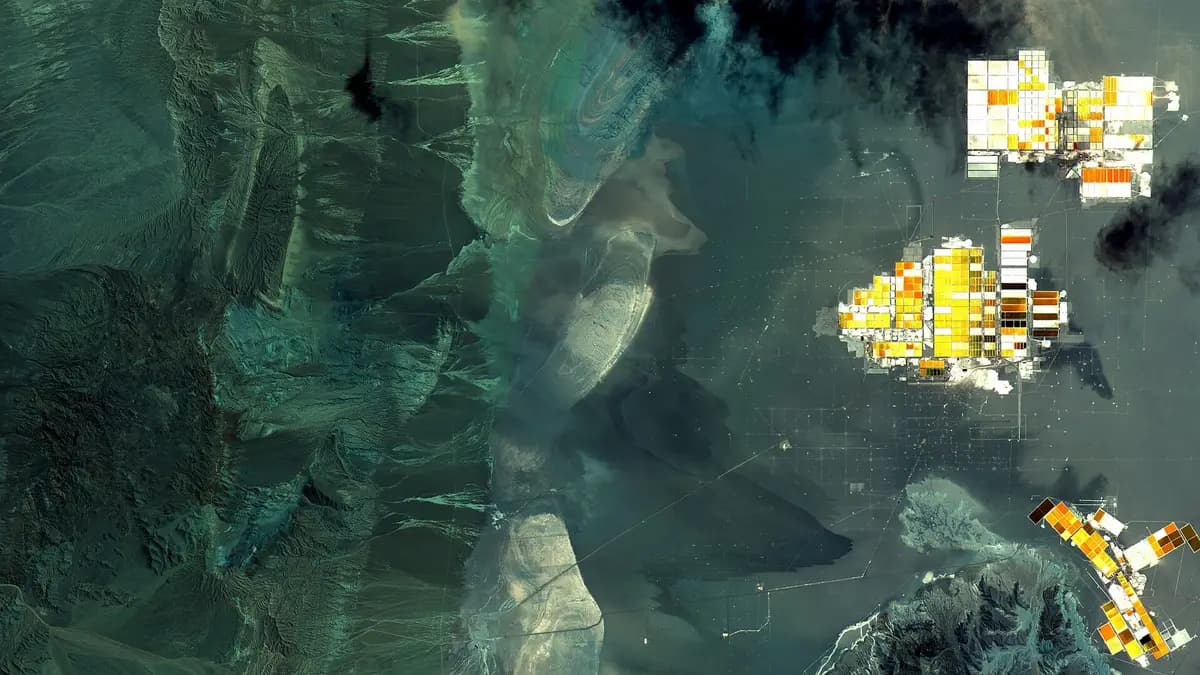
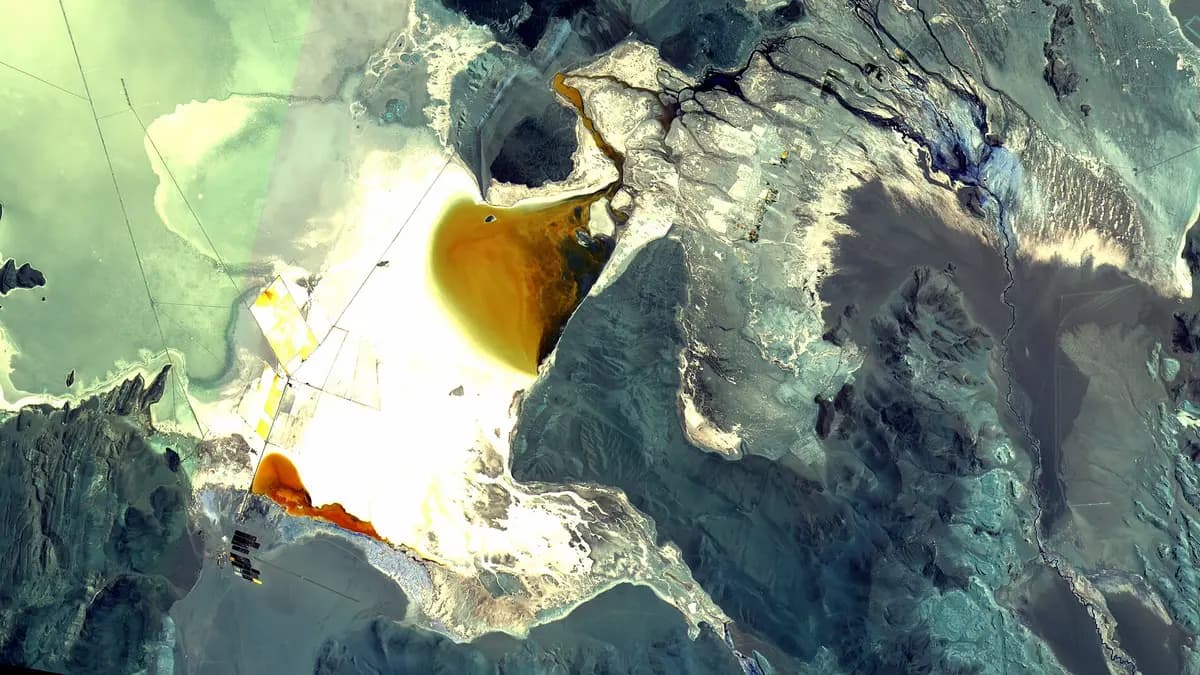
Direct extraction promises to take lithium out of brine without the huge evaporation ponds that can be seen from space in the Salar de Atacama today. But the experts agreed on one point: its big challenge is freshwater. The symposium was organized by the AMTC, the Technology Transfer Foundation (Untec), Germany's Karlsruhe Institute of Technology (KIT) and the Andean Geothermal Center of Excellence (CEGA).
View the data as a table
| Brine water lost to evaporation | Over 90% |
| Lithium recovered with DLE | Over 90% |
| Time in evaporation ponds | 18 months |
| Symposium attendees | Over 120 |
What direct lithium extraction is
In the traditional method, brine is pumped into ponds where the sun evaporates the water for about 18 months until the lithium is concentrated. In that process, more than 90% of the brine's original water is lost, along with roughly half of the lithium, according to a Climate Home News review based on studies published in Nature. Direct extraction uses resins, membranes or sorbents that capture lithium from brine in hours and can recover more than 90% of the metal; the lithium-free brine can be returned to the salt flat.
| Aspect | Evaporation ponds | Direct extraction (DLE) |
|---|---|---|
| Process time | ~18 months | Hours or days |
| Lithium recovered | About half | More than 90% |
| Brine water | More than 90% evaporates | Can be reinjected into the salt flat |
| Freshwater | Used in process stages | Can be higher; in some studies more than 10 times |
| Footprint | Ponds the size of thousands of football pitches | Compact industrial plant |
Source: Climate Home News (13 October 2025), citing the review by Vera, Torres, Chagnes and Flexer published in Nature Reviews Earth & Environment in 2023. Freshwater use figures for DLE vary widely depending on the technology.
The freshwater problem in direct lithium extraction
Argentine researcher Victoria Flexer, of Conicet and Cidmeju, warned at the symposium that direct extraction needs large volumes of demineralized water, so it must respect the territory: it does not evaporate brine, but it does demand water. Flexer co-authored the 2023 review that analyzed 57 articles on DLE: a quarter reported significantly higher freshwater use than the traditional method, in some cases more than 10 times.
In the high-altitude salt flats, freshwater is scarce and sustains wetlands and lagoons. A study by hydrologist Dan Corkran cited by Climate Home News linked a 90% reduction in wetland vegetation at the Salar del Hombre Muerto, in Argentina, to freshwater extraction. In the Salar de Atacama, the ground is sinking by up to 2 centimeters a year, according to the same publication.
Michael Schmidt, of Germany's Federal Institute for Geosciences and Natural Resources (BGR), defended the technique: "DLE technology is the way forward to achieve environmentally friendly production," he said, because the water returns to the basin. Reinjection is not an automatic solution either: AMTC scientists warned in October that reinjecting brines does not guarantee the salt flat will recover.
- Apr 2023National Lithium StrategyRequires direct extraction in new operations.
- 2024First DLE symposium, in Karlsruhe
- 2025Second DLE symposium, in Karlsruhe
- 5-6 Nov 2026First DLE symposium in South America, in SantiagoMore than 120 attendees at the Universidad de Chile.
Chile, China and the lithium race
At the symposium it was said that lithium demand could grow 20 to 40 times over the next 15 to 20 years and that China would displace Chile from second place among producers by 2027. US Geological Survey (USGS) data show that this already happened in 2025: China produced about 62,000 tonnes of lithium content and Chile, 56,000.
| Country | Lithium production 2025 (t) | Change from 2024 | Main deposit type |
|---|---|---|---|
| Australia | 92,000 | +11% | Hard rock (spodumene) |
| China | 62,000 | +50% | Hard rock and brine |
| Chile | 56,000 | +15% | Brine |
| Zimbabwe | 28,000 | +40% | Hard rock |
| Argentina | 23,000 | +67% | Brine |
| Brazil | 12,000 | +18% | Hard rock |
Source: USGS, Mineral Commodity Summaries 2026. Tonnes of lithium content; excludes the United States. The full ranking is in our profile of the world's largest lithium producers.
To regain ground, Codelco and its subsidiary Salares de Chile aim to be among the five largest producers by 2035, as we reported in our story on that goal. Hernán Cáceres, executive director of the National Institute of Lithium and Salt Flats, said at the symposium that direct extraction technologies "are a concrete part of the solution," and Hugo Giraldo, of the Novo Andino project, said Chile should move toward refining and higher-value products.
What's next for direct lithium extraction in the region
There are about a dozen direct extraction projects at various stages in South America. Of the four plants that use DLE for part of their output, one is in Argentina and three in China, and in Argentina, at least two thirds of 38 proposed new mines would use the technique, according to Climate Home News. Meanwhile, lithium is having a good commercial year: Chile's lithium exports rose 165% through October.
The symposium, in its third edition and the first outside Germany, was held as part of the Bridge project, a Chile-Germany alliance. The previous editions took place at KIT, in Karlsruhe, in 2024 and 2025. The organizers had not published formal conclusions at the time of writing.
Does your company develop lithium technology or water management? Reach Energía Futura's readers.
See advertising formatsFrequently asked questions
What is direct lithium extraction (DLE)?
A set of technologies that capture lithium from brine with resins, membranes or sorbents, without evaporating it in ponds for months.
Does Chile require direct extraction?
Yes. The National Lithium Strategy, from April 2023, requires direct extraction technologies in new operations.
Does direct extraction use less water?
It avoids evaporating brine, but it can use a lot of freshwater: a review of 57 studies found that a quarter reported higher use than the traditional method.
How much lithium does direct extraction recover?
It can recover more than 90% of the lithium in the brine, versus about half in evaporation ponds.
Where does Chile rank among lithium producers?
Third in 2025, with 56,000 tonnes, behind Australia and China, according to the USGS.