Codelco wants to be among the five largest lithium producers in the world by 2035, alongside Albemarle, SQM, Rio Tinto and China's Ganfeng. That was the message from Rolando Kukenshoner, head of Administration, Finance and Business at Salares de Chile, the state miner's lithium subsidiary, at the Jueves Minero event of the Chilean Institute of Mining Engineers (IIMCh), as reported by Minería Chilena on November 6.
The executive projected that lithium demand will grow an average of 12% a year over the next decade and that some 300,000 additional tonnes will be needed. Since current projects produce between 20,000 and 25,000 tonnes each, that would mean starting 12 to 15 new projects a year worldwide. "Every day that goes by we are losing value," he said.
View the data as a table
| Annual demand growth | 12% |
| Additional tonnes needed | 300,000 t |
| New projects per year | 15 |
| Rank Codelco targets by 2035 | Top 5 |
| Indicator | Figure | Source |
|---|---|---|
| Lithium demand growth | 12% a year (next decade) | Salares de Chile |
| Additional supply needed | 300,000 tonnes | Salares de Chile |
| Output of a typical project | 20,000 to 25,000 t | Salares de Chile |
| New projects needed | 12 to 15 a year | Salares de Chile |
| Codelco target | World top 5 by 2035 | Salares de Chile |
| Chile output in 2025 | 56,000 t (world No. 3) | USGS |
Source: Salares de Chile presentation at the IIMCh Jueves Minero, via Minería Chilena (November 6, 2026), and USGS, Mineral Commodity Summaries 2026.
Codelco's lithium target
The strategy of Codelco and Salares de Chile relies on public-private partnerships and operations only in Chile. The largest is NovaAndino Litio, the joint venture with SQM operating in the Salar de Atacama; it is joined by projects in the Maricunga and Pedernales salt flats, among others. Kukenshoner stressed that these deposits have lithium concentrations "far higher" than competitors', which would make them more resilient to price falls.
"Having half of a project that gets financed is better than having 100% of a project I can't finance," he explained about the partnership model, which also spreads risk and brings in technology at early stages. He also warned that the lithium industry lacks professionals, an opportunity for students choosing a career today.
Where Chile stands among lithium producers
Chile was the world's third-largest lithium producer in 2025, with about 56,000 tonnes of lithium content and 19.3% of the total, behind Australia (92,000 t) and China (62,000 t), according to the USGS Mineral Commodity Summaries 2026. Its output grew 15% from 2024, less than China's (+50%) or Argentina's (+67%), which is advancing quickly in its salt flats. The country-by-country detail is in the ranking of the world's largest lithium producers.
| Rank | Country | 2025 production (t of lithium) | Change vs. 2024 | Share |
|---|---|---|---|---|
| 1 | Australia | 92,000 | +11% | 31.7% |
| 2 | China | 62,000 | +50% | 21.4% |
| 3 | Chile | 56,000 | +15% | 19.3% |
| 4 | Zimbabwe | 28,000 | +40% | 9.7% |
| 5 | Argentina | 23,000 | +67% | 7.9% |
| 6 | Brazil | 12,000 | +18% | 4.1% |
| 7 | Mali | 9,400 | New producer | 3.2% |
| 8 | Canada | 5,600 | +16% | 1.9% |
Source: USGS, Mineral Commodity Summaries 2026, lithium. Estimates in tonnes of lithium content; world total, excluding the United States, was about 290,000 tonnes.
The comparison helps put Salares de Chile's figure in perspective: the 300,000 additional tonnes the market needs are more than all of the world's production in 2025. An arithmetic note: at 12% annual growth, demand does not double in ten years but triples (1.12 to the power of 10 is 3.1); doubling takes just over six years. Both figures were presented together at the event.
Direct extraction: more lithium, new risks for the salt flat
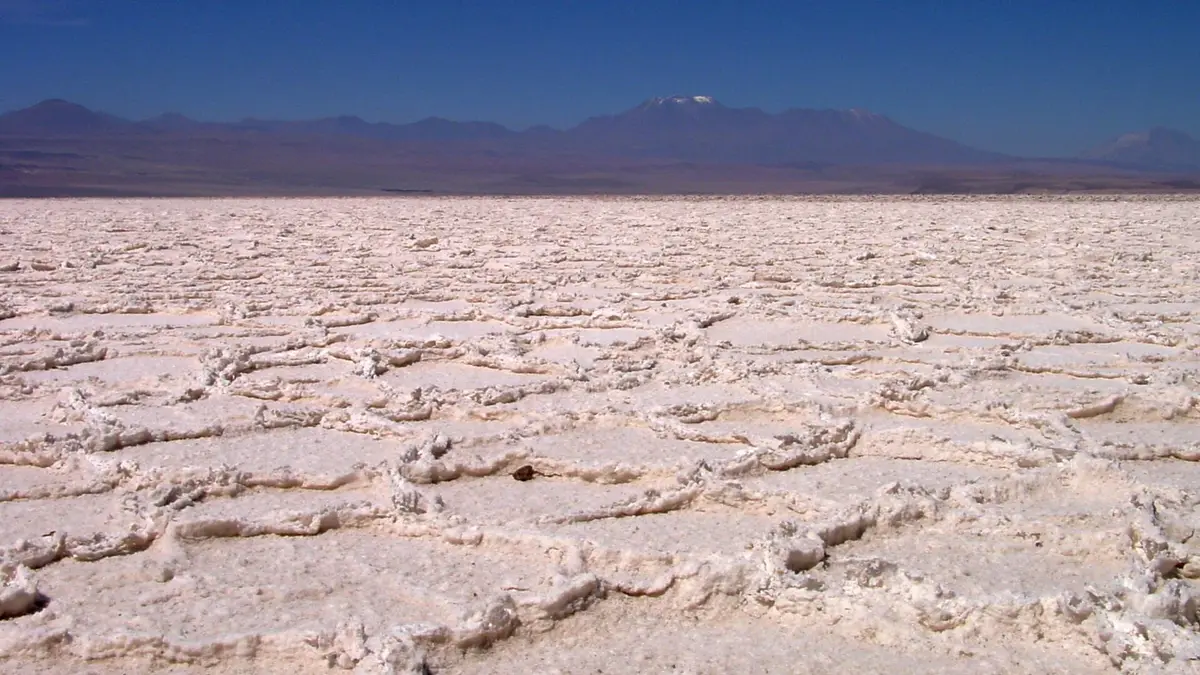
The environmental angle came from Julietta Zamora, a geologist and critical minerals adviser. On direct lithium extraction (DLE), the technology the government is promoting for new projects because it avoids large evaporation ponds, she explained that it can double the lithium recovery rate, but that it also poses significant operational challenges.
The main one is what to do with the brine once the lithium has been removed. If it is reinjected into limited areas of the salt flat, Zamora warned, it can dilute the resource, alter the salt boundaries and affect local hydrogeology. It is the same warning made by AMTC scientists in a recent study, which found that brine reinjection does not guarantee the salt flat's recovery. Zamora also noted that lithium is not traded on traditional metal exchanges, which makes its price more volatile.
The IIMCh's new Lithium Commission
The event also introduced the IIMCh Lithium Commission, created in mid-July and chaired by Alicia Sepúlveda. Its two goals are to educate the mining industry about lithium, a business different from copper, and to encourage academia, industry and the state to take part in decisions. Its board is completed by Lorena Barrientos (Minera Salar Blanco), Ignacia López (NovaAndino Litio) and Ángela Fasnacht (Princeton Critical Minerals).
The economic context supports the ambition. Chile's lithium exports almost tripled between January and September 2026, to US$4.745 billion, driven by the price recovery. For that boom to be sustainable, the challenge the experts raised is to grow without repeating the model of large evaporation ponds, using less water and with certainty about the effect of reinjection in each salt flat.
What it means for Chilean lithium
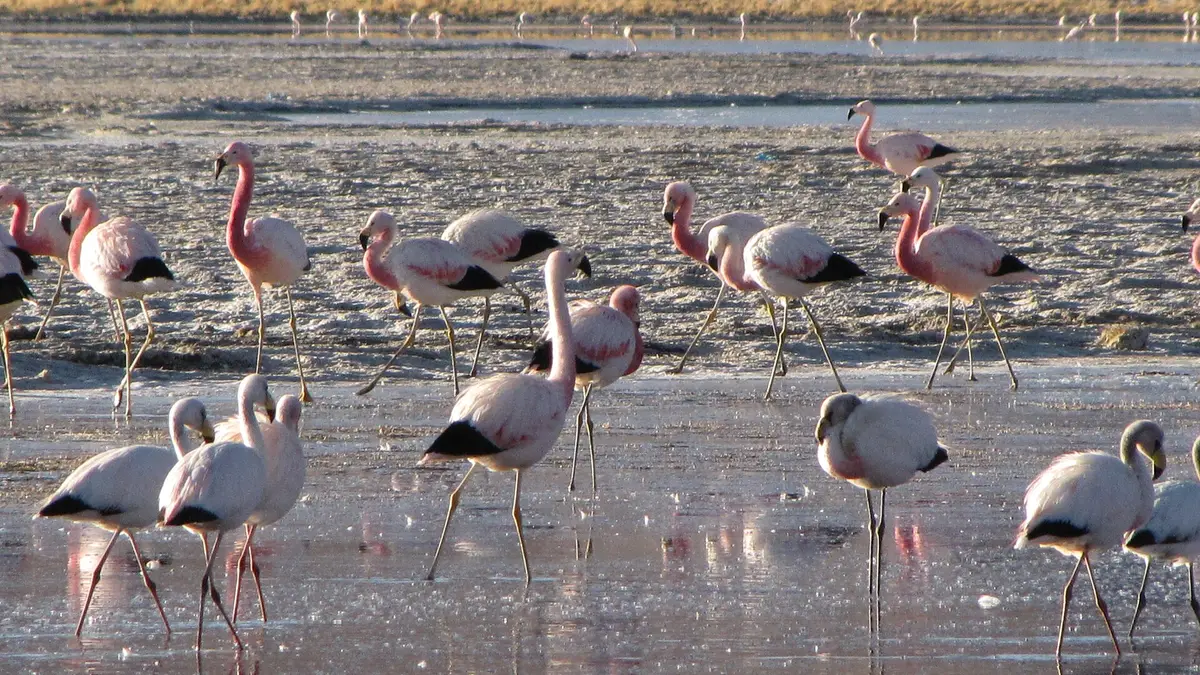
For Chile, Codelco's target has two readings. The first is economic: the state wants to capture more value from a mineral of which the country has the largest known reserves, in a market growing faster than copper. The second is environmental: new projects in high Andean salt flats such as Maricunga and Pedernales, home to flamingos and protected lagoons, will have to show that direct extraction reduces water use and ecosystem impact, as the technology promises.
The other factor is competition. Argentina increased its output by 67% in 2025 and China by 50%, while Chile grew 15%. If demand grows at the pace Salares de Chile projects, there is room for new producers, but also pressure to speed up permitting and construction. To follow the rest of the chain, from mines to cell factories, it helps to look at the world's largest lithium mine and where Chile's salt flats stand in that ranking.
Does your company provide technology or services for more sustainable lithium? Reach Energía Futura's readers.
See advertising optionsFrequently asked questions
What is Codelco's lithium target?
To be among the five largest lithium producers in the world by 2035, through partnerships and operations only in Chile.
What is Salares de Chile?
Codelco's subsidiary that develops its lithium projects in the Atacama, Maricunga and Pedernales salt flats, among others.
How much lithium does Chile produce?
About 56,000 tonnes of lithium content in 2025, 19.3% of the world total, according to the USGS. It is the third-largest producer.
How fast would lithium demand grow?
Salares de Chile projects 12% a year over the next decade and a need for 300,000 additional tonnes.
What is the risk of direct lithium extraction?
It doubles recovery, but brine reinjection can dilute the resource and alter the salt flat's hydrogeology.