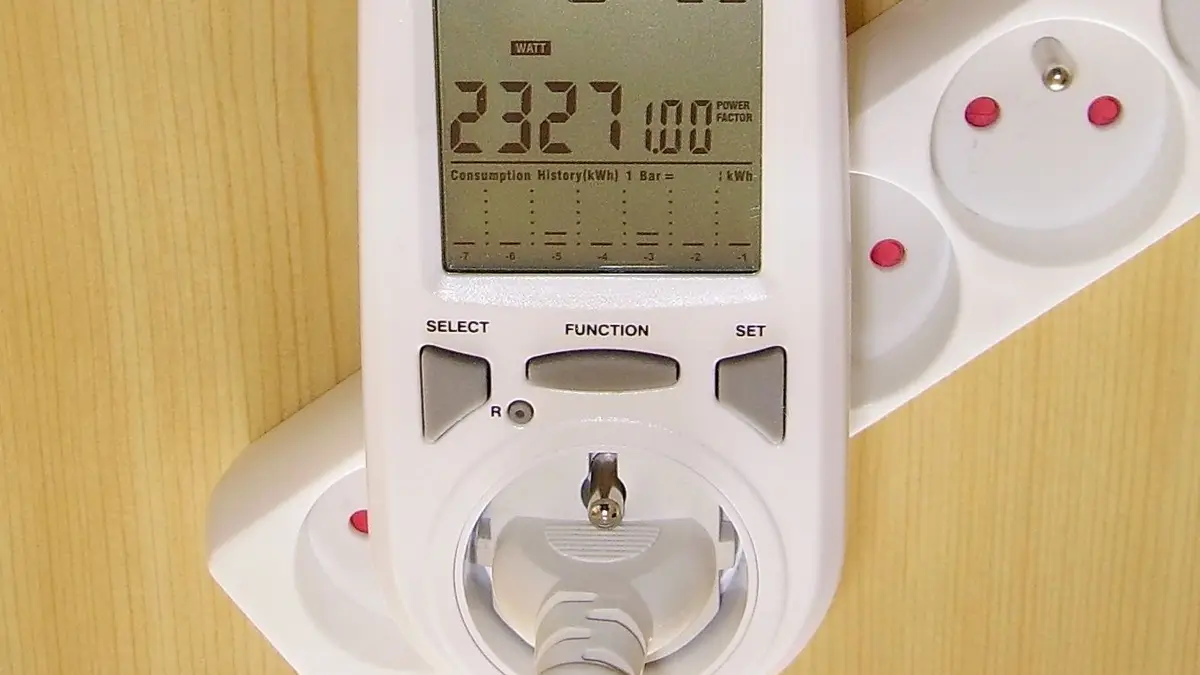
An electricity usage meter is a device that plugs in between the socket and an appliance, or goes in the home's electrical panel, and shows how much energy is used. In Chile, the simplest plug-in meters cost from CLP 13,490, smart plugs with energy metering from CLP 18,990 and panel submeters from CLP 7,990, according to prices listed at Falabella on November 13, 2026.
They help you find out how much the refrigerator, heater or computer really uses, spot hidden standby consumption and check whether replacing an appliance saves money. This guide explains the types, prices, how to use one and what to measure first.
View the data as a table
| Plug-in meter from | $13,490 |
| Smart plug with metering from | $18,990 |
| Panel submeter from | $7,990 |
| Set-top box on standby | $17,640 a year |
Types of electricity usage meter
There are three families, depending on where they go and what they measure:
- Plug-in meter: plugs into the wall and the appliance plugs into it. It has a display with watts, accumulated kWh, voltage, current and, in many models, cost once you enter the kWh price. It measures one appliance at a time.
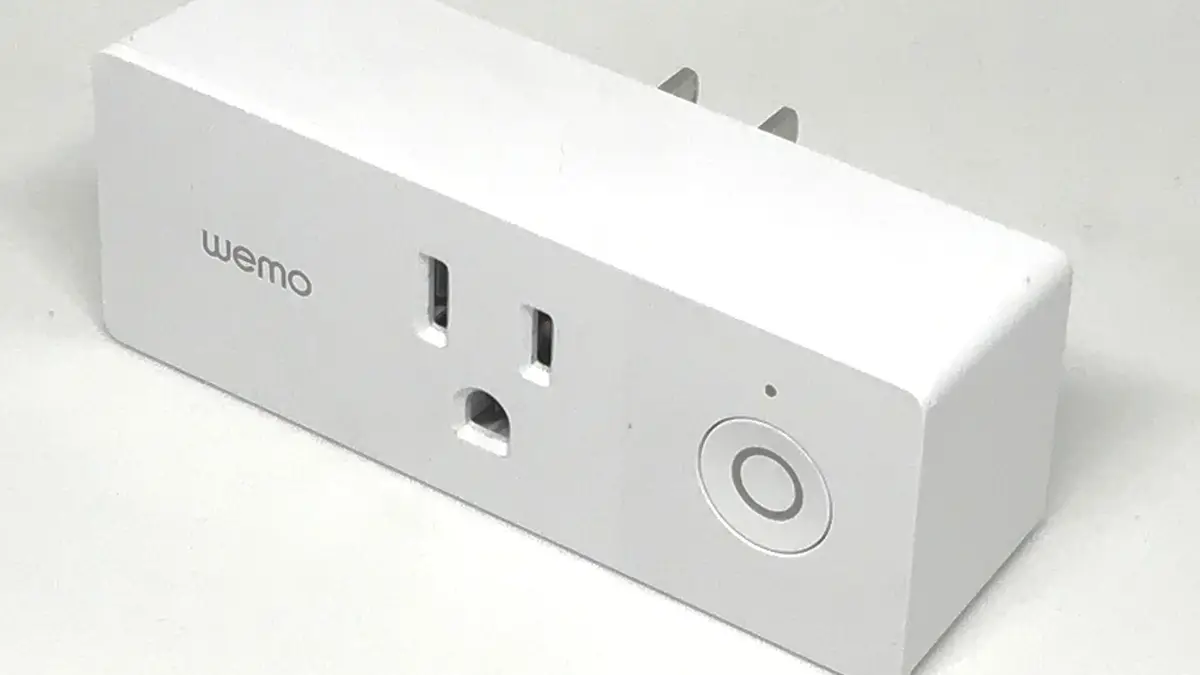
- Smart plug with energy metering: works the same way but sends data to your phone over Wi-Fi or Zigbee, keeps a history and lets you schedule on and off times. Note: not every smart plug measures consumption; check the spec sheet for energy metering.
- Panel meter or submeter: installed in the electrical panel on a DIN rail, it measures a circuit or the whole home. It is used to split consumption among apartments or shops, or to monitor the whole house. It requires an electrician licensed by Chile's fuel and electricity regulator (SEC).
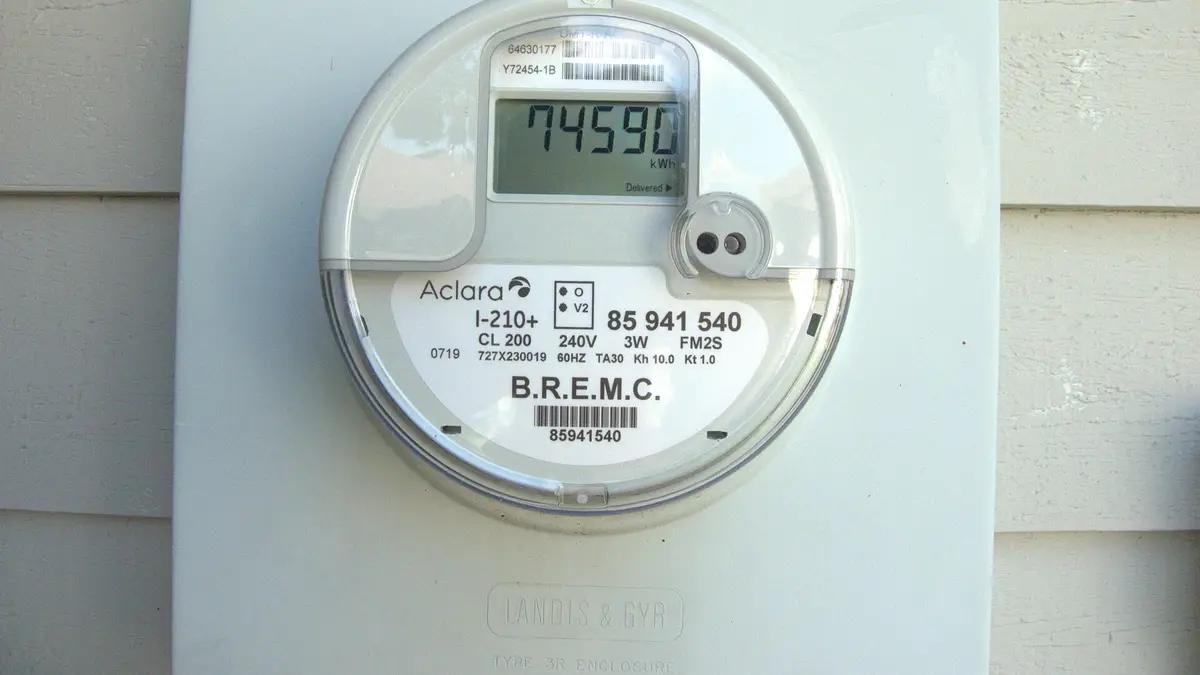
The distributor's meter, which records the consumption billed, is different: it belongs to the official metering system and none of these devices replaces it. But it does allow a rough measurement: note the reading, switch everything off except one appliance for an hour and read it again.
Electricity usage meter prices in Chile
We checked Falabella search results on November 13, 2026. Prices change daily and some products come from third-party marketplace sellers; the table is a reference for price ranges, not a buying recommendation.
| Product | Type | Listed price (CLP) |
|---|---|---|
| Single-phase digital submeter 50 A (generic) | Panel, DIN rail | 7,990 (was 12,990) |
| Watt meter with cost calculation (generic) | Plug-in | 13,490 (was 18,990) |
| Sonoff S60 ZB 16 A, Zigbee plug with metering | Smart plug | 18,990 |
| Certified single-phase meter (Ebasee) | Panel | 21,940 |
| Analog single-phase meter 10(60) A (Stanford) | Panel | 22,090 |
| Certified electronic meter (Inoxcrom) | Panel | 23,990 |
| Single-phase energy meter (Lexo) | Panel | 24,990 |
| Electronic meter 60 A ML-25001 (Stanford) | Panel | 27,500 |
| Sonoff POW Elite 20 A, Wi-Fi with monitoring | Smart switch | 29,675 |
| Watt meter with LCD screen (generic) | Plug-in | 29,990 |
| Sonoff Basic-1GSP 32 A, DIN rail with metering | Panel, Wi-Fi | 29,990 |
| Three-phase digital meter 80 A (Soliot) | Panel, DIN rail | 42,990 |
| Digital submeter 45 A Modbus (CNC) | Panel, DIN rail | 49,800 |
| Sonoff POWR3 25 A, Wi-Fi switch with monitoring | Smart switch | 50,134 |
| Power analyzer with LCD (CNC) | Panel, professional | 93,500 |
Source: Falabella, search «medidor de consumo eléctrico» and «enchufe inteligente medidor de consumo», checked November 13, 2026. Energía Futura receives no commission on these products.
| Single-phase digital submeter 50 A | Panel | 7,990 |
| Watt meter with cost calculation | Plug-in | 13,490 |
| Sonoff S60 ZB 16 A (Zigbee, metering) | Smart | 18,990 |
| Certified single-phase meter (Ebasee) | Panel | 21,940 |
| Analog single-phase meter 10(60) A (Stanford) | Panel | 22,090 |
| Certified electronic meter (Inoxcrom) | Panel | 23,990 |
| Single-phase energy meter (Lexo) | Panel | 24,990 |
| Electronic meter 60 A ML-25001 (Stanford) | Panel | 27,500 |
| Sonoff POW Elite 20 A (Wi-Fi) | Smart | 29,675 |
| Watt meter with LCD screen | Plug-in | 29,990 |
| Sonoff Basic-1GSP 32 A DIN rail (Wi-Fi) | Panel | 29,990 |
| Three-phase digital meter 80 A (Soliot) | Panel | 42,990 |
| Digital submeter 45 A Modbus (CNC) | Panel | 49,800 |
| Sonoff POWR3 25 A (Wi-Fi) | Smart | 50,134 |
| Power analyzer with LCD (CNC) | Panel | 93,500 |
Do you sell meters, home automation or energy efficiency equipment? Reach Energía Futura's readers.
See advertising optionsHow to use an electricity usage meter step by step
- Set the kWh price. Check your bill or use as a reference the CLP 255.27 per kWh of CGE's October 2026 BT1 tariff. The meter will then show the cost directly.
- Check the maximum current. A plug-in meter usually handles 10 or 16 A; at 220 V, that is 2,200 or 3,520 W. Do not use it with appliances above that limit, such as some electric showers or water heaters.
- Measure long enough. A refrigerator should be measured for at least 24 hours, ideally a week, because it runs in cycles. A heater or air conditioner, over a typical day of use.
- Write down kWh, not watts. Watts are the power at that moment; accumulated kWh are what you pay for.
- Scale to a month. If the refrigerator logged 1.2 kWh in 24 hours, that is about 36 kWh a month: about CLP 9,190.
The formula to turn a reading into a monthly cost is explained in how to calculate electricity consumption. With several days of data you can compare the reading with the appliance's efficiency label.
| Meter reading | Time measured | kWh a month (× 30) | Cost a month (CLP 255.27/kWh) |
|---|---|---|---|
| Refrigerator: 1.2 kWh | 24 hours | 36 | CLP 9,190 |
| TV on standby: 0.5 W | Constant | 0.36 | CLP 92 |
| Set-top box on standby: 8 W | Constant | 5.76 | CLP 1,470 |
| Heater: 3.1 kWh | One day of use | 93 | CLP 23,740 |
| Desktop computer: 0.6 kWh | One working day | 18 | CLP 4,595 |
Source: Energía Futura worked examples with typical values, to show how to convert a reading into a monthly cost; they are not measurements of any specific model.
Which electricity usage meter suits your case
- If you want to know what one appliance costs: a plug-in meter with a display is the simplest and cheapest; move it from one device to the next.
- If you want control and automation: a smart plug with metering shows the history on your phone and lets you switch the device off remotely or on a schedule.
- If you rent out a room or have a shop inside a property: a submeter in the panel measures that space's consumption to split the bill.
- If you have solar panels or an electric car: a Wi-Fi panel meter shows the whole home's consumption and helps decide when to use energy.
In every case, savings depend on your distributor's kWh price, which varies by municipality, as our guide to the kWh price in Chile shows. With a more expensive kWh, every watt you eliminate is worth more.
Which appliances to measure first to cut your bill
Start with those that run all day and those that heat. The refrigerator can be up to a third of a home's consumption; the new refrigerator label is explained in our story on the E2.0 label. Then the heater or air conditioner, the electric water heater, the computer and the entertainment center, where standby consumption piles up.
A plug-in meter of about CLP 13,000 pays for itself if it finds hidden consumption: a set-top box drawing 8 W day and night costs about CLP 1,470 a month, some CLP 17,600 a year. Switching it off with a power strip saves that full amount.
Frequently asked questions
How much does an electricity usage meter cost in Chile?
Plug-in meters cost between CLP 13,490 and 29,990, smart plugs with metering from CLP 18,990 and panel submeters from CLP 7,990, according to Falabella on November 13, 2026.
What is an electricity usage meter for?
To find out how many watts and kWh each appliance uses and what it costs, spot standby consumption and check whether replacing an appliance saves money.
Do all smart plugs measure consumption?
No. Only those whose spec sheet states energy metering or monitoring. Many basic models only switch on and off.
Can I install a submeter myself?
It is not advisable: it goes inside the electrical panel and should be installed by an electrician licensed by the SEC.
How long should a refrigerator be measured?
At least 24 hours and preferably a week, because the compressor runs in cycles and consumption changes with temperature and door openings.