Engie Energía Chile has won environmental approval to convert its last two coal units in the country to natural gas: Andina (CTA) and Hornitos (CTH), at the Mejillones Thermal Power Complex in the Antofagasta Region. The project, which will keep diesel as backup, adds a 60 MW gas turbine and involves an investment of US$59 million, Electrominería reported on November 6.
The initiative is called "Conversion to natural gas and operational improvements to the Central Térmica Andino Project of the Mejillones Thermal Power Complex" and was processed through an Environmental Impact Declaration (DIA) before the Antofagasta office of the Environmental Assessment Service (SEA). It modifies the original project, approved in 2007. With the conversion, Engie would stop burning coal in Chile.
View the data as a table
| New gas turbine | 60 MW |
| Investment | US$59 million |
| Project lifetime | 35 years |
How the gas conversion of Andina and Hornitos will work
The project goes beyond changing the boilers' fuel. It adds a 60 MW gas turbine with dual burners, able to run on natural gas or diesel, and a heat recovery steam generator (HRSG) that will use the turbine's hot exhaust to produce steam and send it to CTA's existing steam turbine. That is the principle of a combined cycle: the same fuel generates electricity twice.
| Item | Detail |
|---|---|
| Owner | Engie Energía Chile S.A. |
| Units | Andina (CTA) and Hornitos (CTH), Mejillones Thermal Power Complex |
| Fuel | Natural gas; diesel as backup (previously coal) |
| New turbine | 60 MW, dual burners, water injection to cut NOx |
| Heat recovery | HRSG sending steam to CTA's existing turbine |
| Stack | 40 meters; exhaust at 80-90 °C |
| Emission controls | Gas recirculation and selective catalytic reduction (SCR) |
| Black start | Able to restart the system after a blackout |
| Investment | US$59 million |
| Lifetime | 35 years |
Sources: Electrominería (November 6, 2026), Reporte Minero (December 2025) and the DIA extract published in Chile's Diario Oficial on April 17, 2026.
The turbine will have black start capability: it can start without external power and help re-energize the grid after a total blackout. That service is scarce in northern Chile, where most new generation is solar and wind, which cannot start on its own. On emissions, the project includes water injection, gas recirculation and selective catalytic reduction, aiming to lower nitrogen oxides (NOx), sulfur dioxide (SO2) and particulate matter compared with coal operation.
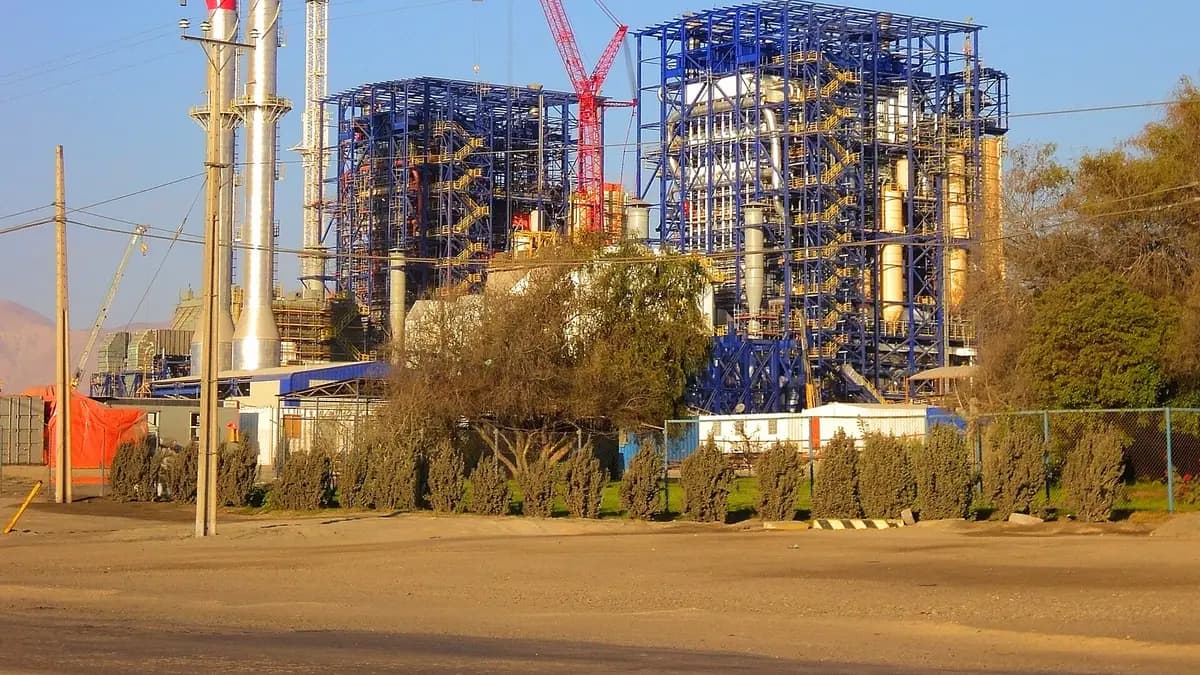
The CNE won't let Andina and Hornitos shut down before May 2027
Environmental approval does not mean the units will leave coal immediately. On February 18, 2026, the National Energy Commission rejected, through Exempt Resolution No. 86, Engie's request to bring the conversion forward, and extended to May 10, 2027 the retirement or modification date of both units, which had been set for May 10, 2026.
The reason is system security. Chile's National Electric Coordinator concluded that taking CTA and CTH offline for conversion *"produces risks to system security"* and recommended making their disconnection conditional on the commissioning of synchronous condensers, equipment that adds strength to the grid and is scheduled to enter service at the end of 2027. The CNE set the deadline as May 10, 2027 or the start of those condensers, *"whichever occurs first."*
- 2007Central Térmica Andino receives environmental approval
- 2011Andina and Hornitos start operating on coal
- December 2025Engie files the gas conversion with the SEIA (US$59 million)
- December 31, 2025Disconnects CTM1, CTM2 and IEM: 711 MW of coal
- February 18, 2026CNE refuses to bring forward the conversion and sets May 10, 2027
- October 2026IEM resumes operation, now on gas
- November 2026Environmental approval of the Andina and Hornitos conversion
- May 10, 2027Minimum operating deadline, unless synchronous condensers come online earlier
Large thermal plants like those in Mejillones spin in sync with the grid and provide inertia and short-circuit power, two properties that stabilize voltage and frequency during a fault. Solar and wind parks, connected through power electronics, do not provide them on their own. So until synchronous condensers or new technical resources arrive, the Coordinator needs those units to stay available. The same logic now requires close monitoring of other plants on the bay, such as Angamos, whose coal stock the Coordinator checks daily because of the port failure.
The end of Engie's coal in Chile
Andina and Hornitos are the last pieces of Engie's coal exit plan. On December 31, 2025, the company disconnected 711 MW of coal in Mejillones: units CTM1 and CTM2 and the IEM plant, of 377 MW, which was converted to gas with an investment of US$78 million and returned to service in October 2026. It was the first coal-to-gas conversion of a power plant in Chile.
| Engie unit in Mejillones | Status |
|---|---|
| CTM1 | Disconnected on December 31, 2025 |
| CTM2 | Disconnected on December 31, 2025 |
| IEM (377 MW) | Converted to gas; operating since October 2026 (US$78 million) |
| Andina (CTA) | On coal until May 10, 2027 or the start of the synchronous condensers; gas conversion approved |
| Hornitos (CTH) | Same as Andina |
Sources: Engie (January 2026), CNE (Exempt Resolution No. 86 of 2026) and Electrominería. According to Global Energy Monitor, Andina and Hornitos have about 177 and 178 MW, respectively, and have operated since 2011.
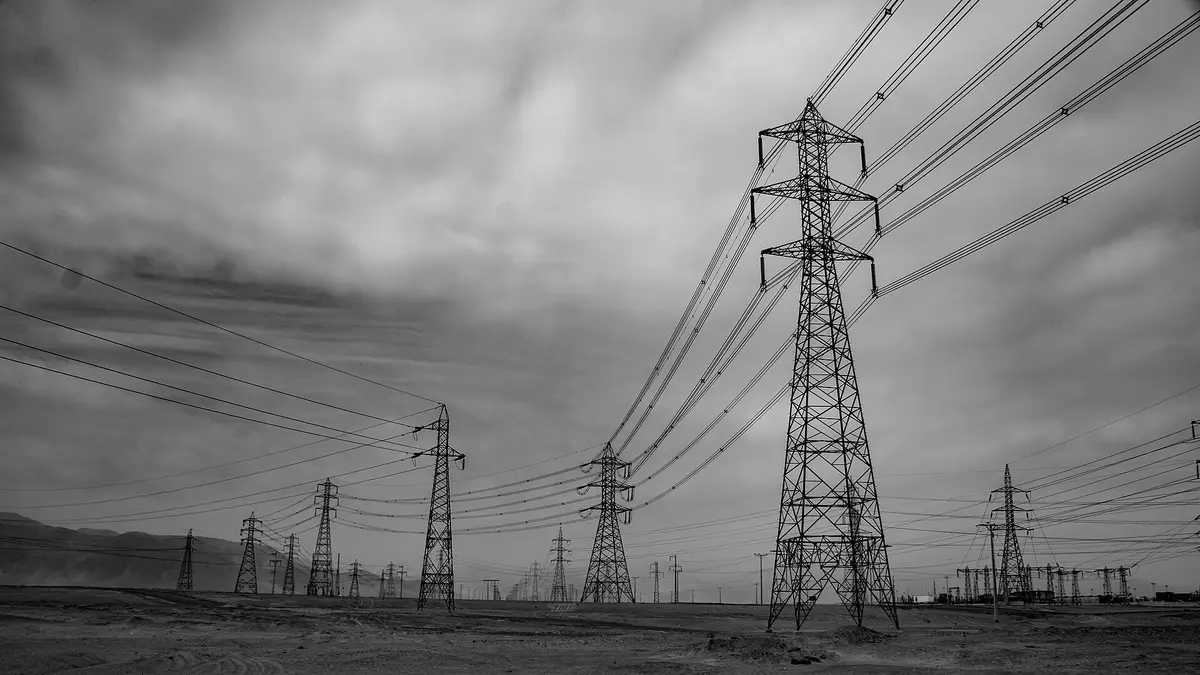
Natural gas: a transition fuel and its debate
The official DIA extract describes the project as part of the decarbonization plan for Chile's energy mix, with natural gas as a transition fuel. Gas emits about half the CO2 of coal per unit of electricity in modern plants, according to the International Energy Agency, and almost no particulate matter or sulfur dioxide. Mejillones also has a liquefied natural gas regasification terminal, which allows the plants to be supplied without a new pipeline.
The SEA considered that the project creates environmental burdens for nearby communities and opened a 20-business-day public participation process in April 2026. The debate in Mejillones, one of the municipalities designated as a sacrifice zone, is whether switching to gas is enough or whether the units should close. With renewables already covering most generation, as shown by September's generation, 83.6% renewable, gas plants will tend to operate as backup in the hours without sun.
Is your company part of northern Chile's energy transition? Show it to Energía Futura's readers.
See advertising optionsFrequently asked questions
What did the environmental authority approve for Engie?
The conversion of the Andina (CTA) and Hornitos (CTH) coal units to natural gas, with diesel backup and a new 60 MW turbine, in Mejillones.
How much does the project cost?
US$59 million, according to the information filed with the SEIA.
When will they stop using coal?
Not before May 10, 2027 or the commissioning of the synchronous condensers, whichever comes first, according to the CNE.
Why didn't the CNE allow it earlier?
Because the Coordinator concluded that removing both units before synchronous condensers are available would create risks to system security.
Will Engie keep using coal in Chile?
Andina and Hornitos are its last coal units. Once they switch to gas, Engie will stop generating with coal in the country.