Canada's Innergex is trying again to build a hydropower plant on the Biobío River. Its subsidiary Inversiones San Carlos SpA submitted to Chile's Environmental Impact Assessment System (SEIA) a new environmental impact study for the San Carlos Hydropower Plant, a 154.4 MW run-of-river plant with an investment of about US$420 million, Revista Electricidad reported on November 4, 2026. The document is dated November 3.
It is the project's third environmental review. In 2022 the company filed it, withdrew in May and refiled in June; in August that year the Environmental Assessment Service (SEA) ended the review early, according to the same outlet and REDIMIN.
View the data as a table
| Installed capacity | 154.4 MW |
| Investment | US$420 M |
| Design flow | 750 m³/s |
| Peak construction workforce | 906 |
What the San Carlos hydropower plant looks like
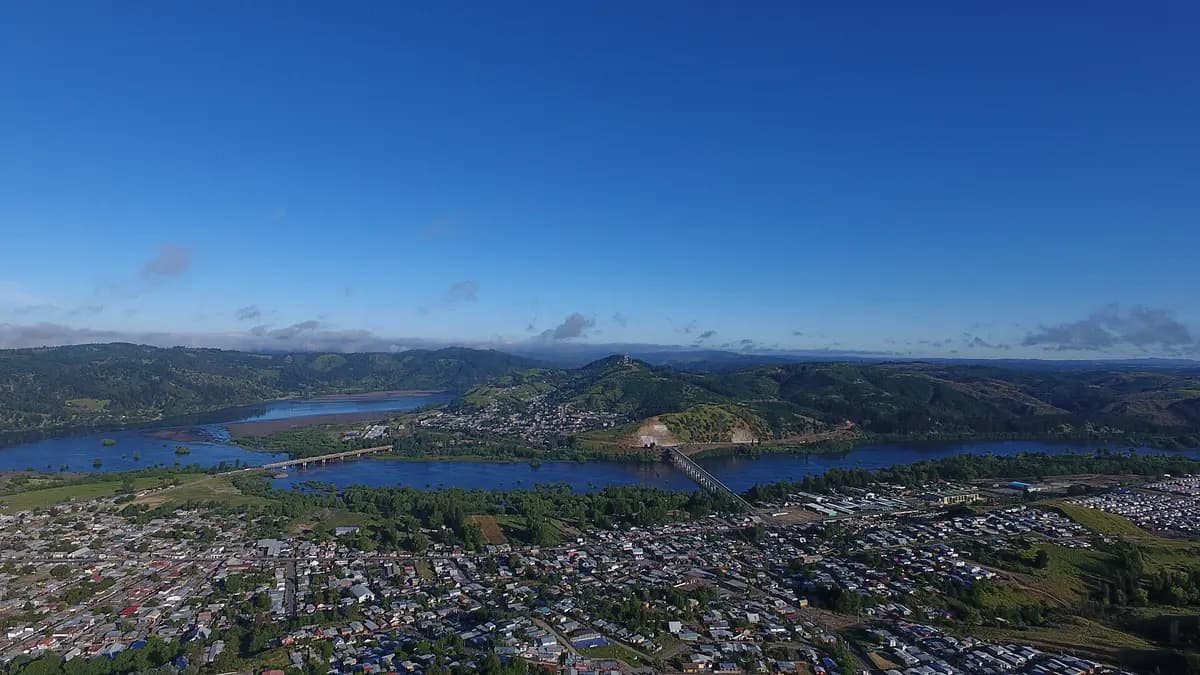
The San Carlos hydropower plant would sit in the San Carlos de Purén area, on the boundary of the Los Ángeles and Mulchén communes, about 1,200 meters upstream of the old Route 5 South bridge over the Biobío (now route Q-619). It is a run-of-river plant: it does not create a large regulating reservoir, but raises the river level with a barrier to use its flow.
The design includes a fixed barrier and closure embankments on both banks, a movable barrier to release floods and a powerhouse with three Kaplan units: two main turbine-generators and a secondary unit that uses the ecological flow. The design flow is 750 m³/s: 660 m³/s for the main turbines and 90 m³/s for the secondary unit. A step-up substation and a line of about 650 meters would connect it to a line associated with the Mulchén substation in the National Electric System.
| Feature | Value |
|---|---|
| Developer | Inversiones San Carlos SpA (Innergex subsidiary) |
| Installed capacity | 154.4 MW |
| Estimated investment | US$420 million |
| Type | Run-of-river, 3 Kaplan turbines |
| Design flow | 750 m³/s (660 + 90 ecological) |
| Permanent works area | 682 hectares |
| Construction | 43 months, average of 490 workers and a peak of 906 |
| Operation | 50 years, average of 6 workers |
| Planned start of works | January 2030 |
| Planned start of operation | September 2033 |
Source: the project's environmental impact study, via Revista Electricidad (November 4, 2026). The company did not report expected annual generation in GWh.
Why the San Carlos plant already failed twice
The 2022 early termination was applied under Article 15 bis of Law 19,300, which lets the SEA close a review when the study lacks relevant or essential information that cannot be fixed through clarifications. In that process, the Biobío Regional Government raised concerns about the effects on the river and on communities, the adequacy of mitigation, repair and compensation measures, and the loss of ecosystem services in the area that would be flooded.
- 2022First SEIA filing
- May 2022The company withdraws
- June 2022Second filing
- August 2022SEA ends the review early (art. 15 bis)
- November 3, 2026Third environmental impact study
- January 2030Planned start of works
- September 2033Planned start of operation
The new study will have to answer the same questions, now with a permanent works area of about 682 hectares. A BNamericas profile based on the 2022 version mentioned about 703 hectares affected and operation by 2029, a date that has already passed.
The Biobío, Chile's basin of large hydropower plants
The Biobío is Chile's most important hydropower basin. Upstream, in the Upper Biobío, Ralco (690 MW) and Pangue (456 MW) are in operation; on the same river, Angostura (323.8 MW) started operating in 2014, and in the basin of the Laja, a tributary, is Antuco (320 MW), according to each plant's records. San Carlos would be the first of this size on the middle course of the river, already in the valley.
View the data as a table
| Capacity | ||
|---|---|---|
| San Carlos | Under review | 154.4 MW |
| Ralco | Operating | 690.0 MW |
| Pangue | Operating | 456.0 MW |
| Angostura | Operating | 323.8 MW |
| Antuco | Operating | 320.0 MW |
| Plant | River | Installed capacity | Type |
|---|---|---|---|
| Ralco | Biobío (Upper Biobío) | 690 MW | Reservoir |
| Pangue | Biobío | 456 MW | Reservoir |
| Angostura | Biobío | 323.8 MW | Reservoir, operating since 2014 |
| Antuco | Laja | 320 MW | Reservoir |
| San Carlos (project) | Biobío (middle course) | 154.4 MW | Run-of-river |
Source: each plant's Wikipedia page and the San Carlos environmental impact study. Unlike Ralco, Pangue and Angostura, which form large reservoirs in the upper basin, San Carlos would sit downstream, where the Biobío has already received several tributaries and flows through a farmed and populated valley. That is precisely the point that drew the 2022 objections: what happens to the river, the riverside vegetation and the communities that live from it when a barrier raises its level. Run-of-river plants usually have less impact than reservoir plants, but their effect depends on the flow they let through and on how floods are managed.
Ralco is also Chile's largest hydropower plant, although far from the world's giants, as our ranking of the largest hydropower plant in the world shows.
Source: Wikipedia pages of each plant (installed capacity) and the San Carlos environmental impact study. Hydropower became Chile's main source again this year: in September it led generation thanks to winter rain and snow, as we reported in our story on September's power generation.
Does your company work in hydropower or renewables? Reach Energía Futura's readers.
See advertising optionsInnergex in Chile and what comes next
Innergex is a renewable energy producer based in Canada that operates hydropower and solar plants in Chile, and in recent years has added battery systems next to its solar plants in partnership with Prevalon. According to Global Energy Monitor, the San Carlos project is listed under Energía Llaima, the Chilean company through which Innergex entered the country.
The SEA must now decide whether to admit the study. If it does, citizen participation, comments from public agencies and addenda will follow, in a process that took more than 450 days on average for energy projects approved in 2025, according to the Ministry of Energy. If everything is approved, works would start in January 2030 and the plant would begin operating in September 2033. In the long run, water-based plants like this one and pumped storage are discussed as a complement to solar, as we explained in the largest pumped-storage plant in the world.
Frequently asked questions
Where would the San Carlos hydropower plant be built?
On the Biobío River, in the San Carlos de Purén area, on the boundary of Los Ángeles and Mulchén, Biobío Region.
How much capacity would it have?
154.4 MW, with three Kaplan turbines and a design flow of 750 m³/s.
How much does it cost?
About US$420 million, according to the environmental impact study.
Why is this the third attempt?
In 2022 the company withdrew the first filing and the SEA ended the second review early for lack of essential information.
When would it start operating?
In September 2033, if approved and if construction starts in January 2030 as the company plans.