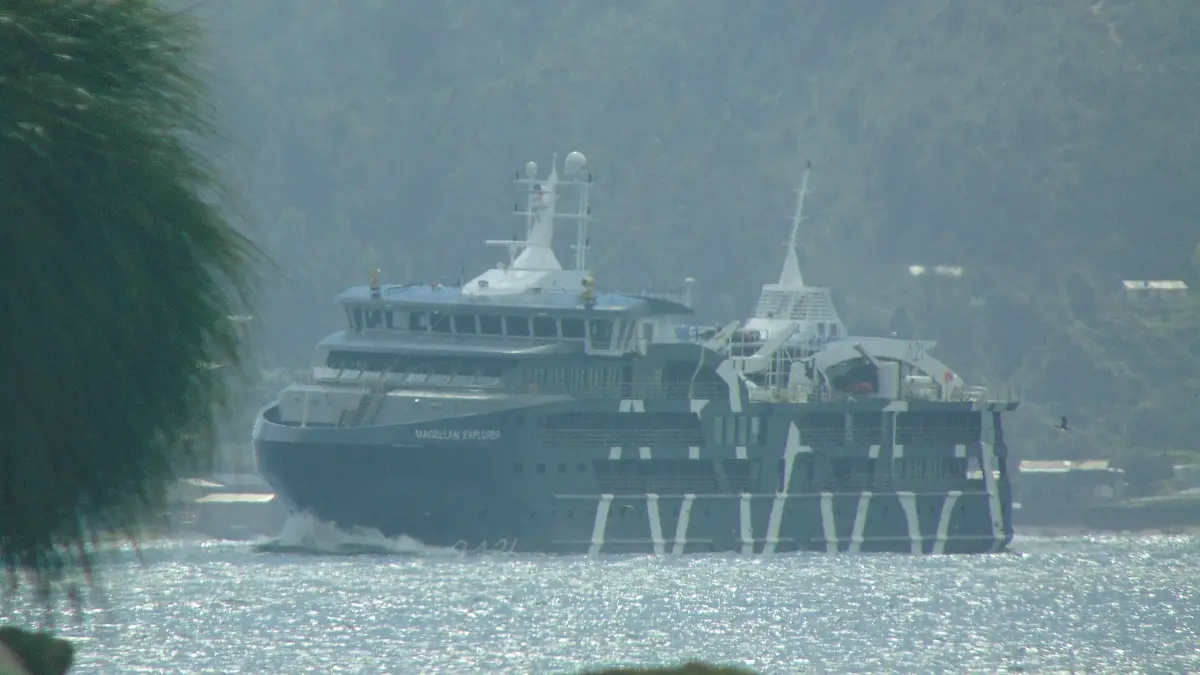
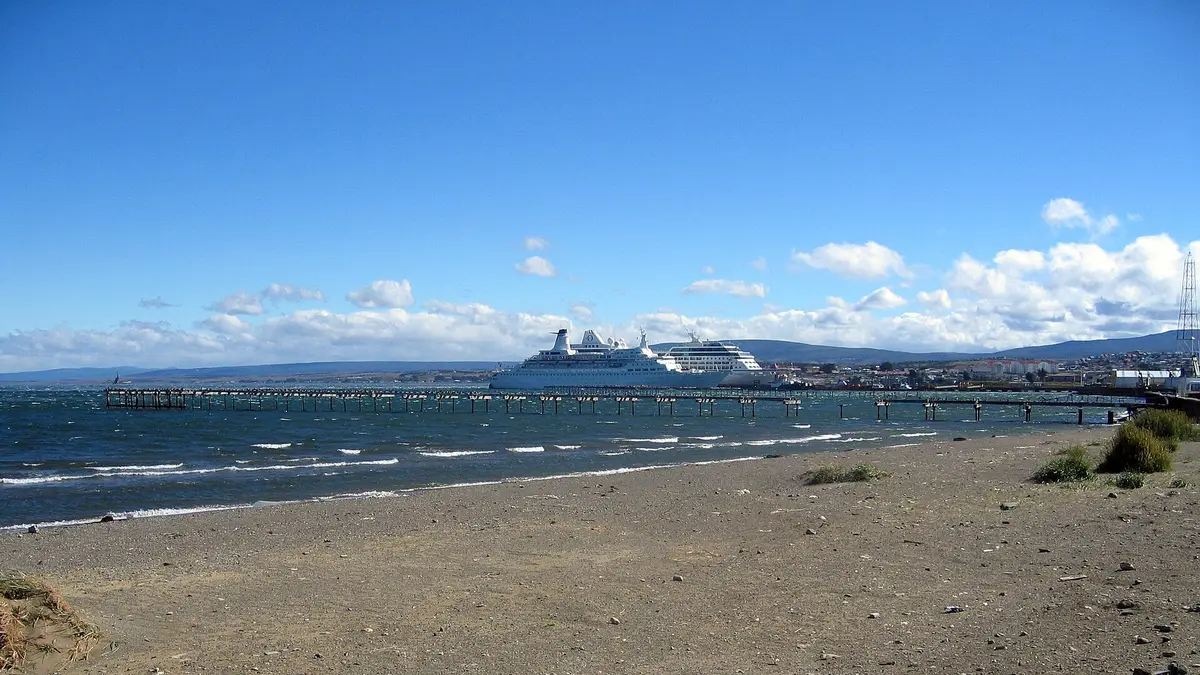
The Magellan Discoverer, the first polar expedition cruise ship with hybrid-electric propulsion built in South America, arrived in Punta Arenas on Thursday, November 5, from Valdivia, where it was built by Chilean shipyard Asenav. The 94-meter vessel combines two 1,800 kW diesel engines with a Corvus Energy battery bank and ABB Azipod thrusters, and it is 20% more efficient than a conventional propulsion system, according to the Magallanes Regional Energy Office.
The ship belongs to Antarctica21, the operator that runs Antarctic voyages from Punta Arenas, and will join its twin Magellan Explorer, built at the same shipyard. According to Cruise Industry News, its christening was scheduled for November 6, Chilean Antarctic Day, and its maiden voyage for December 15.
View the data as a table
| Length | 94 m |
| Propulsion power | 3,600 kW |
| More efficient than a conventional one | 20% |
| Passengers | 96 |
How the hybrid-electric cruise ship works
The Magellan Discoverer is not a battery ship like Norway's electric ferries or the world's largest electric ship, which make short trips. It is a diesel-electric hybrid: the generators produce electricity that powers the electric propulsion motors through an ABB Onboard DC Grid direct-current network, and the Corvus Energy batteries store energy to cover peaks, optimize engine use and allow stretches of quiet, emission-free navigation in sensitive areas.
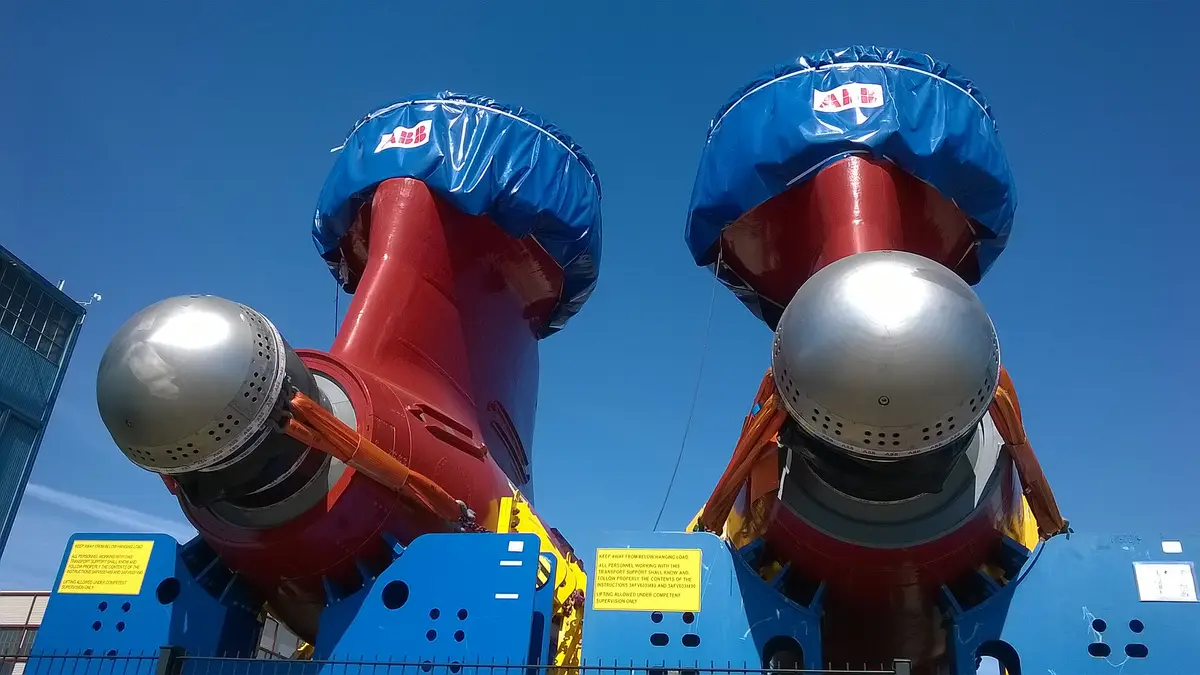
Propulsion is delivered through two Azipods, units that house the electric motor inside a submerged pod that rotates 360°. That improves maneuverability and hydrodynamic efficiency and reduces underwater noise, which matters for Antarctic wildlife. "The cruise ship's propulsion system is 20% more efficient than a conventional one," said Marco Antonio Pinto, Magallanes regional Energy secretary, after touring the ship.
| Specification | Magellan Discoverer |
|---|---|
| Length | 94 m |
| Beam | 17.2 m |
| Draft | 4.3 m |
| Gross tonnage | 5,900 |
| Propulsion | Hybrid diesel-electric, 2 x 1,800 kW, ABB Azipods |
| Energy storage | Corvus Energy batteries (capacity not disclosed) |
| Passengers | 88 on air-cruises and 96 on sea voyages |
| Crew and staff | 67 |
| Polar class | PC6 |
| Cruising speed | 14 knots |
Source: Ministry of Energy, Magallanes Regional Office (November 7, 2026) and Cruise Industry News for gross tonnage. Battery capacity has not been disclosed.
Energy efficiency on board the Magellan Discoverer
Propulsion is not the only feature. The ship has retractable fin stabilizers that reduce rolling in the Drake Passage and drag; a digital system, Ascenz Marorka, that monitors and optimizes fuel use; and an exhaust gas economizer that recovers waste heat from the engines for heating and hot water, reducing the use of fuel-fired boilers.
- Heat recovery: exhaust heat is used for climate control and hot water.
- Fresh water by reverse osmosis: the ship desalinates seawater and relies less on water from shore.
- Antifouling coating without harmful biocides: reduces hull drag and environmental impact.
- Selective catalytic reduction (SCR): meets the International Maritime Organization's Tier III level for nitrogen oxides.
- MARPOL waste management: separation, compaction and delivery to authorized port facilities.
Magallanes regional Environment secretary Gonzalo Rosenfeld said the ship contributes to Chile's 2050 carbon neutrality goal and has "greater autonomy because of its electrical system". None of the officials gave a figure for emissions avoided per season.
- 2023-2026Construction at AsenavAlmost three years of work in Valdivia, designed entirely by the shipyard.
- 26 Oct 2026Final sea trialsSails to Corral for the last trials.
- 30 Oct 2026Handover to Antarctica21The ship is taken over, registered and provisioned.
- 5 Nov 2026Arrival in Punta ArenasEnergy and Environment officials tour the ship.
- 6 Nov 2026Scheduled christeningChilean Antarctic Day.
- 15 Dec 2026Planned maiden voyageSouthern Chile and Antarctica, 2026-2027 season.
| Date | Milestone |
|---|---|
| 2023-2026 | Construction at Asenav, Valdivia (almost three years) |
| October 26, 2026 | Sails for final sea trials toward Corral |
| October 30, 2026 | Handover, registration and provisioning |
| November 5, 2026 | Arrival in Punta Arenas |
| November 6, 2026 | Scheduled christening (Chilean Antarctic Day) |
| December 15, 2026 | Planned maiden voyage |
Source: Cruise Industry News (November 2, 2026) and Magallanes Regional Energy Office.
A milestone for shipbuilding and Antarctic tourism
The Discoverer was designed and built entirely by Asenav in Valdivia over almost three years, according to Cruise Industry News. It left for final sea trials on October 26, was handed over and flagged on October 30, and then sailed to Punta Arenas. From there, together with the Magellan Explorer, it will operate Antarctica21's trips, which combine a flight to King George Island with sailing along the Antarctic Peninsula (so-called air-cruises) as well as full sea voyages.
In 2024, the regional Energy Office had already brought together more than forty players in maritime transport with the Mærsk Mc-Kinney Møller Center for Zero Carbon Shipping to study a green corridor to help decarbonize shipping in Magallanes by 2030. A hybrid ship does not eliminate diesel, but it does reduce consumption and prepares the electrical architecture for cleaner fuels in the future, such as the green hydrogen derivatives planned in the region.
What comes next for the Magellan Discoverer
The first voyage with passengers is scheduled for December 15, 2026, in the 2026-2027 Antarctic season, with routes through southern Chile and Antarctica. The operator has not published fuel consumption per trip or the kWh capacity of its batteries, two figures that would make it possible to measure precisely the savings compared with a conventional cruise ship. For other fleets going electric in Chile, the experience at sea shows a middle path: hybridize first when batteries alone are not yet enough for the trip.
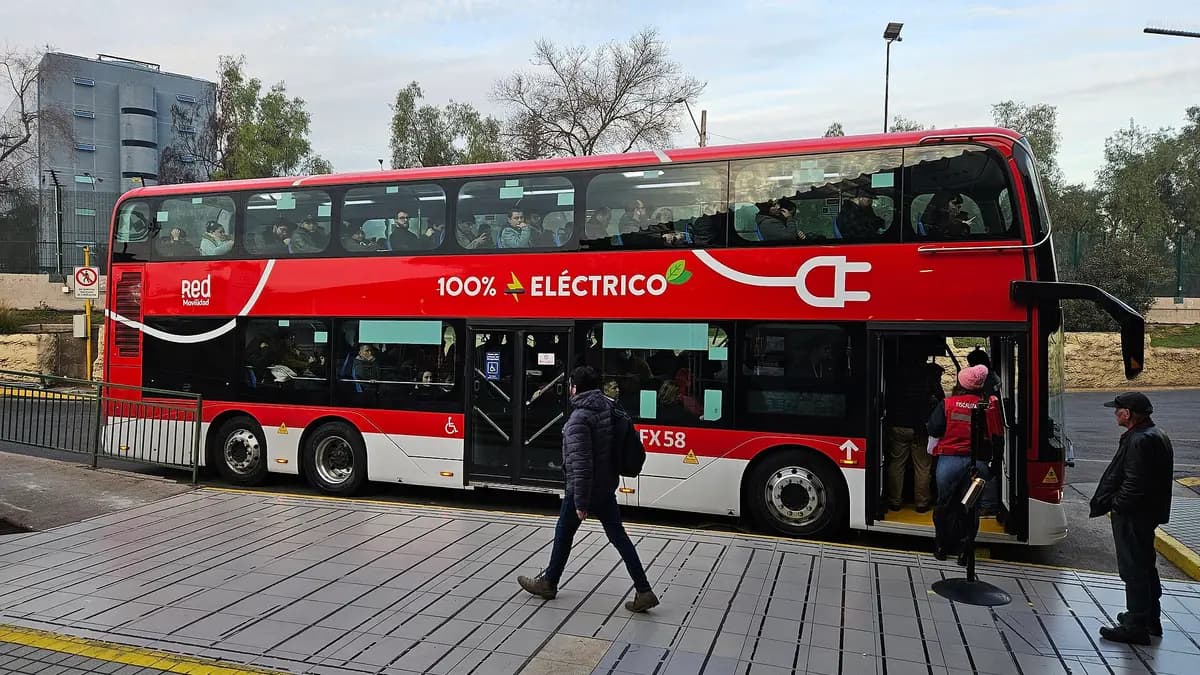
On land, electrification is moving ahead with fully electric vehicles because routes are shorter and charging is easier. Chile has the largest electric bus fleet in the region, as shown by the monitor according to which Latin America passed one million electric cars.
In the north, taxi fleets are being added too, such as the 18 electric taxis in Iquique and Alto Hospicio. At sea, where an Antarctic vessel must sail for days without recharging, batteries still work as a complement to diesel rather than a replacement.
That difference explains why the maritime industry measures its progress in efficiency and not only in electrification. The International Maritime Organization requires ships to reduce their carbon intensity, and expedition cruise ships, which operate in protected areas such as Antarctica, also face rules under the Antarctic Treaty and from the International Association of Antarctica Tour Operators (IAATO) to limit their impact. A ship that can shut down its engines and sail on batteries near penguin colonies or whales has an operational and commercial advantage over conventional cruise ships.
Does your company work on fleet electrification or maritime transport? Reach Energía Futura's readers.
See advertising optionsFrequently asked questions
What is the Magellan Discoverer?
A 94-meter polar expedition cruise ship owned by Antarctica21, built by Asenav in Valdivia, with hybrid diesel-electric propulsion.
Is it an electric ship?
It is a hybrid: it combines two 1,800 kW diesel engines with Corvus Energy batteries, which allow stretches of emission-free navigation.
How much more efficient is it?
According to the Magallanes Regional Energy Office, its propulsion is 20% more efficient than a conventional one.
How many passengers does it carry?
88 on air-cruises and 96 on sea voyages, with 67 crew.
When is its first voyage?
It is scheduled for December 15, 2026, according to Cruise Industry News.