A 0.75 HP pool pump draws about 790 W from the grid and, filtering 6 hours a day, uses about 142 kWh a month: around CLP 36,300 with electricity at CLP 255.27 per kWh (CGE's BT1 residential tariff in force since October 1, 2026). With 8 hours a day, the cost rises to about CLP 48,400. In other words, in summer the pool pump can use more than the rest of the house, which Chile's National Energy Commission estimates at about 180 kWh a month.
The good news is that it is also one of the uses where you can save the most. The US Department of Energy estimates that choosing a smaller pump and filtering fewer hours can cut consumption by up to 75%. In this guide we look at how much electricity a pool pump and filter use by size, what they cost per month in pesos and how to choose the right size.
How much electricity a pool pump uses by size
Pool pumps are sold by their horsepower (HP), which is the motor's mechanical output (P2). What you pay for on the bill is the electrical input (P1), which is higher because the motor has losses. For a 0.75 HP pump, manufacturers report an input of 790 to 870 W: the AstralPool Sena 3/4 HP lists 0.79 kW input and 0.56 kW output, and the Hayward Max-Flo 0.75 CV lists 870 W input, according to their sales listings in Spain.
| Pump size | Electrical input | Pool type | Reference price in Chile |
|---|---|---|---|
| Cartridge filter pump (frame pools) | Much lower; check the rating plate | Frame and inflatable pools | CLP 39,990 (3,028 l/h) |
| 0.5 HP | About 530 W (estimate) | Small, up to about 30 m³ | CLP 119,990 (155 l/min) |
| 0.75 HP | 790 to 870 W | Medium, 30 to 60 m³ | CLP 189,990 (SS075 model) |
| 1 HP | About 1,050 W (estimate) | Large, over 60 m³ | CLP 150,990 |
| 1.5 HP | About 1,580 W (estimate) | Very large or with extra uses | CLP 149,990 to 569,990 |
Sources: AstralPool and Hayward listings (0.75 HP); prices from the pool pump search at Sodimac as of November 2, 2026. The input power for 0.5, 1 and 1.5 HP is an Energía Futura estimate using the same ratio as the 0.75 HP pump (about 1,050 W per HP). Volume ranges are indicative; the right size depends on flow and the filter.
How much a pool pump costs per month in pesos
The table calculates monthly cost with 6 and 8 hours of daily filtering over 30 days. Six hours is the starting point recommended by the US Department of Energy; eight hours is a common figure in pool sellers' recommendations.
| Pump | Energy per month at 6 h/day | Cost at 6 h/day | Energy per month at 8 h/day | Cost at 8 h/day |
|---|---|---|---|---|
| 0.5 HP (about 530 W) | 95 kWh | CLP 24,353 | 127 kWh | CLP 32,470 |
| 0.75 HP (790 W) | 142 kWh | CLP 36,299 | 190 kWh | CLP 48,399 |
| 1 HP (about 1,050 W) | 189 kWh | CLP 48,246 | 252 kWh | CLP 64,328 |
Energía Futura calculations with electricity at CLP 255.27 per kWh, excluding the fixed charge and other bill items. The 0.5 and 1 HP pumps use the estimated power from the previous table.
For comparison: an average home uses about 180 kWh a month, according to the CNE reference we use in our story on how much electricity a home in Chile uses. A 1 HP pump running 8 hours a day adds 252 kWh, more than that whole home. That is why the bill can double during pool season.
How many hours a day the pool pump and filter should run
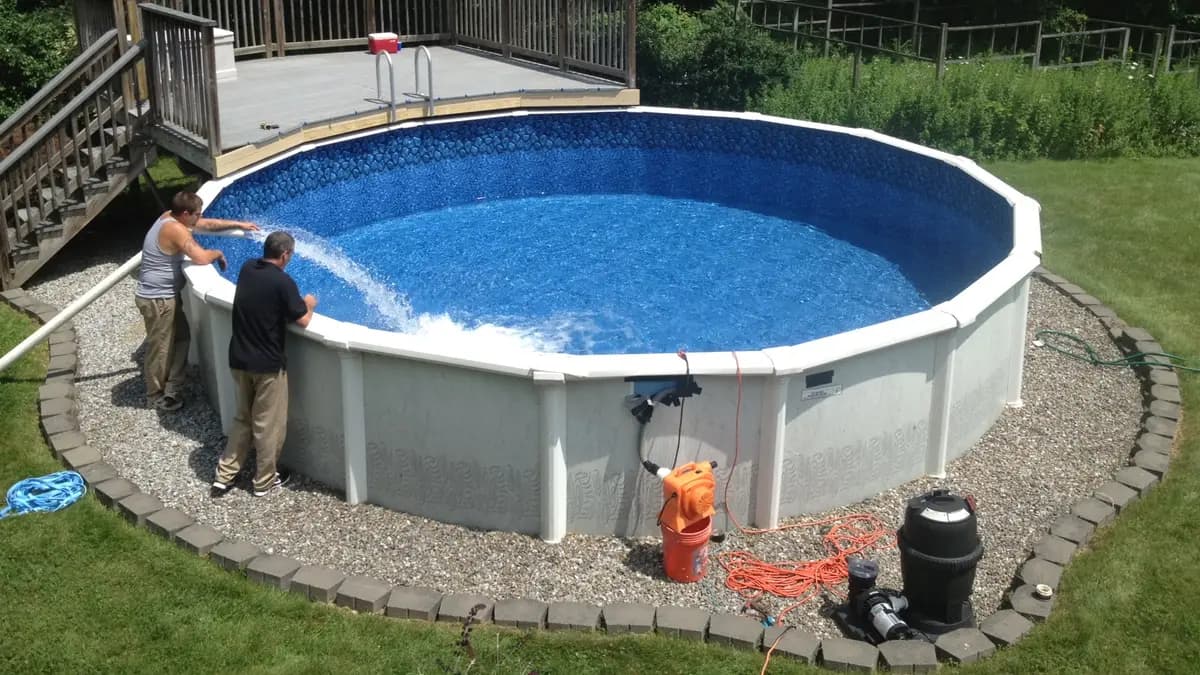
The pump does not need to run all day. The goal is for the pool's entire volume to pass through the filter enough times to keep the water clean, together with the right chlorine and pH. The basic calculation is pool volume divided by the pump's actual flow.
| Pool | Volume | 0.75 HP pump (about 13 m³/h) | 1 HP pump (about 15 m³/h) |
|---|---|---|---|
| 3 x 6 m, 1.4 m average depth | 25 m³ | 1.9 hours per turnover | 1.7 hours |
| 4 x 8 m, 1.4 m | 45 m³ | 3.5 hours | 3 hours |
| 5 x 10 m, 1.5 m | 75 m³ | 5.8 hours | 5 hours |
Energía Futura calculations. Nominal flows of the Hayward Powerline range (13 m³/h for 0.75 HP and 15 m³/h for 1 HP); actual flow is lower because of filter and pipe resistance. A common practice is to turn over the full volume at least once a day, and more on hot or busy days.
The US Department of Energy (Energy Saver) recommends starting with 6 hours a day and reducing the time gradually as long as the water stays clean. In its example of a Florida pool with a 3,000 kWh a year baseline, downsizing the pump cut use to 1,800 kWh (-40%), reducing filtering time cut it to 1,200 kWh (-60%) and both measures together, to 720 kWh (-75%).
What pool pump and filter size to choose
The most common mistake is buying an oversized pump: a 1.5 HP pump in a pool that works fine with 0.75 HP does not clean proportionally faster, because the filter and pipes limit flow, but it uses twice as much. Before buying, check:
- Pool volume in cubic meters: length times width times average depth.
- The filter's maximum flow: the pump should not exceed it, or the filter loses efficiency.
- Pipe diameter: with narrow pipes, a large pump only adds losses.
- Voltage: most home pumps are 220 V single-phase.
- Electrical input (P1) in the listing, not just HP: that is what you pay for.
Variable-speed pumps
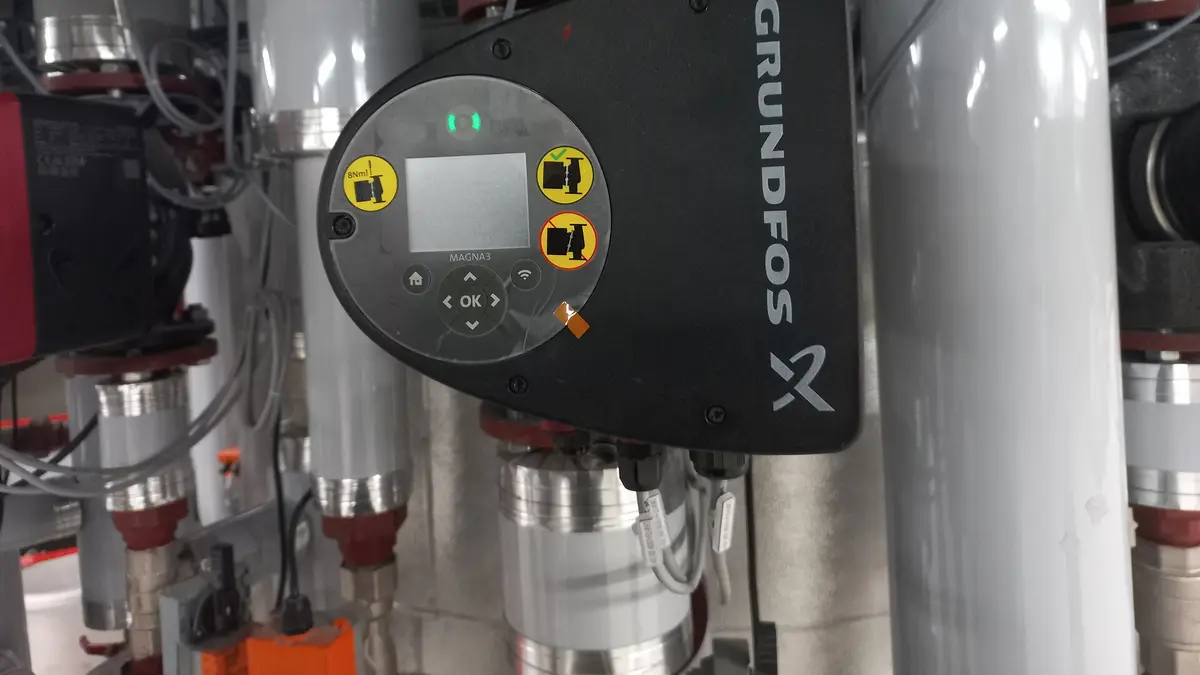
Variable-speed pumps filter at low speed most of the time and speed up only for vacuuming or backwashing. Because a pump's consumption falls much faster than its flow when speed drops, filtering more hours at low speed usually uses less than a few hours at high speed. They cost more upfront, but in large pools used all season the difference is recovered on the bill.
Solar pumps and frame pools
The Chilean market also offers solar pool pumps (Sodimac lists one at CLP 454,930), which run on their own panel and draw nothing from the grid. And frame pools usually come with a low-power cartridge filter pump that uses much less than an in-ground pool pump. If you also want to heat the water, a heat pump is a separate appliance with its own consumption, which we cover in our guide on pool heat pumps.
How to lower your pool pump's cost
- Use a timer and adjust the hours: start with 6 and reduce as long as the water stays clear.
- Split filtering into two blocks, for example morning and afternoon, to keep chlorine well distributed.
- Avoid peak hours if you have a time-of-use tariff.
- Clean the filter and baskets: a dirty filter makes the pump work longer.
- Cover the pool at night: fewer leaves and dust get in, and less filtering is needed.
- Do not switch to a bigger pump if the problem is a poorly adjusted filter or chlorine.
To calculate the cost with your tariff, see the price per kWh in Chile by municipality and distributor. In municipalities with a more expensive kWh, the monthly difference between filtering 6 and 8 hours can exceed CLP 15,000.
Do you sell pumps, filters or solar solutions for pools? Reach Energía Futura's readers.
See advertising optionsFrequently asked questions about pool pumps and filters
How much electricity does a 1 HP pool pump use?
About 1,050 W of electrical input by our estimate. At 6 hours a day that is about 189 kWh a month, around CLP 48,200 with electricity at CLP 255.27 per kWh.
How many hours a day should a pool filter run?
The US Department of Energy recommends starting with 6 hours and adjusting to how clean the water stays. It depends on volume, pump flow and use.
What size pump does my pool need?
For family pools of 30 to 60 m³, a 0.75 HP pump is usually enough. The key is that its flow does not exceed the filter's maximum.
Does a pool pump raise the power bill much?
Yes. At 6 to 8 hours a day, a 0.75 HP pump adds 142 to 190 kWh a month, as much as or more than an average home's consumption.