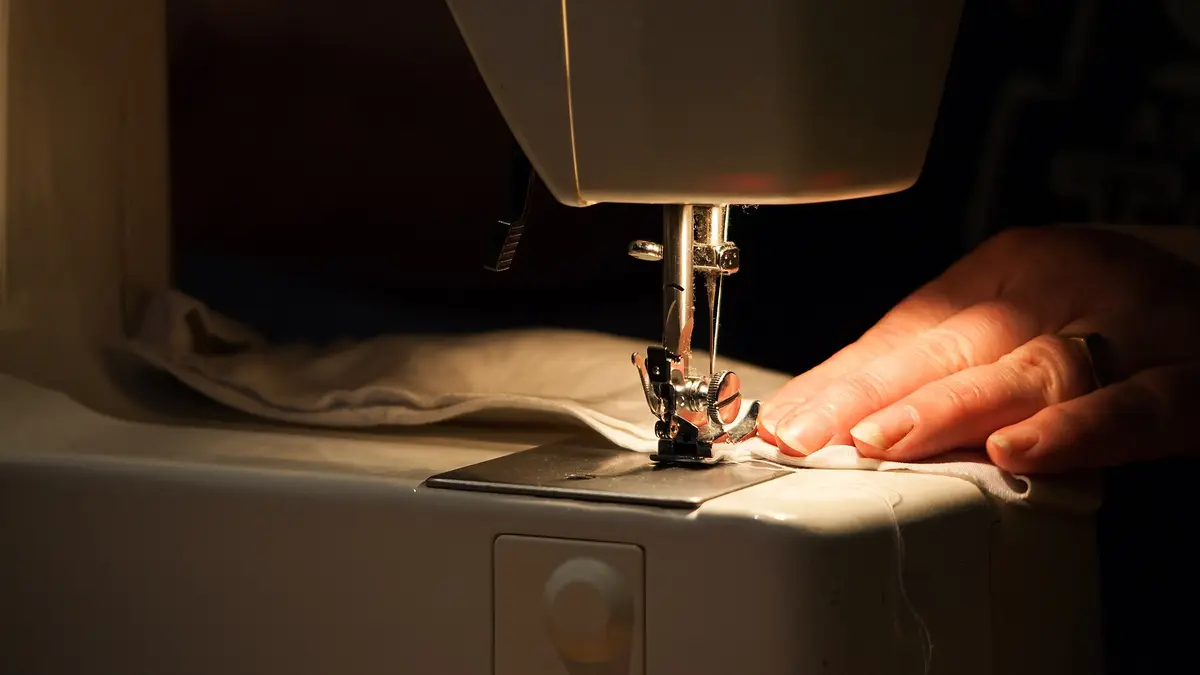
A home sewing machine is one of the appliances that uses the least electricity in a house. The models on sale in Chile today have motors of 50 W to 90 W, according to the product sheets published by Falabella on 6 November 2026. With electricity at CLP 255.27 per kWh, sewing non-stop for an hour costs between CLP 13 and CLP 23, and a hobbyist who sews four hours a week spends less than CLP 300 a month.
The picture changes in workshops. An industrial lockstitch machine with a 550 W motor can use in one hour what a home machine uses in six, and a heavily used overlock adds a similar amount. This guide explains how much each type consumes, how much it costs per month depending on use, what the best-selling models cost and which one suits each need.
View the data as a table
| One hour, 70 W home machine | $18 |
| A month as a hobby (16 h) | $286 |
| One hour, 550 W industrial | $140 |
| Top power of home machines | 90 W |
How much power a sewing machine uses
Consumption depends on the motor's power rating, shown on the machine's label or product sheet. The simplest mechanical home machines, such as the Brother VX1445, are rated at 50 W; the Janome 1000A, 60 W; Singer's M series (M1605, M2105, M2505 and M2605), 70 W; the Janome 311, 85 W, and the Singer Facilita Pro 4423, built for heavy fabrics, 90 W. A small bulb or LED that lights the sewing area adds a little more.
To go from watts to kWh, multiply the power by the hours of use and divide by 1,000. A 70 W machine sewing for an hour uses 0.07 kWh. The peso figures in this guide are Energía Futura calculations with CGE's BT1 residential tariff in force since October 2026, CLP 255.27 per kWh, according to its tariff sheet. As of 6 November, CGE had not yet published its November sheet.
| Machine type (power) | Use in 1 hour | Cost of 1 hour |
|---|---|---|
| Basic home (50 W) | 0.05 kWh | CLP 13 |
| Home (60 W) | 0.06 kWh | CLP 15 |
| Home (70 W) | 0.07 kWh | CLP 18 |
| Heavy-duty home (90 W) | 0.09 kWh | CLP 23 |
| Home overlock (75 W) | 0.075 kWh | CLP 19 |
| Heavy-duty overlock (110 W) | 0.11 kWh | CLP 28 |
| Industrial lockstitch with servo motor (550 W) | 0.55 kWh | CLP 140 |
Energía Futura calculations using each sheet's maximum power and electricity at CLP 255.27 per kWh (CGE, October 2026). These are a ceiling: the motor only runs at full power when the pedal is fully pressed and the needle goes through thick fabric. A normal session includes breaks to cut, iron or thread, so actual consumption is lower.
How much a sewing machine costs per month in pesos
For someone who sews as a hobby, about 4 hours a week (16 hours a month), a 70 W machine uses 1.12 kWh and costs about CLP 286 a month. Adding a 110 W overlock for half that time adds 0.88 kWh and about CLP 225. That is what a 2,000 W iron uses in just over half an hour: in how much a steam iron consumes we show that ironing usually costs more than sewing.
| Use (per month) | Machine | Consumption | Monthly cost |
|---|---|---|---|
| Hobby, 4 h a week (16 h) | 70 W home machine | 1.12 kWh | CLP 286 |
| Hobby, 16 h | 110 W overlock | 1.76 kWh | CLP 449 |
| Small business, 6 h a day, 22 days (132 h) | 90 W home machine | 11.88 kWh | CLP 3,033 |
| Small business, 132 h | 110 W overlock | 14.52 kWh | CLP 3,707 |
| Workshop, 132 h at full power (theoretical ceiling) | 550 W industrial lockstitch | 72.6 kWh | CLP 18,533 |
Energía Futura calculations with electricity at CLP 255.27 per kWh. The workshop row uses the motor's rated power for every hour, which does not happen in practice: a servo-motor industrial machine spends much of the day stopped while the seamstress positions the garment.
To put it in perspective: an average Chilean home uses about 180 kWh a month, as we calculated in how much electricity a home in Chile uses. A hobby sewing machine accounts for less than 1% of the bill; even someone running a small business who sews six hours a day on a home machine stays under 7%.
Home, overlock or industrial: how they differ
A home sewing machine does straight stitch, zigzag, buttonholes and decorative stitches, and is used for repairs, curtains, clothes and crafts. Mechanical models are operated with dials; computerised ones have a screen, more stitches and features such as automatic threading, with little change in consumption.
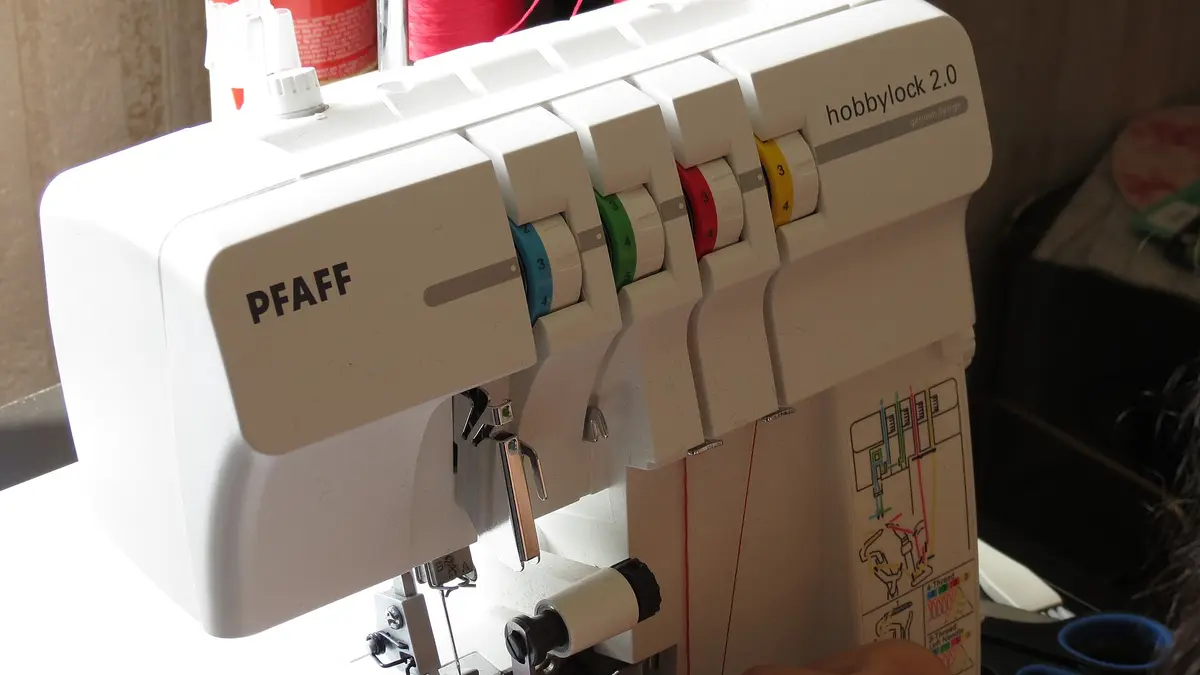
The overlock, also called a serger, sews and trims the fabric edge at the same time with three or four threads, so it does not fray. It gives a factory finish to T-shirts, sweatshirts and stretch clothing. It runs faster than a home machine: the Singer HD0405S Heavy Duty is rated at 1,300 stitches per minute and 110 W, and the Brother 3534DT at 75 W. It does not replace a lockstitch machine: it complements it.
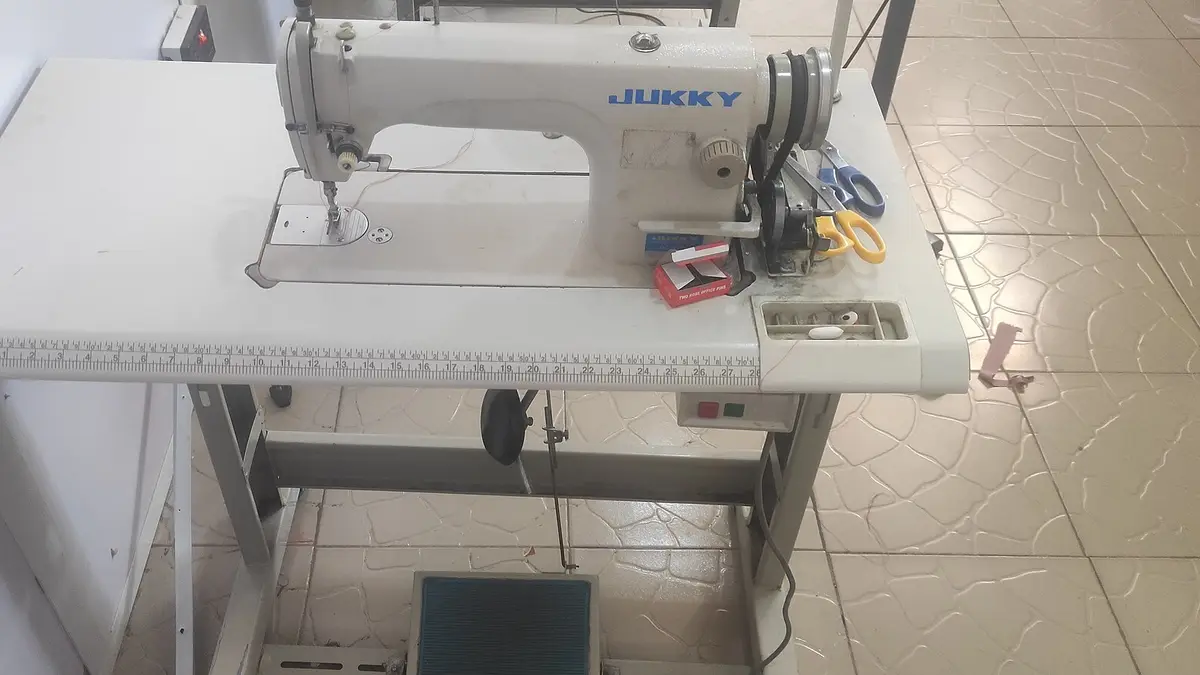
An industrial machine is built to sew for hours and handle thick fabrics such as denim, leather or canvas. It is mounted on a table with a separate motor under the top. Current models use a servo motor, such as the Britex Precious G1, rated at 550 W: it only turns when the pedal is pressed and uses almost nothing at rest. Older clutch motors spin the whole time they are switched on, even when the needle is still, so they use considerably more over a working day.
| Type | Typical power | What it is for | Price from (Falabella, 6 Nov 2026) |
|---|---|---|---|
| Mechanical home | 50 to 85 W | Repairs, clothes, curtains, crafts | CLP 124,990 |
| Heavy-duty or computerised home | 51 to 90 W | Denim, more stitches, frequent use | CLP 229,990 |
| Home overlock | 75 to 110 W | Finishing, stretch fabrics | CLP 259,990 |
| Industrial lockstitch with servo motor | 550 W | Workshops, long shifts, heavy fabrics | CLP 409,990 |
Source: product sheets and prices published on Falabella on 6 November 2026 (discounted price where available). Prices change with promotions.
Sewing machine prices in Chile and their consumption
These are the most visible models in Falabella's sewing machine search on 6 November 2026, with the power stated on each product sheet. The price difference is not about consumption, which is almost the same in all of them, but about sturdiness, number of stitches and features.
| Model | Type | Power | Price |
|---|---|---|---|
| Brother VX1445 | Mechanical home | 50 W | CLP 124,990 |
| Janome 1000A | Mechanical home | 60 W | CLP 129,990 |
| Singer M1605 | Mechanical home | 70 W | CLP 169,990 |
| Brother XB2500 | Mechanical home | 51 W | CLP 179,990 |
| Janome 311 | Mechanical home | 85 W | CLP 189,990 |
| Singer M2105 | Mechanical home | 70 W | CLP 199,990 |
| Brother ST371HD | Heavy-duty home | 51 W | CLP 229,990 |
| Singer M2605 | Mechanical home | 70 W | CLP 229,990 |
| Brother 3534DT | Overlock | 75 W | CLP 299,990 |
| Singer Facilita Pro 4423 | Heavy-duty home | 90 W | CLP 319,990 |
| Singer HD0405S Heavy Duty | Overlock | 110 W | CLP 399,990 |
| Britex Precious G1 | Industrial lockstitch | 550 W | CLP 409,990 |
Source: Falabella, searches for sewing, overlock and industrial machines, checked on 6 November 2026. Power is as published on each product sheet or in the product name.
| Brother VX1445 | Mechanical home | 50 | 124,990 |
| Janome 1000A | Mechanical home | 60 | 129,990 |
| Singer M1605 | Mechanical home | 70 | 169,990 |
| Brother XB2500 | Mechanical home | 51 | 179,990 |
| Janome 311 | Mechanical home | 85 | 189,990 |
| Singer M2105 | Mechanical home | 70 | 199,990 |
| Brother ST371HD | Heavy-duty home | 51 | 229,990 |
| Singer M2605 | Mechanical home | 70 | 229,990 |
| Brother 3534DT | Overlock | 75 | 299,990 |
| Singer Facilita Pro 4423 | Heavy-duty home | 90 | 319,990 |
| Singer HD0405S | Overlock | 110 | 399,990 |
| Britex Precious G1 | Industrial lockstitch | 550 | 409,990 |
View the data as a table
| Power (W) | ||
|---|---|---|
| Brother VX1445 | 50 W | $124,990 |
| Janome 1000A | 60 W | $129,990 |
| Singer M1605 | 70 W | $169,990 |
| Brother XB2500 | 51 W | $179,990 |
| Janome 311 | 85 W | $189,990 |
| Singer M2105 | 70 W | $199,990 |
| Brother ST371HD | 51 W | $229,990 |
| Singer M2605 | 70 W | $229,990 |
| Brother 3534DT | 75 W | $299,990 |
| Singer Facilita Pro 4423 | 90 W | $319,990 |
| Singer HD0405S | 110 W | $399,990 |
Do you sell appliances or workshop equipment? Reach Energía Futura's readers.
See advertising formatsWhich sewing machine to buy
- For repairs and occasional sewing: a mechanical home machine of 50 to 70 W is enough. Look for interchangeable presser feet, a four-step buttonhole and a free arm for trouser hems.
- For denim and heavy fabrics: a heavy-duty model with a metal frame and an 85 to 90 W motor, which keeps its strength at low speed.
- For stretch clothing: add an overlock; a lockstitch plus overlock combination is the basis of any sewing business.
- For a workshop: an industrial lockstitch with a servo motor, which only uses power while sewing and allows speed control. Avoid clutch motors if it will be on for many hours.
- Electrical safety: check that the appliance has SEC certification and that the pedal and cord are in good condition.
The machine's consumption hardly ever decides the purchase: between a 50 W and a 90 W model the difference is about CLP 10 per hour. Lighting for evening sewing and, above all, the iron weigh much more. If you are watching your bill, also check how much a vacuum cleaner consumes, another appliance used after every sewing session.
How to spend less when sewing
Switch the machine off when you finish: even if the motor is not turning, the light and the electronics of computerised models stay on. Turn industrial machines with clutch motors off during every long break. Use LED lighting on the work table and iron clothes in one go, because the iron uses far more than the machine. Searches stay high all year, with about 40,500 monthly searches for "máquina de coser" in Chile according to Google Ads data checked with DataForSEO, which shows it is an appliance found in many homes.
Frequently asked questions
How much electricity does a sewing machine use?
A 70 W home machine uses 0.07 kWh per hour, about CLP 18 with electricity at CLP 255.27 per kWh. Sewing 4 hours a week, it costs about CLP 286 a month.
How many watts does a sewing machine have?
Home machines sold in Chile are rated between 50 W and 90 W; overlocks between 75 W and 110 W, and servo-motor industrial lockstitch machines about 550 W.
Does an industrial sewing machine use a lot of power?
More than a home machine: at 550 W, one hour at full power costs about CLP 140. Servo-motor machines only consume when the pedal is pressed; clutch-motor ones use power the whole time they are on.
Which uses more electricity, sewing or ironing?
Ironing. A 2,000 W iron uses in one hour what a 70 W sewing machine uses in more than 28 hours.
How much does a sewing machine cost in Chile?
From about CLP 124,990 for a mechanical home machine, CLP 259,990 to CLP 399,990 for an overlock and from CLP 409,990 for a servo-motor industrial lockstitch (Falabella, 6 November 2026).