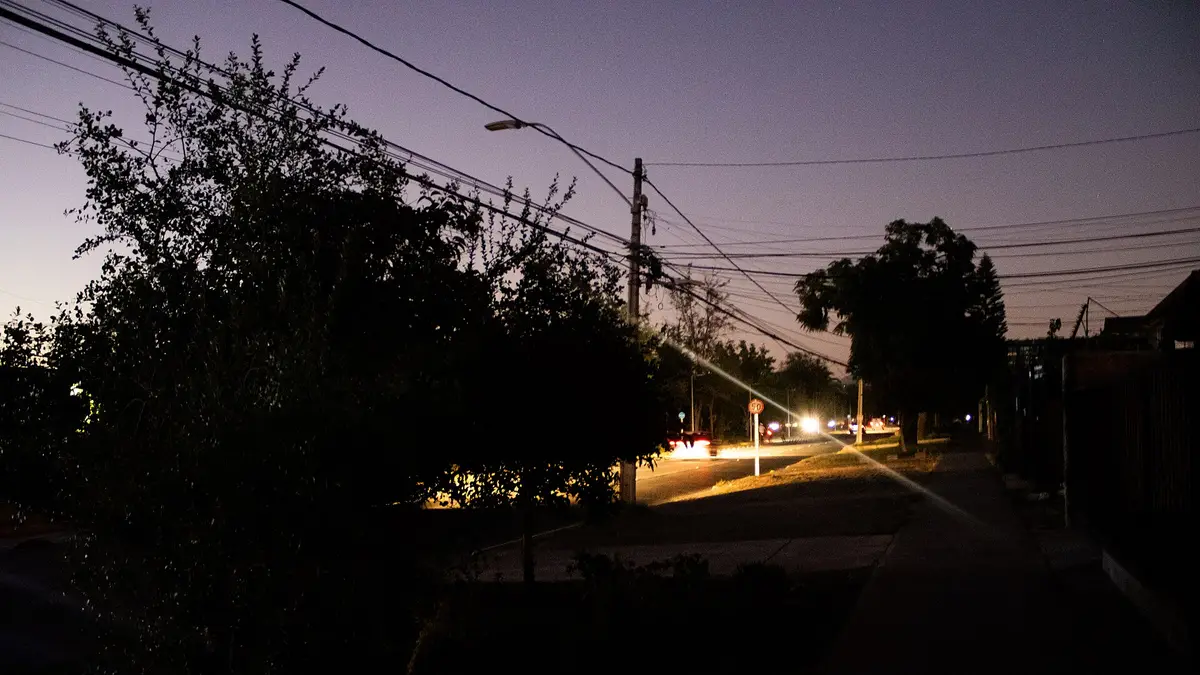
The Santiago Court of Appeals annulled the 300 UTM fines (more than CLP 21 million each) that the Superintendency of Electricity and Fuels (SEC) had imposed on five members of the board of Chile's National Electricity Coordinator over the 25 February 2025 blackout, which left much of the country without power between Arica and Chiloé. The Ninth Chamber upheld each board member's illegality claim on 6 November, as reported by Electrominería on 9 November.
The ruling voids SEC Exempt Resolution No. 37,765 insofar as it sanctioned Juan Carlos Olmedo, then chair of the board; Bernardita Espinoza, vice chair; Humberto Espejo, the current chair, and board members Carlos Finat and Jaime Peralta. According to the court, the SEC did not identify each one's specific actions or omissions, nor the measures they should have taken.
View the data as a table
| Board members fined | 5 |
| Fine per board member | 300 UTM |
| Fine on Interchile | 180,000 UTM |
| Fines on companies for the blackout | Over CLP 29,000 million |
What the court said about the 25 February blackout
The court described the charges as ambiguous and imprecise, which in its view affected the board members' right to a defense. It also held that liability "cannot be established automatically by the mere fact" of the blackout: the SEC had to prove negligent conduct and its causal link to the outcome, under the standard of slight negligence, and instead built the breach of the duty of care from the outcome itself.
The ruling recalls the technical origin of the event: an intervention, without prior notice to the Coordinator, in the communications system of a protection on the 2x500 kV Nueva Maitencillo–Nueva Pan de Azúcar transmission line owned by Interchile, a subsidiary of Colombia's ISA. According to the majority opinion, the system was transferring about 1,800 MW through that corridor at the time, below the 2,200 MW limit allowed under the N-1 criterion, which means with enough margin to withstand the failure of one element.
The majority also considered that the sanction did not explain what the board members should have done differently, given that their role is to direct and oversee the Coordinator, not to operate each grid facility in real time. That daily operation is carried out by the organization's technical teams and by the companies that own the lines and substations.
The blackout fines: who was sanctioned and for how much
The SEC announced its first sanctions on 20 February 2026, almost a year after the outage. The largest went to Interchile, for causing the blackout through a fault in its facilities and for intervening in them without coordinating with the Coordinator. Transelec and Alfa Transmisora were fined for inadequate maintenance of the backup facilities of the SCADA system used to supervise and control the grid, according to Revista Electricidad.
| Sanctioned | Fine (UTM) | Approximate amount | Reason according to the SEC |
|---|---|---|---|
| Interchile | 180,000 | ~CLP 12.5 billion | Causing the blackout and intervening in facilities without coordination |
| Transelec | 80,000 | ~CLP 5.5 billion | Maintenance of SCADA backup facilities |
| Alfa Transmisora de Energía | 50,000 | ~CLP 3.5 billion | Maintenance of SCADA backup facilities |
| CGE Transmisión and Engie Energía (combined) | 120,000 | Over CLP 8.35 billion | Maintenance of SCADA backup facilities |
| Five Coordinator board members | 300 each | Over CLP 21 million each | Duty of oversight (annulled by the court) |
Source: SEC, according to Revista Electricidad and La Tercera. The second resolution, against CGE Transmisión and Engie, reported the combined amount for both. The board members' fines were to be paid from their personal assets.
With both rounds, the SEC's fines on companies over the blackout exceed CLP 29 billion. Superintendent Marta Cabeza said in February that they were "a clear signal to the electricity industry." The Coordinator said at the time that it disagreed with the sanction on its board members and would use the available legal remedies. Other SEC proceedings remained pending, related to SCADA, the splitting of the system and service restoration plans.
What the blackout ruling changes
For households, the ruling changes nothing immediately: compensation for supply outages is governed by other rules and paid by the distribution companies. What it does leave is a standard for future SEC sanctions on executives: according to the court, a serious failure is not enough; it must be proven what each person did or failed to do and how that caused the outcome.
The ruling only covers the five board members. The sanctions on Interchile, Transelec, Alfa Transmisora, CGE Transmisión and Engie have their own appeals and deadlines. Electrominería's report does not say whether the SEC will appeal to the Supreme Court, and the SEC had not published a statement on the ruling at the time of writing.
This is not the SEC's first court setback against the Coordinator. In October, the Supreme Court annulled another fine on the organization over a transmission tender, as we reported in our story on that ruling. The regulator has, however, upheld sanctions on distributors over service quality, such as the fines of more than CLP 586 million in La Araucanía.
The 25 February blackout still shapes the sector's agenda. After the event, the Coordinator delivered a report of almost 400 pages that traced the origin to an Interchile maneuver, and the discussion about grid security moved to transmission planning: the Kimal-Lo Aguirre direct current line, which will link Antofagasta with Santiago, is more than 22% complete, as we explained in our story on its construction.

- 25 Feb 2025Blackout from Arica to ChiloéIt originates in an Interchile intervention on the 2x500 kV Nueva Maitencillo–Nueva Pan de Azúcar line.
- 20 Feb 2026SEC issues the first finesInterchile, Transelec, Alfa Transmisora and five Coordinator board members.
- 2026Second round of finesCGE Transmisión and Engie, 120,000 UTM combined.
- 6 Nov 2026Court annuls the board members' finesThe Ninth Chamber upholds the illegality claims.
Does your company work in transmission, protection or grid backup systems? Reach Energía Futura's readers.
See advertising formatsFrequently asked questions
What did the Court of Appeals annul?
The 300 UTM fines that the SEC imposed on each of the five board members of the National Electricity Coordinator over the 25 February 2025 blackout.
Why did the court annul the fines?
Because the SEC did not identify each board member's specific actions or omissions, nor prove negligent conduct causally linked to the blackout.
What caused the 25 February 2025 blackout?
An intervention, without notice to the Coordinator, in the communications system of a protection on Interchile's 2x500 kV Nueva Maitencillo–Nueva Pan de Azúcar line.
Do the fines on the companies still stand?
The ruling does not address them. Interchile received 180,000 UTM, Transelec 80,000 and Alfa Transmisora 50,000, plus 120,000 UTM combined for CGE Transmisión and Engie.
How much do the blackout fines add up to?
Fines on companies exceed CLP 29 billion, according to the SEC.