Renewable generation reached a new milestone in Chile: October 2026 was the first month in which it exceeded 90% of the electricity produced on the National Electric System. Between November 2025 and October 2026 the system also logged 1,262 hours with more than 90% renewable energy, when four years earlier there had been none, according to an analysis by the Galilei platform based on actual hourly generation data from the National Electricity Coordinator and published by Electrominería on 13 November.
Over the full year, 7 of every 10 kWh generated on the system were renewable. The jump reflects the growth of solar and wind, a better hydrological year than the previous one and batteries, which delivered 4.5 TWh over the last 12 months, 2.7 times what they supplied the year before.
View the data as a table
| Hours above 90% renewable | 1,262 |
| Renewable kWh out of every 10 | 7 |
| Night-time renewable share in October | 87% |
| Energy delivered by batteries | 4.5 TWh |
Renewable generation topped 90% in October
A full month above 90% renewable does not mean the system runs without fossil plants: thermal plants still operate at night and in areas where the grid cannot carry solar power. What the figure shows is that, on average, October's electricity came almost entirely from clean sources. The analysis links it to this year's higher hydropower availability and to the growing contribution of storage.
The most striking change is at night, the hardest stretch for a solar-dominated system. In October 2022 the night-time renewable share was around 60%; in October 2026 it reached about 87%. The analysis attributes this to higher hydropower output and to batteries, which store midday solar energy and release it after sunset. The trend was already visible in September, when the mix was overwhelmingly renewable, as we reported in our story on September's power generation.
| Indicator | Nov 2021-Oct 2022 | Nov 2025-Oct 2026 |
|---|---|---|
| Hours above 90% renewable | 0 | 1,262 |
| Night-time renewable share (October) | ~60% | ~87% |
| First full month above 90% renewable | — | October 2026 |
| Energy delivered by batteries | — | 4.5 TWh (2.7 times the prior year) |
| Solar and wind curtailment | 1.2 TWh | 5.6 TWh |
Source: Galilei analysis with hourly data from the National Electricity Coordinator, via Electrominería (13 November 2026).
How renewable generation changed by technology
Between the 12 months ending October 2022 and those ending October 2026, solar rose from 14 TWh to 22.6 TWh, up 61%, and wind went from 8.9 TWh to 13.3 TWh, up 48%. Hydropower increased from 19 TWh to 22.5 TWh, while fossil generation fell 33%, from 38.5 TWh to 25.7 TWh a year.
The report stresses that electricity demand grew little over the period, so much of the new solar and wind output displaced thermal generation rather than meeting additional consumption. That is the difference between adding renewables and decarbonizing: in Chile, for now, both are happening at the same time.
| Technology | Nov 2021-Oct 2022 (TWh) | Nov 2025-Oct 2026 (TWh) | Change |
|---|---|---|---|
| Solar | 14.0 | 22.6 | +61% |
| Wind | 8.9 | 13.3 | +48% |
| Hydro | 19.0 | 22.5 | +18% |
| Fossil | 38.5 | 25.7 | −33% |
Source: Galilei with National Electricity Coordinator data, via Electrominería. The hydro change is an Energía Futura calculation based on the report's figures.
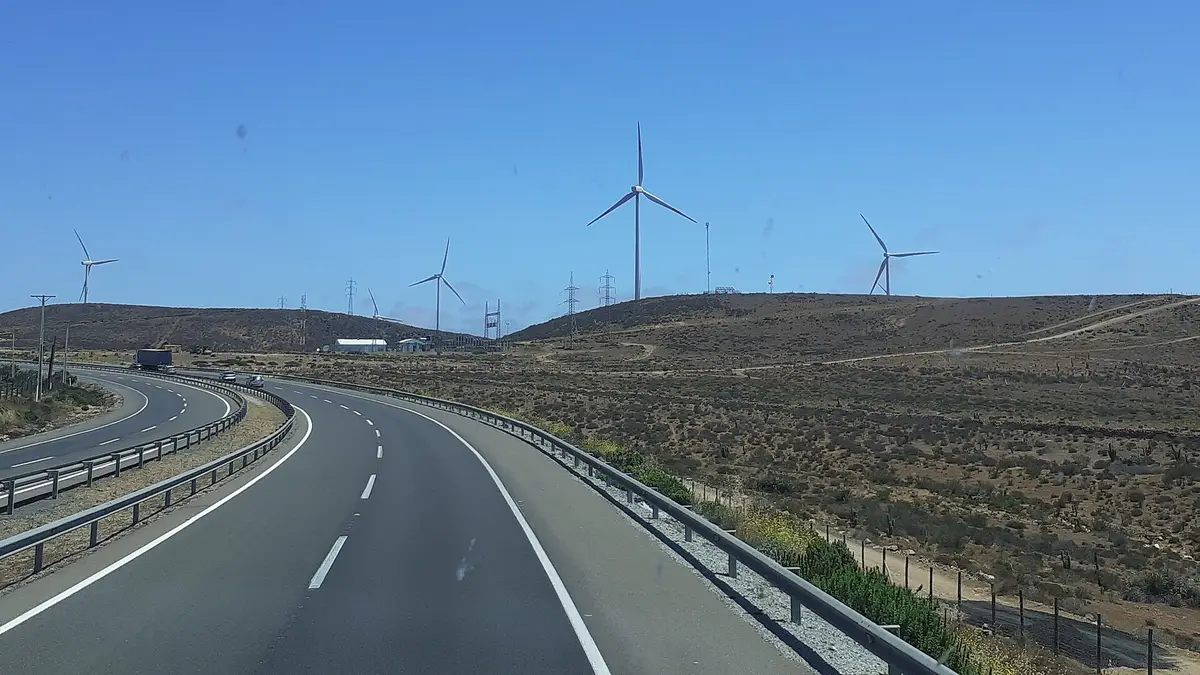
Renewable generation by region
Progress is uneven across the country. Antofagasta, home to the coal and gas plants that supply the mining industry, raised its renewable share from 35% to 56%. O'Higgins went from 75% to 97% and Biobío from 68% to 90%. In Arica y Parinacota, Tarapacá, Ñuble and La Araucanía, local generation is already 100% renewable.
View the data as a table
| Arica y Parinacota | 100% · From 95% |
| Tarapacá | 100% · From 99% |
| Ñuble | 100% · Unchanged |
| La Araucanía | 100% · From 99% |
| O'Higgins | 97% · From 75% |
| Biobío | 90% · From 68% |
| Antofagasta | 56% · From 35%; still 11 TWh fossil |
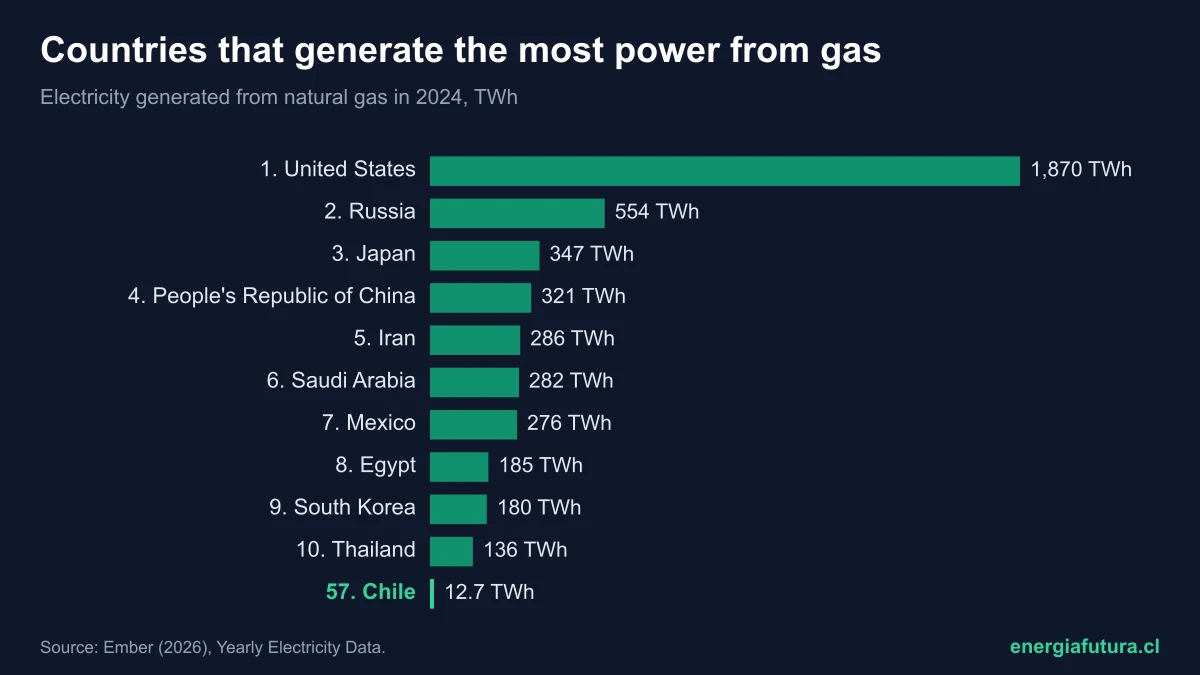
Fossil generation, by contrast, is concentrated in two regions: Antofagasta supplied 11 TWh, 43% of last year's fossil total, and Valparaíso 8.3 TWh, or 32%. Both cut their fossil output from four years earlier, by 25% and 34% respectively. Seen from abroad, Chile already ranks among the countries with highly renewable power mixes, as our ranking of countries with the most renewable energy shows.
| Region | Renewable 2021-2022 | Renewable 2025-2026 |
|---|---|---|
| Arica y Parinacota | 95% | 100% |
| Tarapacá | 99% | 100% |
| Antofagasta | 35% | 56% |
| O'Higgins | 75% | 97% |
| Ñuble | 100% | 100% |
| Biobío | 68% | 90% |
| La Araucanía | 99% | 100% |
Source: Galilei with National Electricity Coordinator data, via Electrominería (13 November 2026). The analysis did not publish figures for the other regions.
Does your company generate, store or sell renewable energy? Reach Energía Futura's readers.
See advertising optionsCurtailment, the unfinished business
The same report shows the other side of the record. Curtailment of solar and wind power, meaning energy that could have been generated but was wasted for lack of demand or transmission lines, reached 5.6 TWh between November 2025 and October 2026, 4.5 times the 1.2 TWh of four years earlier.
88% of that lost energy was concentrated between Arica and Coquimbo. Antofagasta led with 2,647 GWh, followed by Atacama with 1,671 GWh and Coquimbo with 336 GWh. In Atacama 24% of the available solar energy was curtailed and in Antofagasta 20%. The economic consequence shows up in prices: during sunny hours there is surplus energy and the marginal cost drops to zero, as we explained when looking at marginal costs below US$5 per MWh.
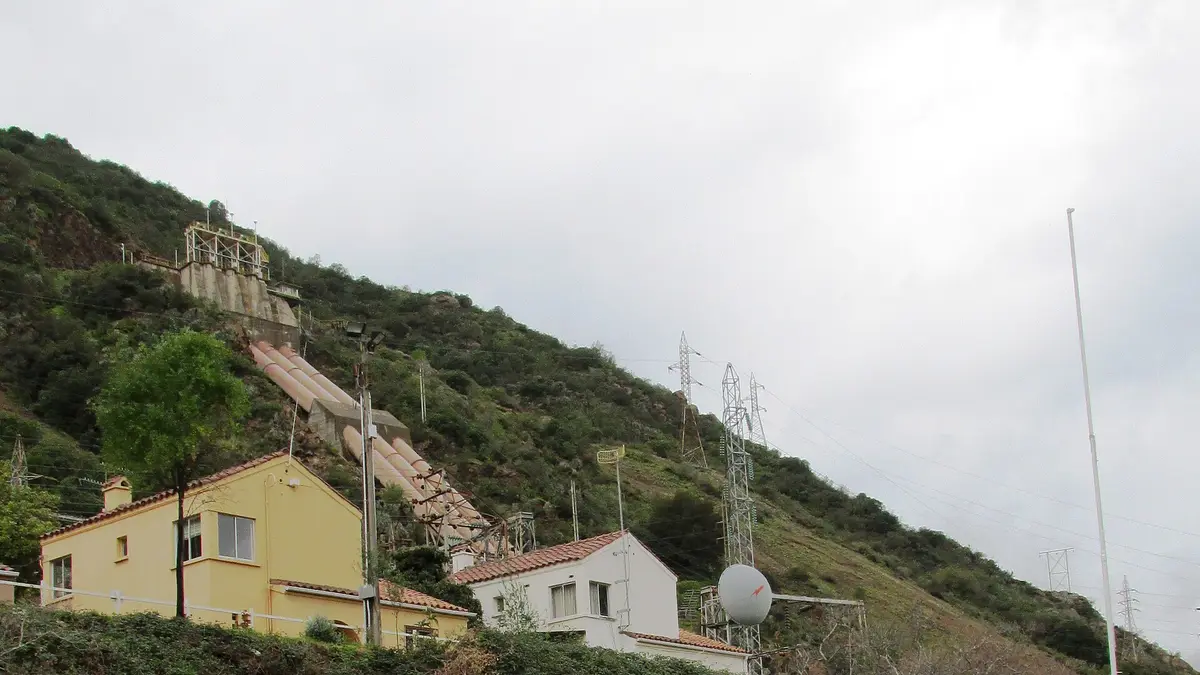
The analysis concludes that the National Electric System already has a mostly renewable mix during the day, and that two challenges remain: raising the renewable share at night in the north and reducing curtailment. Both depend on the same thing: more batteries and more transmission lines connecting the solar north with the main consumption centres.
Frequently asked questions
What share of Chile's electricity is renewable?
Between November 2025 and October 2026, 7 of every 10 kWh on the National Electric System were renewable. In October 2026 the share exceeded 90% over a full month for the first time.
What does 1,262 hours above 90% renewable mean?
That in 1,262 hours over the past year, about 53 full days combined, more than 90% of the electricity on the grid came from renewable sources. Four years earlier there was not a single such hour.
Why is there still coal and gas generation?
Because solar disappears at night and batteries do not yet cover all demand, and because in the north the grid cannot carry all the renewable energy out. Antofagasta and Valparaíso account for 75% of fossil generation.
What is energy curtailment?
It is solar or wind energy that could have been produced but was wasted because there was no demand or transmission capacity to carry it. Over the last 12 months it totalled 5.6 TWh.