Chile's Second Tax and Customs Court (TTA) sided with the Internal Revenue Service (SII) in its dispute with Albemarle and concluded that the lithium producer is a mining operator and must pay the specific mining tax, known as the mining royalty. The 160-page ruling, dated 26 October 2026, was reported on 10 November by Redimin.
Neither side won outright. The court upheld the SII's tax assessments and rejected the company's request for a US$2.5 million refund, but granted its request to annul the fine. Albemarle did not comment on the ruling, according to the outlet.
View the data as a table
| Refund Albemarle sought | US$2.5 million |
| Pages in the ruling | 160 |
| Tax year in dispute | 2,018 |
| Albemarle's tax provision | US$201 million |
What Albemarle and the SII were disputing
The dispute began in September 2021, when the SII issued two assessments and fined Albemarle. In 2022, the company filed a claim asking to annul them and to be refunded US$2.5 million. Its argument was that it did not qualify as a mining operator, so it had wrongly declared and paid the specific tax for the 2018 tax year.
The court disagreed. According to the ruling, Albemarle extracts and sells lithium from mining claims established before the mineral was declared non-concessible, which makes it a mining operator under article 64 bis of the Income Tax Law. Therefore, the 2018 payments did not need to be corrected. The court also upheld the SII's adjustments for transfer pricing, commissions paid to a related entity and the repayment of tax refunds.
| Disputed point | Albemarle's position | Court decision |
|---|---|---|
| Status as mining operator | It is not; it paid the tax by mistake | It is (article 64 bis) |
| Refund of 2018 specific tax | Sought US$2.5 million | Rejected |
| Transfer pricing | Challenged the adjustment | SII adjustment upheld |
| Commissions to related entity | Challenged the adjustment | SII adjustment upheld |
| 2021 fine | Sought annulment | Annulled |
Source: Second Tax and Customs Court, ruling of 26 October 2026, according to Redimin (10 November 2026). The outlet does not say whether either party will appeal to the Court of Appeals.
- 1979Lithium becomes non-concessibleDecree-Law 2,886 reserves it for the State; earlier mining claims remain.
- 2005The specific mining tax is createdLaw 20,026 creates article 64 bis of the Income Tax Law.
- 2018Tax year in disputeAlbemarle declared and paid the specific tax.
- Sep 2021SII assessments and fine
- 2022Albemarle files a claimIt seeks to annul the assessments and a US$2.5 million refund.
- 26 Oct 2026Second Tax Court rulingBacks the SII, rejects the refund and annuls the fine.
Why it matters that lithium pays the specific tax
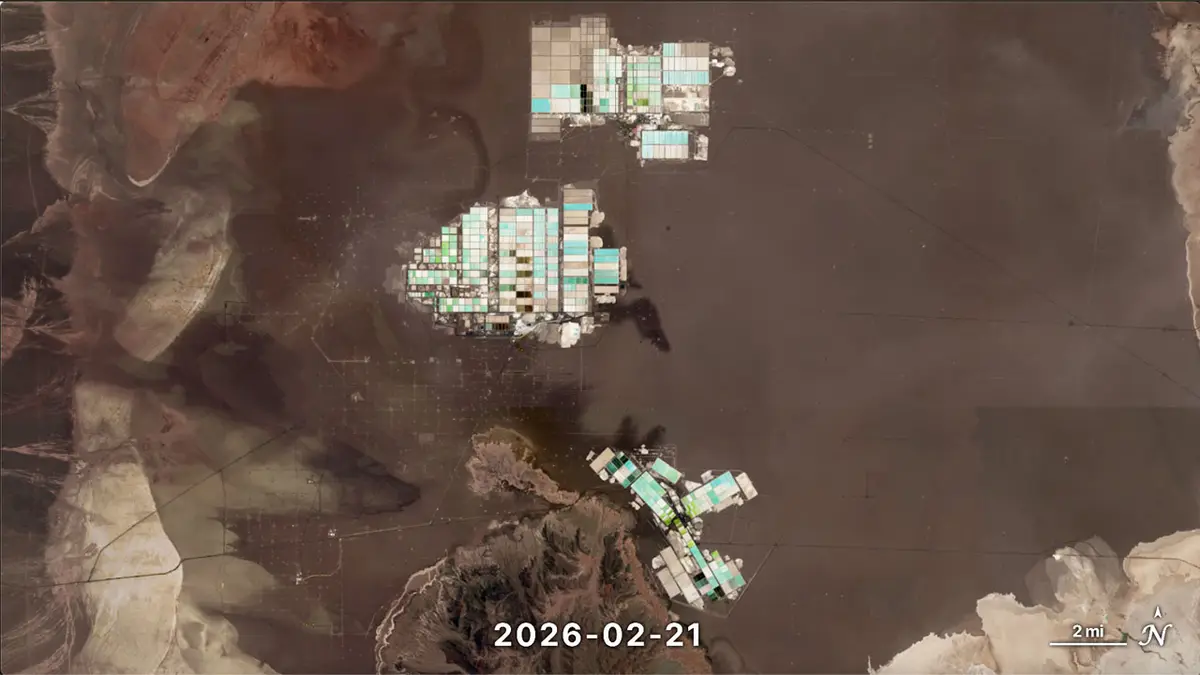
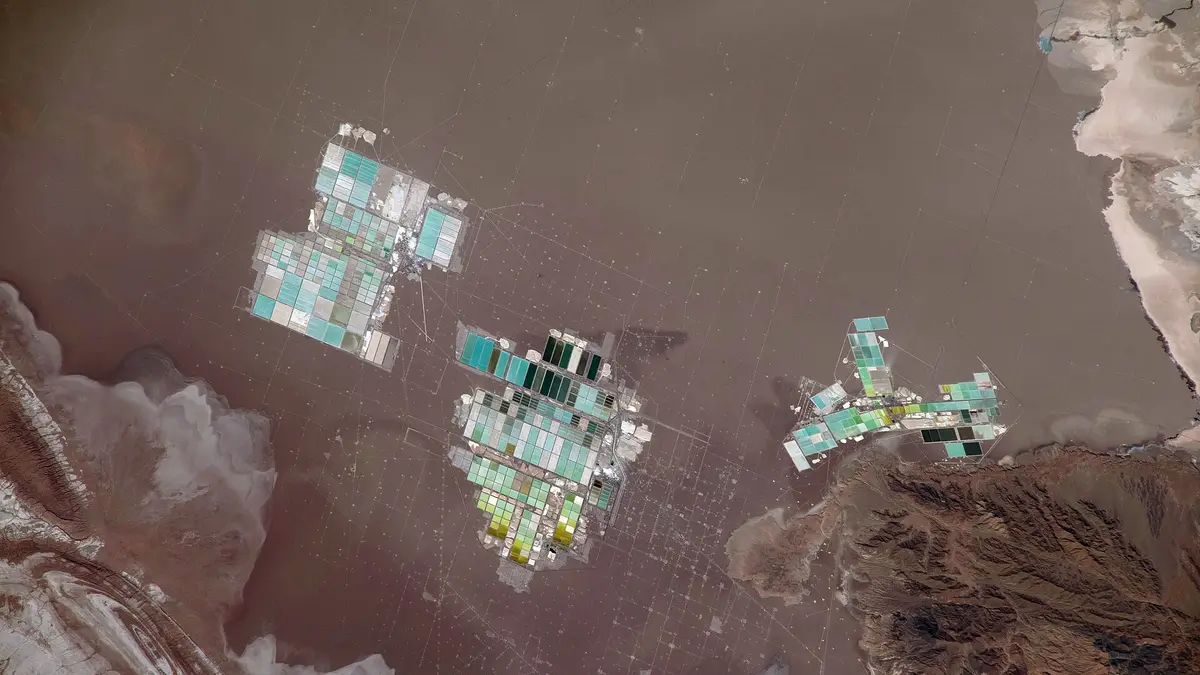
In Chile, lithium has a special regime. Since 1979, Decree-Law 2,886 reserved it for the State and declared it non-concessible: no new concessions can be requested to mine it. Claims established before that date were kept, and part of the industry operates on them. Albemarle works in the Salar de Atacama on land it leases from Corfo, the state development agency, to which it pays commissions on its sales.
The specific mining tax was created by Law 20,026 in 2005 and taxes the operating income of mining operators. The underlying question was whether a company that pays Corfo commissions on lithium must also pay this tax. The court said yes, at least in this case. The SII has similar disputes with SQM over the same tax.
The amounts at stake go beyond this claim. According to Albemarle's financial statements at September 2024, the company had three other claims over SII assessments from 2021 to 2023, for US$11 million, US$15 million and US$20 million. And at June 2026 it recorded a US$201 million provision for tax contingencies linked to the deduction of certain expenses from its mining income. That provision is an accounting figure: the ruling does not order any payment.
To put those figures in perspective: the US$201 million provision is equivalent to almost 4% of all the lithium Chile exported between January and October 2026. The refund disputed in this ruling, by contrast, is small: US$2.5 million, little more than one day of lithium exports at this year's pace.
| Item | Amount | Date of data |
|---|---|---|
| Refund sought by Albemarle (2018 tax year) | US$2.5 million | 2022 claim |
| Claim over September 2021 assessments | US$11 million | Financial statements, Sep 2024 |
| Second claim over assessments | US$15 million | Financial statements, Sep 2024 |
| Third claim over assessments | US$20 million | Financial statements, Sep 2024 |
| Provision for tax contingencies | US$201 million | June 2026 |
| Chile's lithium exports | US$5.171 billion | January-October 2026 (Subrei) |
Sources: Albemarle's financial statements cited by Redimin and Subrei for exports. The comparison with exports is an Energía Futura calculation.
Lithium in its best year since 2022
The ruling comes at a good time for Chilean lithium. Exports of the metal reached US$5.171 billion between January and October 2026, 165% more than in 2025, driven by a price that doubled last year's, as we reported in our story on lithium exports. Albemarle tripled its EBITDA in the third quarter and lithium payments to Corfo exceeded US$1.1 billion through September, according to our story on its results.
For the State, the difference between charging only Corfo's commissions or adding the specific tax grows when the price rises. For companies, tax certainty is key at a time when the country is negotiating new contracts and Codelco and others are seeking to enter the business: Codelco aims to be among the world's five largest lithium producers by 2035, as we detailed in our story on that goal.
What comes next in the Albemarle case
The first-instance ruling can be appealed to the Court of Appeals and then reach the Supreme Court, as happens with most high-value tax cases. Albemarle's other claims will be decided separately, according to Redimin, so each may have a different outcome.
For the industry, the key is the criterion: if the courts confirm that mining lithium from pre-1979 claims makes a company a mining operator for tax purposes, the specific tax becomes a stable part of the cost of Chilean lithium, alongside Corfo's commissions. Chile is today the world's third-largest lithium producer, behind Australia and China, according to the USGS, as shown in our ranking of producers.
Does your company work in lithium, batteries or energy storage? Reach Energía Futura's readers.
See advertising formatsFrequently asked questions
What did the tax court decide about Albemarle?
That Albemarle is a mining operator and must pay the specific mining tax. It rejected the US$2.5 million refund, upheld the SII's assessments and annulled the fine.
Why would Albemarle be a mining operator?
Because it extracts and sells lithium from mining claims established before lithium was declared non-concessible in 1979, according to the ruling.
What is Chile's specific mining tax?
A tax created by Law 20,026 of 2005, in article 64 bis of the Income Tax Law, that applies to the operating income of mining operators.
How much money is at stake?
In this claim, US$2.5 million. Albemarle has other claims for US$11, US$15 and US$20 million, and an accounting provision of US$201 million at June 2026.
Can the ruling be appealed?
Yes, to the Court of Appeals. Redimin did not report whether the parties will do so.