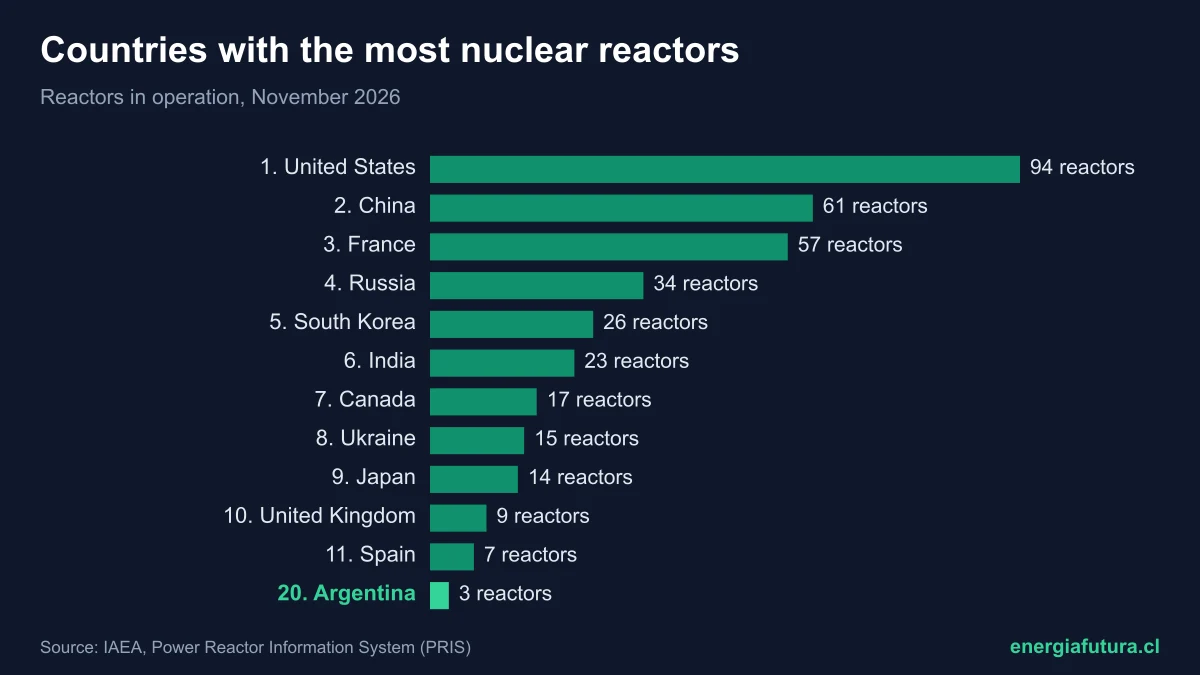
Updated 23 November 2026. The United States is the country with the most nuclear reactors in operation: 94, with 96,952 MW of net capacity, according to the Power Reactor Information System (PRIS) of the International Atomic Energy Agency (IAEA). It is followed by China (61), France (57), Russia (34) and South Korea (26). Worldwide, 419 reactors operate in 31 countries, totalling 381,222 MW. And 76 are under construction: 36 of them in China, 47% of the total.
Latin America has 7 reactors in operation: 3 in Argentina, 2 in Brazil and 2 in Mexico. Chile has no nuclear power plants. This ranking uses PRIS country data, the official database fed by the IAEA member states themselves, accessed on 23 November 2026.
View the data as a table
| Reactors in operation | 419 |
| Reactors under construction | 76 |
| Under construction in China | 36 |
What this ranking counts: reactors, not plants
A nuclear power plant can have one or several reactors, each with its own turbine and its own capacity. The Hanul plant in South Korea, for example, has eight. That is why PRIS counts reactors rather than plants: each reactor is built, connected, shut down for refuelling and closed separately.
Net capacity is what the reactor delivers to the grid after subtracting what the plant itself uses. The world average is about 910 MW per operating reactor (381,222 MW across 419 reactors), but they come in all sizes: the oldest or smallest have about 200 MW or less and the newest exceed 1,600 MW. For scale, US nuclear capacity is more than twice Chile's entire installed power capacity.
Ranking of countries with the most nuclear reactors in operation
The top five hold 272 of the world's 419 reactors, 65%. The United States leads by number and by capacity, although nuclear weighs less in its electricity (17.7%) than in France, where 57 reactors generate 68.1%. India has 23 reactors, but small ones: they total 7,730 MW, less than Japan's 14 (12,631 MW).
View the data as a table
| Reactors | |
|---|---|
| United States | 94 · 96,952 MW |
| China | 61 · 59,892 MW · 36 under construction |
| France | 57 · 63,000 MW |
| Russia | 34 · 27,969 MW · 5 under construction |
| South Korea | 26 · 25,609 MW · 4 under construction |
| India | 23 · 7,730 MW · 8 under construction |
| Canada | 17 · 12,714 MW · 1 under construction |
| Ukraine | 15 · 13,107 MW · 2 under construction |
| Japan | 14 · 12,631 MW · 2 under construction |
| United Kingdom | 9 · 5,883 MW · 2 under construction |
| Spain | 7 · 7,123 MW |
| Sweden | 6 · 7,014 MW |
| Czech Republic | 6 · 3,972 MW |
| Pakistan | 6 · 3,262 MW · 1 under construction |
| Slovakia | 6 · 2,746 MW |
| Finland | 5 · 4,369 MW |
| United Arab Emirates | 4 · 5,348 MW |
| Switzerland | 4 · 2,973 MW |
| Hungary | 4 · 1,916 MW · 1 under construction |
| Argentina | 3 · 1,631 MW · 1 under construction |
| Belarus | 2 · 2,220 MW |
| Belgium | 2 · 2,056 MW |
| Bulgaria | 2 · 2,006 MW |
| Brazil | 2 · 1,884 MW · 1 under construction |
| South Africa | 2 · 1,854 MW |
| Mexico | 2 · 1,552 MW |
| Romania | 2 · 1,300 MW |
| Iran | 1 · 915 MW · 2 under construction |
| Slovenia | 1 · 696 MW |
| Netherlands | 1 · 482 MW |
| Armenia | 1 · 416 MW |
| # | Country | Reactors in operation | Net capacity (MW) | Under construction | % of electricity (2025) |
|---|---|---|---|---|---|
| 1 | United States | 94 | 96,952 | 0 | 17.7% |
| 2 | China | 61 | 59,892 | 36 | 5.0% |
| 3 | France | 57 | 63,000 | 0 | 68.1% |
| 4 | Russia | 34 | 27,969 | 5 | 18.7% |
| 5 | South Korea | 26 | 25,609 | 4 | 31.0% |
| 6 | India | 23 | 7,730 | 8 | 3.2% |
| 7 | Canada | 17 | 12,714 | 1 | 13.0% |
| 8 | Ukraine | 15 | 13,107 | 2 | 55.0% |
| 9 | Japan | 14 | 12,631 | 2 | 9.4% |
| 10 | United Kingdom | 9 | 5,883 | 2 | 10.7% |
| 20 | Argentina | 3 | 1,631 | 1 | 7.3% |
| 24 | Brazil | 2 | 1,884 | 1 | 2.2% |
| 26 | Mexico | 2 | 1,552 | 0 | 3.9% |
Source: IAEA, Power Reactor Information System (PRIS), accessed 23 November 2026. Countries with the same number of reactors are ranked by capacity.
| 1 | United States | 94 | 96,952 | 0 | 0 | 17.7% |
| 2 | People's Republic of China | 61 | 59,892 | 36 | 38,781 | 5.0% |
| 3 | France | 57 | 63,000 | 0 | 0 | 68.1% |
| 4 | Russia | 34 | 27,969 | 5 | 4,655 | 18.7% |
| 5 | South Korea | 26 | 25,609 | 4 | 5,360 | 31.0% |
| 6 | India | 23 | 7,730 | 8 | 6,028 | 3.2% |
| 7 | Canada | 17 | 12,714 | 1 | 300 | 13.0% |
| 8 | Ukraine | 15 | 13,107 | 2 | 2,070 | 55.0% |
| 9 | Japan | 14 | 12,631 | 2 | 2,653 | 9.4% |
| 10 | United Kingdom | 9 | 5,883 | 2 | 3,260 | 10.7% |
| 11 | Spain | 7 | 7,123 | 0 | 0 | 18.9% |
| 12 | Sweden | 6 | 7,014 | 0 | 0 | 26.7% |
| 13 | Czechia | 6 | 3,972 | 0 | 0 | 42.1% |
| 14 | Pakistan | 6 | 3,262 | 1 | 1,117 | 16.5% |
| 15 | Slovakia | 6 | 2,746 | 0 | 0 | 64.4% |
| 16 | Finland | 5 | 4,369 | 0 | 0 | 39.6% |
| 17 | United Arab Emirates | 4 | 5,348 | 0 | 0 | 22.0% |
| 18 | Switzerland | 4 | 2,973 | 0 | 0 | 27.1% |
| 19 | Hungary | 4 | 1,916 | 1 | 1,185 | 45.2% |
| 20 | Argentina | 3 | 1,631 | 1 | 25 | 7.3% |
| 21 | Belarus | 2 | 2,220 | 0 | 0 | 39.5% |
| 22 | Belgium | 2 | 2,056 | 0 | 0 | 32.6% |
| 23 | Bulgaria | 2 | 2,006 | 0 | 0 | 38.3% |
| 24 | Brazil | 2 | 1,884 | 1 | 1,340 | 2.2% |
| 25 | South Africa | 2 | 1,854 | 0 | 0 | 5.5% |
| 26 | Mexico | 2 | 1,552 | 0 | 0 | 3.9% |
| 27 | Romania | 2 | 1,300 | 0 | 0 | 20.5% |
| 28 | Iran | 1 | 915 | 2 | 1,948 | 1.3% |
| 29 | Slovenia | 1 | 696 | 0 | 0 | 39.7% |
| 30 | Netherlands | 1 | 482 | 0 | 0 | 2.7% |
| 31 | Armenia | 1 | 416 | 0 | 0 | 30.6% |
| 32 | Bangladesh | 0 | 0 | 2 | 2,160 | No data |
| 33 | Egypt | 0 | 0 | 4 | 4,400 | No data |
| 34 | Turkey | 0 | 0 | 4 | 4,456 | No data |
The number of reactors is not the same as the electricity they generate: a country can have many small reactors or a few very large ones, and not all of them run the whole year. That other ranking, by terawatt-hours, is in our piece on the countries that generate the most nuclear power.
Where nuclear reactors are being built: China accounts for almost half
Of the 76 reactors under construction worldwide, with 79,738 MW, 36 are in China (38,781 MW). Next come India (8), Russia (5), South Korea (4), Turkey (4) and Egypt (4). If China completes what it is building, its nuclear capacity would rise from 59,892 MW to about 98,700 MW, above the 96,952 MW the United States has today, which has no reactors under construction according to PRIS.
Three countries are building their first plant: Turkey (Akkuyu, 4 reactors and 4,456 MW), Egypt (El Dabaa, 4 and 4,400 MW) and Bangladesh (Rooppur, 2 and 2,160 MW). Among countries that already have reactors, the United Kingdom is building 2 at Hinkley Point C, Hungary 1 at Paks and Canada a 300 MW small modular reactor.
View the data as a table
| In operation | Under construction | |
|---|---|---|
| People's Republic of China | 59,892 | 38,781 |
| United States | 96,952 | 0 |
| France | 63,000 | 0 |
| Russia | 27,969 | 4,655 |
| South Korea | 25,609 | 5,360 |
| Japan | 12,631 | 2,653 |
| Ukraine | 13,107 | 2,070 |
| India | 7,730 | 6,028 |
| Canada | 12,714 | 300 |
| United Kingdom | 5,883 | 3,260 |
| Spain | 7,123 | 0 |
| Sweden | 7,014 | 0 |
| United Arab Emirates | 5,348 | 0 |
| Turkey | 0 | 4,456 |
| Egypt | 0 | 4,400 |
Alongside large reactors of over 1,000 MW come small modular reactors, under 300 MW, which can be built in series. PRIS already lists two under construction in the Americas: Canada's 300 MW unit and Argentina's CAREM 25, a 25 MW prototype of national design. Their backers expect them to cut the costs and timelines that have stretched for years at large Western plants.
Countries where nuclear weighs most in electricity
Having many reactors does not mean depending on them. France generates 68.1% of its electricity from nuclear, Slovakia 64.4% and Ukraine 55%. In China, with 61 reactors, nuclear is just 5% of a gigantic power output. In the United States, 17.7%.
In total, the world's reactors produced 2,635 TWh in 2025, according to PRIS. The plants with the most capacity, led by Hanul in South Korea, are in our ranking of the largest nuclear power plant in the world.
Reactors switched off: closed and suspended
PRIS also lists 21 reactors in «suspended operation» in two countries, with 19,387 MW: they are built but do not generate. And it counts reactors permanently shut down: 41 in the United States, 36 in the United Kingdom, 36 in Germany, which switched off its last ones in 2023, 27 in Japan and 14 each in France and Russia. Italy closed its 4 reactors and has none in operation.
| Country | Reactors permanently shut down | Reactors in operation today |
|---|---|---|
| United States | 41 | 94 |
| United Kingdom | 36 | 9 |
| Germany | 36 | 0 |
| Japan | 27 | 14 |
| France | 14 | 57 |
| Russia | 14 | 34 |
| Canada | 8 | 17 |
| Belgium | 6 | 2 |
| Italy | 4 | 0 |
Source: IAEA, PRIS, «permanent shutdown» category, accessed 23 November 2026.
Latin America's nuclear reactors
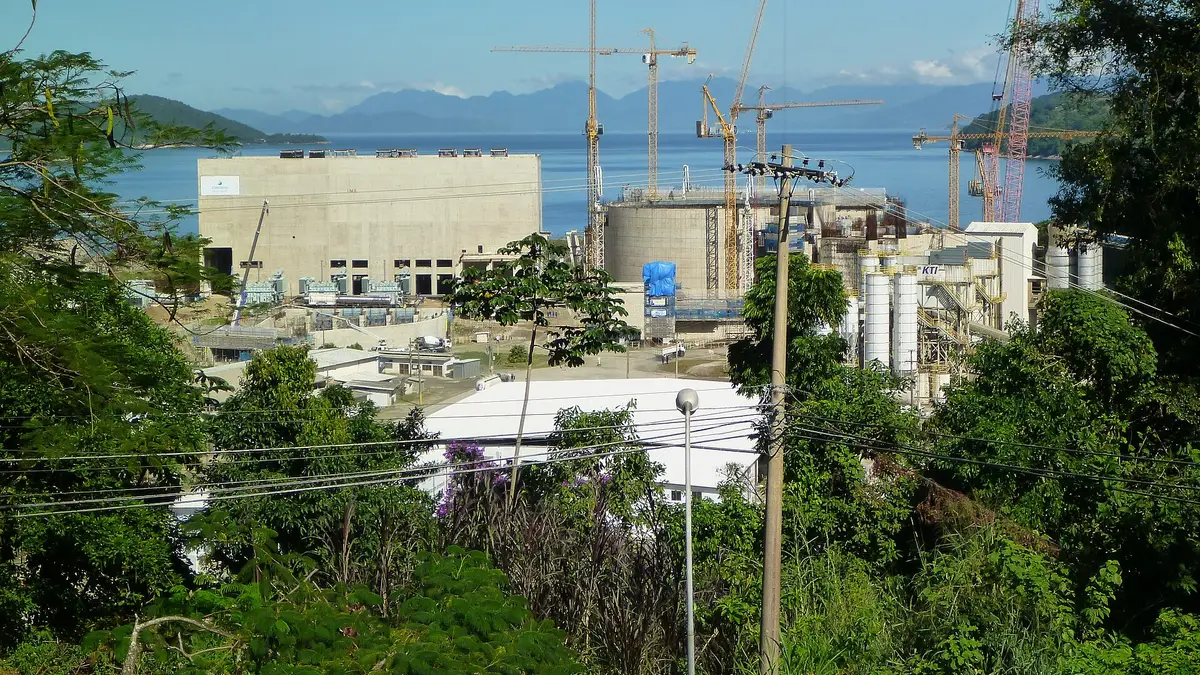
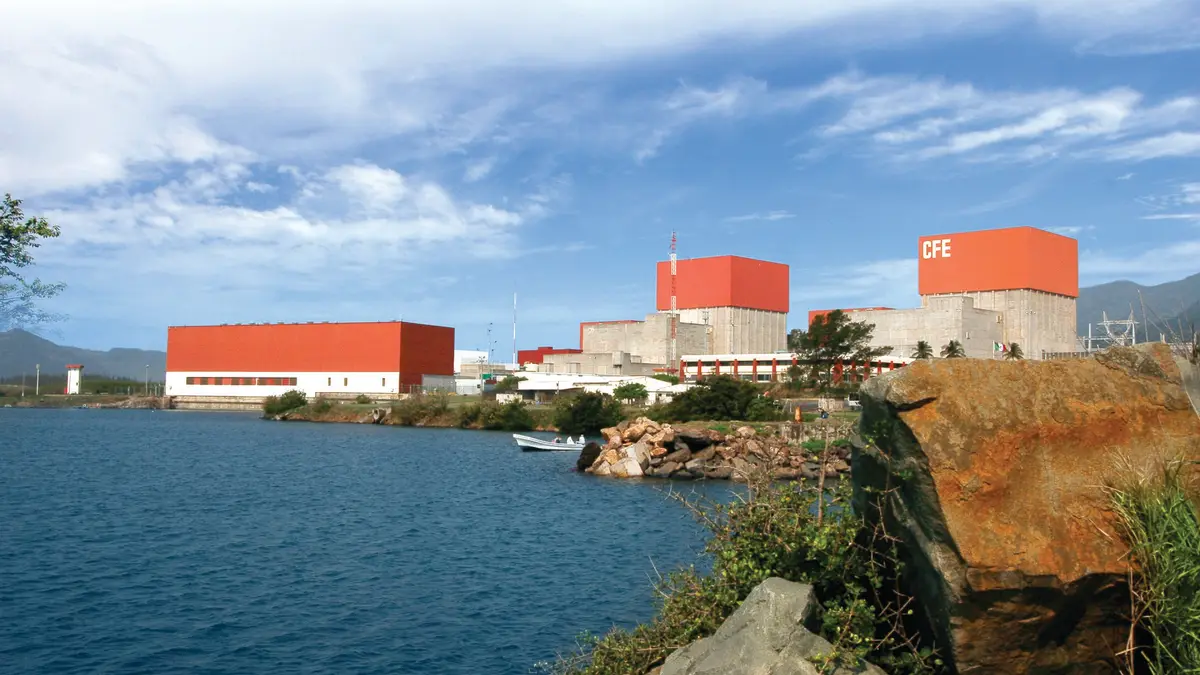
Argentina is the Latin American country with the most reactors: 3 (Atucha I, Atucha II and Embalse), with 1,631 MW, which generated 7.3% of its electricity in 2025. It is also building CAREM 25, a nationally designed 25 MW modular reactor. Brazil has 2 reactors at Angra dos Reis (1,884 MW, 2.2% of its electricity) and is building Angra 3, with 1,340 MW. Mexico has 2 at Laguna Verde (1,552 MW, 3.9%).
- 1974Atucha I, ArgentinaLatin America's first nuclear power plant begins commercial operation.
- 1984Embalse, ArgentinaArgentina's second plant, in Córdoba.
- 1985Angra 1, BrazilBrazil begins commercial operation of its first reactor, at Angra dos Reis.
- 1990Laguna Verde 1, MexicoMexico starts its first unit, in Veracruz; the second follows in 1995.
- 2001Angra 2, BrazilBrazil's second reactor enters commercial operation.
- 2016Atucha II, ArgentinaArgentina's third reactor enters commercial operation.
- 2026Angra 3 and CAREM 25 still under constructionPRIS lists Brazil with 1,340 MW and Argentina with 25 MW under construction.
Chile has no power reactors. The Chilean Nuclear Energy Commission operates a research reactor that does not supply electricity to the grid. The fuel for all these reactors is uranium; who produces it is in our ranking of the largest uranium producers.
Methodology
The data are the country statistics of the IAEA's Power Reactor Information System (PRIS), accessed on 23 November 2026 on its official site: reactors in operation and under construction, their net capacity in MW(e), those permanently shut down and the nuclear share of 2025 electricity generation. Reactors in «suspended operation» are not counted as operating. Countries are ranked by the number of operating reactors and, in a tie, by capacity. PRIS does not include Taiwan in its list of countries with operating reactors. PRIS figures change as countries report new grid connections, construction starts, suspensions and closures, so they can vary from month to month. This ranking will be updated on this same page, with the date of each review at the top.
How to cite this data
Energía Futura (2026). «Countries with the most nuclear reactors 2026: world ranking in operation and under construction». Updated 23 November 2026. energiafutura.cl/en/news/countries-with-the-most-nuclear-reactors-2026-world-ranking-in-operation-and-under-construction. Data: IAEA, Power Reactor Information System (PRIS).
Does your company work in power generation, mining or the energy transition? Reach Energía Futura's readers.
See advertising optionsFrequently asked questions
Which country has the most nuclear reactors?
The United States, with 94 reactors in operation and 96,952 MW, according to the IAEA's PRIS as of 23 November 2026.
How many nuclear reactors are there in the world?
419 in operation in 31 countries, with 381,222 MW, and 76 under construction in 16 countries.
Which country is building the most nuclear reactors?
China, with 36 reactors under construction (38,781 MW), almost half of all those being built worldwide.
How many nuclear reactors are there in Latin America?
7: 3 in Argentina, 2 in Brazil and 2 in Mexico. Two more are under construction: Angra 3 in Brazil and CAREM 25 in Argentina.
How many nuclear reactors does Argentina have?
3 in operation (Atucha I, Atucha II and Embalse), with 1,631 MW, plus CAREM 25 under construction. It is the Latin American country with the most reactors.
Does Chile have nuclear power plants?
No. Chile has no power reactors, only a research reactor run by the Chilean Nuclear Energy Commission.
How much electricity do the world's nuclear reactors generate?
2,635 TWh in 2025, according to the IAEA's PRIS.
Which country depends most on nuclear power?
France, which generated 68.1% of its electricity from nuclear in 2025.