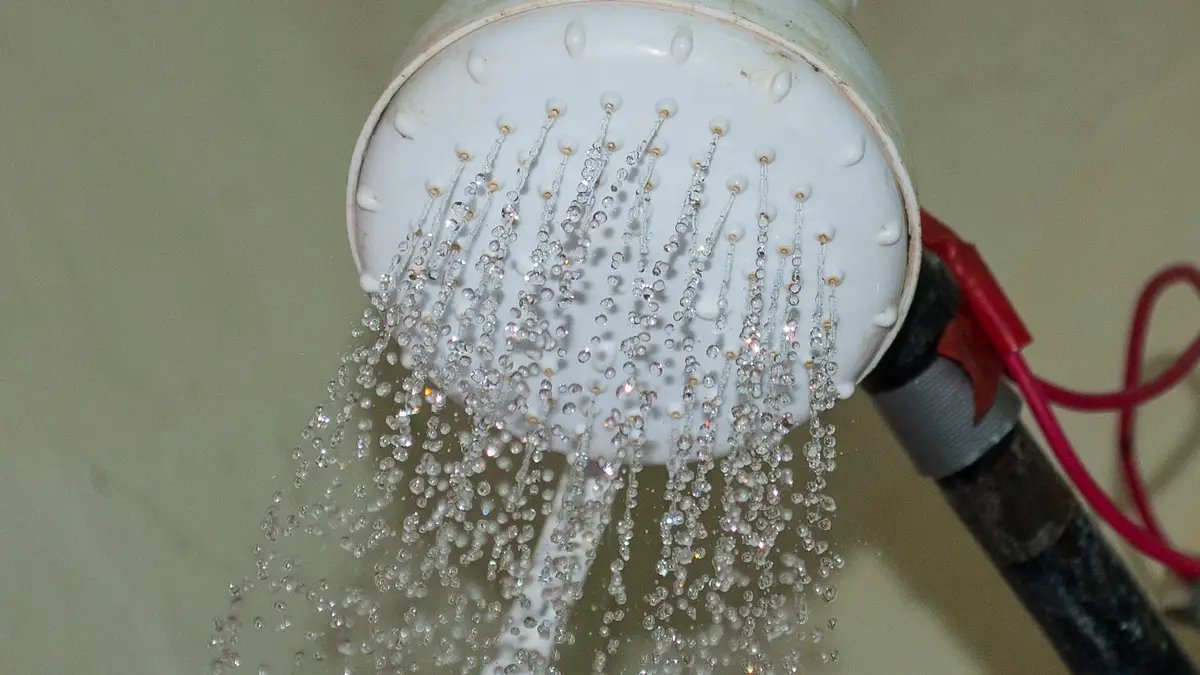
An electric shower heats the water inside the shower head itself, with a heating element of between 5,500 and 7,500 W, the most common ratings for models sold in South America. An 8-minute shower at full power uses between 0.73 and 1 kWh, or between CLP 187 and 255, with power at CLP 255.27 per kWh (CGE's BT1 residential rate in Chile since October 2026). That looks cheaper than a gas water heater, but there is a catch: at that power it can only deliver 3 to 4 litres of warm water a minute, less than half the flow of a shower fed by a gas heater.
This guide calculates how much electricity an electric shower uses, what a family pays each month, why it compares poorly with gas when measured per litre and what Chile's Superintendency of Electricity and Fuels (SEC) requires before buying and installing one.
How much electricity an electric shower uses
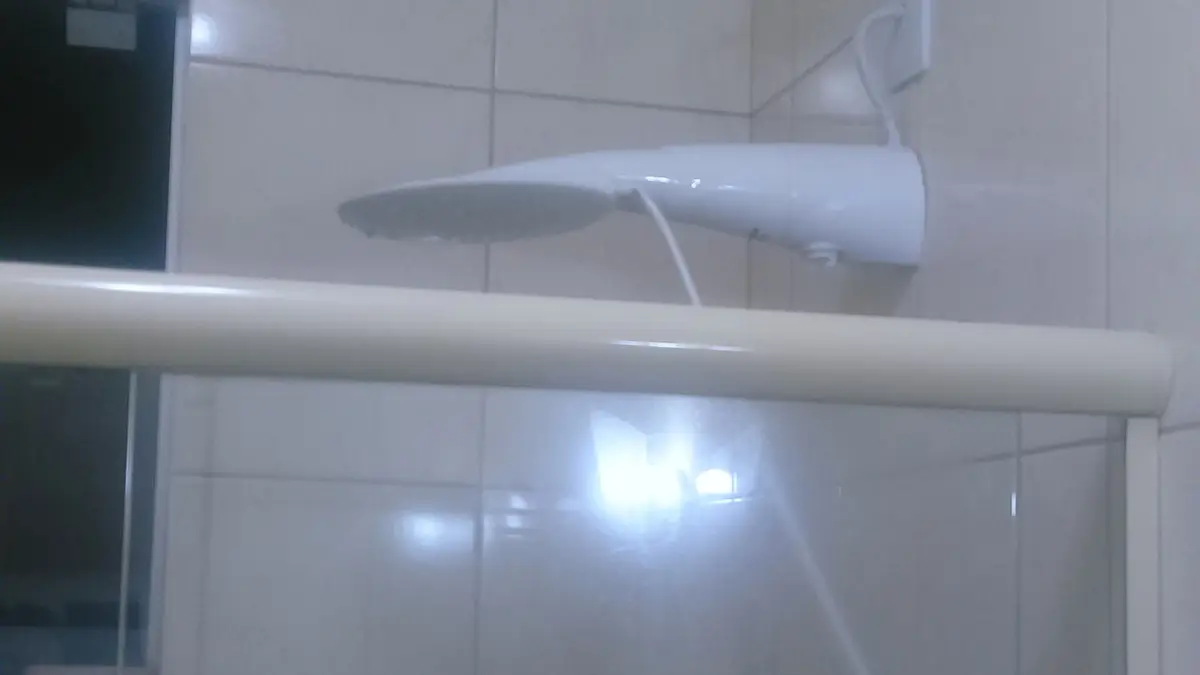
The electric shower, very popular in Brazil, Peru, Bolivia and Central America, works like a kettle with a water outlet: water flows through a chamber with a heating element that warms it instantly as it runs. It has no tank, so it wastes no energy keeping water hot, but it needs a lot of power while in use. At Sodimac Peru, for example, the range of Brazilian brand Lorenzetti runs from the 5,500 W Relax Ultra to the 7,500 W Top Jet, with 6,000 and 6,800 W models in between, according to Sodimac Peru's electric shower catalogue checked on 29 October 2026.
The key figure is not just consumption but how much water it can heat. Raising one litre of water by one degree takes 4,186 joules. From that, the maximum flow each power rating can deliver can be calculated, assuming almost all the electricity turns into heat, as happens with an immersed heating element.
| Shower power | Flow at 40 °C with mains water at 15 °C (spring) | Flow at 40 °C with mains water at 10 °C (winter) | Current at 220 V |
|---|---|---|---|
| 5,500 W | 3.2 litres a minute | 2.6 litres a minute | 25 A |
| 6,000 W | 3.4 litres a minute | 2.9 litres a minute | 27 A |
| 6,800 W | 3.9 litres a minute | 3.2 litres a minute | 31 A |
| 7,500 W | 4.3 litres a minute | 3.6 litres a minute | 34 A |
Energía Futura calculations using the specific heat of water (4,186 J per kilo and degree) and efficiency close to 100%. A shower fed by a 10-litre gas water heater delivers around 8 to 10 litres a minute at the same temperature. That is why electric showers have a weaker spray and, in winter, force a choice between more flow and more heat.
Electric shower running cost in pesos per shower and per month
The calculation is power times minutes of use times the price per kWh. We use the same reference shower as in our gas water heater and electric tank heater guides: 8 minutes. The difference is that less water comes out here, because the power is not enough for more.
| Electric shower | Energy per 8-minute shower | Cost per shower | Monthly cost (4 people, 1 shower a day) |
|---|---|---|---|
| 5,500 W | 0.73 kWh | CLP 187 | CLP 22,460 |
| 6,000 W | 0.80 kWh | CLP 204 | CLP 24,510 |
| 6,800 W | 0.91 kWh | CLP 231 | CLP 27,770 |
| 7,500 W | 1.00 kWh | CLP 255 | CLP 30,630 |
Energía Futura calculations at full power, with 120 showers a month and power at CLP 255.27 per kWh, rounded. With the selector on a lower setting, the cost falls in proportion to power. The price per kWh varies by municipality and distributor, as shown in the price of a kWh in Chile by municipality and distributor.
To put the impact on the bill in perspective: a family of four with a 5,500 W shower uses about 88 kWh a month on showers alone, roughly half of the 180 kWh a month that Chile's National Energy Commission uses as a reference for a typical household. With a 7,500 W unit it reaches 120 kWh, two thirds of that reference. It is by far the appliance that weighs most on the bill of a home that uses it every day.
Electric shower vs. gas water heater: which is better
Compared per shower, the electric one seems to win: CLP 187 against the CLP 340 to 481 that a 10-litre gas water heater burns in bottled LPG for an 8-minute shower, according to our guide to how much a gas water heater costs. But that comparison is misleading: the gas heater delivers 64 litres of warm water in those 8 minutes and the 5,500 W electric shower, about 25 litres.
The fair comparison is per litre of warm water, or for the same shower. Heating 64 litres from 12 °C to 40 °C takes 2.08 kWh of heat. An electric shower does it at almost 100% efficiency, just like an electric tank water heater before counting its tank losses, so it costs the same: about CLP 532.
| System | Cost of 64 litres of water at 40 °C | Cost per litre | Typical flow |
|---|---|---|---|
| 10-litre gas heater, LPG (Gasco) | CLP 340 | CLP 5.3 | 8 to 10 litres a minute |
| 10-litre gas heater, LPG (Lipigas) | CLP 368 | CLP 5.8 | 8 to 10 litres a minute |
| 10-litre gas heater, LPG (Abastible) | CLP 481 | CLP 7.5 | 8 to 10 litres a minute |
| Electric shower | CLP 532 | CLP 8.3 | 3 to 4 litres a minute |
| Electric tank water heater | CLP 532 plus tank losses | CLP 8.3 or more | Depends on the fittings |
Energía Futura calculations. Gas: 15 kg cylinder delivered in the Santiago Metropolitan Region as reported to the CNE's Gas en Línea (Gasco and Abastible as of 21 October 2026; Lipigas as of 1 October), with an 87%-efficient heater. Electricity: CLP 255.27 per kWh.
The bottom line: the electric shower costs less per shower only because it uses less hot water. Per litre, it is between 10% and 56% more expensive than a gas heater running on bottled gas, depending on the company selling the gas. Even if someone showers with a gas heater at a lower flow, for example with a low-flow shower head, gas still wins.
When an electric shower does make sense
- Homes without gas, or where installing a gas heater with a flue is expensive or impossible, such as a guest bathroom, a cabin or a lightweight building.
- Occasional use: in a holiday home or a barbecue area, where keeping a tank heater on all year wastes energy.
- Homes with solar panels, if the shower is used during the day, when self-generation covers the load. At night, the energy comes from the grid.
- Warm areas, where mains water arrives warmer and only needs a few degrees more.
It does not make sense, however, as the main system for a family that showers every day in central and southern Chile, where mains water is cold in winter. There, flow drops below 3 litres a minute at 5,500 W, and the electricity bill rises more than a gas bill would. For homes without gas, an electric tank heater allows showers at normal flow, though it costs more: we break it down in how much electricity an electric water heater uses.
What the SEC requires in Chile: certification and seal
In Chile, every electrical product sold must have prior safety certification and the SEC Seal, which includes a QR code to verify it. Law 18,410 expressly prohibits selling electrical appliances without that certification, and the Supreme Court confirmed in November 2025 that having it «in process» is not enough, according to Diario Constitucional.
Electric showers have been at the centre of that enforcement. In March 2026, the SEC imposed two penalties on Mercado Libre totalling 7,000 UTM, about CLP 490 million, for offering products without the SEC Seal on its platform, including electric showers, drills, polishers, gas regulators and patio heaters, according to Reporte Minero. Before buying, check that the product carries the seal and scan the QR code.
That also explains why they are hard to find at Chile's big retailers. In a check on 29 October 2026, a search for «ducha eléctrica» at Easy returned taps and shower columns, and at Paris, shower kits and spare heating elements. On Falabella's marketplace there were generic three-temperature models at CLP 29,990 and an Indelplas heater with a shower at CLP 71,900, with no wattage in the name. «Rechargeable portable showers» are also sold from CLP 20,850: these are generally battery pumps for camping that do not heat the water.
Installation: cables, protection and supply capacity
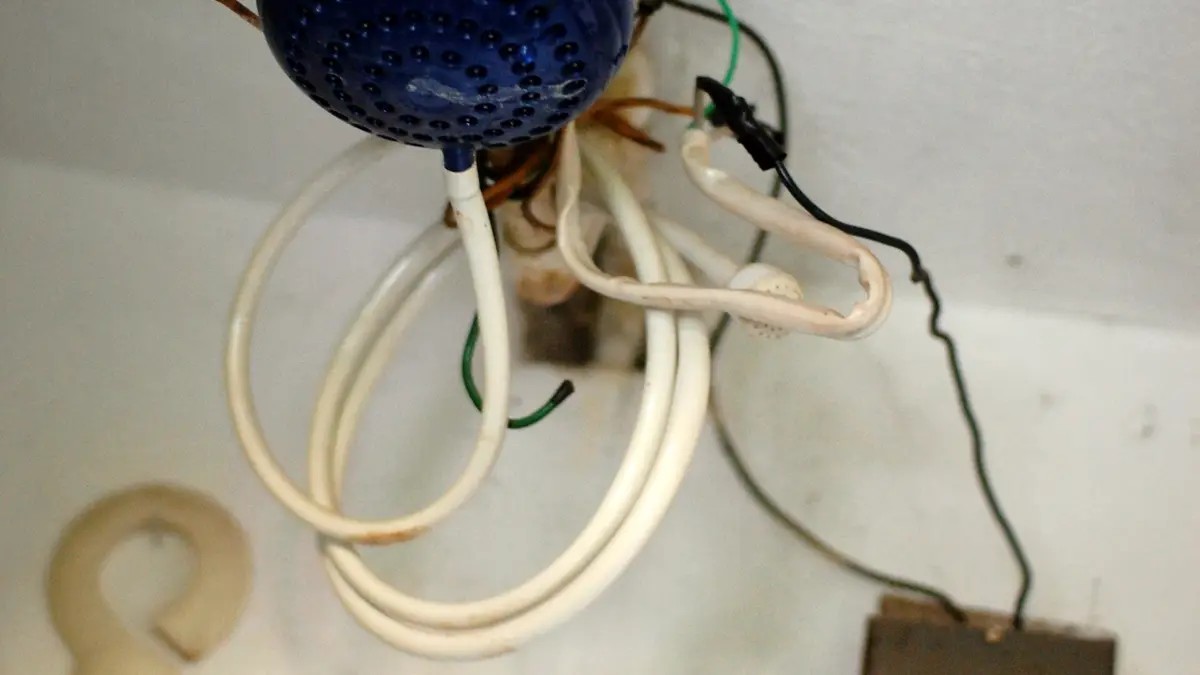
A 5,500 W electric shower draws about 25 amps at 220 V, and a 7,500 W one about 34 A. That is far more than a household socket circuit can handle, which is usually protected by 10 or 16 A breakers. It therefore needs a dedicated circuit from the panel, with a cable of the right cross-section and its own breaker. For the 5,500 W, 220 V Lorenzetti Maxi Ducha Ultra, the maker specifies a 4 mm² cable and a 30 A breaker, according to the spec sheet published by Telhanorte, and warns that thicker cables are needed for runs over 30 metres.
- SEC-authorised installer: work on the panel and the new circuit must be done by an authorised electrical installer, who should also declare the change to the installation.
- Earth connection: the most important protection. If the element is damaged or breaks, the earth keeps the water and fittings from becoming live.
- Residual current device (RCD): it cuts the power if it detects leakage through a person. In a bathroom, where the body is wet, it is essential.
- Supply capacity: a 7,500 W shower, combined with an oven or electric heater running at the same time, can exceed the supply capacity of a small home. If the main breaker trips, ask the distributor about a capacity increase.
- Never switch the shower on dry: the element burns out if powered without water. Turn the water on first, then choose the temperature.
How to spend less on hot water
- Use the lowest setting that is comfortable: in summer, the warm setting can use about half as much as the winter one.
- Take shorter showers: each minute less at 5,500 W saves about CLP 23; for a family of four, one minute less per person a day adds up to almost CLP 2,800 a month.
- Clean the scale from the head and check the element: scale reduces water flow and forces you to use more power.
- Do not run it at the same time as other large appliances, to avoid overloading the supply.
Does your company sell gas water heaters, tank heaters, certified showers or hot water solutions? Reach Energía Futura's readers.
See advertising formatsFrequently asked questions
How much electricity does an electric shower use?
Between 5,500 and 7,500 W at full power. An 8-minute shower uses between 0.73 and 1 kWh.
How much does an electric shower cost in Chilean pesos?
Between CLP 187 and 255 per 8-minute shower, with power at CLP 255.27 per kWh. A family of four showering daily pays between CLP 22,500 and 30,600 a month.
Is an electric shower cheaper than a gas water heater?
Per shower it seems cheaper, but only because it delivers less water: 3 to 4 litres a minute against 8 to 10 with a gas heater. Per litre of warm water, a gas heater on bottled gas costs between CLP 5.3 and 7.5 and an electric shower about CLP 8.3.
Are electric showers allowed in Chile?
They can only be sold with safety certification and the SEC Seal. In 2026 the SEC fined Mercado Libre, among other reasons, for offering electric showers without the seal. Installation must be done by an authorised installer, with a dedicated circuit, earth and an RCD.