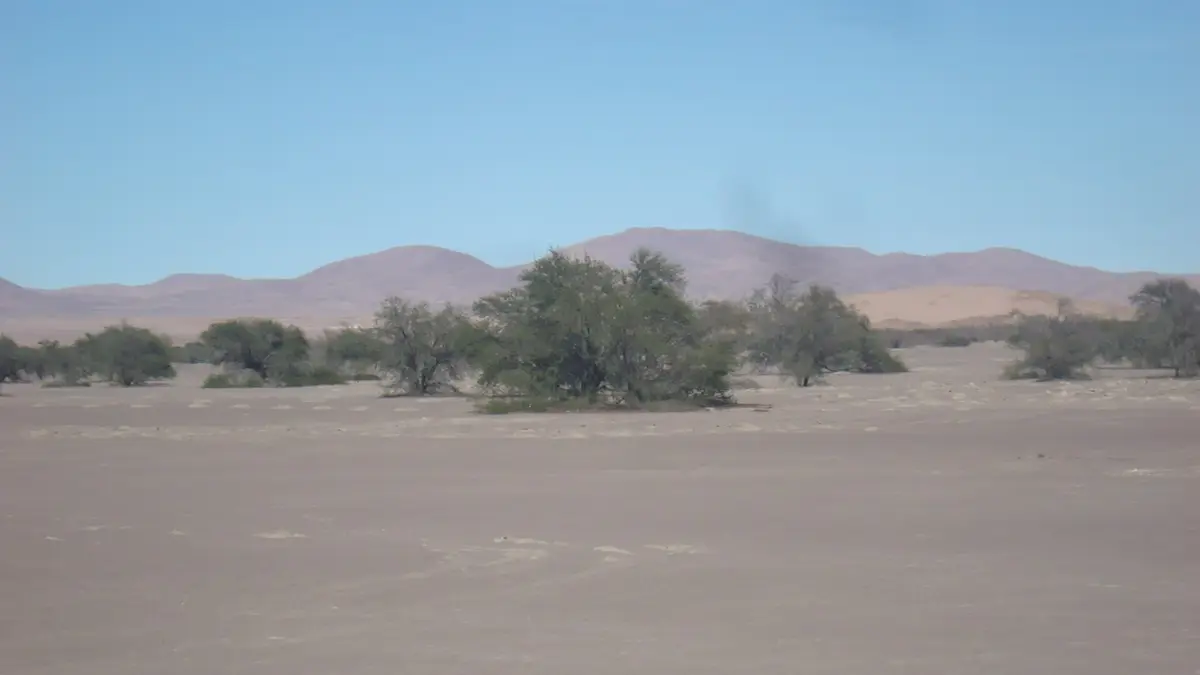
The Huatacondo solar park and its 98 MW / 312 MWh battery system, in the municipality of Pozo Almonte, Tarapacá Region, have been disconnected from Chile's National Electric System for about two months. According to the National Electric Coordinator's daily report for October 27, 2026, cited by REDIMIN, both facilities were listed under forced disconnection with 0% availability.
The outage began on August 27, 2026, at 13:10, when the control center in charge of the plant told the Coordinator it was going offline because of a cyberattack on the Huatacondo facilities, according to the same record. No reconnection date has been announced, and there is no public information about the origin of the attack, the systems affected or any damage.
As far as has been reported, it is the longest case of a Chilean renewable plant out of service with a cyberattack as the stated cause. It comes as the National Energy Commission (CNE) prepares the first cybersecurity technical standard for the power sector, whose public consultation closed on October 2.
What is known about the cyberattack on the Huatacondo solar park
The Coordinator's operating records, reviewed by REDIMIN, show three events on the same day, August 27. At 13:10 the Huatacondo disconnection was reported under forced-disconnection request SDCF 2026100475. The same report notes the forced outage of the 220/23 kV TR1 transformer at the Santa Rita substation, also attributed to a cyberattack (SDCF 2026100746). And at 21:30, the Olivos and Espinos thermal plants in Los Vilos (Coquimbo Region) were declared unavailable after a loss of supervision and remote control, with the same stated cause.
REDIMIN warns that the public information does not establish whether these events are related. It also stresses a key point: operating reports only record the cause each company communicates, and the Coordinator does not verify the technical nature of an attack. What is on record, therefore, is that the companies declared a cyberattack, not a forensic finding on what happened.
| Time (August 27, 2026) | Facility | What was recorded | Reported cause |
|---|---|---|---|
| 13:10 | Huatacondo solar park (Tarapacá) | Forced disconnection (SDCF 2026100475) | Cyberattack |
| Same day | TR1 220/23 kV transformer, Santa Rita substation | Forced disconnection (SDCF 2026100746) | Cyberattack |
| 21:30 | Olivos and Espinos plants (Los Vilos, Coquimbo) | Unavailable after losing supervision and remote control | Cyberattack |
| October 27 | Huatacondo and its battery | Still under forced disconnection, 0% available | No return date |
Source: National Electric Coordinator records cited by REDIMIN, October 29, 2026. Energía Futura did not have direct access to the reports, because the Coordinator's website blocks automated queries.
The Huatacondo solar park and its battery in figures
Construction of the Huatacondo photovoltaic plant began in 2017 and it was inaugurated in 2019. Its owners are Japan's Sojitz (60%) and Shikoku Electric Power (30%) and France's Eiffage (10%), according to ESS News. That outlet lists it at 103 MW and a cost of US$121 million, while reports from its construction, such as pv magazine, spoke of 98 MW.
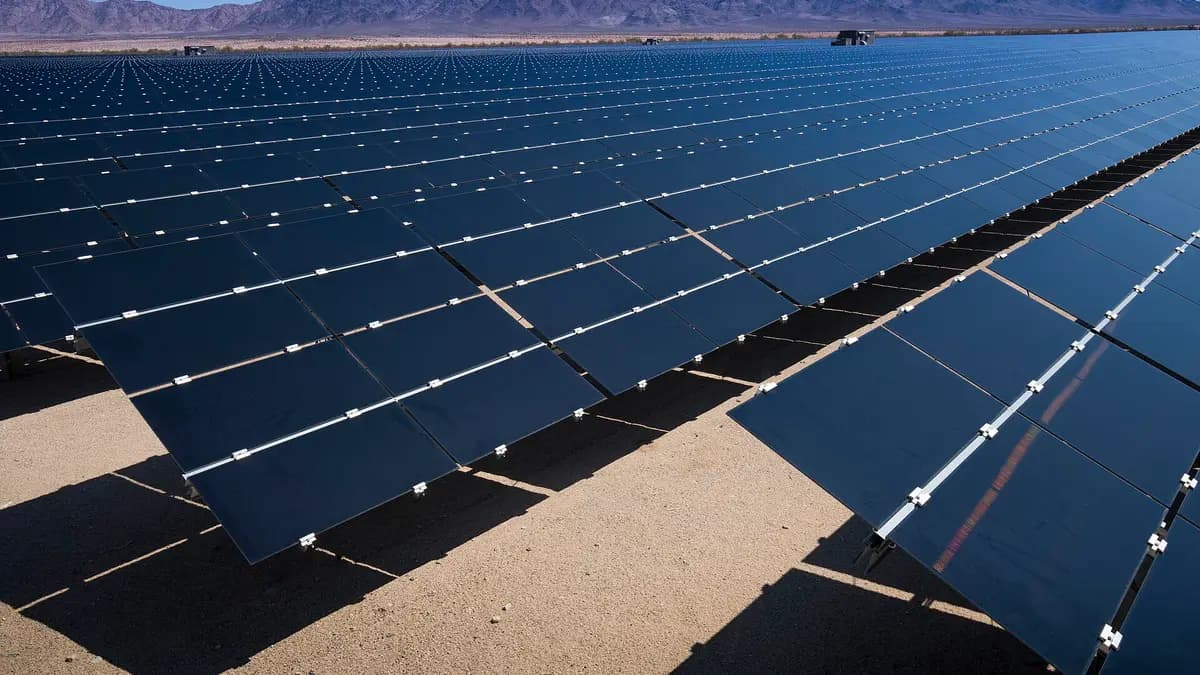
In October 2024, AustrianSolar Chile Cuatro SpA, linked to the same owners, awarded e-STORAGE, a Canadian Solar subsidiary, a turnkey contract to install a 98 MW / 312 MWh battery next to the park, according to Canadian Solar's announcement. Construction started in early 2025, with SolBank 3.0 batteries, inverters from Spain's Power Electronics and a link to the solar plant through a remote-control SCADA system.
| Item | Huatacondo |
|---|---|
| Location | Pozo Almonte, Tarapacá Region |
| Solar capacity | 103 MW (98 MW in 2017 reports) |
| Solar plant inaugurated | 2019 |
| Solar plant cost | US$121 million |
| Owners | Sojitz 60%, Shikoku Electric Power 30%, Eiffage 10% |
| Battery (BESS) | 98 MW / 312 MWh |
| Battery duration at full power (calculation) | About 3.2 hours |
| Battery supplier | e-STORAGE (Canadian Solar) |
| Offline since | August 27, 2026 |
Sources: ESS News (February 2025), Canadian Solar (October 2024) and REDIMIN (October 2026). The duration is an Energía Futura calculation: 312 MWh divided by 98 MW.
An important nuance: according to REDIMIN, the battery was still being commissioned when the incident happened. Its unavailability therefore does not necessarily mean two months of lost commercial operation. The solar park is a different case, because it had been operating since 2019 and sells its energy on the wholesale market.
The storage project also carries an international label: it was the second Chilean project approved under Japan's Joint Crediting Mechanism (JCM) and the country's first hybrid project in that program, which counts part of the emission reductions toward Japan's climate targets, according to ESS News.
Why an offline battery in the north matters
Batteries are now the fastest-growing piece of Chile's power system. They store the surplus solar energy produced at midday and release it at night. According to the Ministry of Energy's monthly report with September data, cited by REDIMIN, there were 3,123 MW of storage in operation and 32 systems under construction totaling 3,702 MW and 15,398 MWh, which explains why Chile already has 32 battery projects under construction.
That equipment relies on software and remote communications to charge, discharge and respond to the Coordinator's dispatch orders. A compromised remote-control system can force an entire plant offline even if the panels and batteries are physically intact. That is one of the risks the new standard seeks to limit.
The weight of storage is already visible in generation: batteries supplied 5.1% of Chile's electricity between January and September, according to the Chilean Renewable Energy and Storage Association (ACERA). A single 312 MWh battery is a small fraction of that total, but the case shows how a digital incident can sideline an asset for weeks.
The power sector's cybersecurity standard, under consultation
One day after the Huatacondo incident, on August 28, 2026, the CNE opened the public consultation on the draft Cybersecurity and Information Security Technical Standard for the power sector. The text seeks to set digital security, operational coordination and information protection requirements for the sector's different players.
The original deadline was 25 calendar days, and the CNE extended it by 10 days to October 2. The procedure had been open since CNE Exempt Resolution No. 383 of September 2021. In August, the Undersecretariat of Energy, through official letter 1190/2026, instructed the CNE to finalize the standard and put it to consultation before August 31, according to a summary by the law firm Prieto Abogados.
| Date | Milestone |
|---|---|
| September 2021 | CNE opens the standard's procedure (Exempt Res. No. 383) |
| August 7, 2026 | Undersecretariat of Energy orders the standard finalized (letter 1190/2026) |
| August 27, 2026 | Huatacondo goes offline after a reported cyberattack |
| August 28, 2026 | CNE opens the public consultation |
| October 2, 2026 | Consultation closes after a 10-day extension |
| October 27, 2026 | Huatacondo and its battery remain offline |
Sources: CNE, Prieto Abogados and REDIMIN. The final version of the standard has not yet been published. In parallel, the Cybersecurity Framework Law (Law 21,663) created the National Cybersecurity Agency (ANCI), which commented on the draft and noted that appointing an incident response team (CSIRT) for the sector must follow that law's special procedure.
To put the size of the batteries being installed worldwide in perspective, and how a 312 MWh unit compares with the largest, see our ranking of the largest battery in the world.
Does your company protect, operate or store energy? Reach Energía Futura's readers.
See advertising optionsFrequently asked questions about the Huatacondo solar park
Why is the Huatacondo solar park offline?
Because on August 27, 2026, its operator reported a cyberattack on its facilities to the National Electric Coordinator. Since then the plant and its battery have been listed under forced disconnection, according to the records cited by REDIMIN.
When will it be back in operation?
No date has been announced. As of October 27, both facilities were still at 0% availability, and the companies have not publicly explained the technical reasons for the delay.
Did the cyberattack affect household supply?
No customer outages linked to the case have been reported. The power system has other plants that cover the output of a roughly 100 MW plant, although its absence reduces solar and storage supply in the north.
Are the other August 27 events related?
It is not known. The same day, the outage of a transformer at the Santa Rita substation and the loss of remote control at the Olivos and Espinos plants were reported as cyberattacks, but public information does not establish a link.
Does Chile have a cybersecurity standard for the power sector?
It is being prepared. The CNE put a draft technical standard to public consultation between August 28 and October 2, 2026, and the final version has not yet been published.