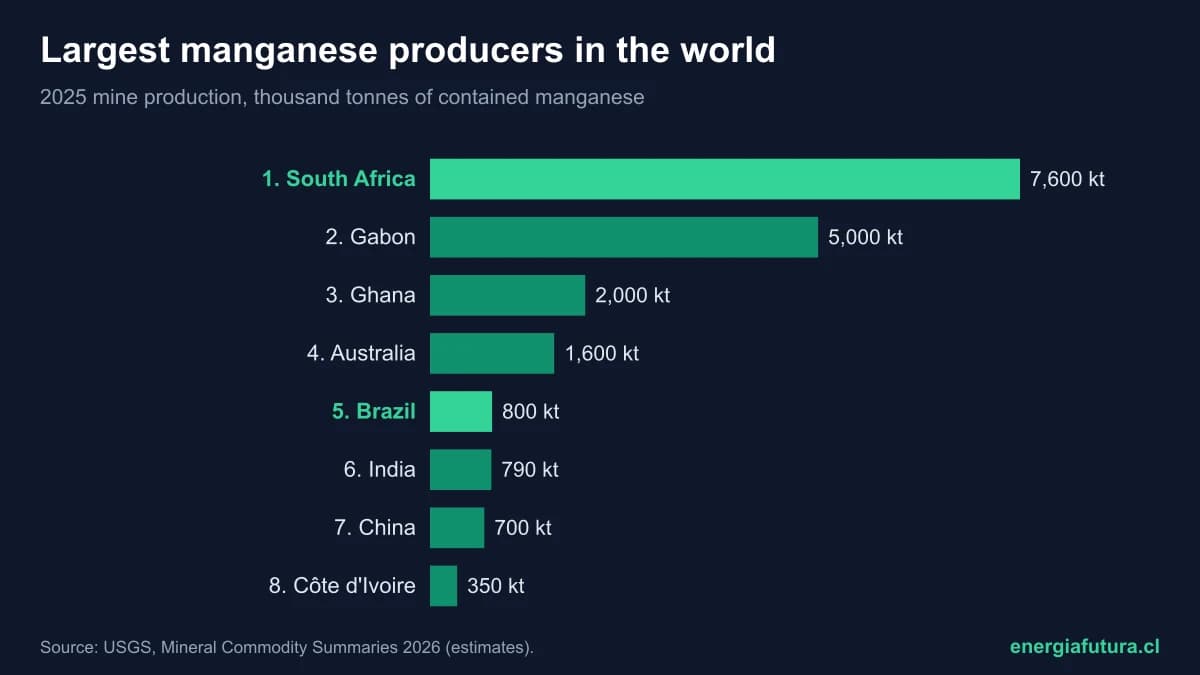
Updated on 5 November 2026. South Africa is the world's largest manganese producer: in 2025 it produced about 7.6 million tonnes of contained manganese, 38% of the world total of 20 million, according to the manganese summary of the United States Geological Survey (USGS), Mineral Commodity Summaries 2026, published in February. Gabon is second, with 5 million (25%), and Ghana third, with 2 million (10%). Brazil is Latin America's top producer, in fifth place.
Manganese is essential for making steel: it has no satisfactory substitute in its main uses, says the USGS, and its consumption closely follows the steel industry. It is also found in lithium batteries with NMC chemistry and in the new LMFP ones, in alkaline batteries and in fertilisers. This fact sheet brings together the production ranking, its evolution since 2020, reserves, prices and its role in the energy transition.
View the data as a table
| World production 2025 | 20 million t |
| South Africa's share | 38% |
| World reserves | 1.8 billion t |
| Resources located in South Africa | 70% |
Ranking of the largest manganese producers in the world in 2025
The table ranks countries by 2025 mine production, in thousand tonnes of contained manganese (not gross ore, which contains between 35% and 54% manganese). The 2025 figures are USGS estimates; the 2024 column shows who grew.
| Rank | Country | Production 2024 (thousand t) | Production 2025e (thousand t) | Share of 2025 total |
|---|---|---|---|---|
| 1 | South Africa | 7,490 | 7,600 | 38.0% |
| 2 | Gabon | 4,640 | 5,000 | 25.0% |
| 3 | Ghana | 1,280 | 2,000 | 10.0% |
| 4 | Australia | 1,600 (est.) | 1,600 | 8.0% |
| 5 | Brazil | 705 | 800 | 4.0% |
| 6 | India | 731 | 790 | 4.0% |
| 7 | China | 690 | 700 | 3.5% |
| 8 | Côte d'Ivoire | 340 | 350 | 1.8% |
| Other countries | 1,240 | 1,300 | 6.5% | |
| World total | 18,700 | 20,000 | 100% |
Source: USGS, Mineral Commodity Summaries 2026. World production rose about 7% in 2025. The USGS revised Australia's 2024 production down and Ghana's up based on company and government reports. Percentages calculated by Energía Futura.
Manganese content varies a lot by product. According to the USGS, manganese ore typically contains 35% to 54% manganese, and ferromanganese, the alloy used in steelworks, 74% to 95%. That is why the USGS reports production in contained manganese: it allows countries that ship ores of different grades to be compared on the same basis. In gross tonnes of ore, the figures would be roughly twice as large.
View the data as a table
| kt | |
|---|---|
| South Africa | 7,600 kt |
| Gabon | 5,000 kt |
| Ghana | 2,000 kt |
| Australia | 1,600 kt |
| Brazil | 800 kt |
| India | 790 kt |
| People's Republic of China | 700 kt |
| Cote d'Ivoire | 350 kt |
South Africa, Gabon and Ghana: the big manganese producers
South Africa dominates for geological reasons: the Kalahari manganese field, in the Northern Cape province, holds most of the planet's land-based resources. The USGS estimates the country has about 70% of the world's manganese resources. Its production grew from 6.5 million tonnes in 2020 to 7.6 million in 2025.
Gabon went from 3.3 to 5 million tonnes over the same period, with high-grade mines in the Moanda area. Ghana is the big recent jump: from 818,000 tonnes in 2023 to 2 million in 2025, overtaking Australia. Australia, on the other hand, fell from about 3 million to 1.6 million: a mine in the north of the country suspended operations in 2024 because of a tropical cyclone and resumed in May 2025, according to the USGS.
View the data as a table
| South Africa | Gabon | Australia | Ghana | Brazil | |
|---|---|---|---|---|---|
| 2020 | 6,500 | 3,310 | 3,330 | 637 | 494 |
| 2021 | 7,200 | 4,340 | 3,260 | 940 | 542 |
| 2022 | 7,300 | 4,670 | 3,040 | 844 | 624 |
| 2023 | 7,300 | 4,490 | 2,860 | 818 | 580 |
| 2024 | 7,490 | 4,640 | 1,600 | 1,280 | 705 |
| 2025 | 7,600 | 5,000 | 1,600 | 2,000 | 800 |
View the data as a table
| 2020 | 2021 | 2022 | 2023 | 2024 | 2025 | |
|---|---|---|---|---|---|---|
| South Africa | 6,500 | 7,200 | 7,300 | 7,300 | 7,490 | 7,600 |
| Gabon | 3,310 | 4,340 | 4,670 | 4,490 | 4,640 | 5,000 |
| Australia | 3,330 | 3,260 | 3,040 | 2,860 | 1,600 | 1,600 |
| Ghana | 637 | 940 | 844 | 818 | 1,280 | 2,000 |
| China | 1,340 | 991 | 743 | 767 | 690 | 700 |
| Brazil | 494 | 542 | 624 | 580 | 705 | 800 |
| India | 632 | 453 | 721 | 744 | 731 | 790 |
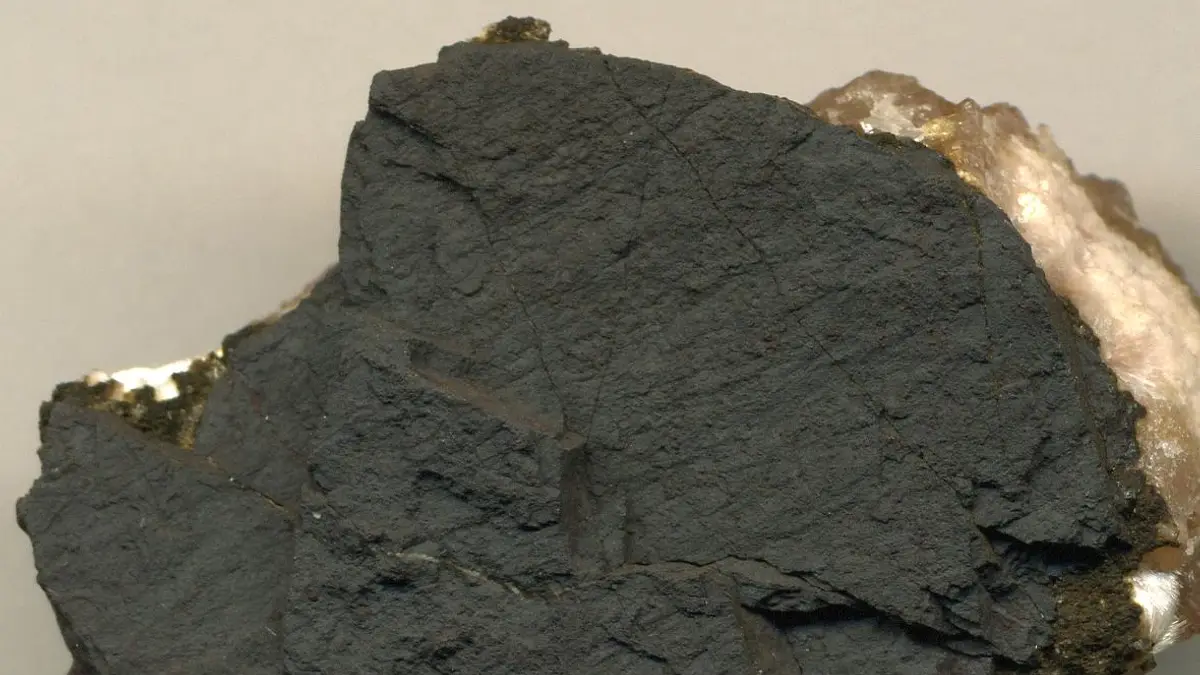
Manganese reserves by country
The USGS estimates world manganese reserves at 1.8 billion tonnes, about 90 times 2025 production. Australia tops the list with 580 million, although reserves compliant with Australia's JORC code are 110 million; it is followed by South Africa (550 million), Brazil (300 million) and China (260 million). Land-based resources are large but irregularly distributed.
| Country | Reserves (million t) | Share of total |
|---|---|---|
| Australia | 580 | 32.2% |
| South Africa | 550 | 30.6% |
| Brazil | 300 | 16.7% |
| China | 260 | 14.4% |
| Gabon | 61 | 3.4% |
| India | 34 | 1.9% |
| Ghana | 13 | 0.7% |
| World total | 1,800 | 100% |
Source: USGS, Mineral Commodity Summaries 2026. The USGS revised reserves for Australia, Brazil, China, Malaysia and South Africa based on company and government reports. Brazil, with 16.7%, holds the world's third-largest reserves and is the Latin American country with the most potential.
Brazil and Latin America on the manganese map
Brazil is the only Latin American country among the USGS's main manganese producers. Its production rose from 494,000 tonnes in 2020 to about 800,000 in 2025, a 62% increase, and in 2025 it narrowly overtook India. With 300 million tonnes of reserves, it has room to grow further. Mexico appeared in earlier USGS editions with about 220,000 tonnes in 2022 and 2023, but since the 2025 edition it has been grouped under "other countries".
Behind Brazil come India (790,000 tonnes), China (700,000) and Côte d'Ivoire (350,000). China is a special case: it mines little manganese, but it is the world's largest consumer and refiner, because it makes more than half of the planet's crude steel, according to the World Steel Association, and most lithium batteries. That is why it imports ore from South Africa, Gabon, Australia and Ghana.
| Year | South Africa | Gabon | Australia | Ghana | Brazil | World total |
|---|---|---|---|---|---|---|
| 2020 | 6,500 | 3,310 | 3,330 | 637 | 494 | 18,900 |
| 2021 | 7,200 | 4,340 | 3,260 | 940 | 542 | 20,100 |
| 2022 | 7,300 | 4,670 | 3,040 | 844 | 624 | 19,800 |
| 2023 | 7,300 | 4,490 | 2,860 | 818 | 580 | 19,600 |
| 2024 | 7,490 | 4,640 | 1,600 | 1,280 | 705 | 18,700 |
| 2025e | 7,600 | 5,000 | 1,600 | 2,000 | 800 | 20,000 |
Source: USGS, Mineral Commodity Summaries, 2022 to 2026 editions, in thousand tonnes of contained manganese. Each year uses the latest figure published by the USGS; the 2023 figures for Gabon and Brazil and those for 2025 are estimates.
Does your company work in mining, metals or batteries? Reach Energía Futura's readers.
See advertising formatsManganese price
The average price of 44%-grade manganese ore delivered to China was about US$4.50 per metric ton unit (mtu) in 2025, 19% less than in 2024, according to the USGS using CRU Group data. Up to October 2025, the spot price had fallen 22% against the 2024 average. One mtu equals 10 kilos of contained manganese, so a tonne of 44% ore was worth about US$198.
| Year | Average price (US$ per mtu, 44% ore, CIF China) |
|---|---|
| 2021 | 5.27 |
| 2022 | 5.97 |
| 2023 | 4.80 |
| 2024 | 5.53 |
| 2025e | 4.50 |
View the data as a table
| Average price | |
|---|---|
| 2021 | US$5.27 |
| 2022 | US$5.97 |
| 2023 | US$4.80 |
| 2024 | US$5.53 |
| 2025 | US$4.50 |
Source: USGS, Mineral Commodity Summaries 2026. The main reason is steel: the World Steel Association estimated that global finished steel consumption did not grow in 2025 compared with 2024, and manganese follows that trend.
Even with lower prices, South Africa and Gabon increased their output in 2025, and together they now supply 63% of the world's mined manganese, up from about 52% in 2020, according to USGS figures.
In steelmaking, manganese is used mainly as ferromanganese and silicomanganese, alloys that remove oxygen and sulphur from steel and give it hardness. The United States, which has no mines, imported about 350,000 tonnes of ore, 350,000 of ferromanganese and 310,000 of silicomanganese in 2025, according to the USGS. Its apparent consumption of contained manganese was about 640,000 tonnes.
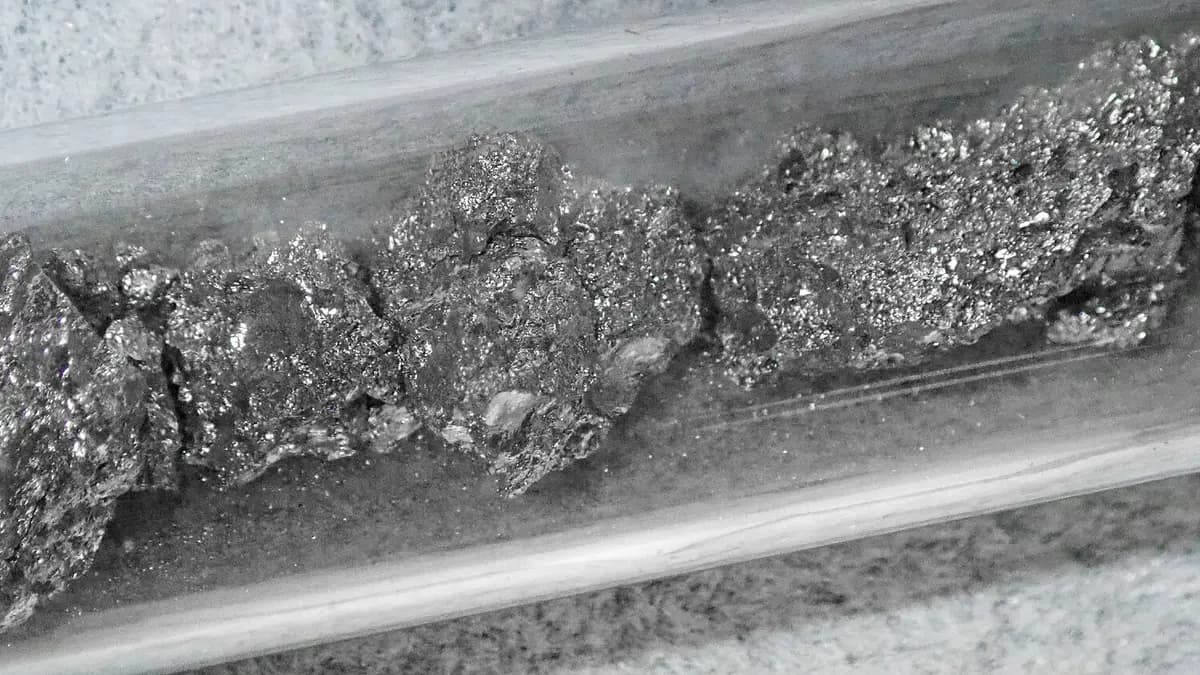
Manganese and batteries: its role in the energy transition
In lithium batteries, manganese is part of the NMC cathode (nickel, manganese and cobalt), widely used in electric cars, and of chemistries such as LMO and the new LMFP, a version of the lithium iron phosphate (LFP) battery with manganese that improves its energy density. That use requires high-purity manganese sulphate, whose refining is concentrated in China: consultancy SFA Oxford estimates the country holds about 85% of global capacity, according to its market analysis.
Manganese thus joins the group of battery metals with concentrated production or refining, like Indonesia's nickel, which we analysed in the largest nickel producers, and the Congo's cobalt, which we reviewed in the largest cobalt producers. Unlike them, manganese is abundant and cheap, which makes it attractive for lowering cell costs.
Chile does not appear among the USGS producers. Its link to manganese runs through batteries: Chilean lithium ends up in cathodes that also contain manganese, made in gigafactories like those we list in the largest battery gigafactory in the world. The United States, for its part, has not produced manganese ore since 1970 and is 100% import-dependent, mainly on Gabon (64% of ore between 2021 and 2024) and South Africa (24%).
How to cite this data
Energía Futura (2026). "Largest manganese producers in the world 2026: country ranking, reserves and their role in batteries". Updated on 5 November 2026. energiafutura.cl/en/news/largest-manganese-producers-in-the-world-2026-country-ranking-reserves-and-role-in-batteries. Data: USGS, Mineral Commodity Summaries 2022-2026; CRU Group; SFA Oxford.
Frequently asked questions
Which country is the largest manganese producer?
South Africa, with about 7.6 million tonnes of contained manganese in 2025, 38% of the world total, according to the USGS.
How much manganese is produced in the world?
About 20 million tonnes of contained manganese in 2025, roughly 7% more than in 2024.
Which country has the largest manganese reserves?
Australia, with 580 million tonnes, followed by South Africa (550 million) and Brazil (300 million).
What is manganese used for?
Mainly for making steel, and also in lithium batteries (NMC, LMO, LMFP), alkaline batteries, fertilisers and animal feed.
Which Latin American country produces the most manganese?
Brazil, fifth in the world with 800,000 tonnes in 2025 and third in reserves, with 300 million tonnes.