Canadian miner Tiernan Gold will evaluate supplying its Volcán gold project, in Chile's Atacama Region, with desalinated water instead of groundwater from the Andes. Through its subsidiary Andina Minerals Chile, the company signed a non-binding memorandum of understanding to study a supply of up to about 120 liters per second (L/s), as reported on November 5 and 6 by REDIMIN and Electrominería.
The agreement is exploratory: the 120 L/s is a maximum for evaluation, not a reserved or committed volume. The parties will have nine months, extendable by another nine, to review the technical feasibility, infrastructure, timing and economics of the supply. The public information does not identify the supplier or the desalination plant.
View the data as a table
| Desalinated water under evaluation | 120 l/s |
| Estimated average use | 105 l/s |
| Preliminary contract term | 15 years |
What Tiernan's desalinated water agreement says
If the evaluation is positive, the preliminary framework provides for a 15-year water purchase agreement from the start of supply, extendable by mutual agreement. No price, start date or take-or-pay mechanism has been agreed, and the memorandum is non-exclusive: neither party is obliged to sign a definitive contract.
| Signatory | Andina Minerals Chile SpA, a Tiernan Gold subsidiary |
| Type of agreement | Non-binding, non-exclusive memorandum of understanding |
| Volume | Up to ~120 L/s (maximum for evaluation) |
| Evaluation period | 9 months, extendable by 9 more |
| Contract if it goes ahead | 15-year water purchase, extendable |
| Pending | Price, start date, supplier and plant |
*"Water is a fundamental part of advancing Volcán,"* said Fausto Di Trapani, president and CEO of Tiernan Gold. According to the executive, the next step is to determine whether the potential flow, the infrastructure required, the timelines and the economics justify a definitive agreement.
The Volcán project and its water use
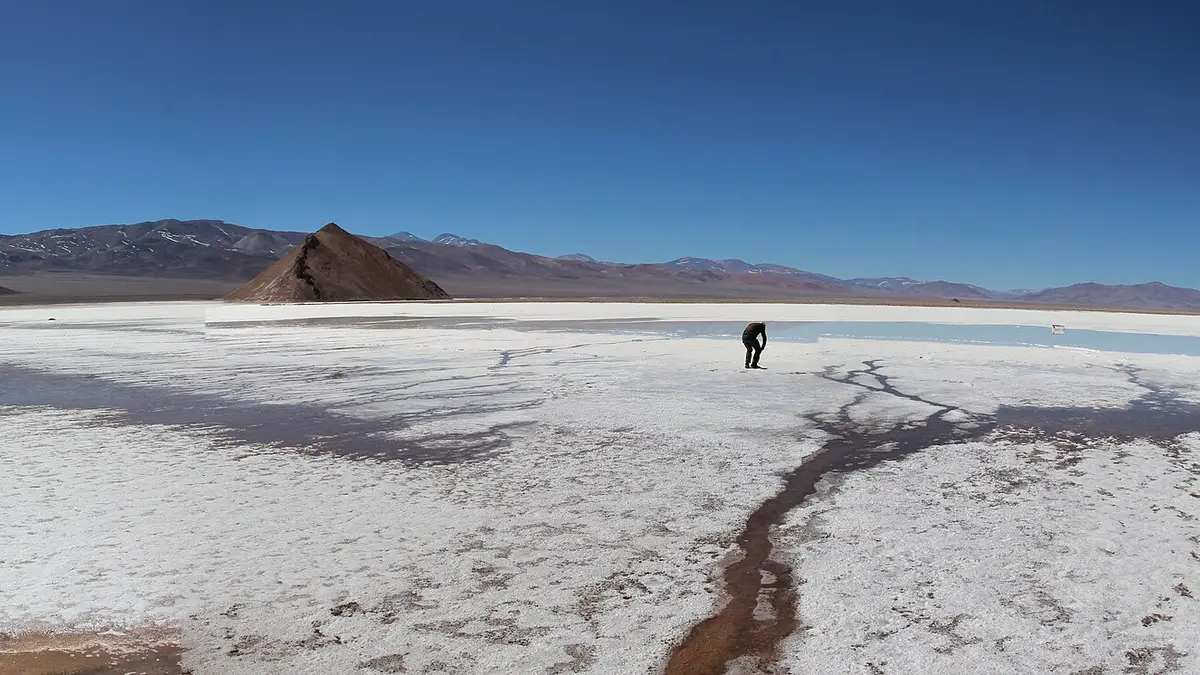
Volcán lies in the Maricunga gold belt, in the high Andes of Atacama, an area of salt flats and high-altitude lagoons where water is scarce. Tiernan, which took over the project from Hochschild Mining and is listed on the TSX Venture Exchange in Toronto, is preparing a pre-feasibility study for the first half of 2027 and plans to file the Environmental Impact Study with Chile's SEIA in the second half of 2027, Reporte Minero reported in October.
The base case is still groundwater. Chile's General Water Directorate (DGA) authorized extraction from two wells, about 21 km northeast of the deposits, for about 7.8 million m³ per year (3.9 million per well). The earlier preliminary economic assessment (PEA) estimated average use of 105 L/s, with a permitted maximum of 170 L/s. The company says it has more water than the operation needs; desalinated water is an alternative it is studying in parallel.
| Volcán project water indicator | Value |
|---|---|
| Estimated average use (earlier PEA) | 105 L/s |
| Permitted maximum | 170 L/s |
| Groundwater rights | ~7.8 million m³/year (2 wells) |
| Distance of the wells | ~21 km northeast of the deposits |
| Desalinated water under evaluation | Up to ~120 L/s |
| Memorandum term | 9 months + 9 months |
| Preliminary contract if it goes ahead | 15 years |
Sources: Tiernan Gold, via Reporte Minero (October 14, 2026), REDIMIN and Electrominería (November 5-6, 2026). For reference, 7.8 million m³ per year equals about 247 L/s on a continuous average.
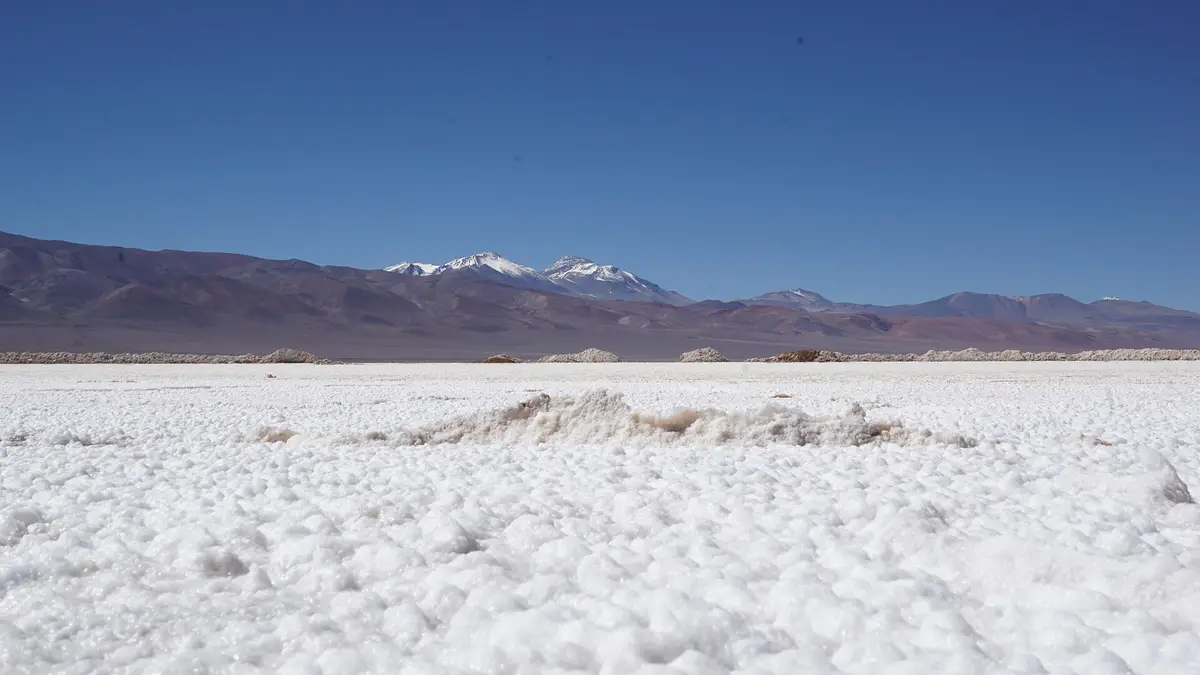
Atacama mining and the shift to seawater
Tiernan's agreement follows a trend that has already reshaped copper mining. According to Cochilco, Chile's copper operations withdrew 8.11 m³/s of seawater in 2025, 36.8% of all the water they use, up from 2.45 m³/s in 2016. The details are in seawater in Chilean mining 2026: consumption, desalination plants and projections.
View the data as a table
| Seawater | Freshwater | |
|---|---|---|
| 2016 | 2.45 m³/s | 13.36 m³/s |
| 2017 | 3.28 m³/s | 13.07 m³/s |
| 2018 | 3.99 m³/s | 13.35 m³/s |
| 2019 | 4.06 m³/s | 11.68 m³/s |
| 2020 | 5.28 m³/s | 12.04 m³/s |
| 2021 | 5.73 m³/s | 12.01 m³/s |
| 2022 | 6.15 m³/s | 11.90 m³/s |
| 2023 | 6.81 m³/s | 12.02 m³/s |
| 2024 | 7.76 m³/s | 14.98 m³/s |
| 2025 | 8.11 m³/s | 13.94 m³/s |
Mining desalination plants already operate in Atacama. Cochilco's inventory lists Candelaria (Lundin Mining), at 500 L/s, since 2013; Mantoverde, at 120 L/s, since 2014; and CAP Minería, at 600 L/s, since 2015, which also sells water to other customers. A 120 L/s supply for Volcán would be the size of the Mantoverde plant.
| Mining desalination plant in Atacama | Operator | Start-up | Capacity (L/s) |
|---|---|---|---|
| CAP Minería plant (also supplies other customers) | CAP Minería | 2015 | 600 |
| Candelaria | Lundin Mining | 2013 | 500 |
| Mantoverde | Mantos Copper | 2014 | 120 |
| Volcán (under evaluation) | Tiernan Gold | — | Up to ~120 |
Source: Cochilco, table 1 of the 2025 water report, and Tiernan Gold. Cochilco only lists plants linked to copper mining; the region's municipal desalination plants, such as Aguas Chañar's in Copiapó, are not on this list.
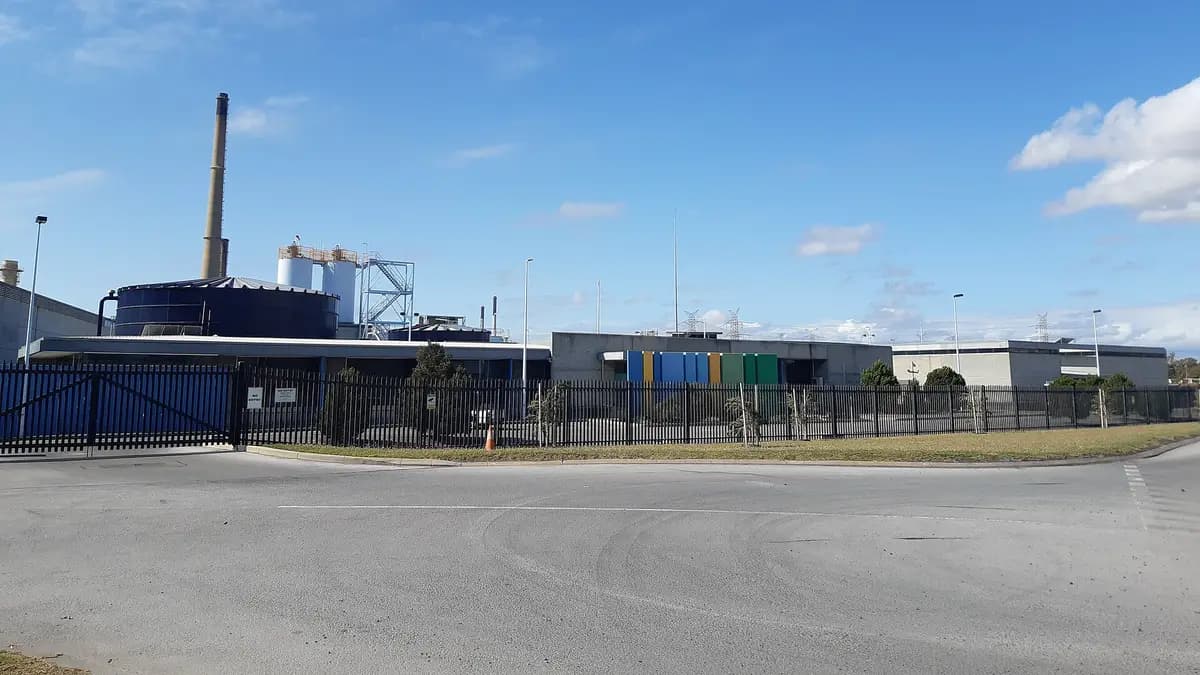
The challenge in Maricunga is distance and altitude. Desalinated water has to be pumped from the coast up to the high Andes, which requires long pipelines and a lot of energy. That is why several operations in the region are evaluating shared schemes, in which a single plant supplies several projects, and why the cost of electricity, increasingly renewable, weighs on the decision.
Energy is the hidden cost of desalinated water. Reverse osmosis uses electricity to push seawater through membranes, and pumping it up to the mountains can consume several times more than the desalination itself. That is why new mining projects seek renewable power contracts for their water systems, a combination the copper industry already uses at its large desalination plants in the north.
Chile's new desalination law
The regulatory context has also changed. Law 21,813, published on May 12, 2026, regulates the use of seawater for desalination, requires plants to go through environmental assessment and prepares a standard for discharging brine, the extra-salty water they return to the sea. The environmental effects of those plants are summarized in the 10 challenges of desalination in mining.
For a high-Andes project, replacing wells with desalinated water reduces pressure on the aquifers that feed salt flats and lagoons, such as Laguna Santa Rosa, in Nevado Tres Cruces National Park, next to the Maricunga Salt Flat. In exchange, it shifts the impact to the coast, where brine and coastal use are under scrutiny: Chile will study how desalination brine from mining affects the sea.
Does your company work in water, desalination or energy for mining? Reach Energía Futura's readers.
See advertising optionsFrequently asked questions
What did Tiernan Gold sign?
A non-binding memorandum of understanding to evaluate a supply of up to about 120 L/s of desalinated water for its Volcán gold project.
Where is the Volcán project?
In the Maricunga belt, in the Andes of Chile's Atacama Region.
How much water does Volcán need?
The earlier preliminary assessment estimated an average of 105 L/s, with a permitted maximum of 170 L/s.
Does the agreement guarantee supply?
No. It is a nine-month evaluation memorandum, extendable, with no price or committed volume. The supplier has not been disclosed.
How much seawater does Chilean mining use?
8.11 m³/s in 2025, 36.8% of its total withdrawal, according to Cochilco. 70.4% of that water is desalinated.