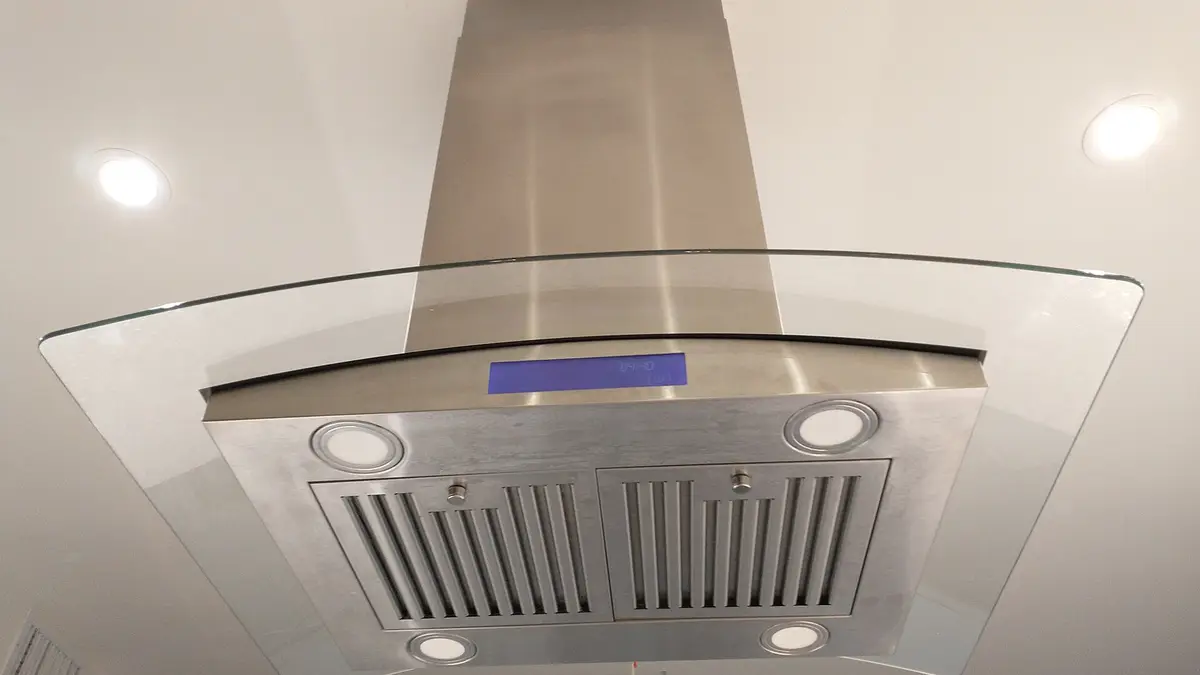
A 110 W range hood, like the Teka TL 6420.2 60 cm telescopic model, costs about CLP 28 per hour at top speed with electricity at CLP 255.27 per kWh (CGE's BT1 residential tariff in force since October 1, 2026). Used one hour a day, it adds up to about CLP 840 a month. A 280 W decorative hood costs two and a half times as much: about CLP 2,140 a month with the same use.
That is a moderate figure, but there is a cost almost nobody looks at: a ducted hood sends outside the air you have already heated or cooled. In winter, the warm air going out through the duct can cost more than the motor itself. In this guide we look at how much electricity a range hood uses, what it costs in pesos, what changes between a ducted and a ductless hood, and which one to choose.
How much electricity a range hood uses: power of real models
A hood's power is the sum of the motor and the lighting. The motor dominates: 60 cm telescopic or slide-out hoods usually have 100 to 150 W motors, and wall-mounted or island chimney hoods, with more airflow, 250 to 300 W. LED lights add only a few watts. The table shows models with their power and maximum extraction airflow.
| Model | Type | Motor power | Maximum airflow | Source |
|---|---|---|---|---|
| Mademsa DM6SS | Slide-out, 60 cm | Not stated | 200 m³/h | Ripley Chile |
| Teka TL 6420.2 | Telescopic, 60 cm | 110 W | 360 m³/h | PcComponentes |
| Mepamsa Línea 60 | Chimney, 60 cm | 140 W | 560 m³/h | MediaMarkt |
| Mepamsa Módena 60 | Conventional, 60 cm, twin motor | 280 W | 400 m³/h | PcComponentes |
| Teka DM 675 | Chimney | 280 W | 603 m³/h | MediaMarkt |
Listings checked on November 3, 2026. Some are from European retailers, because Teka and other brands sell equivalent models in Chile but local stores do not always state the power. Airflow is the maximum stated and is not always measured the same way across brands.
The table shows something important: more watts does not always mean more airflow. The Mepamsa Línea 60 moves 560 m³/h with 140 W, while the Módena 60 moves 400 m³/h with 280 W. The design of the motor and the fan matters as much as the power.
How much a range hood costs in Chilean pesos
The calculation is power in kilowatts times hours of use times the price per kWh. A 110 W hood (0.11 kW) used for one hour consumes 0.11 kWh, which at CLP 255.27 comes to CLP 28. Over 30 days that is 3.3 kWh and CLP 842.
| Motor power | Cost per hour | 30 minutes a day (month) | 1 hour a day (month) | 1.5 hours a day (month) |
|---|---|---|---|---|
| 80 W | CLP 20 | CLP 306 | CLP 613 | CLP 919 |
| 110 W | CLP 28 | CLP 421 | CLP 842 | CLP 1,264 |
| 140 W | CLP 36 | CLP 536 | CLP 1,072 | CLP 1,608 |
| 280 W | CLP 71 | CLP 1,072 | CLP 2,144 | CLP 3,216 |
Energía Futura calculations with electricity at CLP 255.27 per kWh and 30-day months, rounded. They assume top speed the whole time; at speed 1, power use is considerably lower.
In Europe, range hoods carry an energy label under Delegated Regulation (EU) No 65/2014, which calculates annual consumption assuming 60 minutes of motor and 120 minutes of lighting per day. The Teka TL 6420.2, for example, states 55 kWh a year and class C, according to the retailer listing: about CLP 14,000 a year or CLP 1,170 a month at Chilean prices, consistent with the table.
Ducted or ductless range hood: which one to choose
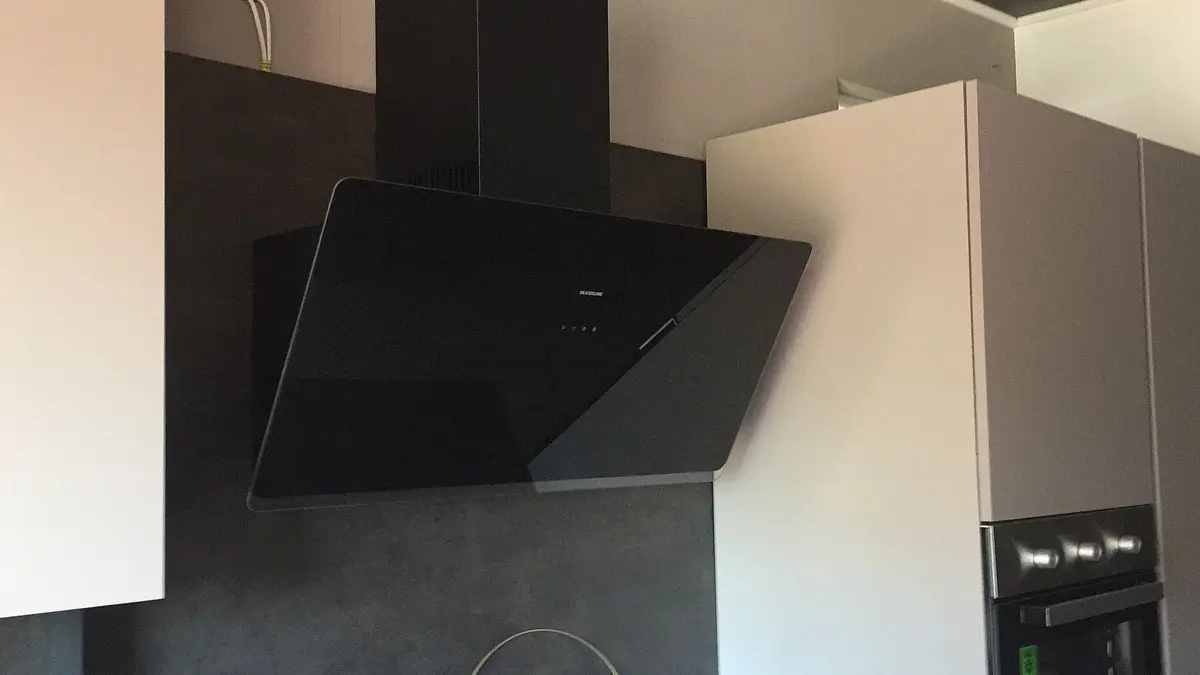
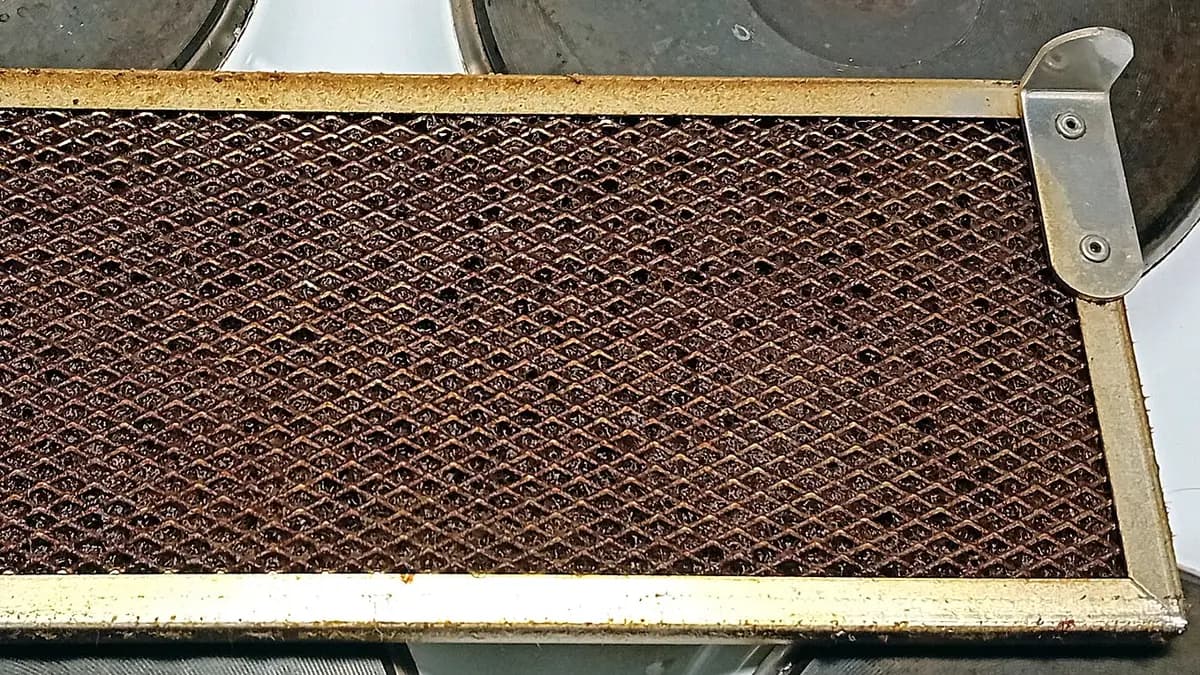
A ducted (extraction) hood sends smoke and steam outside through a pipe. A ductless (recirculating) hood passes them through a grease filter and an activated carbon filter and returns the air to the kitchen. Both use the same power in the motor, but their effect and costs differ.
| Aspect | Ducted (extraction) | Ductless (recirculation) |
|---|---|---|
| Smoke and odors | Go outside | Carbon traps odors; steam and heat stay in |
| Moisture | Removed | Not removed: condensation can increase |
| Installation | Needs an outside vent | Can go on any wall |
| Maintenance | Wash the grease filter | Wash the grease filter and replace the carbon filter |
| Heat loss in winter | Yes: expels heated air | No |
The hidden cost of a ducted hood is the air it expels. A 360 m³/h hood running for an hour removes 360 m³ of air from the house. With 20 °C inside and 10 °C outside, replacing that heat takes about 1.2 kWh, roughly CLP 308 if the home is heated with electricity, according to an Energía Futura calculation based on the properties of air. That is ten times what the motor uses in the same hour.
That does not mean you should pick a ductless hood: in kitchens with gas cooktops or heavy use, venting steam and gases outside is the right thing. What pays off is using the right speed and switching it off when you finish cooking, instead of leaving it running for an hour. If you cook on an electric or induction cooktop, our article on how much electricity an electric stove uses lets you add up both costs.
What size and airflow to choose
The hood should be at least as wide as the cooktop: 60 cm for a standard four-burner stove and 90 cm for wider cooktops. For airflow, a common rule of thumb among manufacturers is that the hood should be able to change the kitchen air 10 to 12 times per hour. A 3 by 3 meter kitchen with a 2.4 meter ceiling holds about 22 m³, so it needs around 220 to 260 m³/h. More airflow than needed only adds noise and expelled warm air.
The hood's lights
A hood's lighting is sometimes used for more hours than the motor, because it lights the cooktop while you cook or tidy up. Current hoods come with LED lights of a few watts, whose monthly cost is measured in tens of pesos. Older ones use halogen bulbs of about 20 to 40 W each, which use several times more for the same light. If your hood is one of those, replacing them with compatible LEDs is a cheap upgrade.
If you cook with gas, the hood also plays a safety role: it helps remove water vapor and combustion gases. In that case it does not pay to stop using it to save money; it pays to use it at the right speed. And if you bake a lot, the oven weighs far more than the hood on the bill, as shown in our article on how much electricity an electric oven uses.
Tips to make it use less
- Turn it on when you start cooking and at low speed: it captures steam better from the start and there is no need to turn it up to maximum.
- Put lids on your pots: less steam means less hood time, and cooking uses less energy too.
- Wash the grease filter every one or two months; a clogged one reduces airflow.
- Replace the carbon filter of ductless hoods when the manufacturer says: once saturated, it no longer traps odors.
- Choose LED lights: if your hood has halogen bulbs, swapping them for equivalent LEDs cuts the lighting consumption.
- Switch it off a few minutes after you finish, not half an hour later.
To work out the cost with your own utility's rate, check the price per kWh in Chile by municipality and utility. With a more expensive kWh, the cost rises by the same proportion.
Do you sell efficient appliances or home energy-saving solutions? Reach Energía Futura's readers.
See advertising optionsFrequently asked questions about power use, ducts and filters
How many watts does a range hood use?
60 cm telescopic hoods usually have 100 to 150 W motors, and wall-mounted or island chimney hoods, 250 to 300 W. LED lights add only a few watts.
How much does a range hood cost per month?
Used one hour a day at top speed with electricity at CLP 255.27 per kWh, between CLP 610 and CLP 2,140 a month depending on motor power.
Which is better, a ducted or a ductless hood?
A ducted hood sends smoke, steam and gases outside and is the best option if there is a vent. A ductless one can be installed anywhere, but it only filters grease and odors: the steam stays in the kitchen and the carbon filter has to be replaced.
Does a range hood use a lot of electricity?
Not in the motor, which costs less than CLP 100 an hour. The bigger cost can be the heat lost in winter when a ducted hood expels heated air.
How often should the hood filter be cleaned?
The metal grease filter should be washed every one or two months with normal use, by hand or in the dishwasher if the manufacturer allows it. The activated carbon filter of ductless hoods cannot be washed: it has to be replaced.