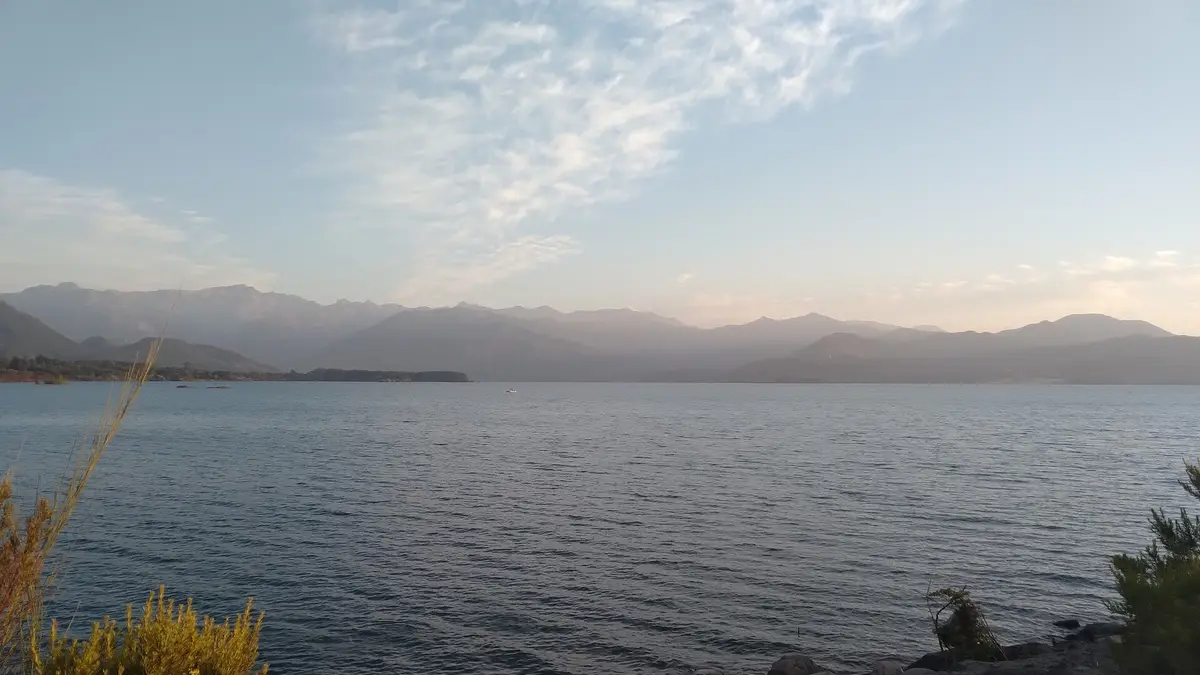
Chile's reservoirs held 7,896 million cubic metres of water on 9 November 2026, 26% more than at the end of November 2025, according to the Hydrometeorological Bulletin of the General Water Directorate (DGA) of the Ministry of Public Works. The figure covers the 25 reservoirs the DGA monitors in nine regions, and equals 62.3% of their total capacity, according to an Energía Futura calculation using each reservoir's data.
After a rainy winter, 9 reservoirs are at 100% or more and in Coquimbo six of them are spilling over. Only one, Peñuelas, in Valparaíso, is below 20%. This guide covers Chile's largest reservoirs, how much water each one holds today, how they filled up in 2026 and what role they play in electricity generation.
View the data as a table
| Water stored in 25 reservoirs | 7,896 million m³ |
| Versus November 2025 | +26% |
| Share of total capacity filled | 62.3% |
| Reservoirs at 100% or more | 9 |
The largest reservoirs in Chile
Lago Laja, in the Biobío Region, is by far the country's largest reservoir: it can store 5,582 million m³, 44% of the capacity of the DGA's 25 reservoirs combined. It is a natural lake whose outflow is regulated to generate electricity at the El Toro plant and to irrigate the Laja valley. It is followed by Colbún (1,544 million m³) and Laguna del Maule (1,359 million), both in Maule, and Ralco (1,174 million), in the Upper Biobío.
| # | Reservoir | Region | Main use | Capacity (million m³) | Water on 9 Nov 2026 | % full |
|---|---|---|---|---|---|---|
| 1 | Lago Laja | Biobío | Power and irrigation | 5,582 | 1,900.8 | 34% |
| 2 | Colbún | Maule | Power | 1,544 | 1,529.1 | 99% |
| 3 | Laguna del Maule | Maule | Power and irrigation | 1,359 | 740.0 | 54% |
| 4 | Ralco | Biobío | Power | 1,174 | 1,153.5 | 98% |
| 5 | La Paloma | Coquimbo | Irrigation | 750 | 652.1 | 87% |
| 6 | Rapel | O'Higgins | Power | 471 | 416.6 | 88% |
| 7 | Convento Viejo | O'Higgins | Irrigation | 237 | 229.0 | 97% |
| 8 | Digua | Maule | Irrigation | 225 | 223.9 | 100% |
| 9 | El Yeso | Metropolitana | Drinking water | 220 | 152.4 | 69% |
| 10 | Puclaro | Coquimbo | Irrigation | 209 | 121.4 | 58% |
Source: DGA, Hydrometeorological Bulletin of 9 November 2026.
According to the DGA, of the 25 reservoirs 64% are used mainly for irrigation, 16% for power generation, 12% for drinking water and 8% are mixed, for power and irrigation. Although the power reservoirs are few, they are the largest: the six reservoirs with generation add up to 10,213 million m³ of capacity, 81% of the total.
| Lago Laja | Biobío | Power and irrigation | 5,582.0 | 1,900.8 | 34% | 1,616.7 |
| Colbún | Maule | Power | 1,544.0 | 1,529.1 | 99% | 1,258.8 |
| Laguna del Maule | Maule | Power and irrigation | 1,359.0 | 740.0 | 54% | 827.7 |
| Ralco | Biobío | Power | 1,174.0 | 1,153.5 | 98% | 766.5 |
| La Paloma | Coquimbo | Irrigation | 750.0 | 652.1 | 87% | 81.9 |
| Rapel | O'Higgins | Power | 471.0 | 416.6 | 88% | 599.3 |
| Convento Viejo | O'Higgins | Irrigation | 237.0 | 229.0 | 97% | 199.1 |
| Digua | Maule | Irrigation | 225.0 | 223.9 | 100% | 178.3 |
| El Yeso | Metropolitana | Drinking water | 220.0 | 152.4 | 69% | 187.2 |
| Puclaro | Coquimbo | Irrigation | 209.0 | 121.4 | 58% | 42.1 |
| Santa Juana | Atacama | Irrigation | 166.0 | 166.0 | 100% | 113.5 |
| Cogotí | Coquimbo | Irrigation | 137.0 | 136.7 | 100% | 36.4 |
| Recoleta | Coquimbo | Irrigation | 100.0 | 100.0 | 100% | 20.5 |
| Peñuelas | Valparaíso | Drinking water | 95.0 | 16.0 | 17% | 9.1 |
| Pangue | Biobío | Power | 83.0 | 82.3 | 99% | 78.1 |
| Bullileo | Maule | Irrigation | 60.0 | 60.0 | 100% | 59.7 |
| Corrales | Coquimbo | Irrigation | 50.0 | 50.0 | 100% | 49.2 |
| La Laguna | Coquimbo | Irrigation | 38.0 | 18.1 | 48% | 17.0 |
| Los Aromos | Valparaíso | Drinking water | 35.0 | 35.0 | 100% | 32.7 |
| Coihueco | Ñuble | Irrigation | 29.3 | 28.2 | 96% | 28.5 |
| El Bato | Coquimbo | Irrigation | 26.0 | 25.5 | 100% | 25.0 |
| Lautaro | Atacama | Irrigation | 23.0 | 15.4 | 68% | 2.7 |
| Conchi | Antofagasta | Irrigation | 22.0 | 18.4 | 84% | 19.7 |
| Tutuvén | Maule | Irrigation | 22.0 | 16.9 | 77% | 7.5 |
| Culimo | Coquimbo | Irrigation | 9.0 | 9.2 | 100% | 5.2 |
How much water Chile's reservoirs hold today
The 9 November snapshot is the best in several years for much of the country. Total volume is 26% above November 2025 (6,262 million m³) and 7% above the sum of each reservoir's 1991-2020 historical averages (7,364 million m³). But the aggregate hides big differences between basins.
Coquimbo shows the most striking change. After years of drought, La Paloma, the region's largest reservoir, holds 652.1 million m³ (87%), when a year earlier it had only 81.9 million. Recoleta, La Paloma, Cogotí, Culimo, El Bato and Corrales are spilling over. In Valparaíso, Los Aromos, key for Greater Valparaíso's drinking water, is full, but Peñuelas has just 16 million m³, 17% of its capacity.
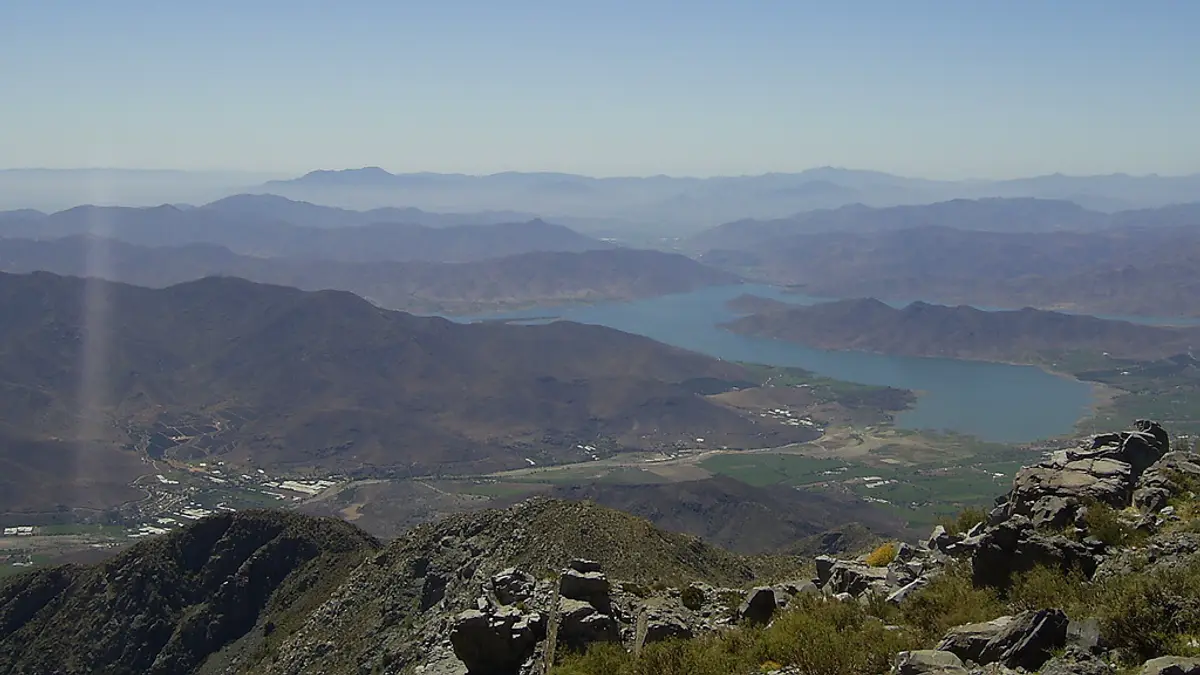
In the centre and south, the big power reservoirs are almost full: Colbún at 99%, Ralco at 98% and Pangue at 99%. The exception is Lago Laja, which holds 1,900.8 million m³, just 34% of its capacity, though above the 1,616.7 million of a year ago. Because of its size, the Laja takes several years of heavy rain to recover.
View the data as a table
| Biobío | 3,137 |
| Maule | 2,570 |
| Coquimbo | 1,113 |
| O'Higgins | 646 |
| Atacama | 181 |
| Metropolitana | 152 |
| Valparaíso | 51 |
| Ñuble | 28 |
| Antofagasta | 18 |
| Region | Reservoirs | Water on 9 Nov 2026 (million m³) | Capacity (million m³) | % full |
|---|---|---|---|---|
| Antofagasta | 1 | 18.4 | 22 | 84% |
| Atacama | 2 | 181.4 | 189 | 96% |
| Coquimbo | 8 | 1,113.0 | 1,319 | 84% |
| Valparaíso | 2 | 51.0 | 130 | 39% |
| Metropolitana | 1 | 152.4 | 220 | 69% |
| O'Higgins | 2 | 645.6 | 708 | 91% |
| Maule | 5 | 2,569.9 | 3,210 | 80% |
| Ñuble | 1 | 28.2 | 29.3 | 96% |
| Biobío | 3 | 3,136.6 | 6,839 | 46% |
Source: DGA. Regional sums and shares calculated by Energía Futura from each reservoir's data.
In the Metropolitan Region, the only reservoir in the bulletin is El Yeso, in the Cajón del Maipo, Santiago's main drinking-water reserve. It holds 152.4 million m³, 69% of its capacity, slightly less than the 187.2 million of November 2025, because the water utility uses it to secure supply over the summer. In O'Higgins, Convento Viejo is at 97% and Rapel, used for power, at 88%. In Maule, the five reservoirs hold 2,569.9 million m³, 80% of capacity, with Bullileo and Digua full.
In the north, Santa Juana, in the Huasco valley, is at 100%, and Lautaro, on the Copiapó, at 68%, compared with just 2.7 million m³ a year ago. Conchi, Antofagasta's only reservoir in the bulletin, on the Loa river, is at 84%.
How the reservoirs filled up in 2026
The DGA's weekly bulletins show the whole cycle of the year. Reservoirs started January with 5,930 million m³ and fell through summer and autumn because of irrigation and power generation, to a low of 3,557 million on 6 July. The July rains changed everything: in three weeks volume rose to 5,214 million and in August it passed 6,000 million, above the previous year. Since then the snowmelt has kept adding water.
View the data as a table
| 2026 | Same month of 2025 | |
|---|---|---|
| 5 Jan | 5,930 | 6,787 |
| 2 Feb | 5,346 | 6,128 |
| 2 Mar | 4,757 | 5,567 |
| 6 Apr | 4,515 | 5,069 |
| 4 May | 4,221 | 4,779 |
| 1 Jun | 3,998 | 4,569 |
| 6 Jul | 3,557 | 4,706 |
| 3 Aug | 6,159 | 5,244 |
| 7 Sep | 6,956 | 5,675 |
| 5 Oct | 7,417 | 6,001 |
| 9 Nov | 7,896 | 6,262 |
Snowpack is also favourable. The DGA's October bulletin reported an average snow surplus in several basins, which points to good meltwater flows for the irrigation season and for run-of-river plants in spring and summer.
Does your company work in hydropower, irrigation, water management or renewable energy? Reach Energía Futura's readers.
See advertising optionsChile's reservoirs and electricity
Reservoirs are the power system's natural batteries: they store water to generate when it is most needed, at night or in winter. The National Electricity System had 3,532 MW of reservoir hydro plants and 3,981 MW of run-of-river plants, which use the river's flow without storing it, according to the CNE as of July 2026, via the Generadoras de Chile bulletin. Together they account for about 19% of the country's capacity.
The six power reservoirs in the bulletin feed plants such as Ralco and Pangue on the Biobío, Colbún and Machicura in Maule, Rapel in O'Higgins and El Toro, which takes its water from Lago Laja. Ralco is Chile's largest hydro plant; how it compares with the giants of China and Brazil is in our ranking of the largest hydroelectric plant in the world.
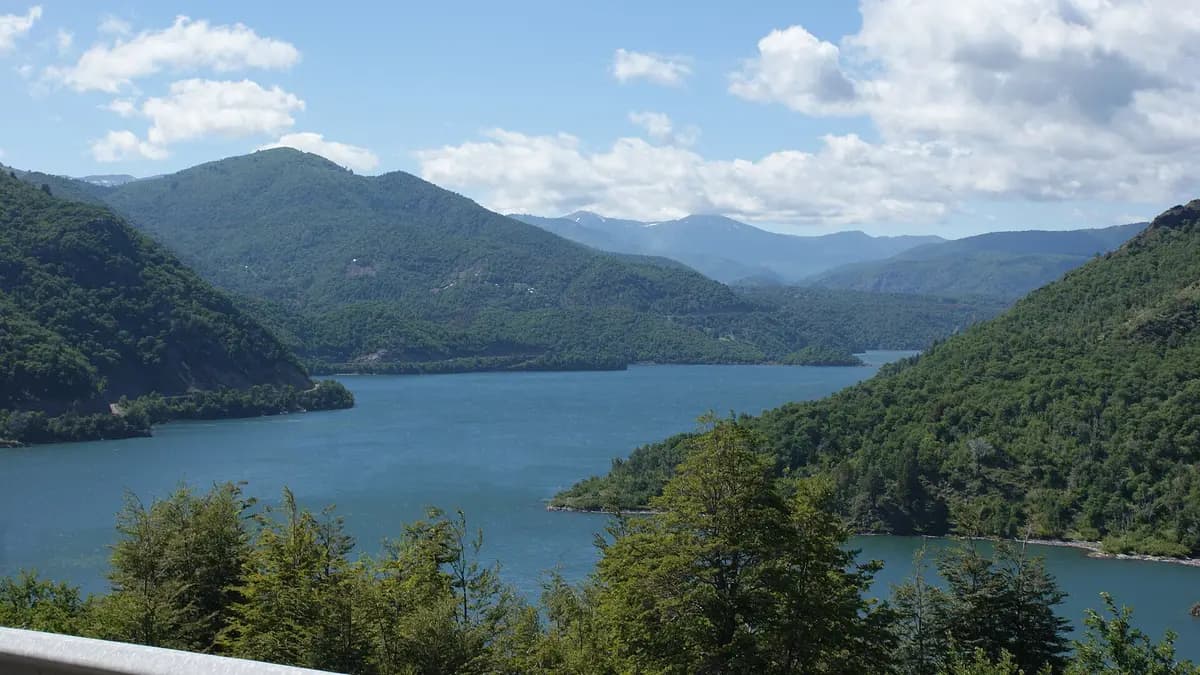
Chile's hydroelectric generation, reservoir and run-of-river combined, reached 26 TWh in 2024, one of the best years on record, and fell to 19.7 TWh in 2025, 22.2% of the country's electricity, because of a drier year, according to Ember. With reservoirs full in 2026, water is weighing in again: in October, renewable generation passed 90% for the first time in a month, as we reported in the renewable generation record.
View the data as a table
| Hydropower | |
|---|---|
| 2000 | 20 |
| 2001 | 21 |
| 2002 | 22 |
| 2003 | 21 |
| 2004 | 22 |
| 2005 | 26 |
| 2006 | 29 |
| 2007 | 23 |
| 2008 | 24 |
| 2009 | 25 |
| 2010 | 22 |
| 2011 | 21 |
| 2012 | 20 |
| 2013 | 20 |
| 2014 | 23 |
| 2015 | 23 |
| 2016 | 23 |
| 2017 | 21 |
| 2018 | 23 |
| 2019 | 22 |
| 2020 | 22 |
| 2021 | 19 |
| 2022 | 21 |
| 2023 | 23 |
| 2024 | 26 |
| 2025 | 20 |
Stored water is not used only for electricity: in mixed reservoirs, such as the Laja and Laguna del Maule, agreements between generators and irrigators set how much water is released and when. How much Chile's hydropower weighs compared with other countries can be seen in our ranking of countries with the most hydropower.
Where to check reservoir levels today
Every week the DGA publishes a Hydrometeorological Bulletin with the volume of the 25 reservoirs, the comparison with the previous year and the historical average, accumulated rainfall and snow, on its bulletins page. Daily data by station are in the National Water Bank. Energía Futura will update this guide with the next bulletins.
Frequently asked questions
What is the largest reservoir in Chile?
Lago Laja, in Biobío, with a capacity of 5,582 million m³, 44% of the 25 reservoirs monitored by the DGA. It is followed by Colbún, Laguna del Maule and Ralco.
How much water do Chile's reservoirs hold today?
7,896 million m³ on 9 November 2026, 26% more than in November 2025 and 62.3% of their total capacity.
Which reservoirs are lowest?
Peñuelas, in Valparaíso, at 17%, the only one below 20%. Lago Laja (34%) and La Laguna, in Coquimbo (48%), are also below half.
How many reservoirs are there in Chile?
The DGA monitors 25 reservoirs in nine regions, the country's main ones. There are also many smaller irrigation ponds and reservoirs that are not in its bulletin.
How much electricity do the reservoirs generate?
Reservoir plants total 3,532 MW in the National Electricity System (CNE, July 2026). All of Chile's hydropower, reservoir and run-of-river, generated 19.7 TWh in 2025, according to Ember.