A hand mixer of 250 W costs at most about CLP 11 per 10 minutes of use, and a stand mixer of 1,000 W about CLP 43, with electricity at CLP 255.27 per kWh (CGE's BT1 residential tariff in force since October 1, 2026). If you bake twice a week with 15 minutes of mixing each time, the 1,000 W stand mixer adds up to about CLP 511 a month. That is little for the power bill, but the oven you finish the recipe in uses far more.
In this guide we look at how much electricity a mixer uses by type and power, what a cake, a meringue or a bread dough costs in pesos, and what to look for when choosing between a hand mixer and a stand mixer.
How much electricity a mixer uses: hand and stand mixers
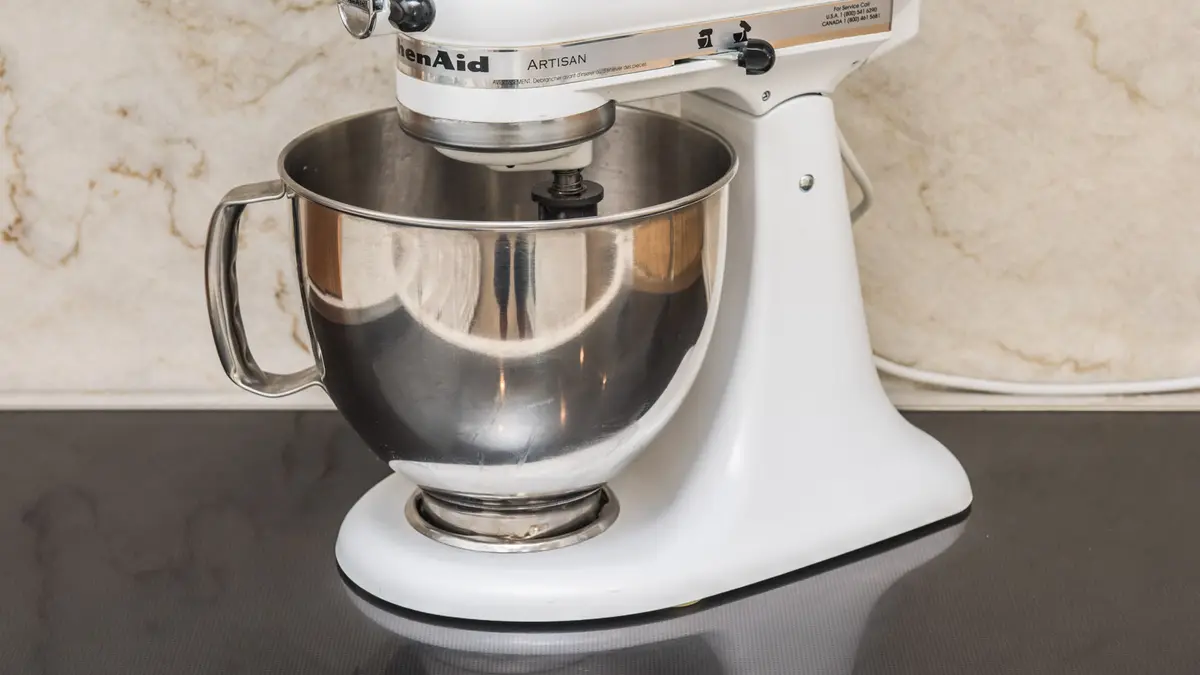
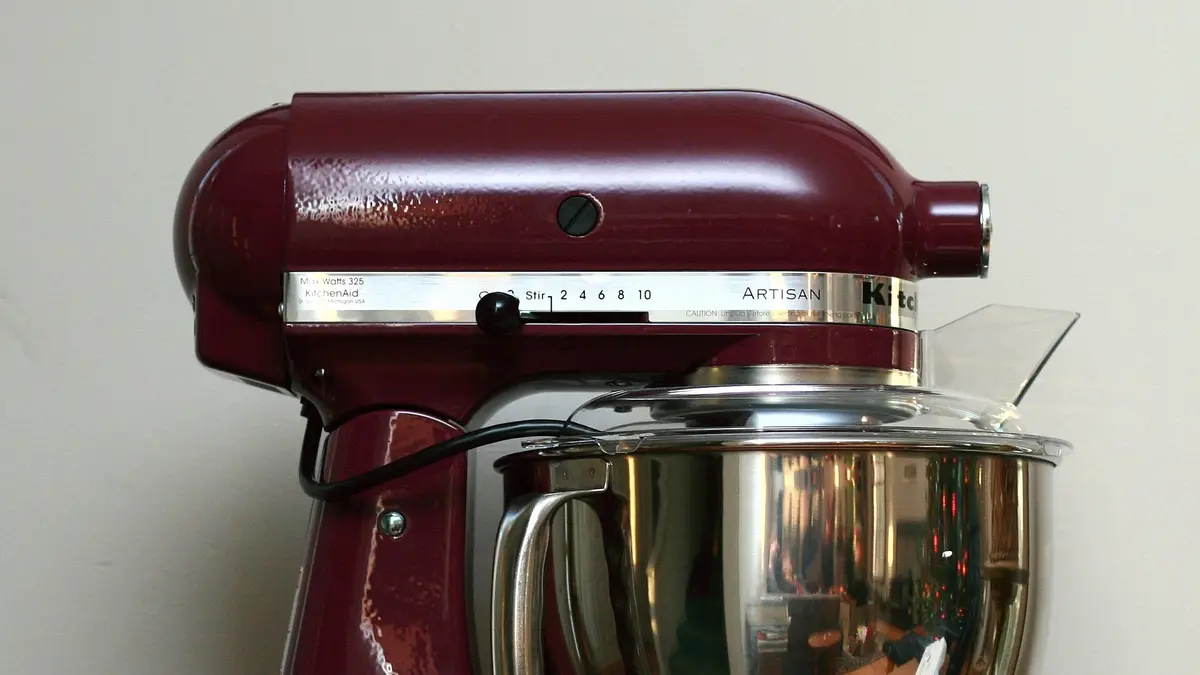
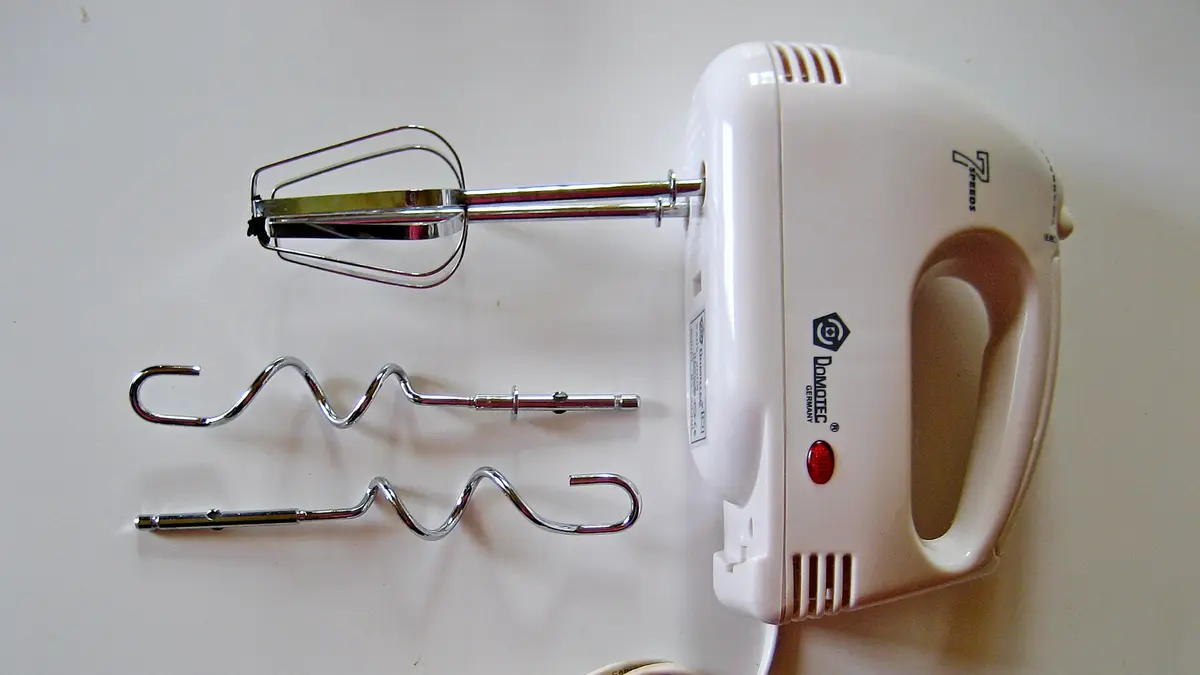
Hand mixers have 200 to 450 W motors and handle light mixtures: creams, meringues, cakes. Stand mixers, with 3 to 6 liter bowls, range from about 300 to 1,000 W for home use and can handle heavy doughs such as bread. Semi-professional models, with 10 to 20 liter bowls, exceed 1,000 W. The table shows models with their power and price on Solotodo as of November 2, 2026.
| Model | Type | Power | Bowl | Price on Solotodo |
|---|---|---|---|---|
| Oster 3532 | Hand | 250 W | — | CLP 13,993 |
| Oster 2612 | Hand | 250 W | — | CLP 18,990 |
| Thomas TH-8832M | Hand | 300 W | — | CLP 13,491 |
| Sindelen B-5020IN | Hand | 450 W | — | CLP 17,990 |
| Hamilton Beach 64650-CL | Stand | 290 W | 3.8 L | CLP 13,990 |
| Sindelen B-5300IN | Stand | 300 W | 2.6 L | CLP 29,990 |
| KitchenAid KSM150PSEER | Stand | 300 W | 4.8 L | CLP 429,990 |
| Ursus Trotter UT-KLEIN700 | Stand | 700 W | 4.5 L | CLP 59,990 |
| Oster FPSTSMPL4W | Stand | 750 W | 5.2 L | CLP 236,990 |
| Bosch MUMS2VM00 | Stand | 900 W | 3.8 L | CLP 189,990 |
| Thomas TH-915PND | Stand | 1,000 W | 5 L | CLP 69,990 |
| Maigas SC-265DN | Stand | 1,000 W | 5 L | CLP 117,990 |
Source: Solotodo listings checked on November 2, 2026. Prices change by store and promotion. Power is the maximum stated by each manufacturer.
Be careful comparing only watts. KitchenAid, one of the best-selling stand mixers in the world, lists 300 W and handles heavy doughs thanks to its direct drive. Other brands list 1,000 W or more. Watts indicate how much electricity the motor can draw, not how much force it delivers in the bowl: that also depends on motor design and gearing.
How much a mixer costs to run in pesos
Using the usual formula, power in kW times hours times the price per kWh, a 1,000 W mixer running 10 minutes uses 0.17 kWh and costs CLP 43. The table summarizes the cost per 10 minutes and per month, with two baking sessions a week of 15 minutes of mixing each (about 2 hours a month).
| Mixer power | Energy in 10 minutes | Cost per 10 minutes | 2 hours of use a month |
|---|---|---|---|
| 250 W (hand) | 0.042 kWh | CLP 11 | CLP 128 |
| 300 W (hand or stand) | 0.050 kWh | CLP 13 | CLP 153 |
| 450 W | 0.075 kWh | CLP 19 | CLP 230 |
| 750 W (stand) | 0.125 kWh | CLP 32 | CLP 383 |
| 1,000 W (stand) | 0.167 kWh | CLP 43 | CLP 511 |
Energía Futura calculations with electricity at CLP 255.27 per kWh, rounded. They assume maximum power the whole time; at low speeds the motor uses less, so actual cost is lower.
Over a year, at the same pace of two hours a month, a 1,000 W stand mixer uses about 24 kWh and costs about CLP 6,130, and a 250 W hand mixer about 6 kWh and CLP 1,530. The annual difference between them is less than the price of a kilo of butter, so the choice should be driven by the recipes you make, kitchen space and budget, not the power bill. Mixers have no meaningful standby use: with no display or clock, they draw nothing when off.
What each recipe costs: the mixer versus the oven
In baking, the mixer is the cheap part. An electric oven, usually around 2,000 W and running 40 to 60 minutes, uses many times more. The table compares the cost of mixing with a 750 W stand mixer and baking in a 2,000 W electric oven.
| Recipe | Mixing | Mixing cost | Baking | Baking cost |
|---|---|---|---|---|
| Pound cake | 5 minutes | CLP 16 | 45 minutes | CLP 383 |
| Meringue or whipped cream | 8 minutes | CLP 26 | — | — |
| Bread dough (kneading) | 10 minutes | CLP 32 | 40 minutes | CLP 340 |
| Sponge cake | 10 minutes | CLP 32 | 35 minutes | CLP 298 |
Energía Futura calculations with electricity at CLP 255.27 per kWh. The oven is calculated at full power, although its thermostat cycles off at times; times are typical assumptions. The oven's comparison with other appliances is in our guide on how much electricity an electric oven uses.
The conclusion is the same as with other short-use kitchen appliances: the mixer barely moves the bill. If you want to save on baking, the margin is in the oven: bake two things at once, do not open the door and use the residual heat. The same applies to the blender, which we covered in our guide on how much electricity a blender uses.
The mixer compared with other kitchen appliances
To place the mixer on the power bill, the table compares its monthly cost with other kitchen appliances, with typical use and electricity at CLP 255.27 per kWh.
| Appliance | Typical power | Assumed use per month | Cost per month |
|---|---|---|---|
| Hand mixer | 250 W | 2 hours | CLP 128 |
| Stand mixer | 1,000 W | 2 hours | CLP 511 |
| Blender | 1,100 W | 30 minutes | CLP 140 |
| Electric kettle | 2,000 W | 5 hours (about 10 minutes a day) | CLP 2,553 |
| Electric oven | 2,000 W | 8 hours | CLP 4,084 |
Energía Futura calculations at maximum power, rounded. Uses are assumptions to compare orders of magnitude; actual cost depends on each household. Appliances that heat water or air are the ones that weigh on the bill, not those that just run a motor for a few minutes.
Which mixer to choose: stand or hand
- For occasional creams, meringues and cakes: a hand mixer of 250 to 300 W is enough. It costs from about CLP 13,000 and takes little space.
- For frequent baking or bread dough: a stand mixer with a 4 to 5 liter bowl. It frees your hands and handles heavy mixtures.
- For bread dough every week: look for a stand mixer with a dough hook and a sturdy motor; check reviews of its performance with heavy doughs, not just the watts.
- For home production for sale (cakes, bread): semi-professional 10 to 20 liter models, with motors over 1,000 W, costing more than CLP 400,000.
The immersion blender
The immersion blender, known in Chile as a minipimer, is a different appliance: a wand with blades that goes into the pot or cup. It ranges from 250 to 1,000 W, like the 250 W Oster 2609 or the 1,000 W Moulinex DD655810, and runs for seconds. Its cost is even lower than a blender's: less than CLP 5 per use even in the most powerful models.
Tips for using a mixer without overspending
- Start at low speed and increase gradually: the motor works less and the mixture does not splatter.
- Do not overload the bowl: respect the maximum dough capacity in the manual, especially with flour.
- Let the motor rest if it feels hot while kneading; most have thermal protection.
- Use ingredients at room temperature: cold butter strains the motor.
- Use the right attachment: whisk for whipping, paddle for mixing and hook for kneading.
To calculate the cost with your distributor's rate, see the price per kWh in Chile by municipality.
Do you sell kitchen appliances or home efficiency solutions? Reach Energía Futura's readers.
See advertising optionsFrequently asked questions about how much electricity a mixer uses
How many watts does a mixer have?
Hand mixers have 200 to 450 W and home stand mixers 300 to 1,000 W. Semi-professional models exceed 1,000 W.
How much does a mixer cost per month?
With two hours of use a month, between CLP 128 (250 W hand mixer) and CLP 511 (1,000 W stand mixer), with electricity at CLP 255.27 per kWh.
Is a higher-wattage stand mixer better?
Not necessarily. Watts measure electricity use, not force in the bowl. Some 300 W models knead better than others rated at 1,000 W.
Which uses more, the mixer or the oven?
The oven, by far. Baking a pound cake in a 2,000 W electric oven costs about CLP 383; mixing it, about CLP 16.