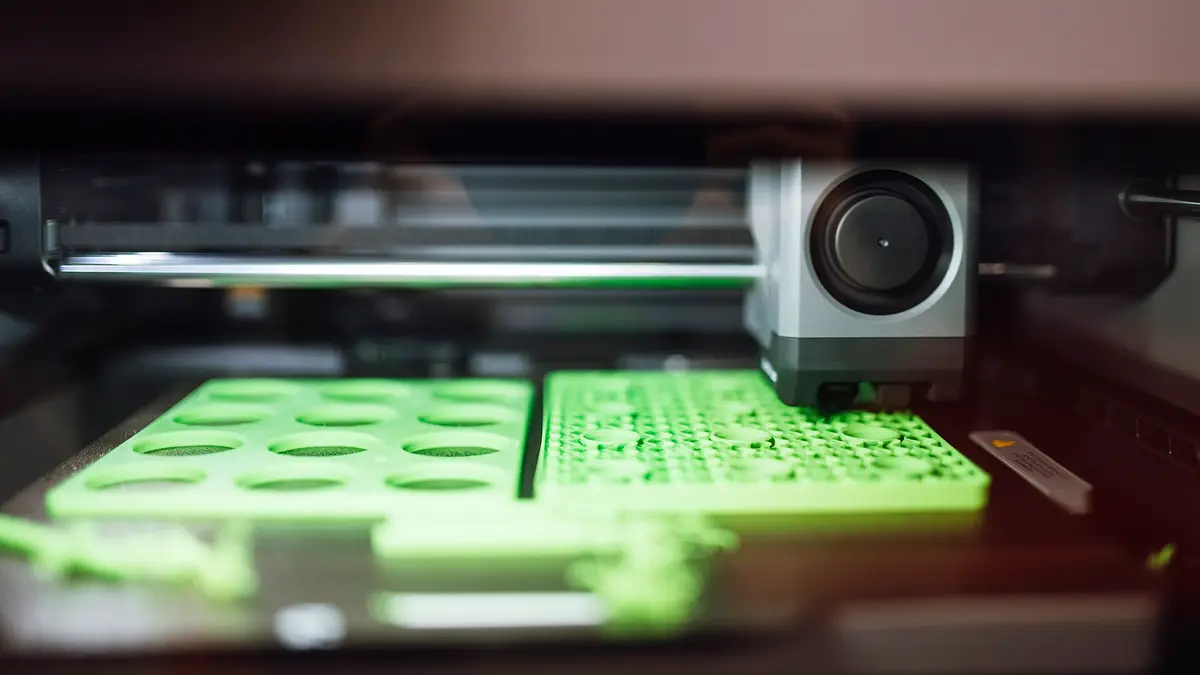
A desktop 3D printer uses less electricity than it seems. The Bambu Lab A1 mini, one of the best sellers, averages 80 W printing PLA, according to the measurements the manufacturer publishes on its power consumption wiki page. With electricity at CLP 255.27 per kWh (CGE's BT1 residential tariff in force since October 1, 2026), that is about CLP 20 per hour. A 5-hour print on a Bambu Lab P1S (105 W) costs about CLP 134 in electricity.
Power use varies a lot with the material, because what uses the most energy is heating: the nozzle, the bed and, in high-end enclosed models, the chamber. In this guide we look at how much electricity a 3D printer uses by model and material, what each print costs in pesos, how resin printers compare and the energy that goes to waste when nothing is printing.
How much electricity a 3D printer uses: measurements by model and material
Bambu Lab publishes the measured average power of each printer with different materials, which allows a comparison with real data rather than the maximum rating of the power supply. The table sums up those measurements.
| Printer | PLA | PETG | ABS | PC | Standby on Wi-Fi |
|---|---|---|---|---|---|
| Bambu Lab A1 mini | 80 W | 75 W | — | — | 6.1 to 7.3 W |
| Bambu Lab A1 | 95 W | — | 200 W | 150 W | 4.1 to 5.4 W |
| Bambu Lab P1P | 110 W | — | 170 W | 160 W | 5 to 5.6 W |
| Bambu Lab P1S | 105 W | — | 140 W | 135 W | 5.8 to 6 W |
| Bambu Lab X1 Carbon | 105 W | — | 150 W | 135 W | 8.7 to 9.9 W |
| Bambu Lab P2S | 200 W | — | — | — | 7.8 to 8.2 W |
| Bambu Lab H2D | 197 W | 150 W | — | 395 W | 25 to 27 W |
Source: Bambu Lab wiki, printer and AMS power parameters, checked on November 3, 2026. These are average printing powers at 220 V; the maximum power of the supply is much higher (for example, 1,000 W on the X1 and P1 series and 150 W on the A1 mini) and is only reached during the initial heat-up.
Two things stand out. First, engineering materials such as ABS and polycarbonate (PC) need a hotter nozzle and bed, and average power rises to as much as double. Second, newer and larger printers, such as the dual-nozzle H2D, use around 200 W even with PLA.
How much a 3D printer costs in Chilean pesos
The calculation is average power in kilowatts times printing hours times the price per kWh. A P1S printing PLA at 105 W (0.105 kW) for 5 hours uses 0.525 kWh, which at CLP 255.27 comes to CLP 134.
| Printer and material | Cost per hour | 5-hour print | 60 hours a month (2 h a day) |
|---|---|---|---|
| A1 mini, PLA (80 W) | CLP 20 | CLP 102 | CLP 1,225 |
| A1, PLA (95 W) | CLP 24 | CLP 121 | CLP 1,455 |
| P1S, PLA (105 W) | CLP 27 | CLP 134 | CLP 1,608 |
| X1 Carbon, ABS (150 W) | CLP 38 | CLP 191 | CLP 2,297 |
| A1, ABS (200 W) | CLP 51 | CLP 255 | CLP 3,063 |
| H2D, PLA (197 W) | CLP 50 | CLP 251 | CLP 3,017 |
| H2D, PC (395 W) | CLP 101 | CLP 504 | CLP 6,050 |
Energía Futura calculations with Bambu Lab's average power figures, electricity at CLP 255.27 per kWh and 30-day months, rounded.
To put it in perspective, printing PLA two hours a day on a printer of about 100 W adds up to roughly 6 kWh a month, less than a desktop computer used several hours a day. Our article on how much electricity a gaming PC and a laptop use has the comparison. For almost every part, the filament weighs more than electricity in the total cost.
Filament or resin 3D printer: which uses less
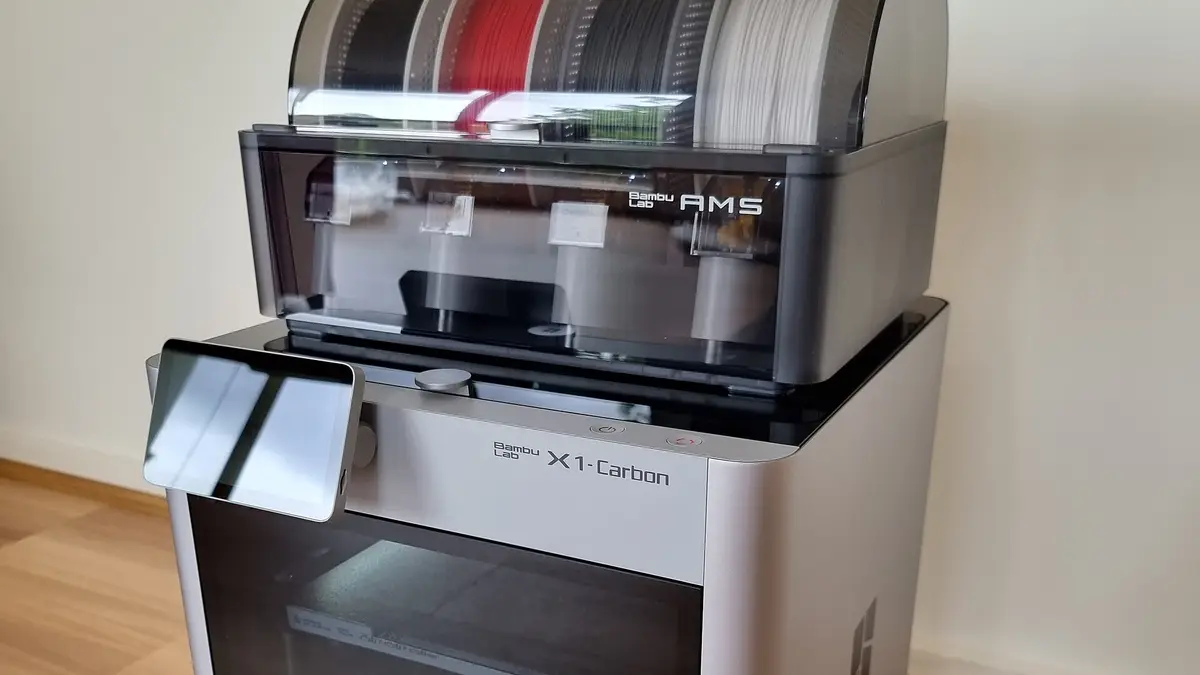
Resin (MSLA) printers do not heat a nozzle or a bed: they cure layers of liquid resin with a screen and an ultraviolet light. That is why their power is moderate. The Anycubic Photon Mono M5s, for example, has a total rated power of 110 W, according to the manufacturer's FAQ page. With that ceiling, an hour costs at most CLP 28.
| Aspect | Filament (FDM) | Resin (MSLA) |
|---|---|---|
| What uses energy | Nozzle, heated bed, motors and fans | UV light, screen and Z-axis motor |
| Typical power | 80 to 200 W with PLA; more with ABS or PC | Up to about 110 W rated on a desktop model |
| Extra consumption | Filament dryer, if used | Wash and cure station after each print |
| Material cost | Filament per kilo | Resin per liter, plus alcohol for washing |
| Typical use | Functional parts, prototypes | Miniatures and highly detailed parts |
In electricity terms, both technologies are in the same order of magnitude: tens of pesos per hour. The choice is made by the type of part, not by the power bill. Resin does add washing and curing, and it requires ventilation because of the fumes.
Standby consumption, when nothing is printing
A detail that often goes unnoticed: many printers stay switched on and connected to Wi-Fi between prints. According to Bambu Lab, a P1S on standby uses 5.8 to 6 W and an X1 Carbon, 8.7 to 9.9 W. A 6 W printer left on all month without printing adds up to 4.3 kWh, about CLP 1,100: almost the same as printing two hours a day on an A1 mini.
The H2D, at 25 to 27 W on standby, reaches about 19 kWh a month if it is never switched off, more than 10% of what a typical household uses according to our article on how much electricity a home in Chile uses each month. Turning it off at the switch or with a smart plug when it is not in use is the simplest saving.
Why enclosed printers can use less
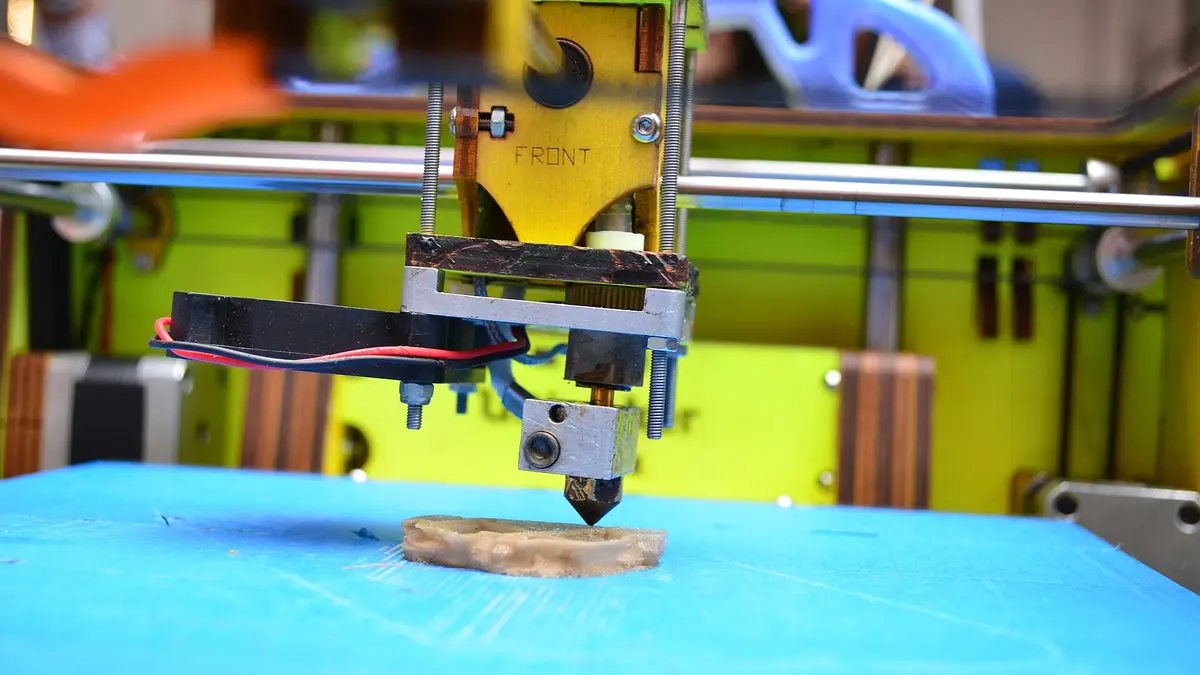
A printer with an enclosure, such as the P1S or the X1 Carbon, keeps the bed's heat inside the chamber. With PLA they average the same as an open printer, but with ABS the enclosed P1S (140 W) uses less than the open A1 (200 W), according to the manufacturer's measurements. Heat that is not lost does not need to be replaced.
How electricity compares with material
In a typical PLA print, electricity costs in the order of CLP 20 to 30 per hour. The filament laid down in that same hour usually costs considerably more, especially on parts with heavy infill. That is why the cost calculators in slicer programs such as PrusaSlicer or Bambu Studio ask for the filament price first and leave electricity as an optional input. For anyone printing to order, electricity is a minor part of the price, although it is worth including for long prints with engineering materials.
Tips to make it use less
- Switch it off between prints or use a smart plug that cuts the power when the job is done.
- Set the bed temperature to what the material needs: PLA is usually fine at 55 to 60 °C.
- Print in a temperate room: in winter, a cold draft forces the bed to heat more.
- Group parts in a single print: the initial heat-up, the moment of peak power, is paid only once.
- Dry filament only when needed: dryers add their own consumption.
To work out the cost with your own utility's rate, check the price per kWh in Chile by municipality and utility. With a more expensive kWh, every cost rises by the same proportion.
Do you sell technology, 3D printers or energy-saving solutions? Reach Energía Futura's readers.
See advertising optionsFrequently asked questions about power use and cost per print
How many watts does a 3D printer use?
Printing PLA, between 80 and 110 W on average for Bambu Lab's desktop models, and about 200 W for large ones such as the H2D or the P2S. With ABS or PC, between 135 and 395 W.
How much does a 3D print cost in electricity?
With electricity at CLP 255.27 per kWh, a 5-hour PLA print costs between CLP 100 and CLP 250 depending on the printer. With PC on an H2D, about CLP 500.
Does a resin printer use more than a filament printer?
They are in the same range. A desktop resin printer has a rated power of around 110 W; a filament printer running PLA, an average of 80 to 110 W. The real difference is in the cost of the material.
Can a 3D printer be left on?
Yes, but it keeps using power on standby: 4 to 10 W for most Bambu Lab models and up to 27 W for the H2D. Switching it off when done saves up to about CLP 1,000 a month.
How much electricity does a filament dryer use?
According to Bambu Lab, its AMS 2 Pro uses 80 W in drying mode and the AMS HT, 170 W. A drying cycle of several hours can cost more than the print itself, so it is best used only with materials that absorb moisture.