Canadian miner Capstone Copper announced on Monday, October 26, 2026 an investment plan of more than US$3 billion in Chile over the next four years, aimed at doubling its copper production in the country by 2031. The announcement was made during a visit by President José Antonio Kast and the minister of Economy and Mining, Daniel Mas, to the Mantoverde operation in the Atacama Region, according to Minería Chilena and BioBioChile.
Beyond the amount, Capstone Copper's investment has two components that bring it closer to sustainable mining: the production of cobalt, a key metal for lithium batteries, and a project that will cut sulfuric acid use at Mantoverde by about 20%. The company also runs that operation on desalinated seawater.
Capstone Copper's investment, item by item
In Chile, Capstone operates Mantos Blancos, in the Antofagasta Region, and Mantoverde, in Atacama, and is developing the Santo Domingo project, also in Atacama. According to the breakdown provided by the company, most of the money goes to that last project.
| Use of the investment | Amount | Region |
|---|---|---|
| Santo Domingo project | at least US$2.3 billion | Atacama |
| Mantoverde Optimized and Mantoverde Pyrite Augmentation (MVPA) | US$220 million | Atacama |
| 2026 mine development | US$160-165 million | Antofagasta and Atacama |
| 2026 sustaining capital | US$150 million | Antofagasta and Atacama |
| Exploration | US$70 million | — |
| Total announced | more than US$3 billion | — |
The itemized amounts add up to about US$2.9 billion; the company speaks of "more than US$3 billion" without breaking down the difference. The mine development item appears as US$165 million in Minería Chilena and as US$160 million in BioBioChile. Capstone has already invested about US$2.2 billion in Chile, mainly to turn old, high-cost deposits into long-life operations.
Santo Domingo: copper, iron and cobalt in Atacama
Santo Domingo is 35 km from Mantoverde and about 130 km north-northeast of Copiapó. It already has environmental approval and will be the company's first greenfield project. According to Capstone, it will have a 19-year mine life and produce about 106,000 tonnes of copper per year in its first seven years, plus 3.7 million tonnes of high-grade iron ore.
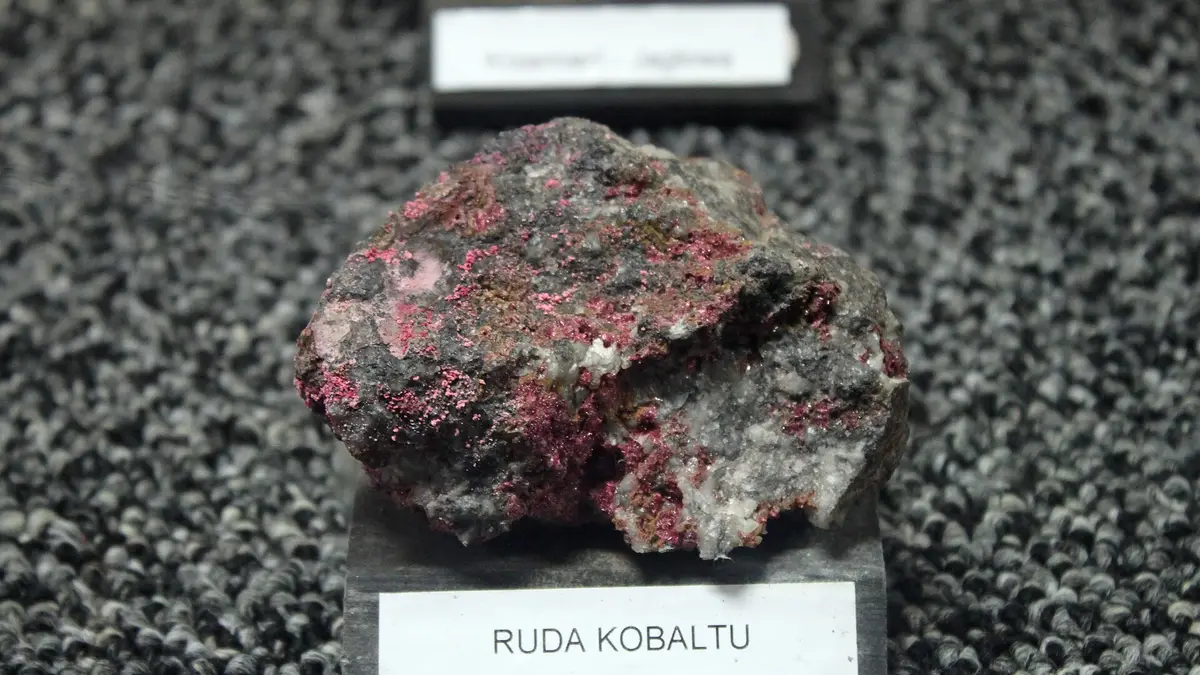
The most relevant piece for the energy transition is cobalt. Capstone estimates that the Mantoverde-Santo Domingo district could produce between 4,500 and 6,000 tonnes of cobalt per year, and describes it as one of the largest and lowest-cost cobalt projects in the Western Hemisphere. Today the market depends on a single country: according to the US Geological Survey (USGS) 2026 cobalt summary, the Democratic Republic of the Congo supplied about 73% of the world's mined cobalt in 2025 and Indonesia, 14%.
| Cobalt: key figure | Value | Source |
|---|---|---|
| Congo's share of world mined cobalt (2025) | 73% | USGS 2026 |
| Indonesia's share (2025) | 14% | USGS 2026 |
| Congo's export quota for 2026 and 2027 | up to 96,600 t per year | USGS 2026 |
| Potential output of the Mantoverde-Santo Domingo district | 4,500 to 6,000 t per year | Capstone Copper |
Congo temporarily banned cobalt exports in February 2025 and later replaced the ban with quotas, which pushed up the price of the metal and increased interest in alternative sources. Chile, the world's leading copper producer, as shown in the ranking of the world's largest copper producers, is not currently among the relevant cobalt producers.
What Capstone Copper's investment funds at Mantoverde
At Mantoverde, Capstone Copper's investment funds two short-term projects. Mantoverde Optimized, under construction, will raise the concentrator's capacity from 32,000 to 45,000 tonnes of ore per day and extend the mine's life from 19 to 25 years. The original concentrator, a project of about US$870 million, reached full capacity at the end of 2024, according to Mining Weekly.
The second is Mantoverde Pyrite Augmentation (MVPA), approved by the board in July. According to the company, it will cut the operation's sulfuric acid consumption by about 20% and add some 3,500 tonnes of copper cathodes per year, with start-up expected in early 2028. Sulfuric acid is a critical input for copper leaching, and Chile increasingly depends on imports of it.
| Project | What it does | Timing |
|---|---|---|
| Mantoverde Optimized | Concentrator from 32,000 to 45,000 t/day; life from 19 to 25 years | Under construction |
| Mantoverde Pyrite Augmentation | -20% sulfuric acid; +3,500 t/year of cathodes | Early 2028 |
| Mantos Blancos | Life extension to 2041 (submitted to the SEIA in June) | Under review |
| Santo Domingo | 106,000 t/year of copper, plus cobalt | No construction date announced |
Desalinated water and what the announcement leaves out
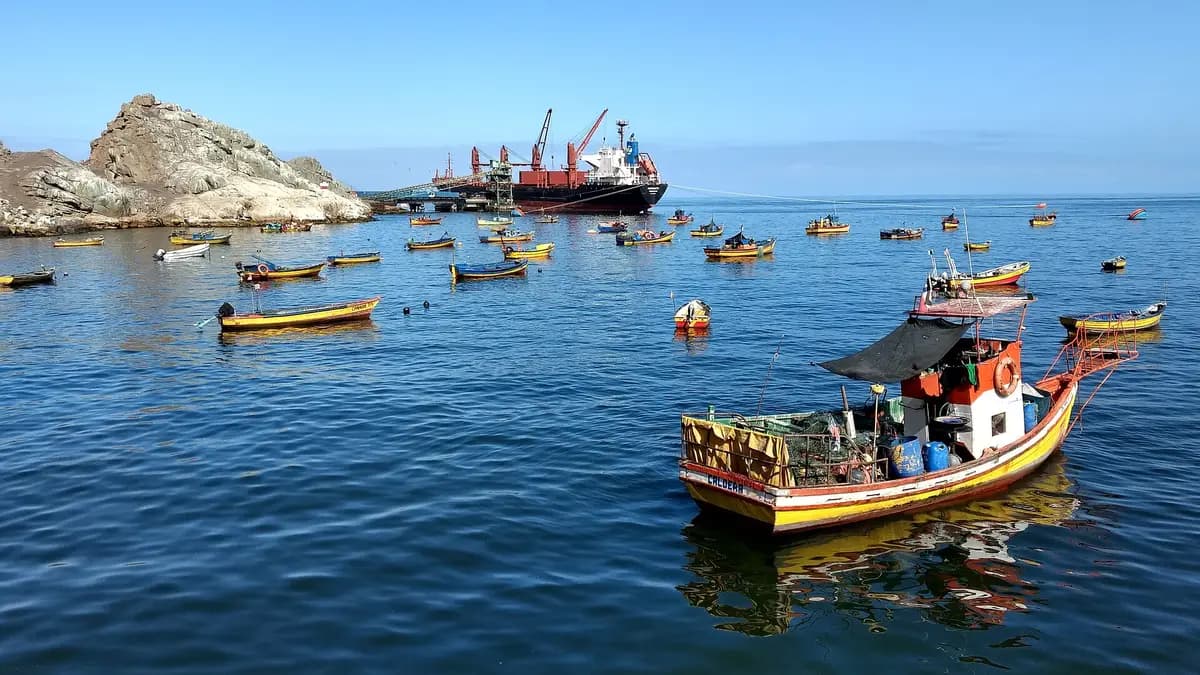
Mantoverde is supplied by a reverse osmosis desalination plant located at Corral de los Chanchos bay, near Flamenco. In 2024, the company signed an agreement with the Atacama Regional Government and Econssa to deliver 2 liters per second of desalinated water free of charge (3 l/s between December and February) to that town, which has about 400 permanent residents and more than 3,500 in summer, according to Minería Chilena. The wider context of seawater use in the sector is in our report on seawater in Chilean mining.
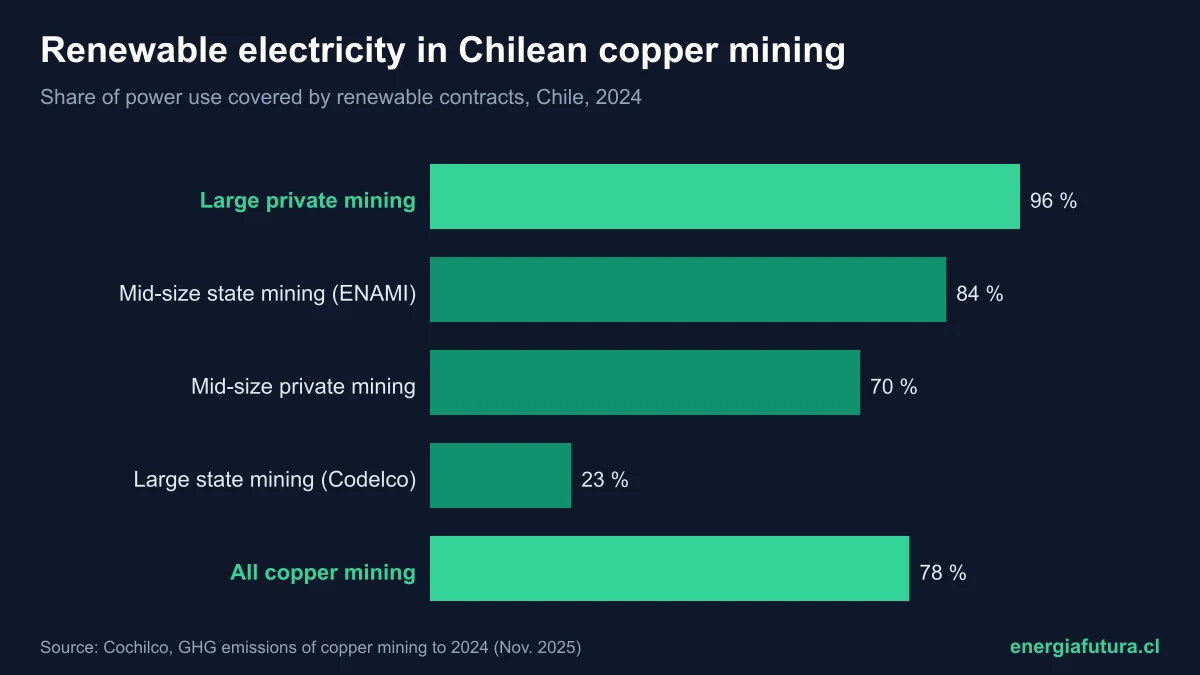
The announcement did not detail how the growth will be supplied with electricity or what share will be renewable, a figure other companies do publish, as shown in our review of renewable energy in Chilean mining. Nor did it specify Santo Domingo's water consumption, or give start and end dates for its construction. On jobs, the company expects more than 8,000 workers at the peak of Santo Domingo's construction and about 3,000 in operation; Mantos Blancos and Mantoverde currently employ about 7,900 people, including direct staff and contractors.
Kast said he hopes these investments "translate into more jobs" and opportunities for local suppliers, and Mas said the announcement consolidates Chile "as an undisputed global mining power". Mantos Blancos, meanwhile, turns 65 in 2026 and is the oldest private mining operation in the country.
Does your company offer energy, water or efficiency solutions for mining? Reach Energía Futura's readers.
See advertising optionsFrequently asked questions
How much will Capstone Copper invest in Chile?
More than US$3 billion over four years, of which at least US$2.3 billion will go to the Santo Domingo project.
Where is the Santo Domingo project?
In the Atacama Region, 35 km from Mantoverde and about 130 km north-northeast of Copiapó.
Will Chile produce cobalt?
Capstone estimates that the Mantoverde-Santo Domingo district could produce between 4,500 and 6,000 tonnes a year, but the company has not announced a start date.
Why does cutting sulfuric acid matter?
Because it is an expensive input, largely imported, with environmental impacts from its production and transport. The MVPA project would cut its use at Mantoverde by about 20%.