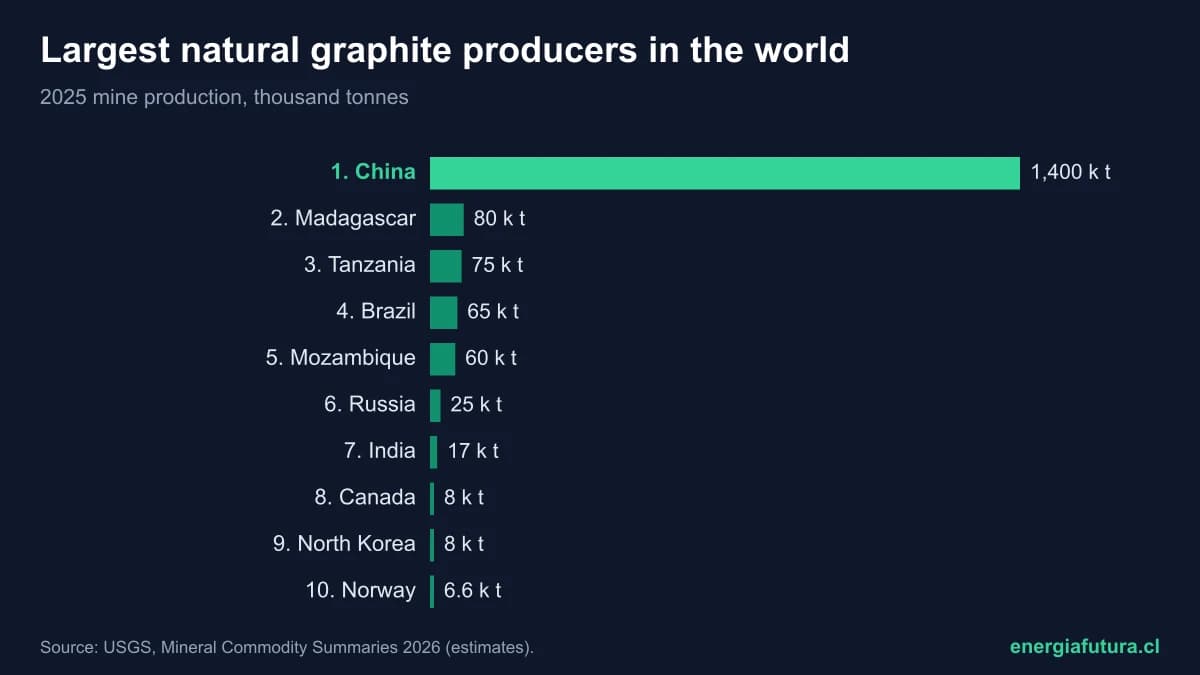
Updated November 2, 2026. China is the world's largest natural graphite producer, with estimated mine production of 1.4 million tonnes in 2025, about 78% of the world total of 1.8 million tonnes, according to the natural graphite summary of the US Geological Survey (USGS), Mineral Commodity Summaries 2026, published in February. Madagascar is second, with 80,000 tonnes, and Tanzania third, with 75,000.
Graphite is the anode material of almost every lithium-ion battery, the negative electrode where lithium ions are stored when the battery charges. By weight, an electric car battery contains more graphite than lithium. It is also used in refractories, lubricants, brakes and steelmaking.
Chile is not on the list: it has no graphite production reported in the USGS table. The country takes part in the battery chain through lithium and copper.
Ranking: the largest graphite producers in the world in 2025
| Rank | Country | 2024 production (t) | 2025 production (t) | 2025 share |
|---|---|---|---|---|
| 1 | China | 1,270,000 | 1,400,000 | 77.8% |
| 2 | Madagascar | 85,000 | 80,000 | 4.4% |
| 3 | Tanzania | 27,000 | 75,000 | 4.2% |
| 4 | Brazil | 58,000 | 65,000 | 3.6% |
| 5 | Mozambique | 39,000 | 60,000 | 3.3% |
| 6 | Russia | 20,000 | 25,000 | 1.4% |
| 7 | India | 17,600 | 17,000 | 0.9% |
| 8 | Canada | 11,700 | 8,000 | 0.4% |
| 8 | North Korea | 8,100 | 8,000 | 0.4% |
| 10 | Norway | 5,340 | 6,600 | 0.4% |
| 11 | Sri Lanka | 3,000 | 3,200 | 0.2% |
| 12 | Turkey | 2,600 | 2,200 | 0.1% |
| — | World total | 1,550,000 | 1,800,000 | 100% |
Source: USGS, Mineral Commodity Summaries 2026 (2025 figures estimated; 2024 figures for Tanzania, Russia and North Korea also estimated). Share calculated by Energía Futura on the rounded world total; in the report text, the USGS estimates China's share at 82%. Mexico, Vietnam, South Korea, Ukraine, Austria and Germany each produce less than 1,000 tonnes.
World production grew 16% between 2024 and 2025, from 1.55 to 1.8 million tonnes, and China accounted for more than half of the increase. Outside China, growth is concentrated in East Africa: Tanzania, Mozambique and Madagascar already total more than 210,000 tonnes.
China, the world's largest graphite producer
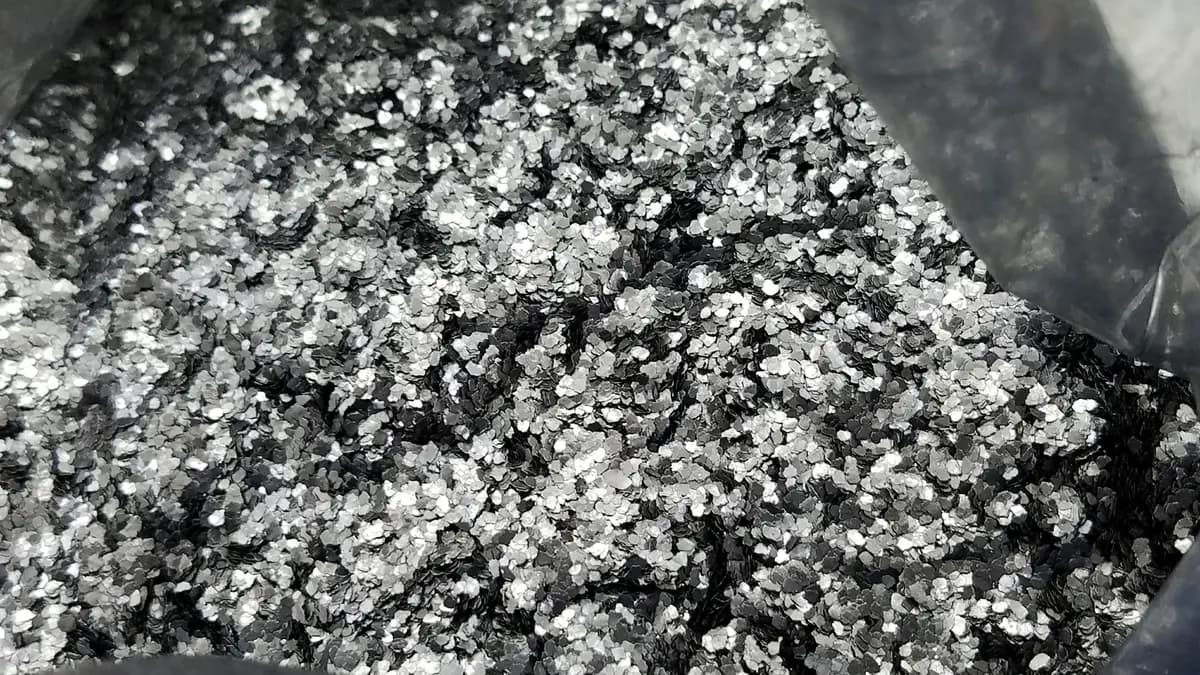
Most Chinese graphite is flake graphite, the crystalline type that, once purified and rounded, becomes spherical purified graphite (SPG), the raw material for anodes. China dominates both the mine and that industrial stage.
| China's exports (January to September) | 2024 (t) | 2025 (t) | Change |
|---|---|---|---|
| Natural graphite | 109,000 | 115,000 | +6% |
| Spherical purified graphite (SPG) | 29,100 | 37,400 | +29% |
Source: USGS, Mineral Commodity Summaries 2026. The main destinations for Chinese natural graphite were Japan (36%), Indonesia (22%), South Korea (10%) and Germany (8%); for SPG, South Korea (40%), Indonesia (33%), Japan (16%) and the United States (11%). The rise in shipments to Indonesia is explained by a new SPG plant of a Chinese company in Central Java.
That dependence led the United States to open a trade investigation. In December 2024, a group of North American producers asked for a review of China's practices on graphite active anode material. In 2025, the Commerce Department published preliminary results with antidumping duties of 93.5% and countervailing duties of 11.58% to 721.03%, depending on the company, according to the USGS.
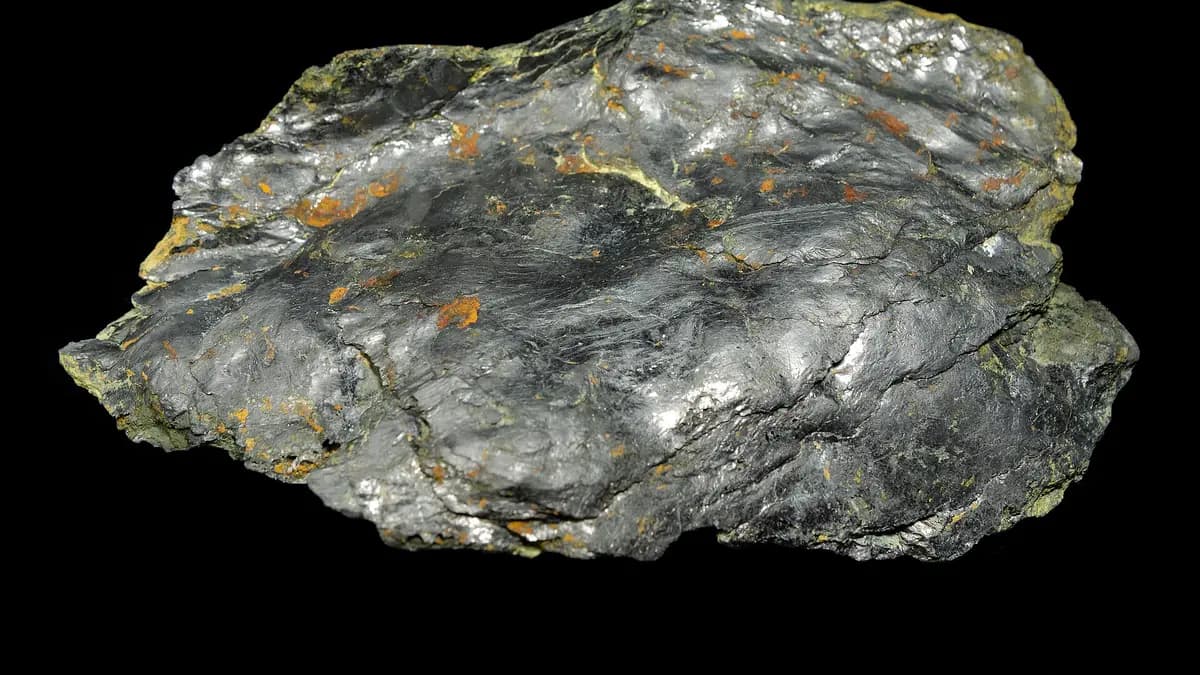
Beyond batteries, the USGS lists other uses of natural graphite: refractory bricks and linings for steel furnaces, brake linings, lubricants, powdered metals, steelmaking and some defense materials. Used refractories are partly recycled into brakes and thermal insulation, but the abundance of cheap graphite holds back wider recycling, and there are no public figures on how much is recovered. That is why the big driver of new demand is anodes for electric car and storage batteries.
Africa, the new graphite hub
Tanzania nearly tripled output in 2025, to 75,000 tonnes, with new mines in Lindi and Manyara run by Australian and Chinese companies. In Mozambique, a Chinese company opened a mine in Niassa and an Australian one restarted Balama in June, suspended since late 2024. In Brazil, the Boa Sorte and Santa Cruz mines kept ramping up, and in Russia the Soyuznoye deposit began production, according to the USGS.
The United States, a graphite consumer without mines
The United States has not produced natural graphite for decades: amorphous graphite was last mined in Montana in 1989 and flake in Texas in 1979. In 2025 it consumed about 71,000 tonnes, worth US$128 million, all imported, according to the USGS.
| US indicator | Value |
|---|---|
| Natural graphite mine production (2025) | 0 |
| Natural graphite imports (2025) | 79,000 t |
| Apparent consumption (2025) | 71,000 t |
| Import reliance | 100% |
| Main import source (2021-2024) | China, 46% |
| Graphite anode material imports (January to August 2025) | 43,400 t (28,100 t in 2024) |
| Average price of imported flake graphite (2025) | US$1,000 per tonne |
Source: USGS, Mineral Commodity Summaries 2026 (2025 figures estimated). Anode material imports came from China (55%), Indonesia (31%) and South Korea (14%).
To change that, five companies are developing graphite projects in Alabama, Alaska, Montana and New York. The Alaska project completed a feasibility study in 2025 to produce an average of 175,000 tonnes a year of concentrate over 20 years, almost as much as East Africa's entire current output. Two companies already produce spherical graphite in Illinois and Louisiana, and at least eight more are considering plants.
Graphite reserves: where tomorrow's graphite is
World graphite reserves total about 310 million tonnes. China holds the most, with 100 million, but Brazil follows closely with 74 million, and Madagascar and Mozambique each exceed 25 million.
| Rank | Country | Graphite reserves (t) | Share |
|---|---|---|---|
| 1 | China | 100,000,000 | 32.3% |
| 2 | Brazil | 74,000,000 | 23.9% |
| 3 | Madagascar | 27,000,000 | 8.7% |
| 4 | Mozambique | 25,000,000 | 8.1% |
| 5 | Tanzania | 18,000,000 | 5.8% |
| 6 | Russia | 14,000,000 | 4.5% |
| 7 | Vietnam | 9,700,000 | 3.1% |
| 8 | India | 8,600,000 | 2.8% |
| 9 | Turkey | 6,900,000 | 2.2% |
| 10 | Canada | 5,900,000 | 1.9% |
| — | World total | 310,000,000 | 100% |
Source: USGS, Mineral Commodity Summaries 2026. Share calculated by Energía Futura. Recoverable resources outside the United States exceed 800 million tonnes, according to the USGS.
Natural and synthetic graphite: what it means for Chile
Natural graphite competes with synthetic graphite, made from petroleum coke through very high-temperature, energy-intensive processes. Many battery makers blend both. For buyers seeking lower-footprint minerals, the origin and the energy used to produce graphite weigh more and more, as with the nickel and cobalt in our ranking of the largest nickel producers.
Chile does not produce graphite, but it is a leading player in another material in the same battery: the lithium in the cathode and electrolyte, which comes from salt flats like those in our ranking of the largest lithium mine in the world.
Graphite's concentration in China resembles that of other critical minerals, such as rare earths, which we covered in our ranking of the largest rare earth producers.
How to cite this data
How to cite this data: "China was the world's largest natural graphite producer in 2025, with 1.4 million tonnes, about 78% of the world total (USGS, Mineral Commodity Summaries 2026)". Source: Energía Futura, https://energiafutura.cl/en/news/largest-graphite-producers-in-the-world-2026-ranking-by-country-reserves-and-chile. We update this ranking at the same address when the USGS publishes new figures.
Does your company work in batteries, critical minerals or recycling? Reach Energía Futura's readers.
See advertising optionsFrequently asked questions about the largest graphite producers
Which is the largest graphite producer in the world?
China, with about 1.4 million tonnes of natural graphite in 2025, according to the USGS. That is about 78% of the world total; the USGS itself puts it at 82%.
What is graphite used for in batteries?
It is the anode material, where lithium ions are stored during charging. Almost every lithium-ion battery uses it.
Which country has the largest graphite reserves?
China, with 100 million tonnes, followed by Brazil, with 74 million.
Does Chile produce graphite?
No. Chile does not appear in the USGS graphite production table.