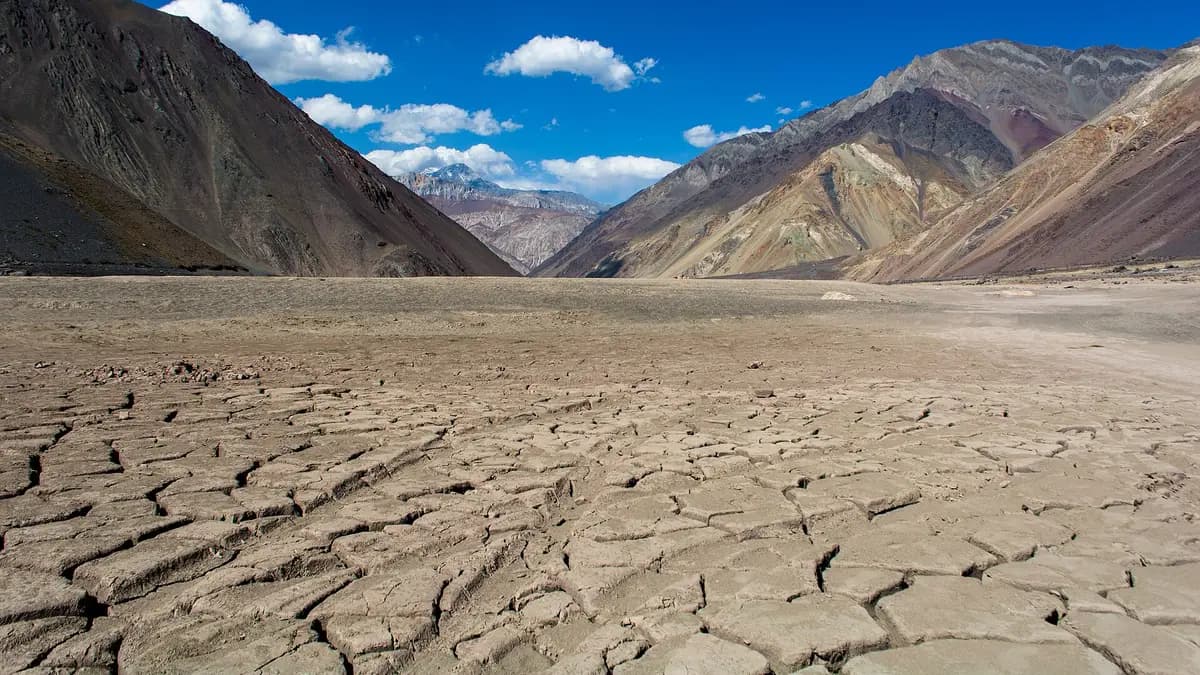
Droughts could affect up to 10.72% of Chile's copper production by 2030, more than 705,000 tonnes a year, and extreme rainfall up to 5.08%, according to the study *Resource and climate paradox: quantifying the impact of climate change in the copper supply chain*, disseminated by the Advanced Mining Technology Center (AMTC) at the University of Chile's Faculty of Physical and Mathematical Sciences, Reporte Minero reported on November 2, 2026.
The paper was published in the International Journal of Mining, Reclamation and Environment (vol. 39, no. 4, 2025) by P. Fernández, L. F. Orellana and E. Castillo. Its abstract estimates potential supply disruptions of between 1% and 11% of production, using Chile, the world's largest copper producer, as a case study.
10.72%
Output exposed to droughts
More than 705,000 t a year
5.08%
Exposed to extreme rainfall
53
Climate events analysed
Between 2001 and 2022
Source: AMTC, University of Chile, via Reporte Minero, November 2, 2026
View the data as a table
| Output exposed to droughts | 10.72% · More than 705,000 t a year |
| Exposed to extreme rainfall | 5.08% |
| Climate events analysed | 53 · Between 2001 and 2022 |
How the effect of droughts on copper was measured
The authors reviewed 53 climate events recorded between 2001 and 2022 that disrupted mining operations: mudslides, water shortages and floods that damaged critical infrastructure. Using that record, they projected the impact over the next decade by combining three factors: climate hazard, the future exposure of production and the vulnerability of the supply chain.
Each operation's exposure depends on its location, water availability, water infrastructure and operating conditions. Northern operations, in arid territory with structural water scarcity, face their own challenges. The study also warns of a knock-on effect: a mining disruption spills over into electricity supply, telecommunications and transport.
| Study result | Figure |
|---|---|
| Output droughts could affect by 2030 | Up to 10.72% |
| Equivalent in copper | More than 705,000 tonnes a year |
| Output extreme rainfall could affect | Up to 5.08% |
| Historical climate events analysed | 53 (2001-2022) |
| Disruption range in the published abstract | 1% to 11% |
Sources: Reporte Minero (November 2, 2026) and the article's abstract in the International Journal of Mining, Reclamation and Environment (2025). The report does not break down results by region or operation.
The two figures allow an estimate of the baseline the authors used: if 705,000 tonnes is 10.72%, projected production for 2030 is around 6.6 million tonnes, according to an Energía Futura calculation. That is well above what Chile will produce this year: between January and August 2026 output was 3.25 million tonnes, 7.7% less than a year earlier, according to Cochilco. In other words, climate risk weighs on the growth the industry expects by the end of the decade.
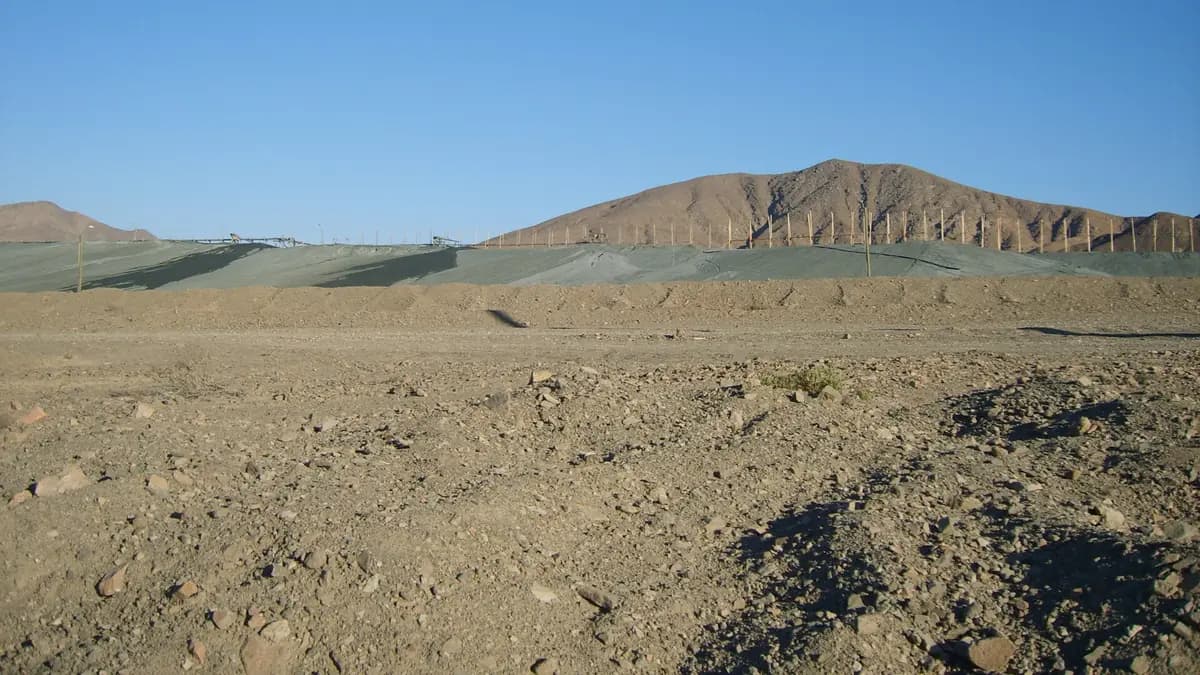
Drought risk is already showing in copper output
The weather is already weighing on 2026 figures. Anglo American produced 6% less copper in the third quarter, partly due to record snowfall at its Chilean operations, as we reported in our story on Anglo American's output drop. That is the other side of the risk: besides water shortages, heavy rain and snowstorms cut roads and force operations to stop.
Fernando Aguirre, hydrology engineering lead at consultancy Ausenco, told Reporte Minero that climate change has increased uncertainty in the design, operation and closure of projects, and that including water-security factors from the earliest stages affects later costs but makes it possible to anticipate the demands infrastructure will face over its lifetime.
Mining's answer: seawater and recirculation
The industry's main response to drought has been to replace inland water. According to Cochilco's report on water consumption in the copper industry through 2025, based on 52 operations covering all production, mining used 80.22 m³/s of water in 2025, of which 72.5% was recovered and recirculated flow (58.17 m³/s).
| Water in copper mining (Cochilco) | 2025 | Change |
|---|---|---|
| Total water use (including recirculation) | 80.22 m³/s | — |
| Recovered and recirculated water | 58.17 m³/s | +4.4% vs. 2024 |
| Seawater | 8.11 m³/s | +4.6% vs. 2024 |
| Desalinated seawater | 5.71 m³/s | About 70% of seawater |
| Inland water extracted | 13.94 m³/s | -9.1% since 2020 (15.34 m³/s) |
| Seawater share of projected 2034 demand | 67.6% | 2025-2034 projection |
Sources: Cochilco, water consumption report through 2025 and water consumption projection 2025-2034. The year-by-year detail is in our data sheet on seawater in Chilean mining.
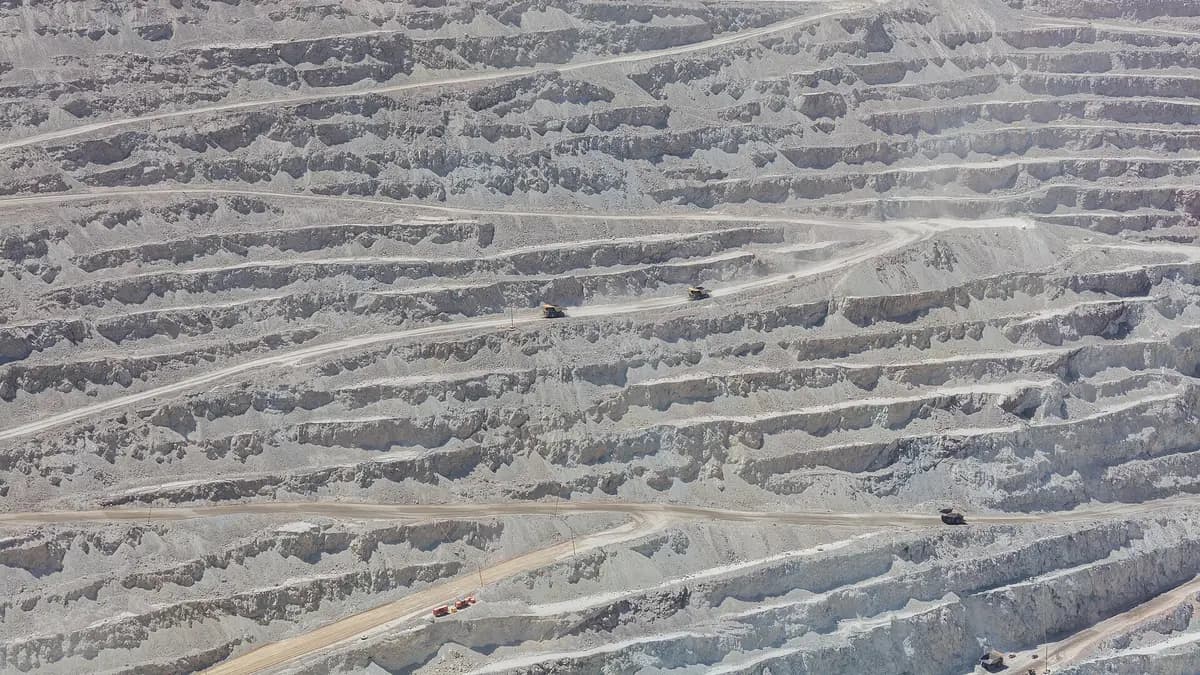
Seawater comes with an energy cost: desalinating it and pumping it hundreds of kilometres to operations more than 2,000 metres above sea level uses a lot of electricity, which adds emissions if that power is not renewable. That is why the expansion of desalination plants goes hand in hand with miners' clean energy contracts, and the brine returned to the sea is being studied for its effects on coastal ecosystems.
For national output, climate risk adds to a difficult year: production fell 7.7% between January and August according to Cochilco, and analysts expect Chile to end 2026 at its lowest output since 2003, as we detailed in our story on 2026 copper production.
Does your company offer water, desalination or energy solutions for mining? Reach Energía Futura's readers.
See advertising optionsFrequently asked questions about droughts and copper
How much copper could Chile lose to droughts?
According to the study disseminated by AMTC, up to 10.72% of production by 2030, more than 705,000 tonnes a year.
And to extreme rainfall?
Up to 5.08% of production, from mudslides and floods that damage roads and infrastructure.
How much seawater does copper mining use?
8.11 m³/s in 2025, according to Cochilco, of which about 70% is desalinated.
Who carried out the study?
P. Fernández, L. F. Orellana and E. Castillo, in a 2025 article in the International Journal of Mining, Reclamation and Environment, disseminated by the University of Chile's AMTC.
What is mining doing about drought?
It recirculates 72.5% of the water it uses, replaces inland water with seawater and builds desalination plants. Cochilco projects seawater will reach 67.6% of demand by 2034.