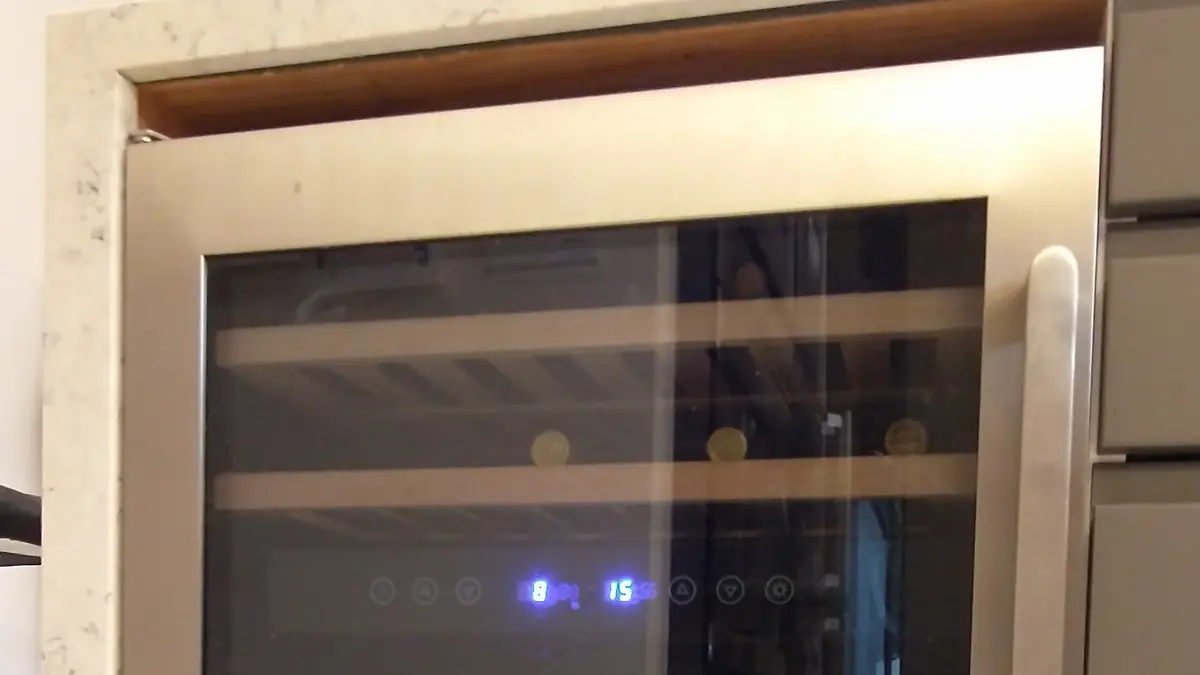
An electric wine cooler works like a small fridge that keeps bottles at a stable temperature, so it stays plugged in 24 hours a day. According to the consumption figures manufacturers declare, a wine cooler uses between 75 and 144 kWh a year. With electricity at CLP 255.27 per kWh, that is between CLP 19,145 and CLP 36,759 a year. The 56-bottle FDV Black sold by Falabella declares 12 kWh a month: about CLP 3,063 a month.
The difference between models depends on the cooling technology, thermoelectric or compressor, the size and where the unit is installed. This guide explains how much each type uses, what it costs per month and per year, what prices are found in Chile and which to choose by number of bottles, with listings checked on 7 November 2026.
View the data as a table
| 56-bottle compressor cooler, per month | $3,063 |
| Same unit, per year | $36,759 |
| 8-bottle thermoelectric, per year | $19,145 |
| Theoretical cap of a 70 W thermoelectric, per month | $12,866 |
How much electricity an electric wine cooler uses
A wine cooler's power is on its spec sheet: the 8-bottle thermoelectric units sold by Falabella declare between 50 W (Kubli FDV Novus 8) and 70 W (Noblex), and compressor units between 70 W (Noblex NBCV28, 28 bottles) and 132 W (Ursus Trotter, 34 bottles). But power alone does not give the cost, because the unit switches on and off to hold the temperature. The useful figure is annual consumption in kWh, which the European energy label requires.
The 38-bottle Smeg CVI338RX3, on sale in Chile, declares 140 kWh a year on its spec sheet; the 44-bottle Bosch KUW21AHG0, 130 kWh according to its product sheet. Among 8-bottle thermoelectric units, the Cecotec 02708 declares 75 kWh on the label published by Digitec and the Hyundai VIN8G 112 kWh according to Alza. Both compressor units are rated class G, the lowest on the European scale.
| Model | Type | Bottles | Annual consumption | Cost per year | Cost per month |
|---|---|---|---|---|---|
| Cecotec 02708 | Thermoelectric | 8 | 75 kWh | CLP 19,145 | CLP 1,595 |
| Hyundai VIN8G | Thermoelectric | 8 | 112 kWh | CLP 28,590 | CLP 2,383 |
| Bosch KUW21AHG0 | Compressor | 44 | 130 kWh | CLP 33,185 | CLP 2,765 |
| Smeg CVI338RX3 | Compressor | 38 | 140 kWh | CLP 35,738 | CLP 2,978 |
| FDV Black | Compressor | 56 | 144 kWh | CLP 36,759 | CLP 3,063 |
Consumption declared by each manufacturer (FDV Black: 12 kWh a month on its Falabella listing). Energía Futura calculations at CLP 255.27 per kWh from CGE's BT1 tariff in force since October 2026, according to its tariff schedule. As of 7 November, CGE had not yet published its November schedule.
Thermoelectric or compressor wine cooler: the differences
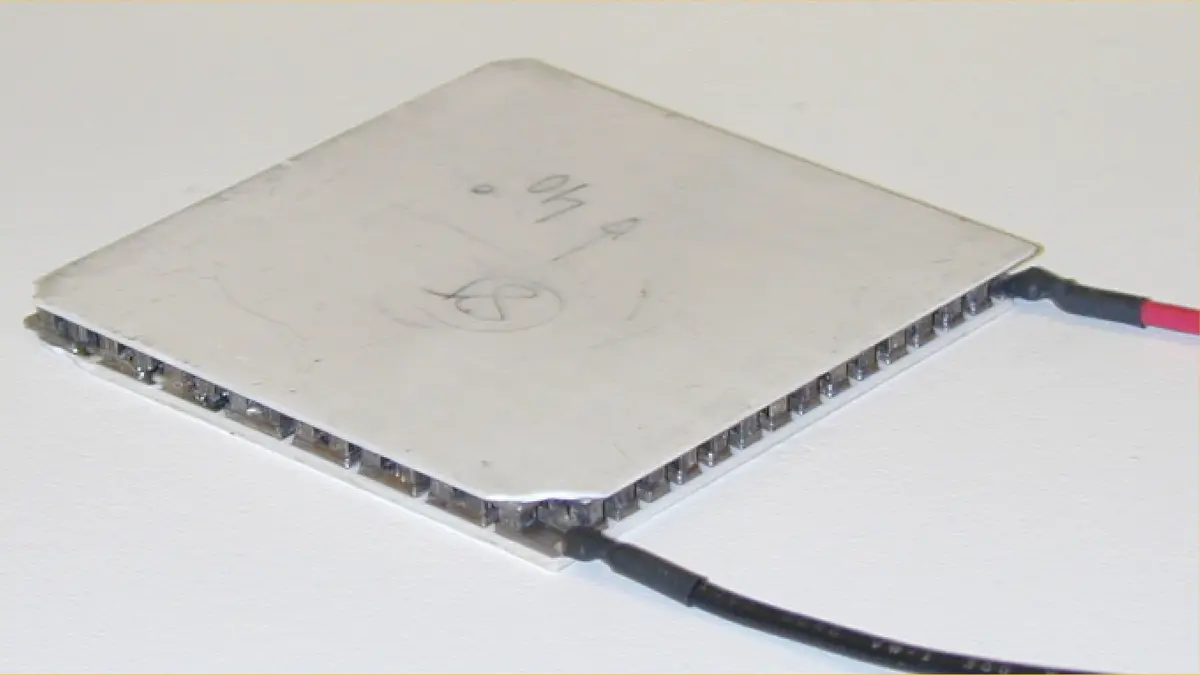
Thermoelectric coolers use a Peltier cell, a plate that moves heat from one side to the other when current flows. They have no motor, so they are silent and vibration-free, which matters because vibration is bad for wine. They are cheaper and lighter, but have two limits: they only come in small sizes of 6 to 12 bottles, and their cooling ability depends on the room temperature, because they can only go a few degrees below ambient.
Compressor coolers work like a fridge: a motor compresses a refrigerant gas and stops once the temperature is reached. They cool better in warm rooms, allow two temperature zones (whites and reds) and come in sizes from 28 to more than 150 bottles. In exchange, they make some noise and cost more. Per bottle stored, they are the most efficient: the FDV Black uses 2.6 kWh a year per bottle, against 9.4 to 14 kWh for 8-bottle thermoelectric units.
| Feature | Thermoelectric | Compressor |
|---|---|---|
| Usual sizes | 6 to 12 bottles | 28 to more than 150 bottles |
| Power in Chile | 50 to 70 W | 70 to 132 W |
| Declared annual consumption | 75 to 112 kWh (8 bottles) | 130 to 144 kWh (38 to 56 bottles) |
| Consumption per bottle per year | 9.4 to 14 kWh | 2.6 to 3.7 kWh |
| Noise and vibration | Almost none | Low, from the compressor |
| In hot rooms | Loses capacity | Holds temperature |
| Price at Falabella | CLP 109,990 to 159,990 | CLP 299,990 to 2,999,990 |
Energía Futura calculations with spec sheet data. Consumption per bottle: annual consumption divided by each model's capacity.
How much a wine cooler costs per month
Based on declared figures, a wine cooler costs between CLP 1,595 and CLP 3,063 a month. For comparison, if a 70 W thermoelectric unit ran non-stop 24 hours a day, it would use 50.4 kWh and cost CLP 12,866 a month: the worst case, a cooler in a room so hot that the cell never reaches the set temperature and never stops. That is why location matters as much as the model.
A 56-bottle compressor cooler uses slightly more than a 90-litre minibar fridge, which declares 9 to 10 kWh a month, and much less than a family fridge, which uses 25 to 60 kWh a month as we calculated in how much electricity a fridge uses. Adding a wine cooler adds 3% to 7% to the consumption of a typical home using 180 kWh a month.
Does your company sell efficient appliances? Reach Energía Futura's readers.
See advertising optionsElectric wine cooler prices in Chile
These are the electric models that appeared in Falabella's wine cooler search on 7 November 2026, with the power stated on each listing and the sale price where available. The search also shows wooden racks and cabinets, which use no electricity because they do not cool.
| Model | Type | Bottles | Power | Price |
|---|---|---|---|---|
| Kubli FDV Novus 8 | Thermoelectric | 8 | 50 W | CLP 109,990 |
| Noblex 8 bottles Panel Touch | Thermoelectric | 8 | 70 W | CLP 129,990 |
| FDV Black | Compressor | 56 | 100 W | CLP 299,990 |
| Noblex NBCV28 | Compressor | 28 | 70 W | CLP 349,990 |
| Ursus Trotter UT W-160 Inox | Compressor | 34 | 132 W | CLP 469,990 |
| FDV Expert 54 | Compressor | 54 | 120 W | CLP 599,990 |
| FDV Expert 171 | Compressor | 171 | n/a | CLP 1,199,990 |
| Bosch built-in Series 6 | Compressor | 21 | n/a | CLP 1,699,990 |
| Smeg CVI338RX3 | Compressor | 38 | 140 kWh/year | CLP 2,999,990 |
Source: Falabella listings and prices as of 7 November 2026; Smeg consumption from its spec sheet. n/a: no power figure on the listing. Prices change with promotions.
| Kubli FDV Novus 8 | Thermoelectric | 8 | 50 | 109,990 |
| Noblex termoeléctrica 8 botellas | Thermoelectric | 8 | 70 | 129,990 |
| FDV Black 56 botellas | Compressor | 56 | 100 | 299,990 |
| Noblex NBCV28 | Compressor | 28 | 70 | 349,990 |
| Ursus Trotter UT W-160 Inox | Compressor | 34 | 132 | 469,990 |
| FDV Expert 54 | Compressor | 54 | 120 | 599,990 |
Where to place it so it uses less
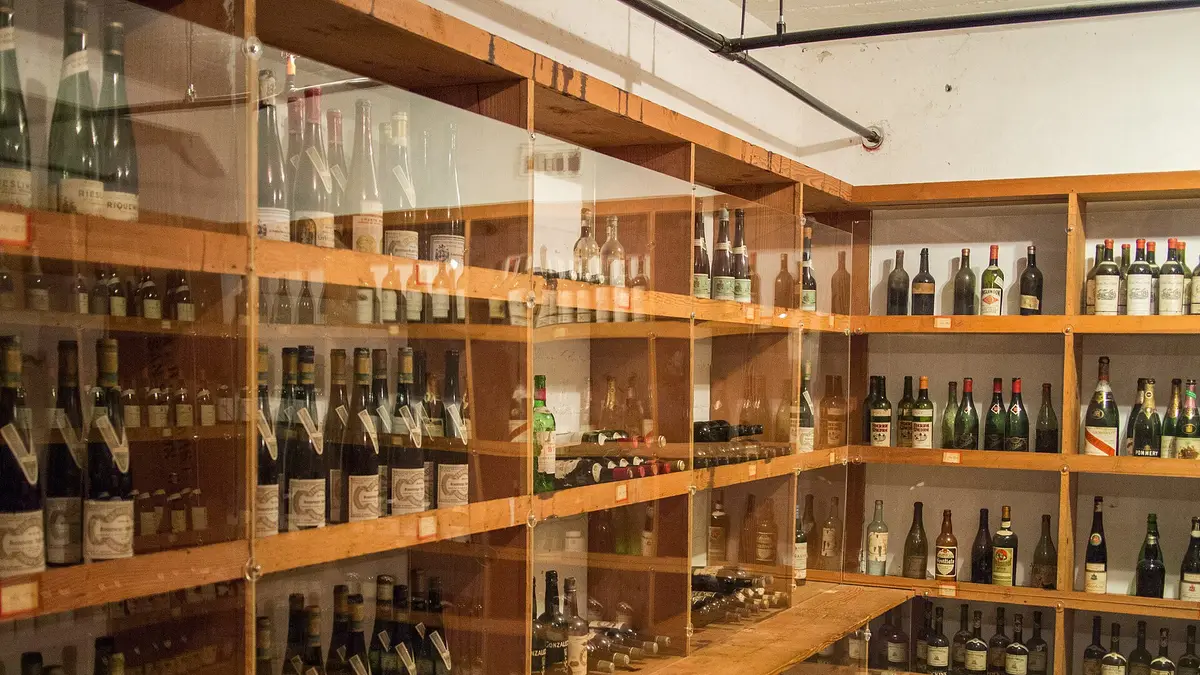
Like any cooling appliance, a wine cooler removes heat from inside and releases it at the back or bottom. Without room to ventilate, that heat stays around it and the unit works more hours. Freestanding models need a few centimetres of free space on the sides and back; built-in models, like the Smeg or Bosch sold by Falabella, are designed to fit into cabinetry and vent air at the front.
The worst spots are next to the oven, on top of the fridge or facing a sunny window. In summer, a room that goes from 20 °C to 30 °C forces a thermoelectric unit to run almost without pause, pushing it towards the theoretical ceiling of CLP 12,866 a month. A pantry, an interior hallway or a cool basement keep any cooler, compressor or thermoelectric, closer to its declared consumption.
- Near an interior wall and away from heat sources.
- Keep the door closed: opening it often lets the cold out.
- Full, but without blocking airflow between the shelves.
- At storage temperature, not serving temperature: over-cooling uses more.
Which electric wine cooler to choose
- Up to 12 bottles and a cool room: a thermoelectric unit is enough and is the quietest.
- More than 20 bottles or a hot kitchen: choose a compressor, which uses less per bottle.
- Whites and reds at once: look for two temperature zones.
- Leave space to ventilate: a boxed-in cooler without air works harder.
- Away from the oven and the sun: every extra degree in the room raises consumption.
- Check annual consumption in kWh, not just watts: it is the figure that tells you what you will pay.
In Chile, the new energy efficiency label applies to refrigerators, as we explained in the E2.0 refrigerator label. Until wine coolers have a local label, the most useful reference is the annual consumption manufacturers publish under the European label.
Frequently asked questions
How much electricity does an electric wine cooler use?
Between 75 and 144 kWh a year for the models reviewed: about 6 to 12 kWh a month.
How much does a wine cooler cost per month?
Between CLP 1,595 and CLP 3,063 a month at CLP 255.27 per kWh, based on each manufacturer's declared consumption.
Which uses less, a thermoelectric or a compressor wine cooler?
In total, the small thermoelectric uses less; per bottle, the compressor unit is up to five times more efficient.
Where should a wine cooler go?
In a cool room, away from the oven and the sun, with space to ventilate. In a hot room, a thermoelectric unit can use several times its declared consumption.
Can I switch off the wine cooler?
You can, but it defeats the purpose: wine needs a stable temperature. If you switch it off, empty it and leave it open so it does not get damp.
How much does an electric wine cooler cost in Chile?
From CLP 109,990 for an 8-bottle thermoelectric unit to about CLP 3 million for a premium built-in model, according to Falabella on 7 November 2026.