A 200-litre solar water heater, enough for a family of four to six, costs between CLP 370,000 and CLP 420,000 in Chile as an unpressurised (atmospheric) model, and between CLP 740,000 and CLP 790,000 as a pressurised heat-pipe model, according to prices published by Chilean shops on 4 November 2026. Chile's Energy Ministry estimates that solar thermal systems cover between 50% and 70% of a home's hot water.
For a family of four that currently heats water with an electric tank heater, that means saving about CLP 21,000 to 30,000 a month, according to Energía Futura calculations with electricity at CLP 255.27 per kWh. This guide explains how a solar water heater works, what each size costs, how much it saves compared with an electric heater and a gas instantaneous heater, and which type suits each climate.
What a solar water heater is and how it works
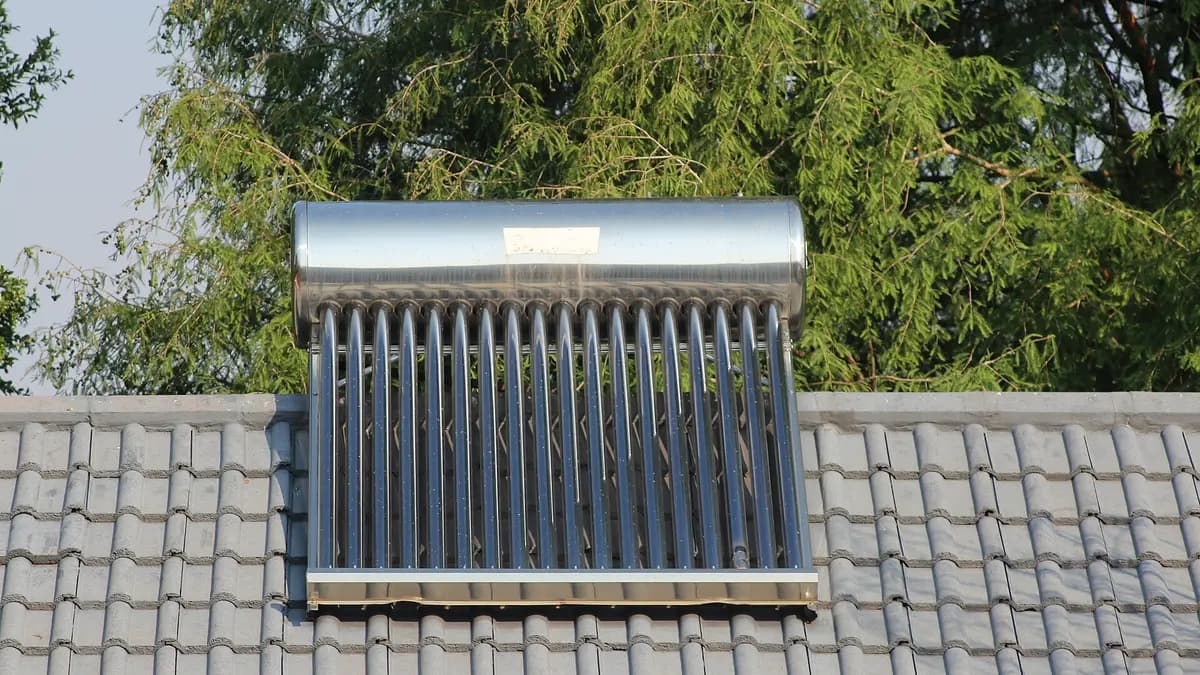
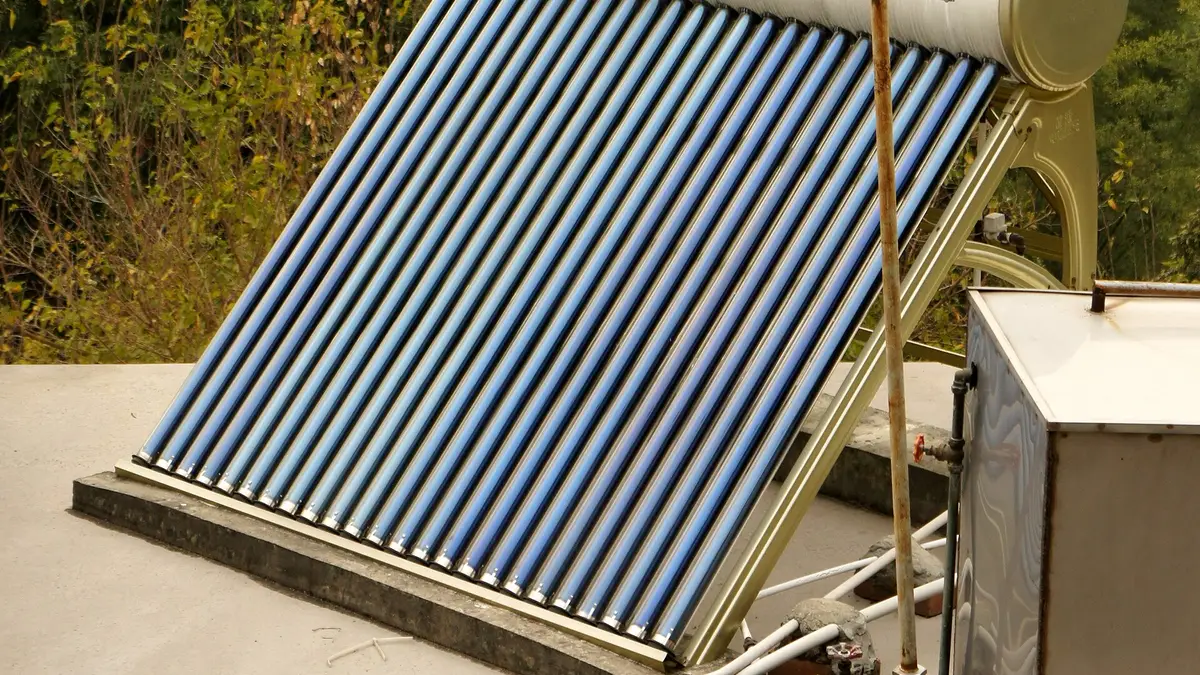
A solar water heater is a compact solar thermal system: a collector that captures the sun's heat and an insulated tank that stores hot water, mounted together on the roof. Unlike photovoltaic panels, it does not produce electricity: it heats water directly. In most units sold in Chile, the collector is made of evacuated glass tubes, which work like a vacuum flask: they let radiation in and lose almost no heat.
There are two main types. In the atmospheric (thermosiphon) type, water flows through the tubes and rises to the tank on its own as it heats; the tank is unpressurised, so it usually needs height or a pump to give good shower pressure. In the pressurised type, the tank works at mains pressure and heat pipe tubes transfer the heat without water passing through the glass, making them more resistant to frost and to a broken tube.
| Type | How it works | Advantages | Drawbacks |
|---|---|---|---|
| Atmospheric (thermosiphon) | Water flows through the tubes and rises to the tank on its own | Cheaper, simple | Low pressure; frost risk; if a tube breaks, the tank drains |
| Pressurised heat pipe | Tubes with a fluid that carries heat to a pressurised tank | Mains pressure; better in frost | Almost twice the price |
| With electric backup | Either of the above with a heating element | Hot water on cloudy days | The element uses electricity |
Solar water heater prices in Chile in 2026
The table lists prices published by Chilean shops, checked on 4 November 2026. Prices include VAT and exclude installation, which depends on the roof, the distance to the water supply and whether the structure needs reinforcing.
| Unit | Capacity | Type | Price (CLP) | Shop |
|---|---|---|---|---|
| Stainless atmospheric solar heater | 150 litres | Atmospheric | 360,000 | Solares Center |
| Stainless atmospheric solar heater (4 to 6 people) | 200 litres | Atmospheric | 420,000 | Solares Center |
| Stainless atmospheric solar heater (6 to 9 people) | 300 litres | Atmospheric | 570,000 | Solares Center |
| Galvanised atmospheric solar heater | 200 litres | Atmospheric | 370,200 | Enertik |
| Caxtor atmospheric solar heater with 1,500 W element | 200 litres | Atmospheric with electric backup | 399,990 | Sodimac |
| Pressurised heat pipe solar heater | 200 litres | Pressurised | 790,000 | Solarset |
Sources: each shop's website, 4 November 2026. Some models were listed as out of stock. Prices change often; confirm before buying and ask for a quote including installation.
What size of solar water heater to choose
Size depends on how many people live in the home. Shops usually allow 40 to 50 litres per person per day: Solares Center recommends the 200-litre unit for 4 to 6 people and the 300-litre one for 6 to 9. A slightly larger tank gives a margin for cloudy days, but if it is far too big the water will not reach a good temperature in winter.
| People in the home | Recommended capacity | Reference price (atmospheric, CLP) |
|---|---|---|
| 1 to 2 | 100 to 120 litres | Under 360,000 |
| 3 to 4 | 150 litres | 360,000 |
| 4 to 6 | 200 litres | 370,000 to 420,000 |
| 6 to 9 | 300 litres | 570,000 |
Source: Solares Center ranges and Energía Futura calculation at 40-50 litres per person. The 1-2 person row is a reference: the catalogues reviewed had no 100-litre units with a published price.
How much a solar water heater saves
Heating 160 litres of water a day (a family of four) from 15 °C to 45 °C takes about 5.6 kWh a day, or around 167 kWh a month. With an electric tank heater, at CLP 255.27 per kWh (CGE's BT1 residential rate in force since October 2026, according to its tariff schedule), that is about CLP 42,700 a month, not counting tank losses. With LPG in an instantaneous gas heater, with a 15 kg cylinder at CLP 30,250, it is about CLP 29,600.
If the solar heater covers 50% to 70% of that demand, as the Energy Ministry estimates, the saving is CLP 21,300 to 29,900 a month versus the electric heater and CLP 14,800 to 20,700 versus gas. The ministry also reports gas bill savings of 40% to 90%, depending on the region.
| Comparison (family of 4, 167 kWh of heat a month) | Monthly cost without solar | Saving at 50% solar coverage | Saving at 70% solar coverage | Payback of a CLP 420,000 unit |
|---|---|---|---|---|
| Versus electric tank heater | CLP 42,700 | CLP 21,300 | CLP 29,900 | 14 to 20 months |
| Versus LPG instantaneous heater | CLP 29,600 | CLP 14,800 | CLP 20,700 | 20 to 28 months |
Energía Futura calculations with electricity at CLP 255.27/kWh (CGE, Oct 2026), LPG at CLP 30,250 per 15 kg cylinder (Lipigas, Santiago region, Gas en Línea), 13.1 kWh per kg of gas and 87% heater efficiency. Payback excludes installation and maintenance. To see what your current equipment costs, check how much an electric water heater uses.
Do you sell or install solar water heaters or panels? Reach Energía Futura's readers.
See advertising options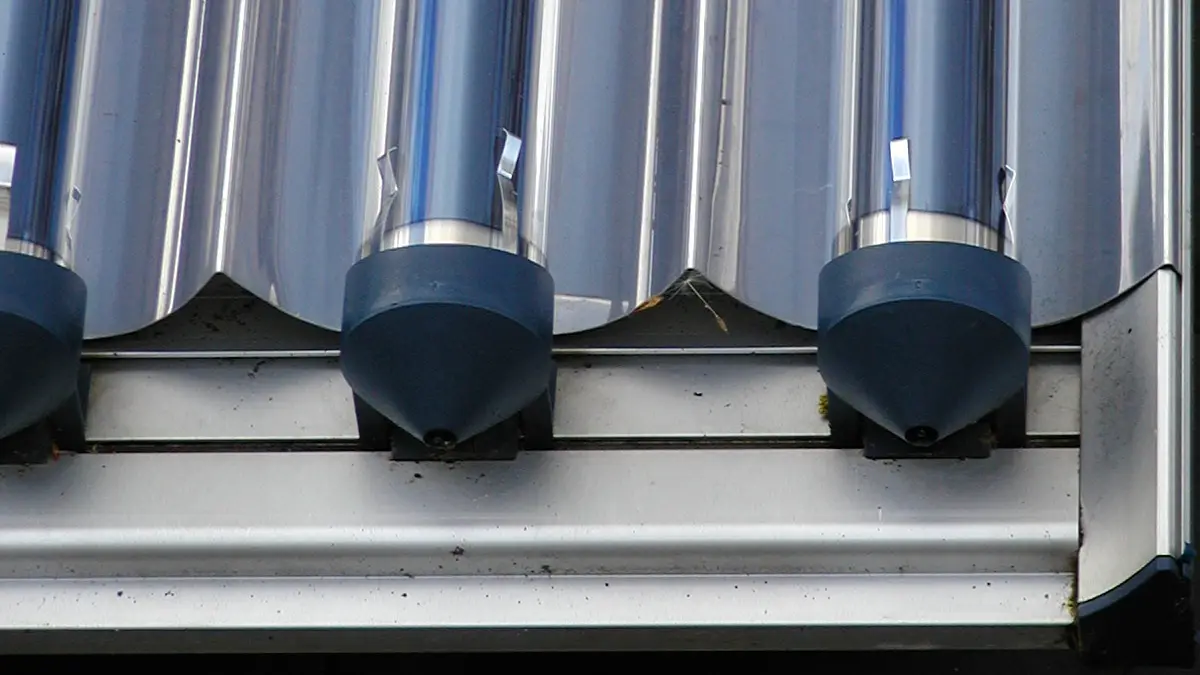
Solar water heaters in winter and in frost-prone areas
In winter a solar water heater keeps working, but it heats less. Solares Center states an average winter water temperature of 45 °C to 55 °C for its atmospheric model and heat retention of 60 to 72 hours. On a run of cloudy days, backup is needed: an electric element inside the tank, like the one in the Sodimac model, or a gas heater connected to the solar tank's outlet so it only tops up the temperature.
In south-central Chile and foothill areas with frost, water can freeze inside the tubes of an atmospheric unit and break them. There, a pressurised heat pipe model is the better choice, even at nearly twice the price. In the north, with strong sunshine all year, an atmospheric unit is usually enough. If the home uses an electric shower head, a solar heater can also replace it; we compared that cost in how much an electric shower uses.
Installation, maintenance and tax benefits
A solar water heater is heavy when full: a 200-litre unit weighs more than 200 kilograms on the roof, so the structure must be checked. It should face north (in the southern hemisphere) and be free of shade between 10 am and 4 pm. Basic maintenance means checking the tubes, flushing the tank once or twice a year to remove sediment and, in atmospheric units, looking after the sacrificial anode. Solares Center states a service life of up to 15 years for its unit.
For new homes, Chile's Law 20,365 created a tax credit for builders that install solar thermal systems supplying at least 30% of domestic hot water. The benefit can cover the full value of the system in homes worth up to 2,000 UF and does not apply above 3,000 UF, and it requires a five-year maintenance contract. For existing homes there is no general subsidy: the saving comes from the monthly bill.
Is a solar water heater worth it?
It pays off above all for people who currently heat water with electricity: the monthly saving is larger and the investment is recovered in one to two years. Against gas, payback is slower but still reasonable for a large family; a gas heater connected to the solar tank's outlet only heats what is missing, as we explain in how much a gas water heater costs per shower. It makes less sense in flats without roof access, in heavily shaded homes or in one- or two-person households that use little hot water.
- Current heater is electric: the solar unit pays for itself in 14 to 20 months.
- LPG instantaneous heater: it pays for itself in 20 to 28 months.
- Frost-prone area: choose a pressurised heat pipe unit.
- Northern Chile: an atmospheric unit is usually enough.
- Heavy shade or no roof of your own: not worth it.
Frequently asked questions
How much does a solar water heater cost in Chile?
A 200-litre atmospheric unit costs between CLP 370,000 and 420,000; a pressurised heat pipe one, about CLP 790,000. The 150-litre model starts at CLP 360,000 and the 300-litre at CLP 570,000 (prices as of 4 November 2026, excluding installation).
How much does a solar water heater save each month?
For a family of four, between CLP 21,000 and 30,000 a month versus an electric tank heater, and between CLP 15,000 and 21,000 versus an LPG instantaneous heater.
What capacity do I need?
Between 40 and 50 litres per person: 150 litres for 3 to 4 people, 200 litres for 4 to 6 and 300 litres for 6 to 9.
Does it work in winter?
Yes, but it heats less. On cloudy days it needs backup from an electric element or a gas heater, and in frost-prone areas a pressurised heat pipe unit is better.
What is the difference between atmospheric and pressurised?
The atmospheric type is cheaper but gives low pressure and is more sensitive to frost. The pressurised type works at mains pressure and handles cold better, at nearly twice the price.